
Elementary heroes
Every hero in every story worth telling has at least one thing in common with every other decent hero ever written. Each one must face an enemy that is absolutely, one hundred percent matched to his own skills and strengths. This is the one enemy that can utterly destroy the hero, the one enemy that he must face alone, the one enemy he must defeat, and the one enemy he cannot possibly defeat. It is, of course, himself.
The idea that a person, before he can be heroic to other people, must first face his own demons and weaknesses is as old as stories themselves. It has been the case with every hero from Batman to Jesus Christ himself (who faced his agony in the garden). Without weakness, there isn’t really anything to overcome. It is not all difficult to fight an enemy that is entirely unknown or unattached to you. An hero without weakness can go against as many super villains as he likes, but a story about an all powerful man beats up bad guys isn’t a story, it’s just an oxymoron.
To the end that all heroes have to have weaknesses, authors throw in all the problems of humanity for their heroes to struggle against. Any and every bad thing imaginable stands between a character and his (or her) destiny as a hero. There are the usual suspects: abandonment, an unpleasant childhood, the death of a dearly beloved family member, some crime committed in the past that comes back to haunt him, all of which create doubts and issues that have to be gone over. More rarely, an author gets a little more creative. Sir Arthur Conan Doyle pulled off an interesting twist when he gave Sherlock Holmes a weakness that is more commonly reserved for villains: hubris. If Dr. Watson wasn’t around to soften Holmes’s antisocial egotism, there would be relatively little to like about the super-sleuth. Additionally, Holmes has the curious luck of having a weakness that is precisely the same as his strength. His mind is the reason that he is successful, but it also causes him to become bored and seek out dangerous (although at the time the story was written, not illegal) alternatives to mental stimulation (i.e. cocaine). He is also limited by his ability to remember things. In one conversation that Dr. Watson has with Holmes, he finds out that Sherlock Holmes did not know (or care) that the earth revolved around the sun. As Watson reels from the shock of the idea that a genius such as Holmes could have escaped knowing the most basic thing about the solar system, Holmes explains that “there comes a time when for every addition of knowledge, you forget something that you knew before. It is of the highest importance, therefore, not to have useless facts elbowing out the useful ones.” This provides a logical reason for purposely forgetting about the solar system. It also reflects back on the idea of strengths and weaknesses.
There comes a point where weaknesses and strengths elbow each other out. When a person practices virtues, those virtues elbow out faults. Likewise, when a person practices vices, virtues are shoved aside. This is, of course, true not only of individuals, but of groups. When an entire culture decided to act one way, other options seem less likely. When one moral pillar of society falls, then it is very likely that others will follow. The ability of that society to uphold natural law quite naturally diminishes.
Under such circumstances, it is harder for morality to be seen because morality of the more mundane variety, that is, your regular old Good Samaritan virtue, becomes harder to recognize and even harder to find. We say there are heroes left but in reality, there is no one left who will recognize those heroes. Instead, the heroes are labeled as crackpots and freaks, because they refuse to adhere the standards of a fallen society.
The time has come when standing up for basic moral principals earns a person the scorn of our society—that much can be seen by looking at the replies of the average tweeter to Pope Benedict XVI. The few moral strongholds left are crumbling, being jostled out of the way by progressive ideas and an unbelievable level of flat-out ignorance. Society has not yet collapsed into a mad ring of hatred and despair but really it is only a matter of time before the negative aspects of society overwhelm the positive ones.
Fortunately, although the moral degradation of society occurs like Sherlock Holmes forgetting how many planets are in the solar system (although, lately, that is a valid question, what with Pluto jumping in and out of the count) the reintroduction of morality into a society works the same way. Just as Dr. Watson pesters Holmes by returning the matter of the Solar System to the front and center of his mind, there are indomitable forces that will always dredge up the moral codes that humans have honored since the beginning of time, and a few brave souls will respond to those truths. When people choose to be selfless, they choose to be heroic—no matter how insignificant the situation. With each case of individual heroism, a little bit of virtue gets to shove its way back into the world and elbow out a tiny bit of the evil that seems to be running rampant.

Saint Kateri , Canada’s Protectress
This was the title given to Saint Kateri Tekakwitha, by Pope Benedict XVI, when he canonized her on October 28th, 2012, along with six others, in Saint Peter’ Square (she had been beatified by Pope John Paul II back in 1980). With Saint Joseph as our protector, along with the Canadian martyrs, we seem to[…]Continue reading→

Remembering Father Alphonse de Valk
(Today marks the sixth anniversary of the death of Father Alphonse de Valk, C.S.B., a faithful, courageous and indefatigable Basilian priest, pro-life-and-family apostle, and the founder of Catholic Insight magazine. Here is what we wrote those on his entering into eternity five years ago, as we continue to remember him in our prayers and thoughts)[…]Continue reading→

My Name is Bernadette
April 16th is a propitious day, for besides the anniversary of Father de Valk’s death, who founded Catholic Insight in its print form decades ago, and the commemoration of the ‘two Benedicts’, mentioned in accompanying posts, today we also recall Saint Bernadette Soubirous, the young visionary to whom the Virgin Mary appeared numerous times at[…]Continue reading→
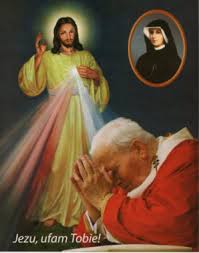
Canonizing Sister Faustina and Divine Mercy
HOMILY OF THE HOLY FATHER MASS IN ST PETER’S SQUARE FOR THE CANONIZATION OF SR MARY FAUSTINA KOWALSKA Sunday, 30 April 2000 1. “Confitemini Domino quoniam bonus, quoniam in saeculum misericordia eius”; “Give thanks to the Lord for he is good; his steadfast love endures for ever” (Ps 118: 1). So the Church sings on the Octave of[…]Continue reading→

Divine Mercy Sunday – An Echo of Every Mass
Reach out your hand and put it in my side. Do not doubt but believe’… ‘My Lord and my God!’ (Jn. 20:18)). Today is Divine Mercy Sunday, and as we celebrate the end of the Easter Octave, we contemplate the wounded side of our Saviour, the Church’s source of life. On Good Friday in the[…]Continue reading→
First Holy Communion: Sermon from May 16, 1943
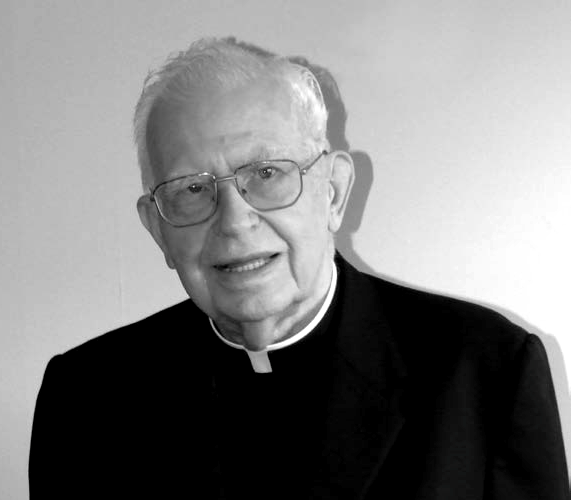
Here is a sermon from the good old days by +Rev. Msgr. Vincent Nicholas Foy (August 14, 1915 – March 13, 2017), from 1943. Readers may recall that Pope Saint Pius X, by the decree Quam Singulari in 1910, lowered the customary age of reception of Holy Communion – after the rigours of the plague[…]Continue reading→

In the Glorious Light of Easter, Alleluia!
Set your minds on things that are above, not on things that are on earth, for you have died, and your life is hidden with Christ in God. When Christ who is your life is revealed, then you also will be revealed with him in glory (Col. 3:3-4). The Resurrection of Our Lord and Saviour[…]Continue reading→

An Ancient Homily for Holy Saturday
The time between Good Friday and Easter Sunday is one of waiting, in silence, as the world wonders – anticipates – what will happen, after the death of Christ. We re-live this time each year in the anamnesis of our liturgy, and in turn look forward to the glorious re-creation of all things at the[…]Continue reading→
Europe’s Long Descent
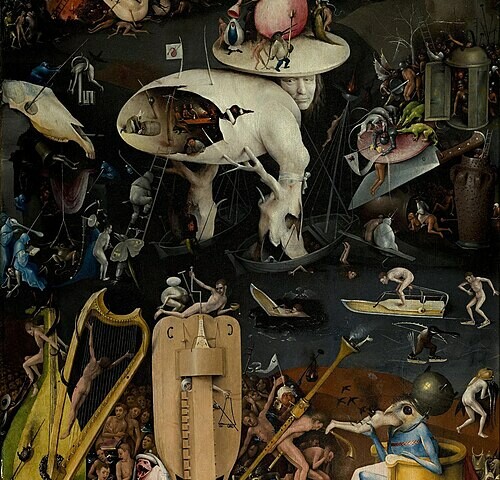
(As we meditate on this day on Christ’s burial, and His descent into hell, it is fitting to ponder here with contributor Peter Marcus how the world seems to be heading there as well. The difference is that, although God cannot ‘redeem’ hell, nor those therein, He can and did redeem the world. There is[…]Continue reading→
Pope Saint John Paul II’s First Good Friday Homily
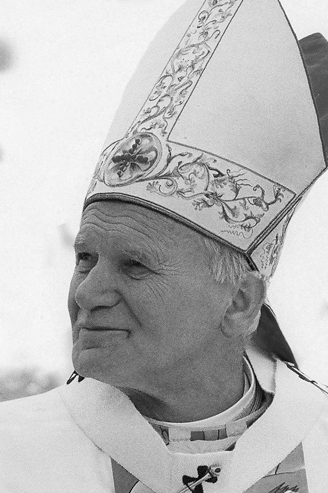
ADDRESS OF HIS HOLINESS JOHN PAUL II AT THE CONCLUSION OF THE STATIONS OF THE CROSS AT THE COLOSSEUM Good Friday, 13 April 1979 When we make the Way of the Cross from one station to the next, in spirit we are always at the spot wherethis journey had its “historical” place: where it[…]Continue reading→