
Bishop Sheen and the Shocking Scandal of the Eucharist
Fulton Sheen’s beatification continues. And I’d like to draw attention to something he once wrote:, “The greatest love story of all time is contained in a tiny white Host,” and that sentence alone has more theological density than most religious commentary produced in a year. Consequently, if we are going to speak about Sheen, we must speak about the Eucharist, because that is where he lived, and that is where he prepared every sermon, and that is where he believed the love story of God and man reaches its blazing summit.
Sacred Scripture presses this claim from the beginning. In the Prologue of John’s Gospel we are told, “And the Word became flesh and dwelt among us” (John 1:14). Furthermore, Saint Paul writes that Christ Jesus “though he was in the form of God, did not count equality with God a thing to be grasped, but emptied himself” (Philippians 2:6–7). The Catechism gathers this stunning descent into a single affirmation: “The Word became flesh to make us ‘partakers of the divine nature’” (CCC 460). Therefore, Christianity presents a shocking claim that no philosopher constructed and no myth ever dared to assert with historical precision. The God whom Christians worship does not merely send laws, prophets, or symbols. He takes on the very nature of the creatures who rebelled against Him.
Throughout history religions have imagined deities who demand sacrifice, who display power, who rule from a distance, or who manipulate fate. However, the Gospel announces that God enters history as a child, grows under the obedience of human parents, weeps at the tomb of a friend, sweats blood in a garden, and submits to a Roman execution. Moreover, “God proves his love for us in that while we were yet sinners Christ died for us” (Romans 5:8). The Catechism states plainly that “the sacrifice of Christ is unique; it completes and surpasses all other sacrifices” (CCC 614). Consequently, the entire architecture of salvation is sheer gift, entirely unmerited, and grounded in benevolence rather than barter.
This is where Sheen’s remark begins to glow. If the Incarnation is already staggering, then the Eucharist intensifies the scandal. For the same Lord who walked the dusty roads of Galilee declares at the Last Supper, “This is my body which is given for you” (Luke 22:19). Furthermore, in John 6 He insists, “My flesh is food indeed, and my blood is drink indeed” (John 6:55). The Catechism calls the Eucharist “the source and summit of the Christian life” (CCC 1324), because in it Christ gives Himself wholly and substantially. Therefore, the love story Sheen describes does not remain in the past tense of Calvary. It becomes sacramentally present in every age.
Here the mild cynic might observe that religious people often speak about lofty mysteries with the emotional temperature of someone discussing a parking regulation. Consequently, familiarity dulls astonishment. We attend Mass, we receive Holy Communion, and we return to our routines as though nothing seismic has occurred. Meanwhile, the claim is that the eternal Son of God gives Himself to us in the accidents of bread and wine so that He may enter the human body and transform it from within. The Church teaches that “in the most blessed sacrament of the Eucharist the body and blood, together with the soul and divinity, of our Lord Jesus Christ… are truly, really, and substantially contained” (CCC 1374). In other words, the Creator of galaxies chooses to hide under the accidents of food.
This move is unprecedented in religious history. Myths may speak of divine feasts. Philosophies may describe union with the Absolute. Yet here the covenantal God who spoke to Abraham and delivered Israel through the Red Sea gives Himself as nourishment. Moreover, the pattern is consistent with Scripture. In the desert, Israel received manna from heaven. In the Temple, the Bread of the Presence rested before the Lord. Consequently, the Eucharist fulfills and surpasses those signs. Jesus identifies Himself as the true manna, the bread that comes down from heaven (John 6:32–35). Therefore, the God who once fed His people externally now feeds them with His own life.
The psychological dimension of this truth alone should arrest us. Human beings hunger for communion, for intimacy, for assurance that they are pursued and desired. Furthermore, every culture constructs rituals around meals because eating is inherently relational. The Gospel takes that universal human structure and saturates it with divine presence. In the Eucharist, Christ does not merely teach about love; He places Himself within the believer. The Catechism explains that Holy Communion “preserves, increases, and renews the life of grace received at Baptism” (CCC 1392). Consequently, salvation is neither abstract nor distant. It is embodied, ingested, interiorized.
Sheen understood this well. He wrote, “All my sermons are prepared in the presence of the Blessed Sacrament.” Furthermore, he observed that homiletic creativity flourishes before the Eucharist, because the Holy Spirit who overshadowed Mary at the Incarnation illuminates the mind in adoration. Therefore, theology for Sheen was never an exercise in cleverness. It was the fruit of encounter. He even remarked that Pope John Paul II kept a writing pad near him before the Blessed Sacrament, because a lover works better when the beloved is present. The image carries warmth and also a certain severity. If the Eucharist is truly the Beloved, then indifference becomes a kind of betrayal.
Moreover, Sheen offered a simple sacramental logic: “As a man must be born before he can begin to lead his physical life, so he must be born to lead a Divine Life. That birth occurs in the Sacrament of Baptism. To survive, he must be nourished by Divine Life; that is done in the Sacrament of the Holy Eucharist.” The Catechism echoes this structure by teaching that Baptism makes us members of Christ and the Eucharist sustains that communion (CCC 1213, 1391). Consequently, Christianity presents a coherent anthropology. Human beings are created for divine life, reborn through water and the Spirit, and sustained through sacramental participation in Christ’s sacrifice.
At this point, the economic metaphor also inevitably surfaces. The transaction is lopsided. God assumes human nature, suffers the Cross, descends into death, rises in glory, and then remains with His Church in sacramental presence. Meanwhile, the human response required is surrender to His lordship and cooperation with grace. Jesus states it plainly: “If any man would come after me, let him deny himself and take up his cross daily and follow me” (Luke 9:23). The Catechism teaches that grace “precedes, prepares, and elicits our free response” (CCC 2001). Therefore, even our yes is enabled by divine initiative.
Here lies the difficulty. The offer is overwhelming in generosity, yet the condition touches the one thing we guard most fiercely, which is self-rule. We prefer a manageable deity who blesses our plans and remains politely distant from our ambitions. However, the Eucharistic Lord is a King who reigns from an altar and who enters the soul in order to reorder it. The choice becomes stark. We may serve on earth in order to reign with Him in heaven, or we may enthrone ourselves temporarily and discover too late the cost of that illusion. Christ warns that a man gains nothing if he wins the world and forfeits his soul (Mark 8:36). Consequently, the stakes are eternal.
Unfortunately, modern man has lost a sense of wonder and traded it for constant boredom. Grand claims are met with a shrug. The Incarnation becomes seasonal decoration. The Eucharist becomes routine. Meanwhile, Sheen’s statement insists that the greatest love story ever told is contained in a Host small enough to be overlooked. That paradox reveals something about divine strategy. God does not overwhelm by spectacle. He invites through humility. The Cross appeared as failure. The Resurrection unfolded in quiet dawn light. The Eucharist looks like bread. Yet the Church dares to say that in this sacrament “Christ gives us the very body which he gave up for us on the cross” (CCC 1365).
Therefore, the continuation of Sheen’s cause is fitting in an era that needs astonishment more than applause. His life directs attention away from personality and toward Presence. He prepared his words before the Blessed Sacrament because he believed that the most brilliant ideas emerge from meeting God face to face. Consequently, the measure of Catholic vitality will never be media metrics or cultural approval. It will be fidelity before the tabernacle.
In the end, the Gospel is a singular and unique proclamation in human history. The Creator becomes creature. The Judge accepts judgment. The Immortal tastes death. The Risen Lord remains as food. All of this unfolds through benevolence rather than merit, through covenant rather than contract, through grace rather than achievement. Moreover, the Eucharist extends that covenant across centuries, drawing each generation into the same love story that began in Bethlehem and culminated on Calvary.
If Sheen is raised to the altars, it will be because he pointed beyond himself to that tiny white Host. Consequently, the invitation remains for each of us. Kneel. Receive. Surrender. Allow the love story to become personal. For in that sacrament, hidden and radiant at once, the living Christ continues to pursue His people with a persistence that unsettles complacency and promises glory.

Remembering Father Alphonse de Valk
(Today marks the sixth anniversary of the death of Father Alphonse de Valk, C.S.B., a faithful, courageous and indefatigable Basilian priest, pro-life-and-family apostle, and the founder of Catholic Insight magazine. Here is what we wrote those on his entering into eternity five years ago, as we continue to remember him in our prayers and thoughts)[…]Continue reading→

Divine Mercy Sunday – An Echo of Every Mass
Reach out your hand and put it in my side. Do not doubt but believe’… ‘My Lord and my God!’ (Jn. 20:18)). Today is Divine Mercy Sunday, and as we celebrate the end of the Easter Octave, we contemplate the wounded side of our Saviour, the Church’s source of life. On Good Friday in the[…]Continue reading→

Saint Stanislaus of Szczepanów
We celebrate Saint Stanislaus today (+ April 11, 1079), in light of this Easter Octave, a bishop and martyr who accepted the episcopacy only at the direct order of Pope Alexander II. He proved a wise and courageous leader of his flock, put to death by his own king, Boleslaus, for rebuking the monarch’s ‘immoral[…]Continue reading→
First Holy Communion: Sermon from May 16, 1943
Here is a sermon from the good old days by +Rev. Msgr. Vincent Nicholas Foy (August 14, 1915 – March 13, 2017), from 1943. Readers may recall that Pope Saint Pius X, by the decree Quam Singulari in 1910, lowered the customary age of reception of Holy Communion – after the rigours of the plague[…]Continue reading→
In the Glorious Light of Easter, Alleluia!
Set your minds on things that are above, not on things that are on earth, for you have died, and your life is hidden with Christ in God. When Christ who is your life is revealed, then you also will be revealed with him in glory (Col. 3:3-4). The Resurrection of Our Lord and Saviour[…]Continue reading→
An Ancient Homily for Holy Saturday
The time between Good Friday and Easter Sunday is one of waiting, in silence, as the world wonders – anticipates – what will happen, after the death of Christ. We re-live this time each year in the anamnesis of our liturgy, and in turn look forward to the glorious re-creation of all things at the[…]Continue reading→
Europe’s Long Descent
(As we meditate on this day on Christ’s burial, and His descent into hell, it is fitting to ponder here with contributor Peter Marcus how the world seems to be heading there as well. The difference is that, although God cannot ‘redeem’ hell, nor those therein, He can and did redeem the world. There is[…]Continue reading→
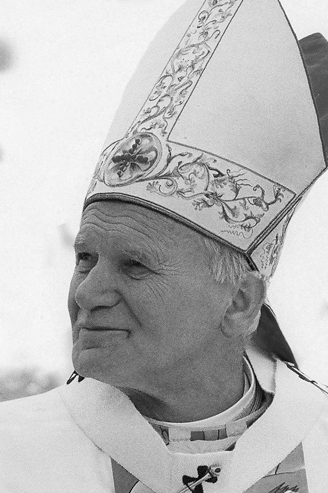
Pope Saint John Paul II’s First Good Friday Homily
ADDRESS OF HIS HOLINESS JOHN PAUL II AT THE CONCLUSION OF THE STATIONS OF THE CROSS AT THE COLOSSEUM Good Friday, 13 April 1979 When we make the Way of the Cross from one station to the next, in spirit we are always at the spot wherethis journey had its “historical” place: where it[…]Continue reading→
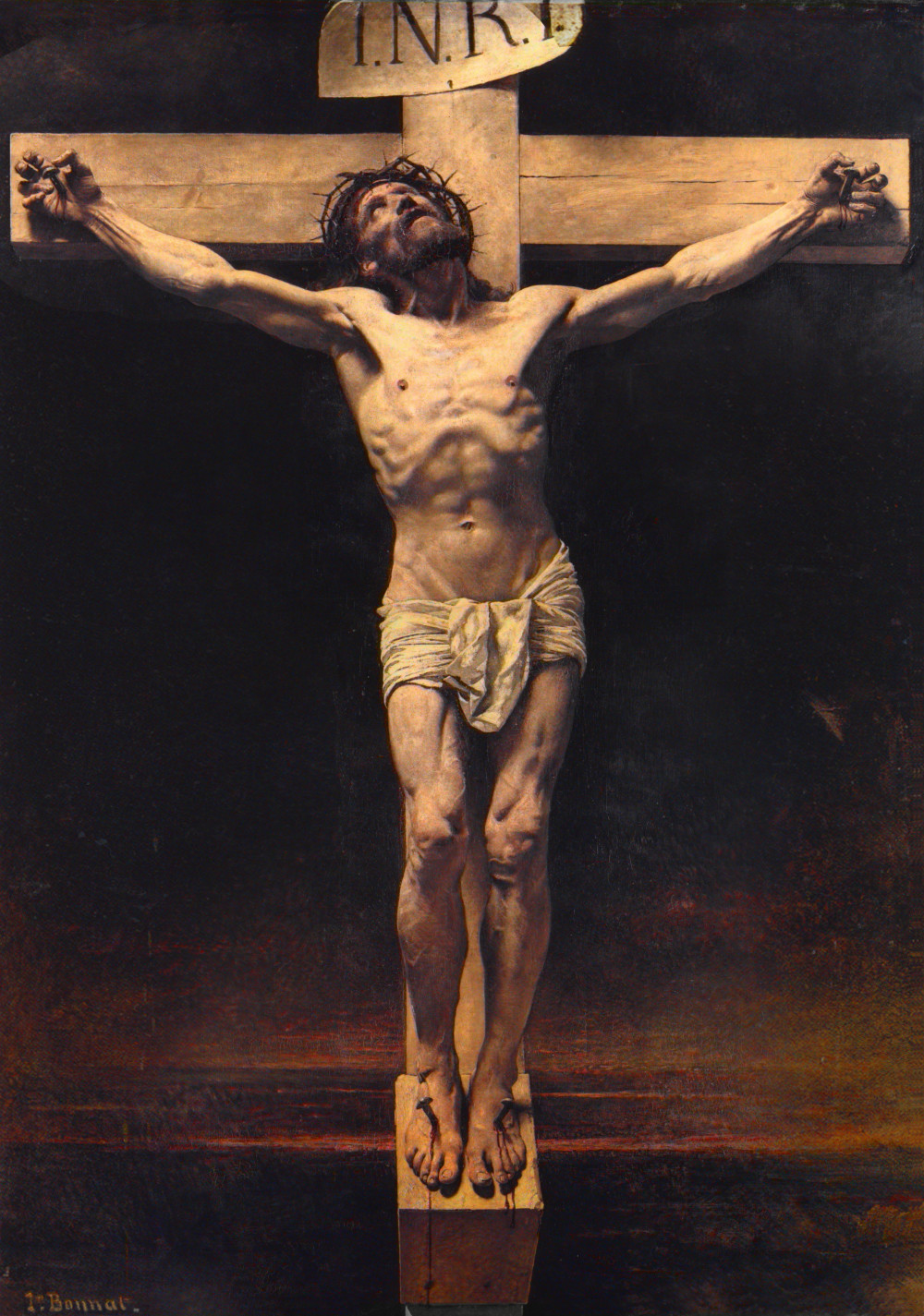
A Meditation for Good Friday: How To Undo the Effects of Sin?
Cardinal Newman, now Saint John Henry Newman, was a towering figure of nineteenth-century Catholicism who is almost universally admired. I say “almost” because not everyone likes him. I knew a priest once, Arthur Caulkins, who has become disenchanted with Newman. As an undergraduate Arthur had been enamoured of Newman, and this interest continued when he[…]Continue reading→
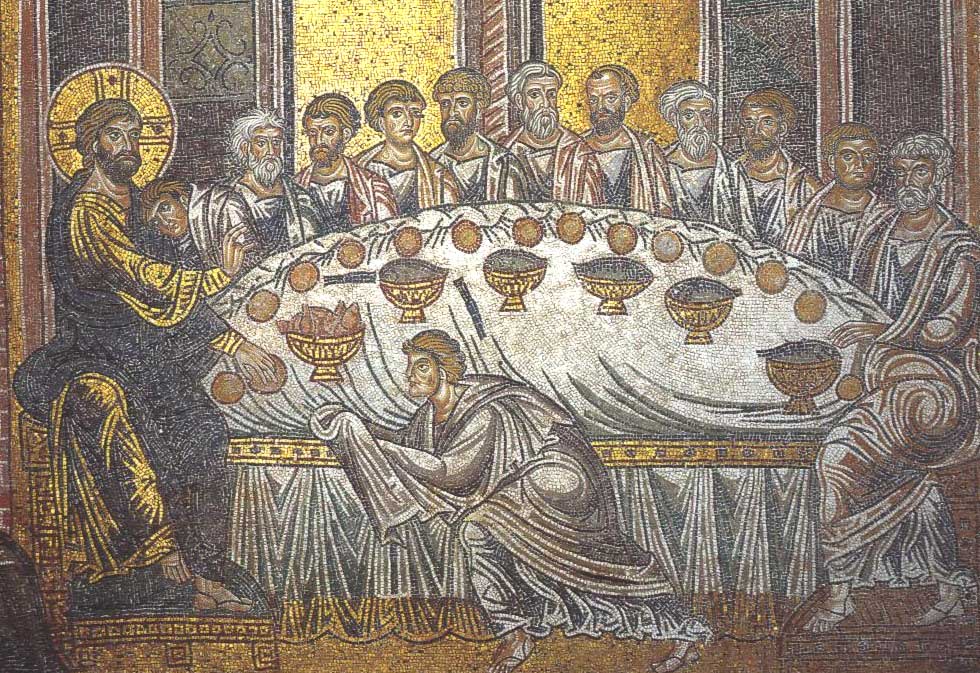
Pope Benedict’s Last Holy Thursday Homily
MASS OF THE LORD’S SUPPER HOMILY OF HIS HOLINESS BENEDICT XVI Basilica of St John Lateran Holy Thursday, 5 April 2012 Photo Gallery (Video) Dear Brothers and Sisters! Holy Thursday is not only the day of the institution of the Most Holy Eucharist, whose splendour bathes all else and in some ways draws it to[…]Continue reading→