
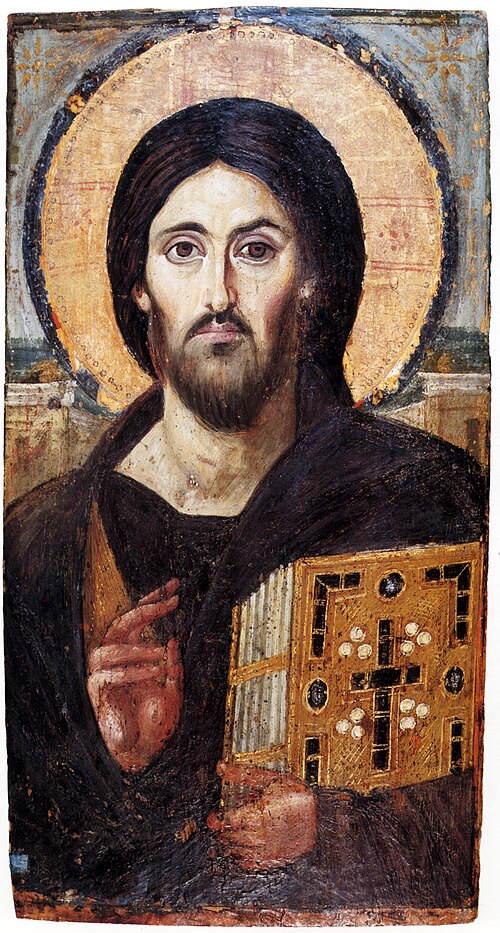
How Byzantine Spirituality Speaks to the Contemporary West
Western culture is marked by a strange double-bind. It is interminably fast-moving yet restless, hyper-connected and yet crushingly lonely, materially comfortable and at the same time spiritually exhausted. The endless abundance of our technological age has given us everything imaginable under the sun, except peace of mind. Into this post-modern landscape, the ancient specter of Byzantine spirituality offers not just theological insights into the Christian past, or aesthetic liturgical forms drawn deep from the familiar past, but an anthropological vision of the human person that speaks with directness to the West’s contemporary spiritual hunger. Far from being a relic of a distant Christian East, it provides a vivacious therapeutic anthropology: a way of healing the human heart in an age fractured by self-adsorption and social fragmentation.
Since the birth of modernity in the 16th century, Western culture often defines the ‘self’ as an autonomous individual whose freedom lies in a state of total self-determination. Nowhere is this more present than in the mind of Americans who harbor a permanent and unalterable optimism, as well as the belief in a sense of unlimited personal agency. While this anthropology has been the catalyst for so much creativity and achievement in modernity, it has also deepened our communal alienation. If the individual can do all things by force of their own will, what need do they have of others? And for that matter, what need do they have for God? The result of this belief is a quasi-schizoid presumption of that state of the world, wherein people experience themselves as isolated monads competing with one another, or perhaps in the era of social media, performing for one another.
Byzantine Christianity begins from the opposite anthropological premise: the human being is fundamentally relational. Man is not called to engage in some trendy réchauffé of self-definition, or to buttress our own egoism with a seemingly endless parade of pride and psychic inflation. Personhood is discovered not by constructing the self, but by entering into communion with others in the assembly we call the church, as well as in communion with God. The contemporary West’s epidemic of loneliness, anxiety, and self-absorption can be read as a symptom of forgetting this fundamental relational vocation. This precept is particularly apparent in Eastern monastic writers, who consistently emphasize this relational anthropology in the life of the church. Famously, St. Dorotheus of Gaza writes that if we wish to draw near to God, we must also draw near to one another: “Imagine that the world is a circle, and God is at the center. The closer we come to God, the closer we draw to one another.” (Conference VI) This is a profound inversion, or counter-vision, to the contemporary understanding that spiritual life is a private, interior quest, detached from the public sphere. For the Byzantine tradition, the path to God is inherently communal, and this communion is the antidote to the poison of post-modern alienation.
In the late 1960’s, the British Orientalist Alan Watts remarked that “psychology is quickly becoming the religion of the West”, and in the corresponding half century this has proved largely prophetic. Our spiritual distress has been largely medicinalized, and given a heavily reductionist explanation in an effort to negate it. If the West often treats spiritual problems as psychological ones, Byzantine spirituality approaches psychological disturbances at their spiritual root. It is refreshingly honest about the interior fragmentation that afflicts all people, ancient or modern. The Eastern Fathers diagnose this disintegration through the concept of “the passions”, disordered energies of the soul that have turned away from God and inward upon the ego. St. Maximus the Confessor describes the passions as: “the irrational movements of the soul against nature.” (Centuries on Charity 1.1) This should not be interpreted to mean emotions are themselves evil or disordered. Rather, the passions are emotions that are severed from communion with God. They are barriers to our proper vision of the world and ourselves, and ultimately irrational in nature, manifesting as anger, anxiety, compulsion, envy, and despair. The church fathers understood that healing requires not suppression, but the internal transformation of the whole person and the mastering of these passions. Central to the art of this kind of healing is the idea of ‘nepsis’ (vigilance). Where the rationale of our contemporary culture oscillates between hyper-stimulation and frantic escapism, the Byzantine tradition calls for a studied watchfulness: a disciplined attention to one’s own heart. It requires what some later psychoanalysts have called the emergence of an ‘observing ego’, the act of continual self-observation that is witness to the mind’s thoughts and actions. St. Hesychios expands upon this idea, saying: “Be still and know yourself. Attend to your thoughts, and you will see them overcome by the name of Jesus.” (On Watchfulness 72) The intention here is clear, personal control cannot be had through self-definition, but through direct observation of what we already are. If we know ourselves, and truly know ourselves at that, then we will understand our motives, our thoughts and feelings, and be more conscientious of our actions, which in turn is the birth of self-control. The life of prayer is intended to mimic this. The oft-repeated Jesus Prayer, “Lord Jesus Christ, Son of God, have mercy on me,” is not a mantra, but a method of inner healing. It trains our attention away from fragmentation and conceit of the self, back toward God. In an age of constant distraction, this simple prayer becomes the proverbial “treasure hidden in a field” (Matt. 13:44).
Fundamental to this therapeutic process is the cultivation of virtue, especially those of humility, patience, and charity. We must consider Aristotle’s pedagogical directive that ‘people become what they do habitually’. The regular practice of virtue must be more than a moral accomplishment in this sense; it must be a simple act of discipline. The ancient Fathers themselves insist on this, stating that the spiritual life is ultimately an organic one, and not mechanical. We must strive to make the force of virtue in us automatic, through regular conscientious practice. St. Isaac the Syrian, the famed Assyrian father, compares the heart to a garden, saying: “The soul that has found peace in humility is like a garden full of greenery, for the Spirit of God rests within it.” (Homily 34) Such images resonate deeply with modern readers who sense that their own interior world has become barren and overgrown by the clutter of post-modernity. Byzantine spirituality meets this natural longing not with moralism, or the brow-beating that sometimes accompanies it, but with a gentle, ascetical path toward healing.
Finally, a defining feature of the Byzantine tradition is its distinctively sacramental worldview, the belief that all reality is permeated with the divine presence of an ever-present, ever-loving God. The contemporary West, by contrast, suffers from what the Canadian philosopher Charles Taylor called the “disenchanted world”. That is to say, matter is viewed as inert, meaning must be constructed, and the experience of transcendence is often treated exclusively as a private psychological experience rather than an ontological truth. The Byzantine East wholly refuses this dichotomy. The material universe, the creatures who populate it, human life and civilization, and even time itself, all are capable of bearing divine grace. St. Gregory Palamas emphasizes that God’s energies penetrate the whole of creation: “The divine energy is everywhere and in everything, although God’s essence remains transcendent.” (Triads 3.2.24) This sacramental realism finds its most powerful expression in the art of the Byzantine Divine Liturgy. Western Christians often experience worship as a symbolic remembrance of Christ’s death and sacrifice. But the Byzantine liturgy presents a different paradigm: the liturgy is not solely an act of commemoration but participation in numinous realities. As the Cherubic Hymn proclaims, we “mystically represent the Cherubim” and join the angelic liturgy.

Remembering Father Alphonse de Valk
(Today marks the sixth anniversary of the death of Father Alphonse de Valk, C.S.B., a faithful, courageous and indefatigable Basilian priest, pro-life-and-family apostle, and the founder of Catholic Insight magazine. Here is what we wrote those on his entering into eternity five years ago, as we continue to remember him in our prayers and thoughts)[…]Continue reading→

Divine Mercy Sunday – An Echo of Every Mass
Reach out your hand and put it in my side. Do not doubt but believe’… ‘My Lord and my God!’ (Jn. 20:18)). Today is Divine Mercy Sunday, and as we celebrate the end of the Easter Octave, we contemplate the wounded side of our Saviour, the Church’s source of life. On Good Friday in the[…]Continue reading→

Saint Stanislaus of Szczepanów
We celebrate Saint Stanislaus today (+ April 11, 1079), in light of this Easter Octave, a bishop and martyr who accepted the episcopacy only at the direct order of Pope Alexander II. He proved a wise and courageous leader of his flock, put to death by his own king, Boleslaus, for rebuking the monarch’s ‘immoral[…]Continue reading→
First Holy Communion: Sermon from May 16, 1943
Here is a sermon from the good old days by +Rev. Msgr. Vincent Nicholas Foy (August 14, 1915 – March 13, 2017), from 1943. Readers may recall that Pope Saint Pius X, by the decree Quam Singulari in 1910, lowered the customary age of reception of Holy Communion – after the rigours of the plague[…]Continue reading→
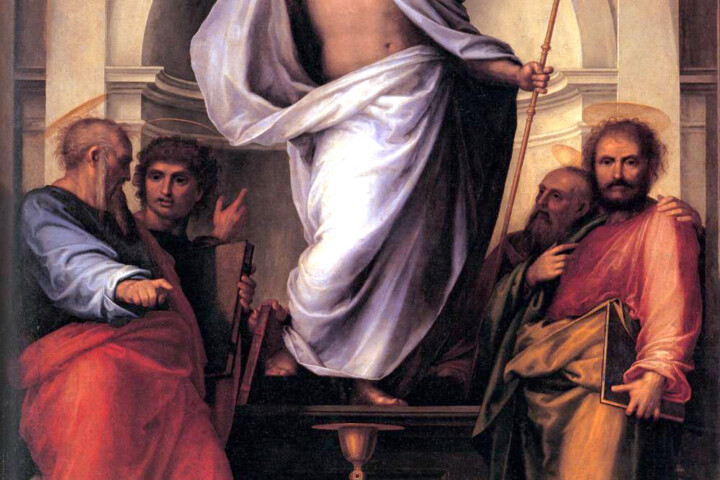
In the Glorious Light of Easter, Alleluia!
Set your minds on things that are above, not on things that are on earth, for you have died, and your life is hidden with Christ in God. When Christ who is your life is revealed, then you also will be revealed with him in glory (Col. 3:3-4). The Resurrection of Our Lord and Saviour[…]Continue reading→
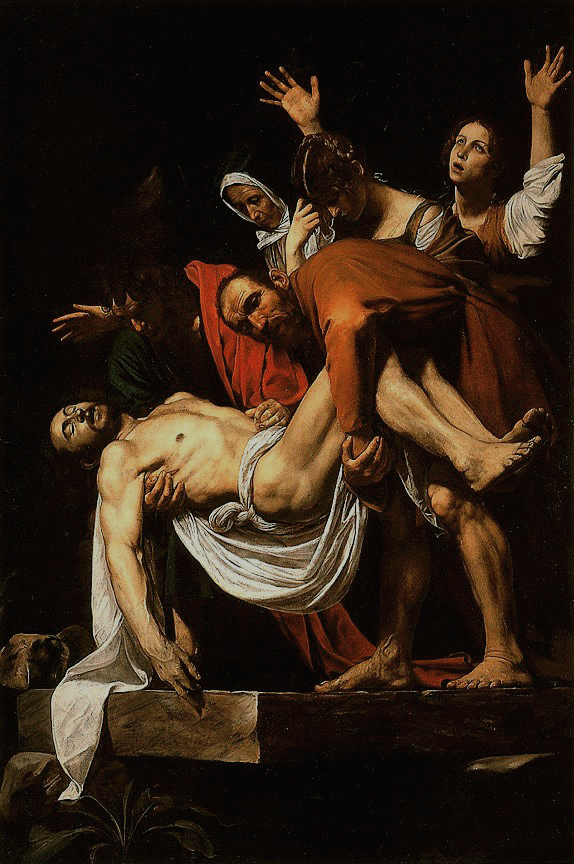
An Ancient Homily for Holy Saturday
The time between Good Friday and Easter Sunday is one of waiting, in silence, as the world wonders – anticipates – what will happen, after the death of Christ. We re-live this time each year in the anamnesis of our liturgy, and in turn look forward to the glorious re-creation of all things at the[…]Continue reading→
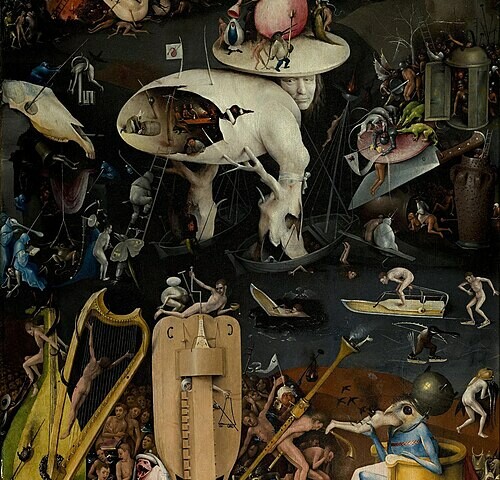
Europe’s Long Descent
(As we meditate on this day on Christ’s burial, and His descent into hell, it is fitting to ponder here with contributor Peter Marcus how the world seems to be heading there as well. The difference is that, although God cannot ‘redeem’ hell, nor those therein, He can and did redeem the world. There is[…]Continue reading→
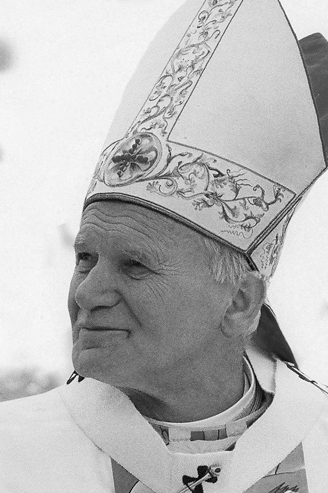
Pope Saint John Paul II’s First Good Friday Homily
ADDRESS OF HIS HOLINESS JOHN PAUL II AT THE CONCLUSION OF THE STATIONS OF THE CROSS AT THE COLOSSEUM Good Friday, 13 April 1979 When we make the Way of the Cross from one station to the next, in spirit we are always at the spot wherethis journey had its “historical” place: where it[…]Continue reading→
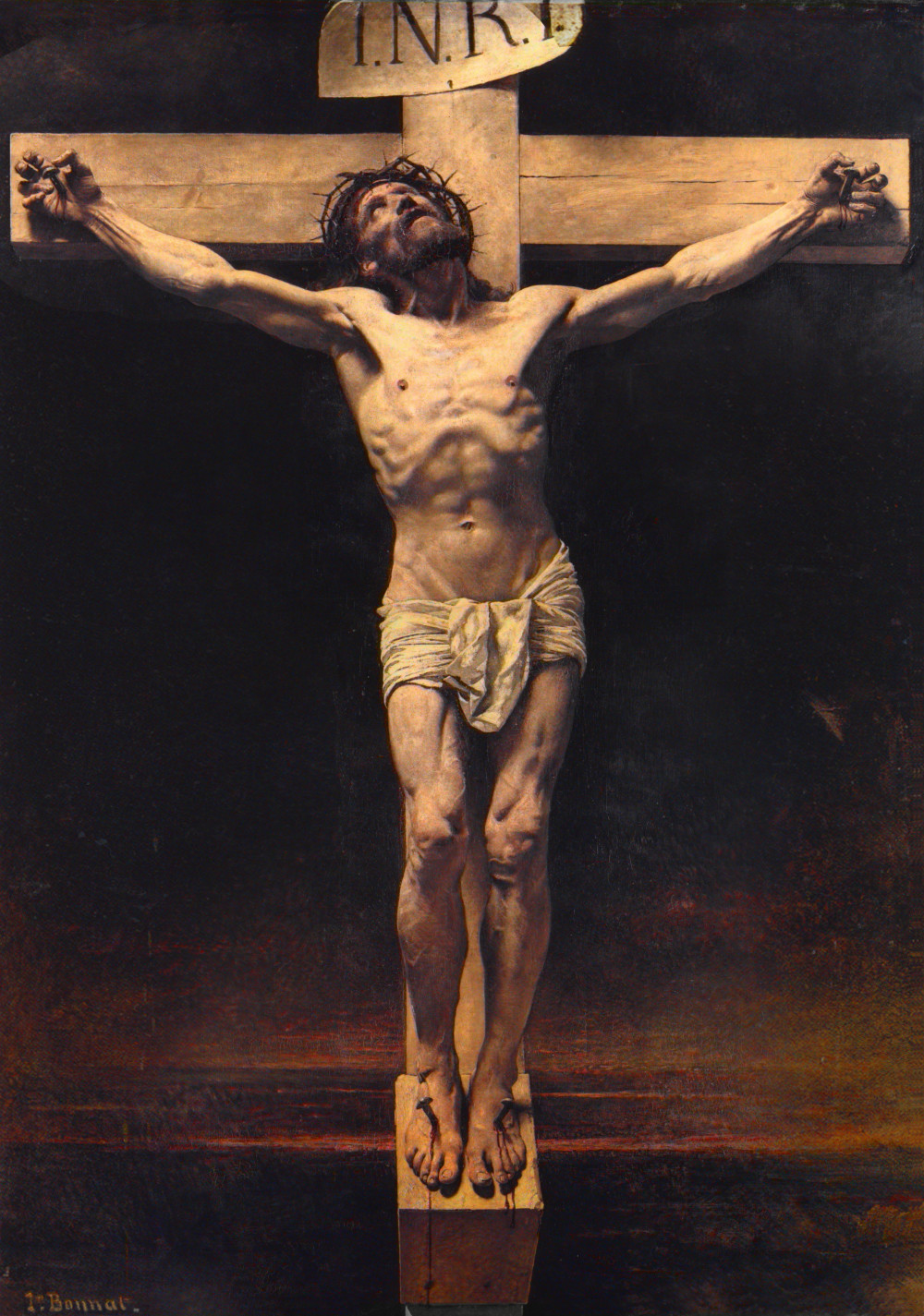
A Meditation for Good Friday: How To Undo the Effects of Sin?
Cardinal Newman, now Saint John Henry Newman, was a towering figure of nineteenth-century Catholicism who is almost universally admired. I say “almost” because not everyone likes him. I knew a priest once, Arthur Caulkins, who has become disenchanted with Newman. As an undergraduate Arthur had been enamoured of Newman, and this interest continued when he[…]Continue reading→
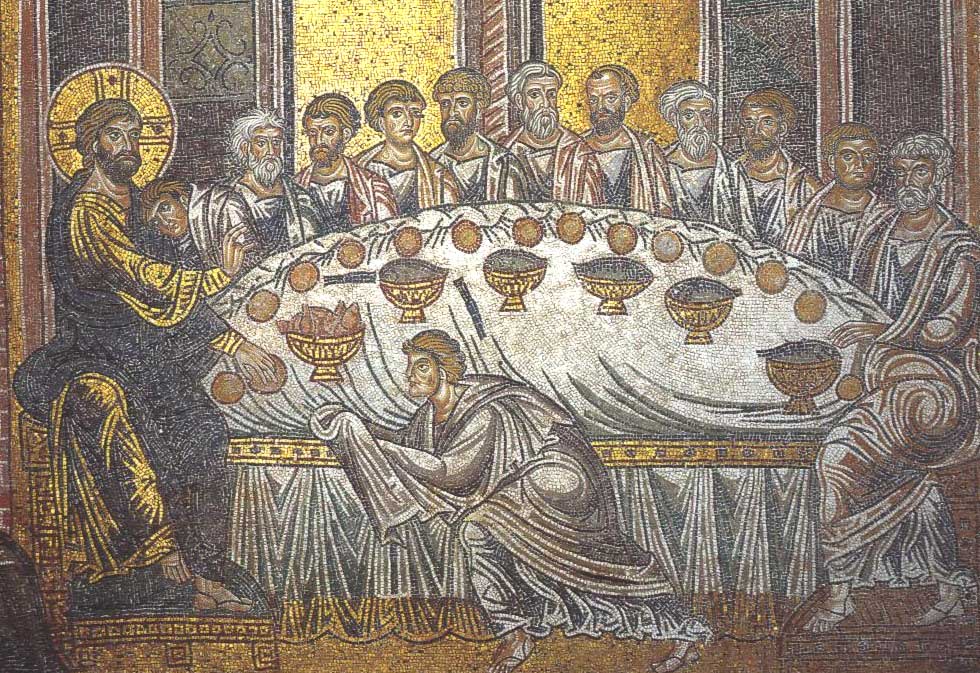
Pope Benedict’s Last Holy Thursday Homily
MASS OF THE LORD’S SUPPER HOMILY OF HIS HOLINESS BENEDICT XVI Basilica of St John Lateran Holy Thursday, 5 April 2012 Photo Gallery (Video) Dear Brothers and Sisters! Holy Thursday is not only the day of the institution of the Most Holy Eucharist, whose splendour bathes all else and in some ways draws it to[…]Continue reading→