
Forgiveness, Not Mockery, Reveals the True Measure of a Soul
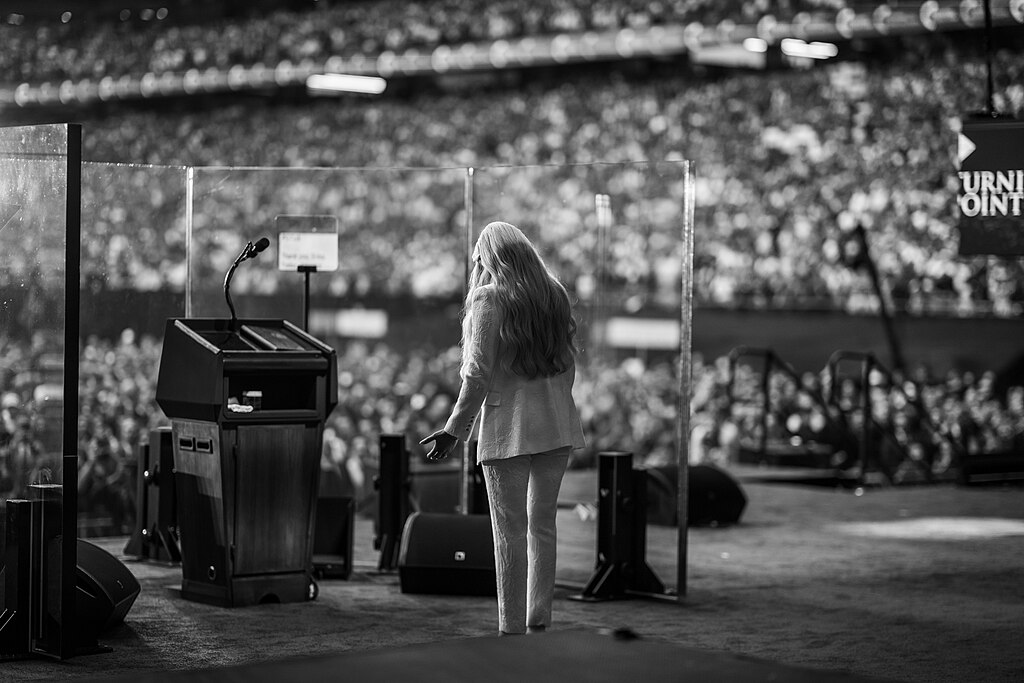
When Erika Kirk stepped up to the microphone to speak about Charlie, the mood was nothing like a staged tribute. You could witness her tremendous suffering and authenticity. Every word was marked by the love she had for him and by the faith they shared, a faith that turned even her grief into testimony.
She reminded everyone of Charlie’s favourite verse: “Here I am, Lord. Send me” (Isaiah 6:8). He didn’t just quote those words. He lived them. Charlie gave himself to defending truth, to preaching the Gospel, and to lifting up others. Saying yes to God wasn’t just a slogan for him. It was what ultimately would define his whole life, including his untimely death. His life exemplified Blaise Pascal’s observation that the true essence of humanity lies not in transient distractions but in eternity. Charlie bore witness to this, something that our world is resistant to.
After his assassination, some tried to twist the meaning of the moment, as though Christian fidelity and contempt for God’s truth could be placed on equal footing. Erika’s testimony, along with the witness of the wider Church, makes plain that such comparisons collapse under their own weight.
If ever there was a moment when American Christians might have erupted in violence, this was it. A beloved and outspoken defender of the faith was executed in broad daylight. Yet no mobs filled the streets. No buildings burned. No gunshots cracked through the night. What we saw instead was prayer. The packed stadium was a testament to the glory of God and the indomitable spirit of humanity. At the center stood a widow who, rather than demanding vengeance, extended forgiveness to her husband’s killer. That choice alone shows the difference. There is no ambiguity between these two responses. Let us be explicitly clear: there is no moral equivalence.
The world must wrestle with this contrast. Where cynics expected violence and chaos, Christians turned to God in prayer. Erika chose forgiveness, echoing Christ’s words on the cross: “Father, forgive them, for they know not what they do.” By contrast, late-night television reduced Charlie’s murder to a punchline. Jimmy Kimmel, who had once applauded Tucker Carlson’s removal from Fox and even endured a brief suspension from ABC, mocked the tragedy on air. That is not courage but cowardice. It unmasks an profound spiritual poverty that distracts itself with ridicule, choosing momentary diversion over the weight of sorrow and truth.
The truth has to be spoken without hesitation. The political left has no counterpart to what Charlie represented. There is no figure in its ranks whose death could stir hearts toward repentance and hope, drive people back to prayer, or spark revival in the way his did. In fact, what we have seen is quite the opposite. Stadiums were packed, millions prayed, and long-closed Bibles were opened again. That kind of response was not born from celebrity status but from conviction, not from self-promotion but from a life rooted in Christ. His passing cut so deeply because his entire mission pointed beyond himself.
Perhaps Erika’s strongest words came when she said: “I forgive him because it was what Christ did and is what Charlie would do. The answer to hate is not hate. The answer we know from the Gospel is love and always love.”
Forgiveness may appear weak to the world, but it is in fact the strongest act a Christian can offer. It stands in stark contrast to the endless cycles of vengeance that dominate our culture.
Charlie Kirk’s life, as Erika described it, was a miracle. His death has become a turning point. His memory now confronts us with a choice.
One path leads to prayer, forgiveness, family, and Christ. The other leads to sneering, mockery, chaos, debauchery, the celebration of tragedy, and ultimately hell.
There is no moral equivalence between the two. The only question is which road we will take.

Remembering Father Alphonse de Valk
(Today marks the sixth anniversary of the death of Father Alphonse de Valk, C.S.B., a faithful, courageous and indefatigable Basilian priest, pro-life-and-family apostle, and the founder of Catholic Insight magazine. Here is what we wrote those on his entering into eternity five years ago, as we continue to remember him in our prayers and thoughts)[…]Continue reading→

Divine Mercy Sunday – An Echo of Every Mass
Reach out your hand and put it in my side. Do not doubt but believe’… ‘My Lord and my God!’ (Jn. 20:18)). Today is Divine Mercy Sunday, and as we celebrate the end of the Easter Octave, we contemplate the wounded side of our Saviour, the Church’s source of life. On Good Friday in the[…]Continue reading→

Saint Stanislaus of Szczepanów
We celebrate Saint Stanislaus today (+ April 11, 1079), in light of this Easter Octave, a bishop and martyr who accepted the episcopacy only at the direct order of Pope Alexander II. He proved a wise and courageous leader of his flock, put to death by his own king, Boleslaus, for rebuking the monarch’s ‘immoral[…]Continue reading→
First Holy Communion: Sermon from May 16, 1943
Here is a sermon from the good old days by +Rev. Msgr. Vincent Nicholas Foy (August 14, 1915 – March 13, 2017), from 1943. Readers may recall that Pope Saint Pius X, by the decree Quam Singulari in 1910, lowered the customary age of reception of Holy Communion – after the rigours of the plague[…]Continue reading→

In the Glorious Light of Easter, Alleluia!
Set your minds on things that are above, not on things that are on earth, for you have died, and your life is hidden with Christ in God. When Christ who is your life is revealed, then you also will be revealed with him in glory (Col. 3:3-4). The Resurrection of Our Lord and Saviour[…]Continue reading→

An Ancient Homily for Holy Saturday
The time between Good Friday and Easter Sunday is one of waiting, in silence, as the world wonders – anticipates – what will happen, after the death of Christ. We re-live this time each year in the anamnesis of our liturgy, and in turn look forward to the glorious re-creation of all things at the[…]Continue reading→
Europe’s Long Descent
(As we meditate on this day on Christ’s burial, and His descent into hell, it is fitting to ponder here with contributor Peter Marcus how the world seems to be heading there as well. The difference is that, although God cannot ‘redeem’ hell, nor those therein, He can and did redeem the world. There is[…]Continue reading→
Pope Saint John Paul II’s First Good Friday Homily
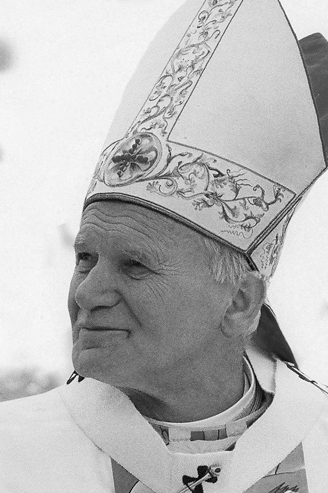
ADDRESS OF HIS HOLINESS JOHN PAUL II AT THE CONCLUSION OF THE STATIONS OF THE CROSS AT THE COLOSSEUM Good Friday, 13 April 1979 When we make the Way of the Cross from one station to the next, in spirit we are always at the spot wherethis journey had its “historical” place: where it[…]Continue reading→
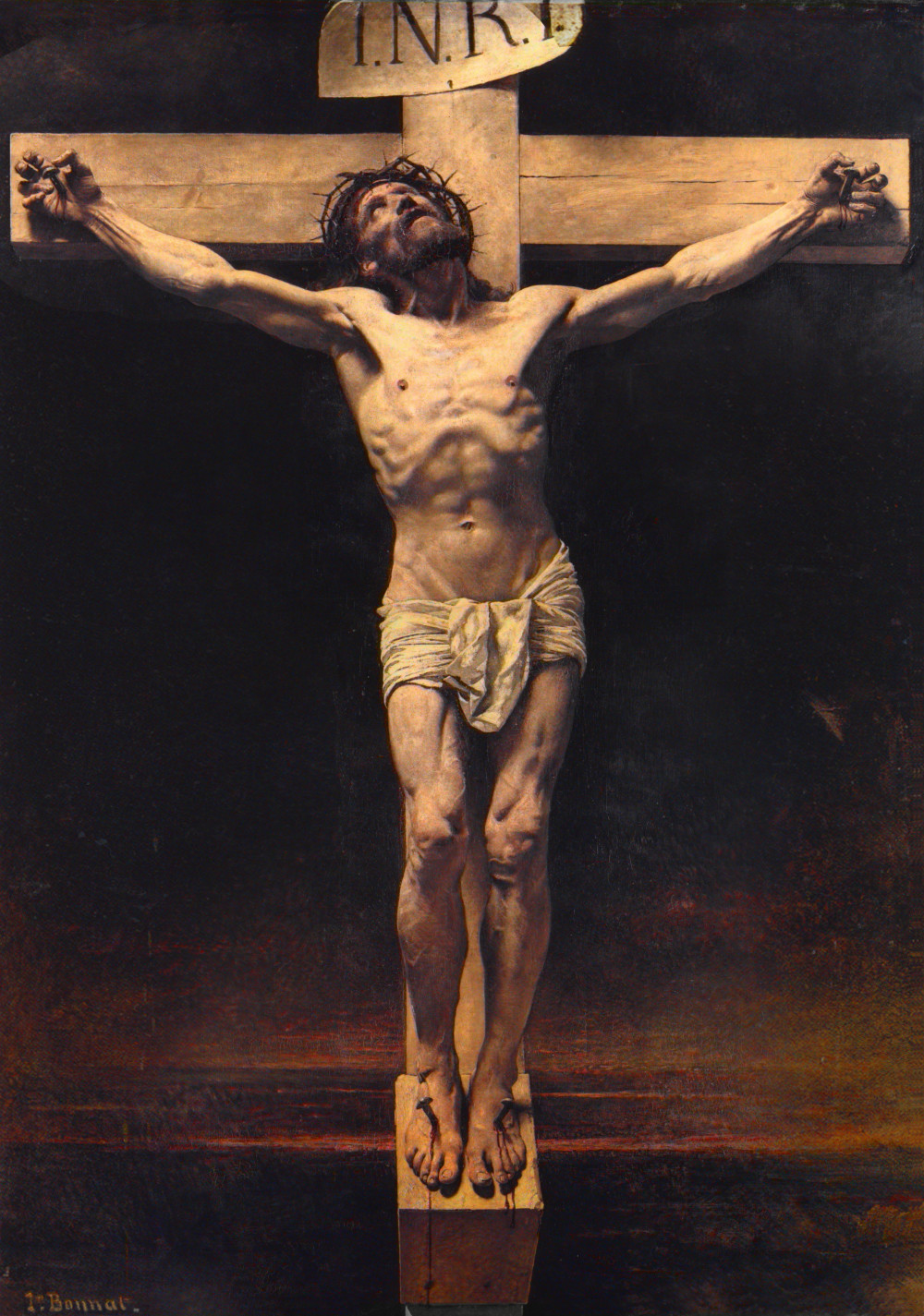
A Meditation for Good Friday: How To Undo the Effects of Sin?
Cardinal Newman, now Saint John Henry Newman, was a towering figure of nineteenth-century Catholicism who is almost universally admired. I say “almost” because not everyone likes him. I knew a priest once, Arthur Caulkins, who has become disenchanted with Newman. As an undergraduate Arthur had been enamoured of Newman, and this interest continued when he[…]Continue reading→
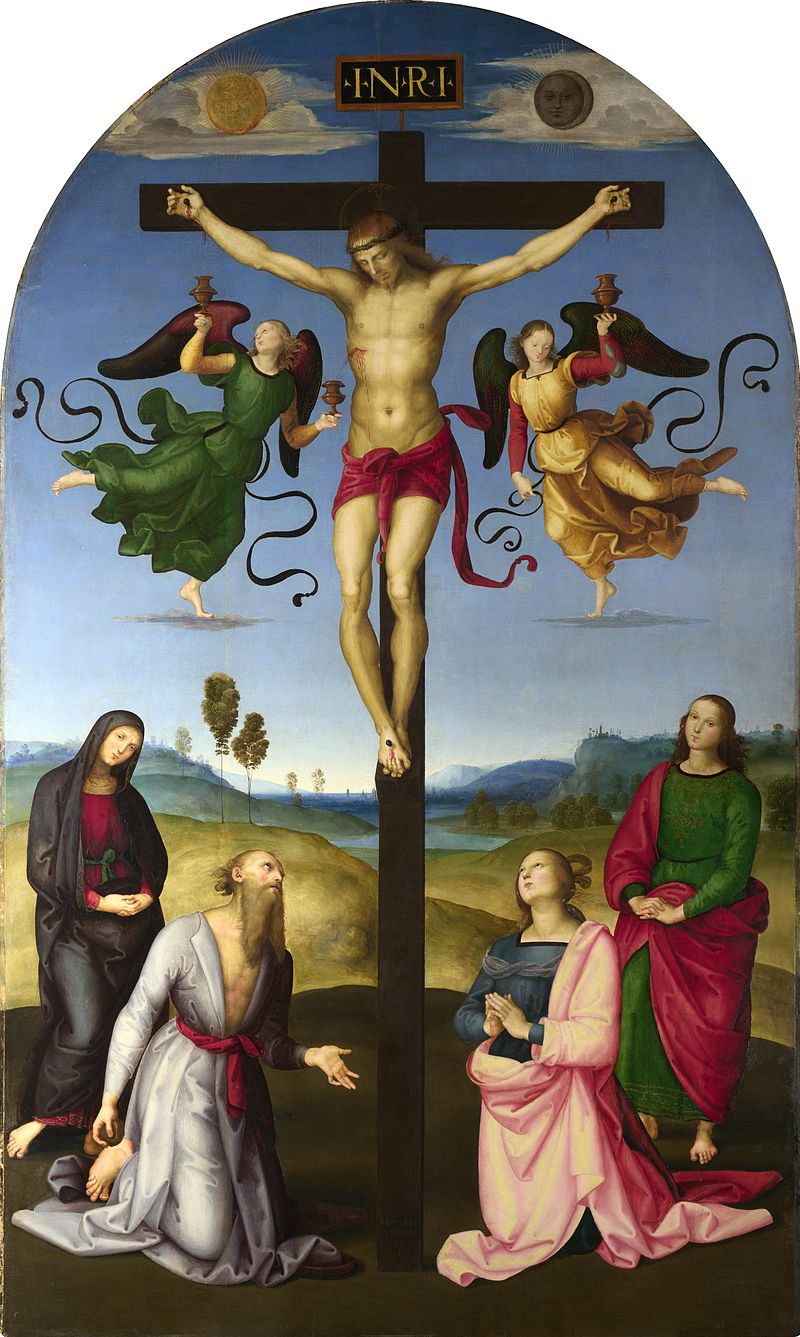
Pope Saint John Paul II’s Last Passion Sunday
(This is the last of Pope Saint John Paul II’s Passion-Palm Sunday homilies, given in 2004, before his own passion and death the following year, when he was unable – for the first time – to celebrate Mass on this Holy Day. Yet he worked in the Lord’s vineyard right up until the end, having[…]Continue reading→