
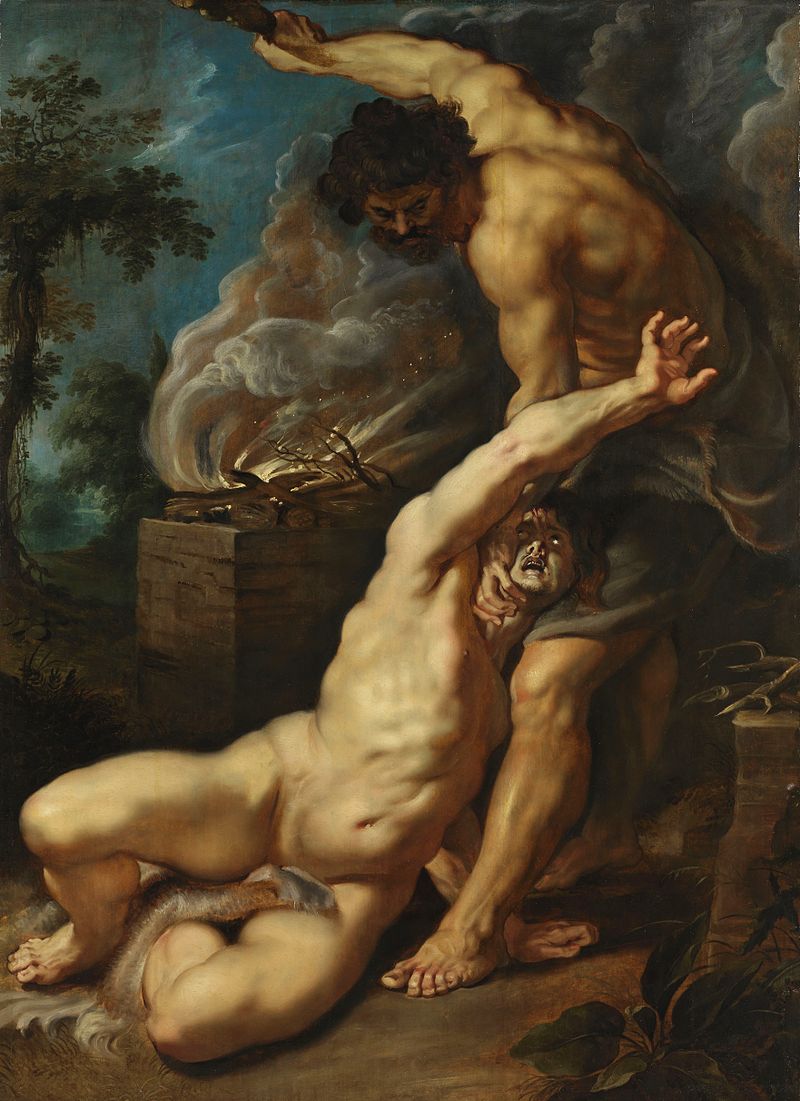
Fate, Determinism and Free Will
“All theory is against free will; all experience for it.” Samuel Johnson
In the normal course of our lives we assume we are able to choose between thoughts or actions that are right or wrong. Determinism (fatalism) is the philosophical conviction that such choice is not possible. Advocates of psychological determinism insist that a previous thought or action determines each thought or action that follows it. All thoughts and actions are not subject to our control, though we are under the illusion that they are.
But if they are not under our control, then there is no reason to believe that any one set of thoughts or actions by one person are to be regarded as superior to any other set of thoughts or actions by any other person. Absent real freedom to choose, there is no way to look at human nature other than to see each of us as a collection of atoms and molecules helplessly bumping against each other for no purpose or reason but that they have to bump against each other.
Such a position is directly contrary to what we have been taught at the start of Genesis. God made it abundantly clear: Adam and Eve were given a choice about eating the fruit of a certain tree, and they were told the consequences of their choice. God did not force them to eat from that tree. The serpent did not force them to eat. Nor did natural hunger force them to eat. They freely chose to disobey, and they freely chose to face the consequences.
In the same manner, people who commit crimes against the state are accounted to be responsible and punished accordingly for choosing to engage in criminal acts. But with psychological determinism, no one is responsible for anything because people only react like robots to positive or negative stimuli. Should we shut down the courts, close the prisons, and open more mental hospitals to “fix” people whose behavior we want (choose) to change?
Some ethical determinists believe that the only way to change a person’s behaviour is to change his environment. This is called behavioral psychology. It is a far cry from the Catholic way of dealing with sin. As G. K. Chesterton put it: “The determinist does not believe he is appealing to will, but he does believe in changing environment. He must not say to the sinner, ‘Go and sin no more,’ because he cannot help it. But he can put him in boiling oil; for boiling oil is an environment.” If anyone believes that merely changing environment is the key to making people behave better, such movies as “Lord of the Flies” and “Clockwork Orange” would best show them the kind of boiling oil a changed environment can get you into.
On the level of common sense it is especially difficult to believe that determinism trumps free will. There is hardly anyone in the world who does not sense, at any given moment, that in the matter of ethics he can choose freely between two possible courses of action: virtue or vice. We simply feel that we are free. Even when our actions are regrettable, we feel honest regret because we know we could have acted differently than we did. The logic of determinism, then, is self-devouring and resembles the image of a snake swallowing its own tail.
God made clear to Adam and Eve that the choice was theirs to eat or not to eat from the forbidden tree. A second time in Genesis 4:3-7 God makes the existence of free will abundantly clear:
“In the course of time Cain brought an offering to the LORD from the fruit of the ground, while Abel, for his part, brought the fatty portion of the firstlings of his flock. The LORD looked with favour on Abel and his offering, but on Cain and his offering he did not look with favor. So Cain was very angry and dejected. Then the LORD said to Cain: Why are you angry? Why are you dejected? If you act rightly, you will be accepted; but if not, sin lies in wait at the door: its urge is for you, yet you can rule over it.”
But Cain chose not to rule over the temptation to murder. After killing his brother in a fit of jealous rage, history would record that he had consciously chosen to commit the first human homicide.
Quel dommage! Les humains peuvent être si stupides.

Saint Kateri , Canada’s Protectress
This was the title given to Saint Kateri Tekakwitha, by Pope Benedict XVI, when he canonized her on October 28th, 2012, along with six others, in Saint Peter’ Square (she had been beatified by Pope John Paul II back in 1980). With Saint Joseph as our protector, along with the Canadian martyrs, we seem to[…]Continue reading→

Remembering Father Alphonse de Valk
(Today marks the sixth anniversary of the death of Father Alphonse de Valk, C.S.B., a faithful, courageous and indefatigable Basilian priest, pro-life-and-family apostle, and the founder of Catholic Insight magazine. Here is what we wrote those on his entering into eternity five years ago, as we continue to remember him in our prayers and thoughts)[…]Continue reading→

My Name is Bernadette
April 16th is a propitious day, for besides the anniversary of Father de Valk’s death, who founded Catholic Insight in its print form decades ago, and the commemoration of the ‘two Benedicts’, mentioned in accompanying posts, today we also recall Saint Bernadette Soubirous, the young visionary to whom the Virgin Mary appeared numerous times at[…]Continue reading→

Canonizing Sister Faustina and Divine Mercy
HOMILY OF THE HOLY FATHER MASS IN ST PETER’S SQUARE FOR THE CANONIZATION OF SR MARY FAUSTINA KOWALSKA Sunday, 30 April 2000 1. “Confitemini Domino quoniam bonus, quoniam in saeculum misericordia eius”; “Give thanks to the Lord for he is good; his steadfast love endures for ever” (Ps 118: 1). So the Church sings on the Octave of[…]Continue reading→

Divine Mercy Sunday – An Echo of Every Mass
Reach out your hand and put it in my side. Do not doubt but believe’… ‘My Lord and my God!’ (Jn. 20:18)). Today is Divine Mercy Sunday, and as we celebrate the end of the Easter Octave, we contemplate the wounded side of our Saviour, the Church’s source of life. On Good Friday in the[…]Continue reading→

Saint Stanislaus of Szczepanów
We celebrate Saint Stanislaus today (+ April 11, 1079), in light of this Easter Octave, a bishop and martyr who accepted the episcopacy only at the direct order of Pope Alexander II. He proved a wise and courageous leader of his flock, put to death by his own king, Boleslaus, for rebuking the monarch’s ‘immoral[…]Continue reading→
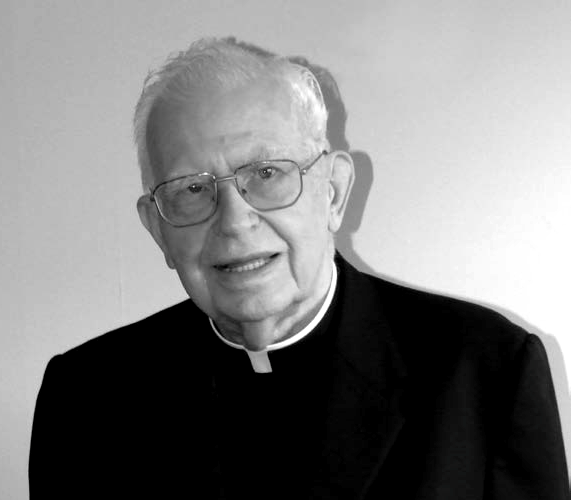
First Holy Communion: Sermon from May 16, 1943
Here is a sermon from the good old days by +Rev. Msgr. Vincent Nicholas Foy (August 14, 1915 – March 13, 2017), from 1943. Readers may recall that Pope Saint Pius X, by the decree Quam Singulari in 1910, lowered the customary age of reception of Holy Communion – after the rigours of the plague[…]Continue reading→
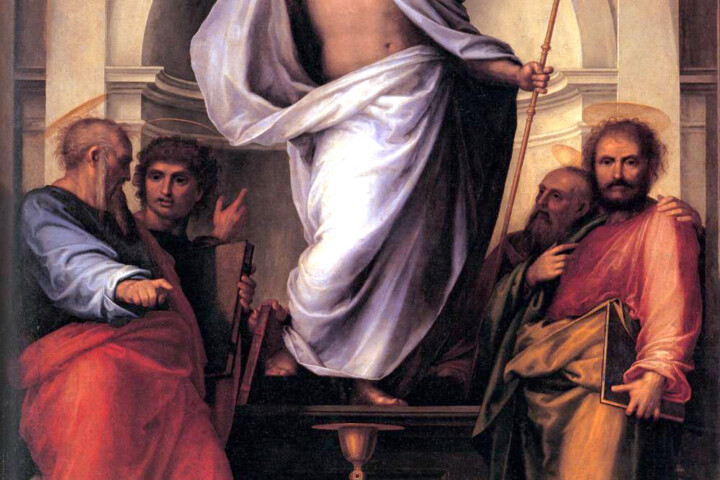
In the Glorious Light of Easter, Alleluia!
Set your minds on things that are above, not on things that are on earth, for you have died, and your life is hidden with Christ in God. When Christ who is your life is revealed, then you also will be revealed with him in glory (Col. 3:3-4). The Resurrection of Our Lord and Saviour[…]Continue reading→
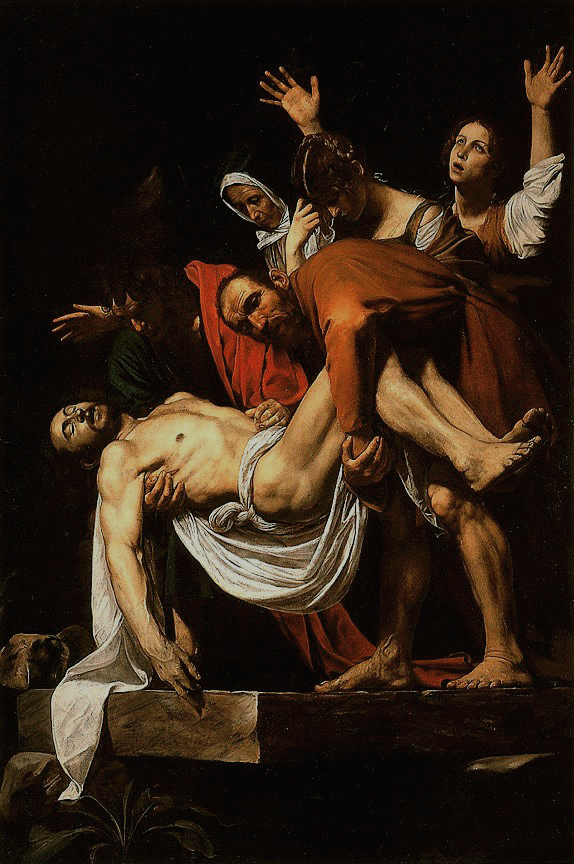
An Ancient Homily for Holy Saturday
The time between Good Friday and Easter Sunday is one of waiting, in silence, as the world wonders – anticipates – what will happen, after the death of Christ. We re-live this time each year in the anamnesis of our liturgy, and in turn look forward to the glorious re-creation of all things at the[…]Continue reading→
Europe’s Long Descent
(As we meditate on this day on Christ’s burial, and His descent into hell, it is fitting to ponder here with contributor Peter Marcus how the world seems to be heading there as well. The difference is that, although God cannot ‘redeem’ hell, nor those therein, He can and did redeem the world. There is[…]Continue reading→