
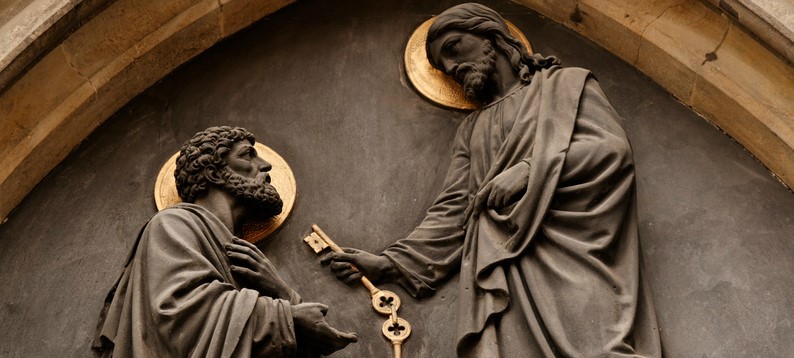
Why is There a Pope?
“I pray that you will be one as I and the Father are one.” John 17:21
A Protestant friend of mine once asked why Catholics need a pope since a pope is not even mentioned in the Gospels. But there are few Catholic doctrines more provable from Scripture than the doctrine of papal succession from St. Peter to Leo XIV.
No one can make the case that Jesus did not give a special mission to the apostle Peter. In John 1:42 Jesus said, “You are Simon the son of John; you will be called Cephas (which is translated Peter).” Cephas in Aramaic mean Rock. Again in Matthew 16:18 Jesus said, “I say to you: That you are Peter; and upon this rock I will build my church, and the gates of hell shall not prevail against it.” Throughout the Gospels Peter is represented as the one often with Jesus, the one Jesus most often praised for his strengths and chastised for his weaknesses. The Gospel of Mark was most likely based upon the account of Jesus’s life, death and resurrection as reported to Mark by Peter when they were both in Rome during the great persecution and not long before the executions of Peter and Paul.
At the Council of Jerusalem, reported by Luke in Acts 15, the subject of requiring circumcision for the Gentiles was brought up. Paul argues against the requirement, but the matter is settled by Peter who says: “My brothers, you are well aware that from early days God made me his choice among you that through my mouth the Gentiles would hear the word of the gospel and believe.” Now the ‘Gentiles’ (non-Jews) would mean the whole world. After Peter speaks, the whole assembly falls silent for a while, and then discussion resumes on other matters. Deference is clearly given to Peter as the ultimate authority in matters of doctrine for all Christians, as the following early Fathers testified.
Tertullian: “Was anything withheld from the knowledge of Peter, who is called ‘the rock on which the Church would be built’ [Matt. 16:18] with the power of ‘loosing and binding in heaven and on earth’ [Matt. 16:19]?” (Demurrer Against the Heretics [A.D. 200]).
Origen: “Look at [Peter], the great foundation of the Church, that most solid of rocks, upon whom Christ built the Church [Matt. 16:18]. (Homilies on Exodus 5:4 [A.D. 248]).
Ambrose of Milan: “[Christ] made answer: ‘You are Peter, and upon this rock will I build my Church. . . . ’ Could he not, then, strengthen the faith of the man to whom, acting on his own authority, he gave the kingdom, whom he called the rock, thereby declaring him to be the foundation of the Church [Matt. 16:18]?” (The Faith 4:5 [A.D. 379]).
Cyprian of Carthage: “Indeed, the others were that also which Peter was [i.e., apostles], but a primacy is given to Peter, whereby it is made clear that there is but one Church and one chair. . . . If someone does not hold fast to this unity of Peter, can he imagine that he still holds the faith? If he [should] desert the chair of Peter upon whom the Church was built, can he still be confident that he is in the Church?” (The Unity of the Catholic Church 4; 1st edition [A.D. 251]).
Jerome: “‘But,’ you [Jovinian] will say, ‘it was on Peter that the Church was founded’ [Matt. 16:18]. Well . . . one among the twelve is chosen to be their head in order to remove any occasion for division” (Against Jovinian 1:26 [A.D. 393]).
Augustine: “If the very order of episcopal succession is to be considered, how much more surely, truly, and safely do we number them [the bishops of Rome] from Peter himself, to whom, as to one representing the whole Church, the Lord said, ‘Upon this rock I will build my Church, and the gates of hell shall not conquer it.’” Letters 53:1:2 (A.D. 412)
That Peter was a flawed man there can be no doubt. That some of his successors were deeply flawed is also true. None of them, however, could commit a more horrible sin than he who knew Christ in person and then denied three times that he knew him. It is as if Christ saw into the future and wanted us to learn from the frailties of Peter, that while the rock would never be smashed, large splinters of it might fall away into the dust. Yet Christ in His wisdom makes Peter the rock upon which the Church will be built, a rock that Christ promised would be indestructible, as it is to this day.
When Jesus gave to Saint Peter the keys to the kingdom, it was for the purpose of assuring that this one apostle could have had no more important task than to feed the sheep, keep them together, and protect them from the wolves that seek to devour.
The successors of Peter have been a motley parade of Roman bishops, some nobly and valiantly performing their duties, others morally corrupt beyond belief. But what can be said with conviction is that the principle of Catholic unity Jesus prayed for has been sustained through twenty centuries. The papacy is the ancient and venerable office by which that unity has been achieved. No other institution in the world so formally founded with “keys to the kingdom” has lasted so long.
Francis’ papacy, whatever his personal virtue, had a deleterious effect on Catholic unity. Upon being elected a pope, he said he would make a mess, and he did. The cardinals who elected him pope possibly did not know he would be as disruptive as he was, denouncing ‘conservative’ Catholics while smiling upon and elevating ‘liberal’ ones. He clearly set upon a path of creating a majority college of cardinals that might elect a successor who may have instantiated greater disunity. Of the 133 princes eligible to elect the next pope, 108 were made electors by Francis.
That was the dilemma as the cardinals gathered in Rome to elect a new pope. Would they reinforce and validate the legacy of Pope Francis, thus risking another and greater scattering of the flock? Would they this time deliberately elect a pope who would transform the Church beyond what was imaginable just a dozen years ago? Would Christendom break up into many quarreling sects, just as Luther made possible by founding Protestantism when he broke so violently with the great traditions of the Church?
Surprise! That did not happen. The Holy Spirit – we may hope – prevailed. The least likely thing happened. An American was elected pope. He took the name Leo XIV. Auspicious to say the least, since the last Leo, who reigned 1878-1903, was a pope admired by conservatives and liberals alike. The principle of unity that Christ fervently prayed for was insured by the last Leo, who liked and promoted very much the works of Thomas Aquinas We may hope and pray that unity will be restored fourfold by the present Leo as we celebrate this year the 800th birthday of Thomas Aquinas.
Deo gratias.

Saint Kateri , Canada’s Protectress
This was the title given to Saint Kateri Tekakwitha, by Pope Benedict XVI, when he canonized her on October 28th, 2012, along with six others, in Saint Peter’ Square (she had been beatified by Pope John Paul II back in 1980). With Saint Joseph as our protector, along with the Canadian martyrs, we seem to[…]Continue reading→

Remembering Father Alphonse de Valk
(Today marks the sixth anniversary of the death of Father Alphonse de Valk, C.S.B., a faithful, courageous and indefatigable Basilian priest, pro-life-and-family apostle, and the founder of Catholic Insight magazine. Here is what we wrote those on his entering into eternity five years ago, as we continue to remember him in our prayers and thoughts)[…]Continue reading→

My Name is Bernadette
April 16th is a propitious day, for besides the anniversary of Father de Valk’s death, who founded Catholic Insight in its print form decades ago, and the commemoration of the ‘two Benedicts’, mentioned in accompanying posts, today we also recall Saint Bernadette Soubirous, the young visionary to whom the Virgin Mary appeared numerous times at[…]Continue reading→
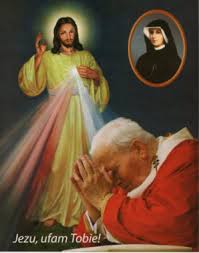
Canonizing Sister Faustina and Divine Mercy
HOMILY OF THE HOLY FATHER MASS IN ST PETER’S SQUARE FOR THE CANONIZATION OF SR MARY FAUSTINA KOWALSKA Sunday, 30 April 2000 1. “Confitemini Domino quoniam bonus, quoniam in saeculum misericordia eius”; “Give thanks to the Lord for he is good; his steadfast love endures for ever” (Ps 118: 1). So the Church sings on the Octave of[…]Continue reading→

Divine Mercy Sunday – An Echo of Every Mass
Reach out your hand and put it in my side. Do not doubt but believe’… ‘My Lord and my God!’ (Jn. 20:18)). Today is Divine Mercy Sunday, and as we celebrate the end of the Easter Octave, we contemplate the wounded side of our Saviour, the Church’s source of life. On Good Friday in the[…]Continue reading→

Saint Stanislaus of Szczepanów
We celebrate Saint Stanislaus today (+ April 11, 1079), in light of this Easter Octave, a bishop and martyr who accepted the episcopacy only at the direct order of Pope Alexander II. He proved a wise and courageous leader of his flock, put to death by his own king, Boleslaus, for rebuking the monarch’s ‘immoral[…]Continue reading→
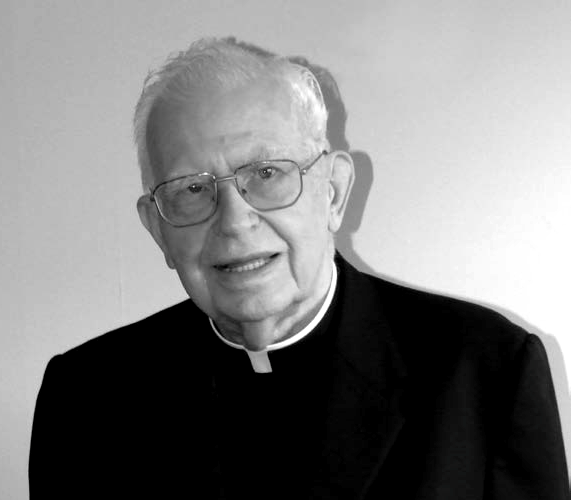
First Holy Communion: Sermon from May 16, 1943
Here is a sermon from the good old days by +Rev. Msgr. Vincent Nicholas Foy (August 14, 1915 – March 13, 2017), from 1943. Readers may recall that Pope Saint Pius X, by the decree Quam Singulari in 1910, lowered the customary age of reception of Holy Communion – after the rigours of the plague[…]Continue reading→
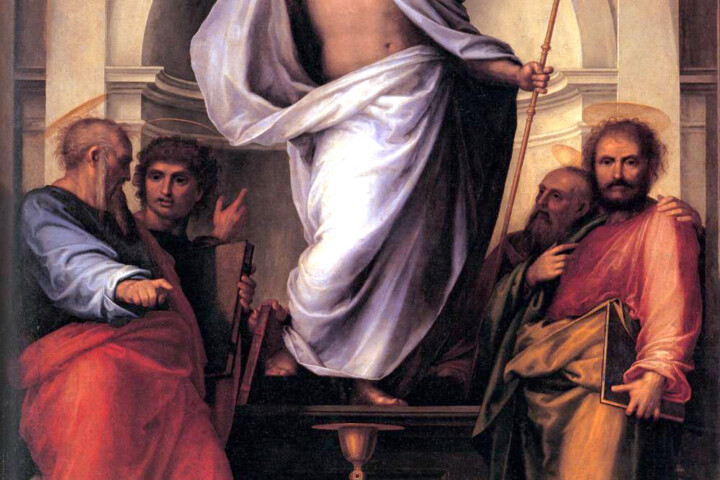
In the Glorious Light of Easter, Alleluia!
Set your minds on things that are above, not on things that are on earth, for you have died, and your life is hidden with Christ in God. When Christ who is your life is revealed, then you also will be revealed with him in glory (Col. 3:3-4). The Resurrection of Our Lord and Saviour[…]Continue reading→
An Ancient Homily for Holy Saturday
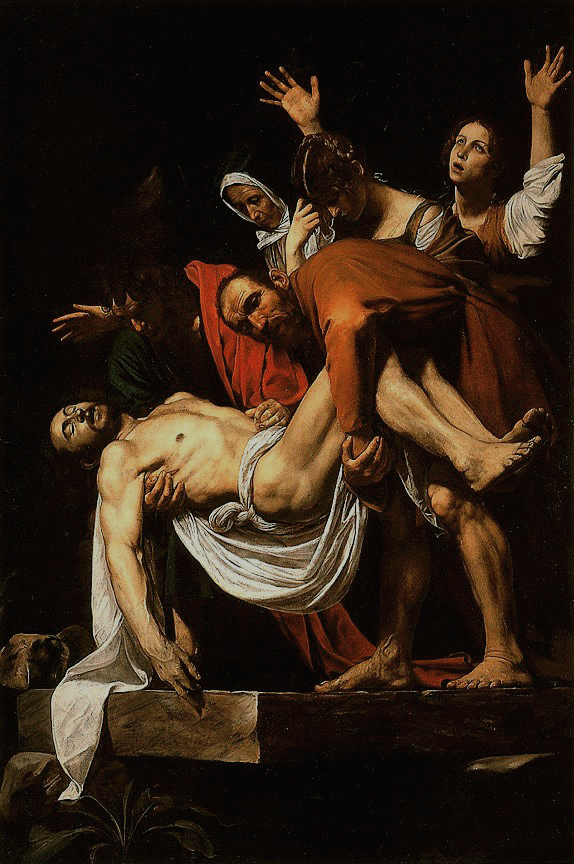
The time between Good Friday and Easter Sunday is one of waiting, in silence, as the world wonders – anticipates – what will happen, after the death of Christ. We re-live this time each year in the anamnesis of our liturgy, and in turn look forward to the glorious re-creation of all things at the[…]Continue reading→
Europe’s Long Descent
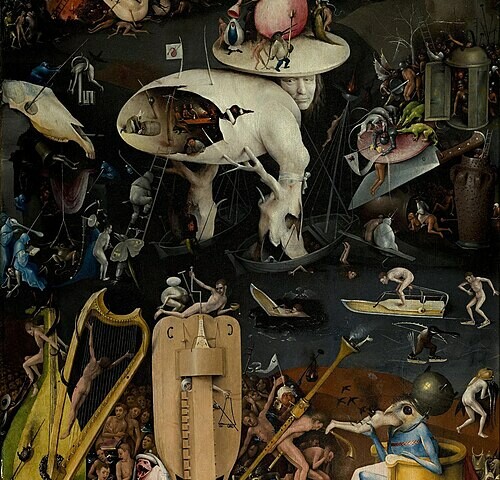
(As we meditate on this day on Christ’s burial, and His descent into hell, it is fitting to ponder here with contributor Peter Marcus how the world seems to be heading there as well. The difference is that, although God cannot ‘redeem’ hell, nor those therein, He can and did redeem the world. There is[…]Continue reading→