
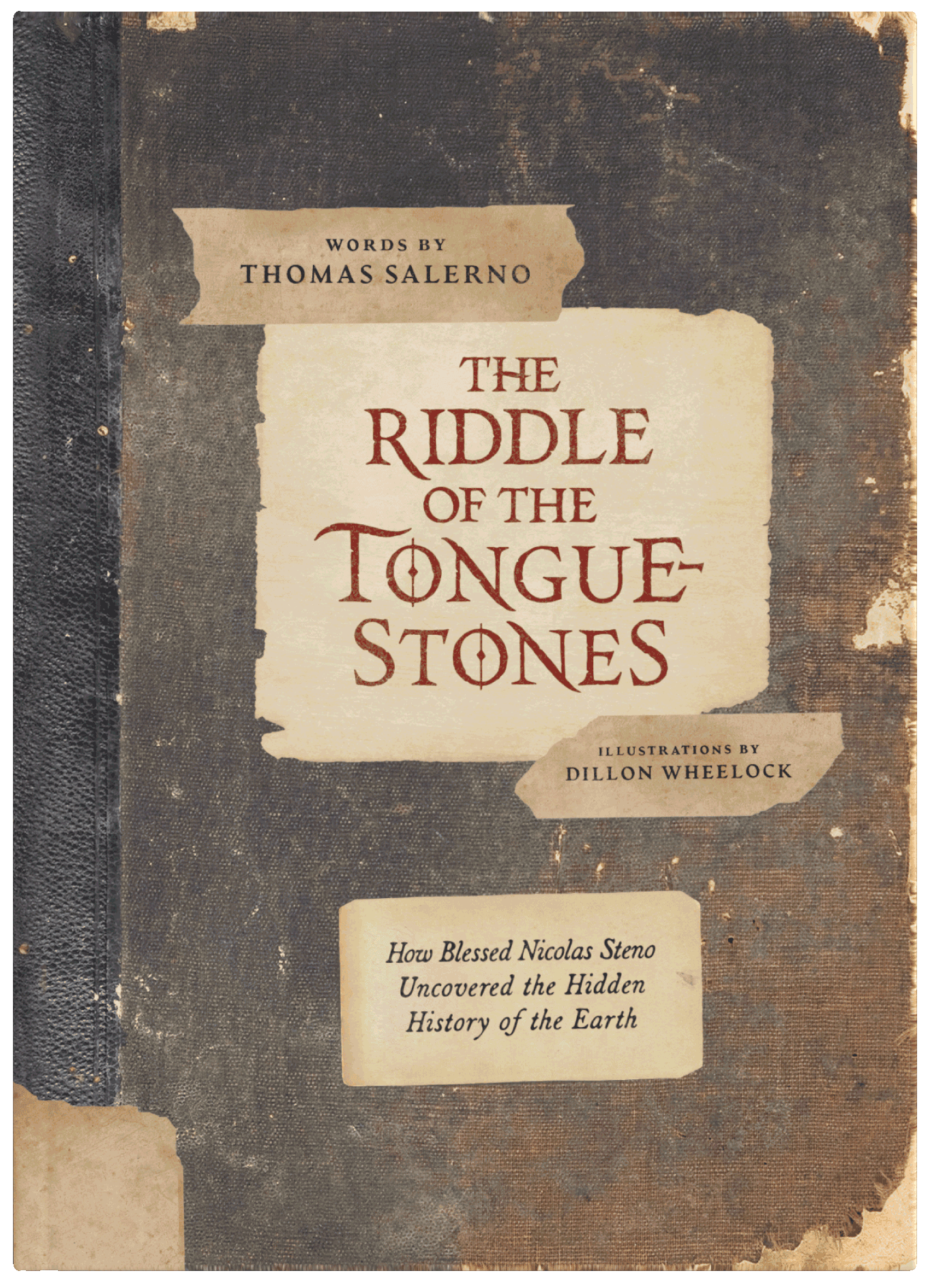
The Riddle of the Tongues: A Review
The Riddle of the Tongue Stones: How Blessed Nicolas Steno Uncovered the Hidden History of the Earth – Thomas Salerno (2024), Word on Fire Votive
While many of us might appreciate the impact that Catholics have had on the history of science or the intrinsic common goal that faith and science have in seeking the truth, not many of us get to experience it on the professional level. In place of this, we have the powerful, personal stories of those scientists who lives and work have made marks in the world and the Church. Blessed Nicolas Steno, whose life and work is uncovered in The Riddle of the Tongue-Stones by Thomas Salerno. Besides going into the conversion and life of this Saint, Salerno also uses his own professional background in paleontology as a way to teach the reader some interesting details about geology and fossils.
Nicolas Steno (1638 -1686) was not only a Christian and a scientist, which would make him interesting and applicable enough for a book-length profile, but he is also a convert to Catholicism, a bishop and a saint. Salerno is able to make this book an interesting and engaging overview of Steno’s life without becoming overly preachy or polemical. Like so many conflicts facing the world today, the agreement of faith and science as found in the person of Nicolas Steno should be an area where Catholics and non-Catholic Christians can find unity, even if the principles that underlie that agreement ultimately point one to the Church founded by Christ.
Not often is there a short, detailed yet readable work that brings these two elements together in an interesting and engaging way. The book, though written in an easy-to-read narrative style, gives the appearance of a scientist’s notebook and is replete with sketches and jots in the margins to give the reader an immersive experience like that of Steno. The illustrations are not the most engrossing, but that is actually part of the intentional charm of the book, as they are meant to resemble the sketchings of a scientist in the field. There are large open spaces in the pages as well that become almost invitations for the reader to make his or her own additions in the margin as if they were a scientist themselves working on a discovery. Another helpful addition to the work is the glossary at the end that will be useful for both young readers and parents as they encounter new scientific vocabulary in addition to the story. This section could actually have been expanded further to provide a more extensive treatment of exposure to scientific vocabulary, but that may just be the teacher in me that wants this.
A critique I have is a small, stylistic one that relates to the text boxes that adorn various pages in the book. In order to make them stand-out and give a more authentic feeling, they are written in a cursive font that is difficult to read. I believe the intention was to give the impression they were handwritten notes by a scientist, but the difficulty did detract slightly from the reading experience.
This is a book that is just as easily read aloud to a child, read through by oneself or picked up and leafed through to find missing details not originally noticed. Like any other area of theology, the relationship between faith and science, which is continually being brought to the forefront of the cultural conversation, must itself become incarnational. It is in scientists and Saints like Blessed Nicolas Steno, authors like Thomas Salerno, and books like The Riddle of the Tongue-Stones where the reality of this relationship can.

Remembering Father Alphonse de Valk
(Today marks the sixth anniversary of the death of Father Alphonse de Valk, C.S.B., a faithful, courageous and indefatigable Basilian priest, pro-life-and-family apostle, and the founder of Catholic Insight magazine. Here is what we wrote those on his entering into eternity five years ago, as we continue to remember him in our prayers and thoughts)[…]Continue reading→

Divine Mercy Sunday – An Echo of Every Mass
Reach out your hand and put it in my side. Do not doubt but believe’… ‘My Lord and my God!’ (Jn. 20:18)). Today is Divine Mercy Sunday, and as we celebrate the end of the Easter Octave, we contemplate the wounded side of our Saviour, the Church’s source of life. On Good Friday in the[…]Continue reading→

In the Glorious Light of Easter, Alleluia!
Set your minds on things that are above, not on things that are on earth, for you have died, and your life is hidden with Christ in God. When Christ who is your life is revealed, then you also will be revealed with him in glory (Col. 3:3-4). The Resurrection of Our Lord and Saviour[…]Continue reading→

An Ancient Homily for Holy Saturday
The time between Good Friday and Easter Sunday is one of waiting, in silence, as the world wonders – anticipates – what will happen, after the death of Christ. We re-live this time each year in the anamnesis of our liturgy, and in turn look forward to the glorious re-creation of all things at the[…]Continue reading→
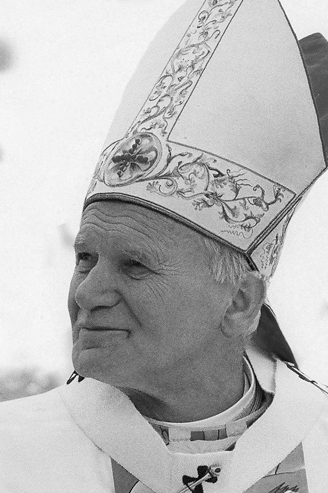
Pope Saint John Paul II’s First Good Friday Homily
ADDRESS OF HIS HOLINESS JOHN PAUL II AT THE CONCLUSION OF THE STATIONS OF THE CROSS AT THE COLOSSEUM Good Friday, 13 April 1979 When we make the Way of the Cross from one station to the next, in spirit we are always at the spot wherethis journey had its “historical” place: where it[…]Continue reading→
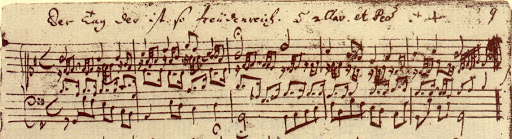
Allegri’s Miserere and Mozart’s Memory
On this Good Friday, a fitting help to our devotion is Allegri’s Miserere, his unsurpassed musical setting of Psalm 51, recited in Lauds (Morning Prayer) every Friday. Composed around 1638, under the patronage of Pope Urban VIII- the same one who battled Galileo – the sublime piece was performed only on certain occasions in the[…]Continue reading→
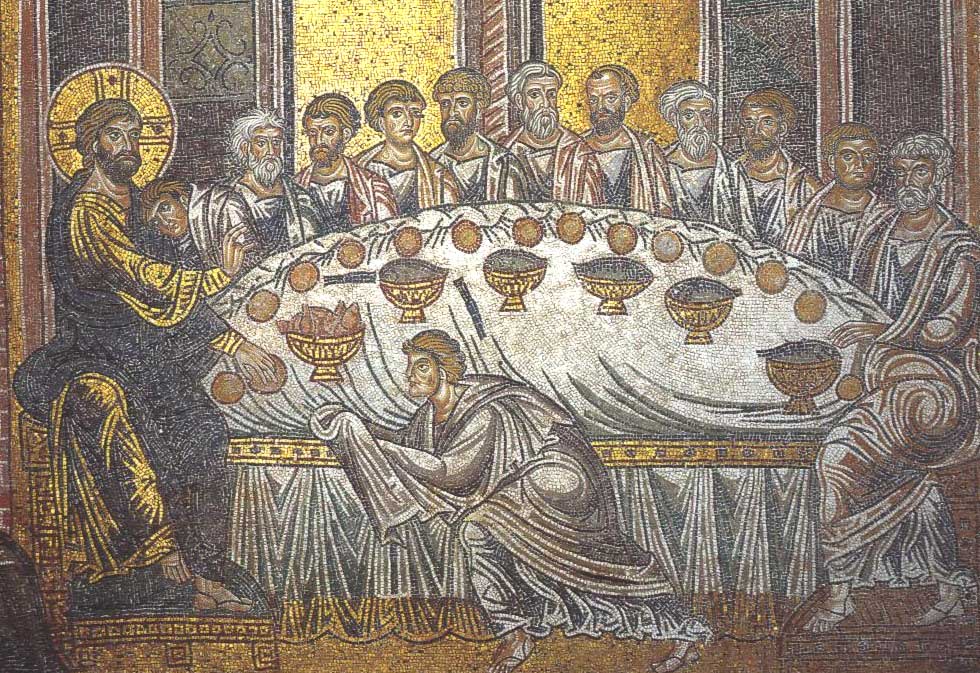
Pope Benedict’s Last Holy Thursday Homily
MASS OF THE LORD’S SUPPER HOMILY OF HIS HOLINESS BENEDICT XVI Basilica of St John Lateran Holy Thursday, 5 April 2012 Photo Gallery (Video) Dear Brothers and Sisters! Holy Thursday is not only the day of the institution of the Most Holy Eucharist, whose splendour bathes all else and in some ways draws it to[…]Continue reading→
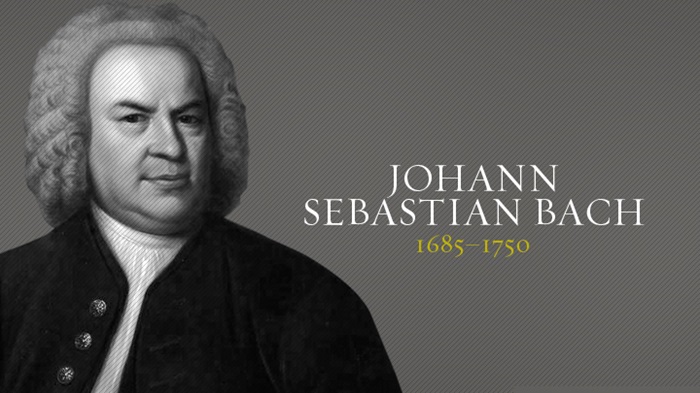
The Two Passions of J.S. Bach
As we enter in Holy Week, it is fitting to suggest some solemn music to fit the season, here the two settings of the ‘Passion’ put to music by Johann Sebastian Bach. According to sources, Bach wrote five ‘Passions’, orchestral chorales based on the final days in the life of Christ, but only two have[…]Continue reading→
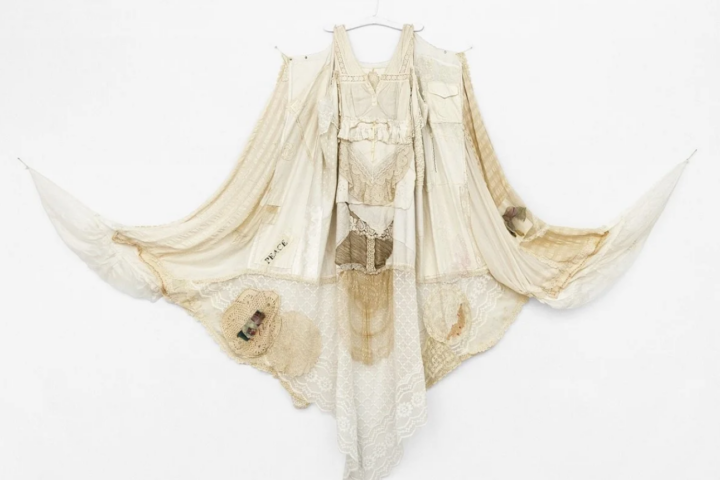
Fabric of Resurrection and Redemption: The Gown of Stillness
Editor’s note: this reflection was originally posted by the Catholic Artist Connection. The mission of the Catholic Artist Connection is to connect and support Catholic artists of all disciplines both professionally and spiritually, to ease the loneliness of being a Catholic artist and encourage the creation of art for Christ. People look at the same[…]Continue reading→
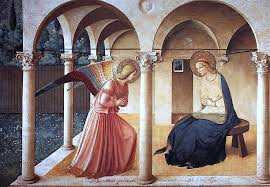
Homily of John Paul II in the Basilica of the Annunciation
A blessed Solemnity of the Annunciation to one and all! Verbum caro factum est! Here is a meditation of the late, great John Paul II, staunchly devoted to Our Lady, from the Jubilee Year, just over a quarter of century ago, to provide food for thought, as we celebrate, and pray. Editor. JUBILEE PILGRIMAGE OF[…]Continue reading→