
The Mystery of the Annunciation as Reflected in Pope St John Paul II
March 25th is the Solemnity of the Incarnation of Our Lord Jesus Christ. The centrality of this feast lies in the Latin words found in the Gospel of St John: Verbum Dei Caro Factum Est – the Word of God was made flesh (see John 1:14). This was also the motto St George Preca chose for his Society of the Christian Doctrine, MUSEUM, and now it is written in the badge which every member of this society wears.
In order to savour the immensity of this pivotal feast, it is beneficial to present the reflections given to us by the great love of Mary, Mother of God and our Mother, Pope St John Paul II. His reflections instill in us that fervour to love and imitate the Mother of God and be like her joyful and active participant in God’s loving plan for us and the entire universe.
This interesting point is further explicated in his catechesis entitled Reflection on the Solemnity of the Annunciation during the general audience Pope St John Paul II gave on Wednesday, 24 March 2004. He said: Since she is associated with the Mystery of the Incarnation, Our Lady shares in the Mystery of the Redemption. Her fiat, which we will commemorate tomorrow, echoes that of the Incarnate Word. In close harmony with the fiat of Christ and of the Virgin, each one of us is called to say our own “yes” to the mysterious designs of Providence. Indeed, that joy and true peace which all ardently hope for even in our times only springs forth in full acceptance of the divine will (no.1).
The Solemnity of the Annunciation is a special day wherein the Church is assembled and pray together to commemorate when the Son of God pitched his camp amongst us by starting living in Mary’s virginal womb. It is a day which shows Mary’s great faith despite the difficulties she encountered when the Angel of the Lord appeared to her. While keeping this in mind, Pope St John Paul II likened Mary to Abraham, walking through the darkness. However, and as Psalm 23 tells us, Mary could say with the psalmist: Even though I walk through the valley of the shadow of death, I fear no evil; for thou art with me; thy rod and thy staff, they comfort me (Ps 23:4).
In his homily at the Mass in the Basilica of the Annunciation during his Jubilee Pilgrimage to the Holy Land (March 20-26, 2000) on Saturday 25 March 2000, in Nazareth, Israel, Pope John Paul said: Like Abraham, Mary must walk through darkness, in which she must simply trust the One who called her. Yet even her question, “How can this come about?”, suggests that Mary is ready to say yes, despite her fears and uncertainties. Mary asks not whether the promise is possible, but only how it will be fulfilled. It comes as no surprise, therefore, when finally she utters her fiat: “I am the handmaid of the Lord. Let what you have said be done to me” (Lk 1:38). With these words, Mary shows herself the true daughter of Abraham, and she becomes the Mother of Christ and Mother of all believers (no.4).
In his homily during a Mass at the conclusion of the Marian Month, on May 31, 1979, Pope St John Paul II kept harping on Mary’s faith when he said: … The fundamental interior attitude of the Blessed Virgin with regard to God: her faith. Mary believed! She believed in the Lord’s words, transmitted to her by the Angel Gabriel; at the Annunciation, her pure heart, already given entirely to God from her childhood, dilated in the generous and unconditional “Fiat” with which she agreed to become the Mother of the Messiah and Son of God. From that moment, taking her place more and more deeply in God’s plan, she will let herself by led by the hand by mysterious Providence and for her whole life, rooted in faith, she will follow her Son spiritually, becoming his first and perfect “disciple” and carry-out in everyday life the requirements involved in following Jesus according to his own words: “Whoever does not bear his own cross and come after me, cannot be my disciple” (Lk 14:27) (no.1).
Pope St John Paul II, a great and refined Thomist philosopher and theologian, could see in the mystery of the Annunciation the Thomistic key idea that grace builds on nature. Thanks to this stance John Paul could conclude that the fact that Mary became Theotokos by grace her femininity was perfected. In his apostolic letter on the dignity and vocation of women on the occasion of the Marian Year, Mulieris Dignitatem, Pope Wojtyla wrote: The whole Annunciation dialogue reveals the essential dimension of the event, namely, its supernatural dimension. Grace never casts nature aside or cancels it out, but rather perfects it and ennobles it. Therefore the “fullness of grace” that was granted to the Virgin of Nazareth, with a view to the fact that she would become “Theotókos”, also signifies the fullness of the perfection of” what is characteristic of woman”, of “what is feminine”. Here we find ourselves, in a sense, at the culminating point, the archetype, of the personal dignity of women (no.5).
Obviously Mary is chosen as Theotokos, the Mother of God, not for herself but to be the handmaid of the Lord for Christ, the Son of God made man. In his encyclical regarding the Blessed Virgin Mary in the life of the Pilgrim Church, Redemptoris Mater, the Mother of the Redeemer, Pope St John Paul II writes: The Annunciation, therefore, is the revelation of the mystery of the Incarnation at the very beginning of its fulfillment on earth. God’s salvific giving of himself and his life, in some way to all creation but directly to man, reaches one of its high points in the mystery of the Incarnation. This is indeed a high point among all the gifts of grace conferred in the history of man and of the universe: Mary is “full of grace,” because it is precisely in her that the Incarnation of the Word, the hypostatic union of the Son of God with human nature, is accomplished and fulfilled (no. 9).
O Mary, pray for me so that I always say my YES to God’s loving plan for me. Amen.
A Closed, Unsustainable, Descending Loop
As a follow-up to my thoughts on Payette’s payout, here be a stark image of where are here in Canada. As the graph shows in, well, graphic terms, since 2025, the public sector has contributed to 95.5% of economic growth. The private sector – which funds the public sector, or is supposed to – has[…]Continue reading→

Remembering Father Alphonse de Valk
(Today marks the sixth anniversary of the death of Father Alphonse de Valk, C.S.B., a faithful, courageous and indefatigable Basilian priest, pro-life-and-family apostle, and the founder of Catholic Insight magazine. Here is what we wrote those on his entering into eternity five years ago, as we continue to remember him in our prayers and thoughts)[…]Continue reading→
Presidential Pardon of Weronika Krawczyk
As a good news, follow-up to our story from Poland, of the persecution of Weronika Krawczyk for her pro-life views, we heard that she has been granted a presidential pardon. One might still wonder why one needs a presidential pardon for simply holding the long-held belief that the child within the womb is a child,[…]Continue reading→
Pope Leo and a Rosary for Peace
Pope Leo XIV has asked Catholics across the world to join him in a Rosary for peace today, at 18:00 Rome time (6 pm), which would be noon from where I write (EST). If you are able, whether at that time or another, and in whatever way you pray, to join in intercession with the[…]Continue reading→
Payette’s Payout
I was glancing through some headlines, and noticed a mention of Julie Payette – engineer and astronaut and sometime the Queen’s representative in Canada – which brought back vague memories. She was appointed Governor-General by Justin Trudeau in 2017. Ms. Payette resigned in 2021, amidst claims that she created a ‘toxic work environment’, with allegations[…]Continue reading→

Saint Stanislaus of Szczepanów
We celebrate Saint Stanislaus today (+ April 11, 1079), in light of this Easter Octave, a bishop and martyr who accepted the episcopacy only at the direct order of Pope Alexander II. He proved a wise and courageous leader of his flock, put to death by his own king, Boleslaus, for rebuking the monarch’s ‘immoral[…]Continue reading→
Weronika Krawczyk and Injustice in Poland
Catholic Action in Poland has issued a formal statement appealing to the President of the Republic of Poland to pardon Weronika Krawczyk—convicted for warning other women against an abortion-performing gynaecologist. Catholic Action (AK) emphasizes that no apology is owed to a doctor who has performed numerous abortions and proposed others; furthermore, the organization considers the[…]Continue reading→
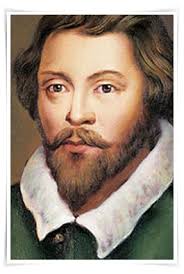
Three Easter Musical Gems: Bach, Palestrina and Byrd
A very blessed and glorious Easter! Christus surrexit vere, alleluia! As we begin this Easter Octave with the great Solemnity of Easter, music to lift the soul would be one of Bach’s Easter cantatas, composed during his time at Leipzig in the early 1700’s, for the six Sundays of this festive season, leading up to[…]Continue reading→
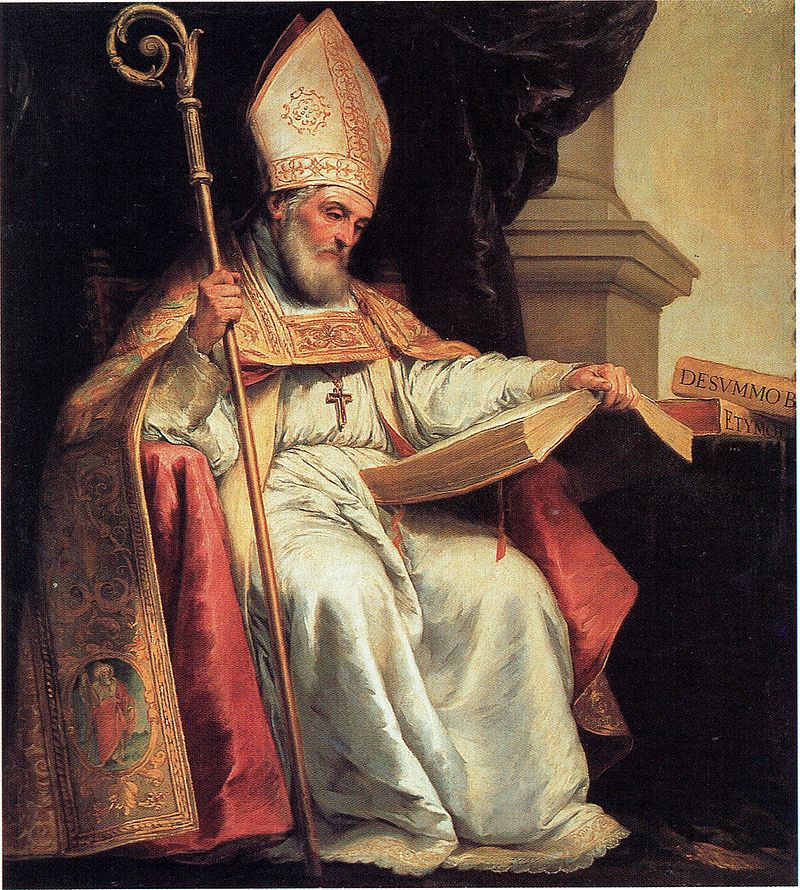
Saint Isidore of Seville, the Internet and Industriousness
Today, April 4th, muted this year by Holy Saturday, is the commemoration of Saint Isidore of Seville (560-636) a bishop and doctor of the Church during a tumultuous age, when civilization was crumbling, coming apart at its very seams, which may sound sort of au courant. Then again, the form of this world has always[…]Continue reading→
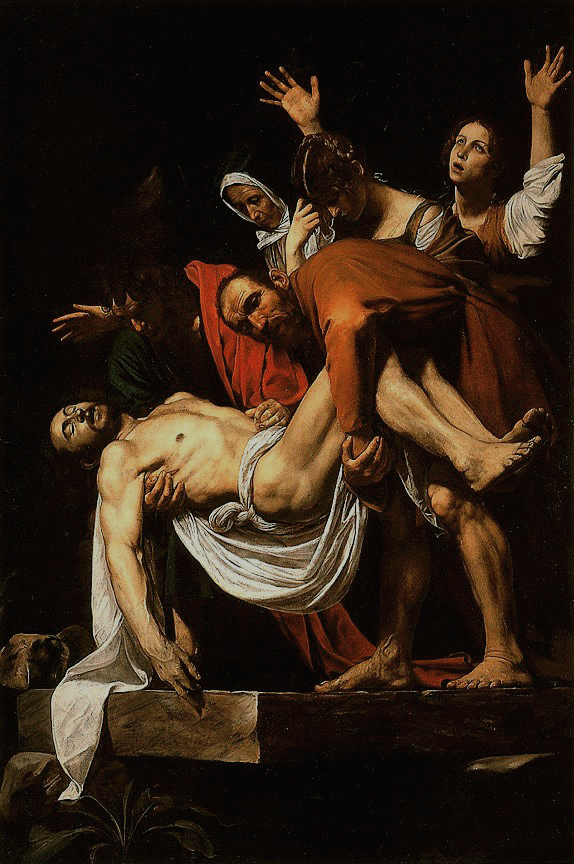
An Ancient Homily for Holy Saturday
The time between Good Friday and Easter Sunday is one of waiting, in silence, as the world wonders – anticipates – what will happen, after the death of Christ. We re-live this time each year in the anamnesis of our liturgy, and in turn look forward to the glorious re-creation of all things at the[…]Continue reading→