
What Is Holiness?
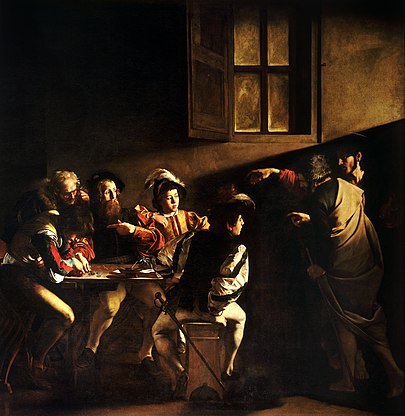
(In light of today’s Gospel, on the calling of Levi, and our Lord eating with ‘tax collectors and sinners’, here are some fitting words on what holiness means from contributor Carl Sundell).
Pope Benedict XVI knew knew the foremost item on his agenda. “First of all, I have no hesitation in saying that all pastoral initiatives must be set in relation to holiness.”
And he certainly knew what to quote from his Bible. “Without holiness, no man shall see the Lord” (Hebrews 12:14)
Any definition of holiness may begin by pointing out what holiness is not. It is not merely being a Christian. There are people professing to be Christian who really should profess to be anything but. Nor is holiness the deep study of Christian theology. That is knowledge, not holiness. Holiness is not necessarily doing works of mercy, because one might be doing them from the wrong motive; that is, to shine in the esteem of others. Holiness is not merely sitting in the pew every Sunday, especially if one is sitting in dens of iniquity the rest of the week. Holiness is not giving to the Church if the giving is resentful, or only to earn the pastor’s or the neighbor’s notice.
In other words, holiness is to be defined not by what we do or do not do, but by who we are in mind, heart, and spirit. This is why only God knows who is truly holy, and who is pretending holiness. A prisoner who is in solitary confinement for life, with no opportunity to attend church, give to the poor, show kindness toward those who grieve, be patient with those who offend, or perform other acts of mercy and charity, can still be holy. There is no prison that can take away anyone’s right to pray, and pray constantly. There is no prison that can take away the prisoner’s right to pray that God’s justice and mercy will fall upon all who live outside, as well as within, prison walls. This is the ultimate act of charity that is reserved especially for all the prisoners of the world … the single avenue God has preserved for them to walk in holiness.
One cannot, of course, be holy without desiring to be holy. All holiness therefore must begin with an authentic prayer life. Humbly expressing to God the praise we have for Him is the first act of holiness. Wanting to please God is the second act of holiness. Actually pleasing God is the third act of holiness. As Thomas a Kempis would put it, we can best please God by imitating the life of Christ. At the heart of imitating Christ is the desire to be sinless and full of love for God and for each other. Out of this ‘holy love’ all other virtues naturally come about: patience, wisdom, mercy, justice and so on, will spring forth from within the spirit as water does from the earth when a path is artfully dug for it to surface.
Saint John Henry Newman suggested the telltale signs of the saints. “The nearer they are towards heaven, so much the more lowly do they think of themselves.” And again: “The holier a man is, the less he is understood by men of the world.” When Newman was nominated a cardinal in 1879, this was his humble reflection:
“In a long course of years I have made many mistakes. I have nothing of that high perfection, which belongs to the writings of Saints, viz., that error cannot be found in them; but what I trust that I may claim all through what I have written, is this, — an honest intention, an absence of private ends, a temper of obedience, a willingness to be corrected, a dread of error, a desire to serve Holy Church, and, through Divine Mercy, a fair measure of success.”
Jesus would not have asked us to be holy as our heavenly Father is holy without showing us a pathway to holiness. The path is found in these simple words:
Our Father, who art in heaven, hallowed be Thy name. Thy kingdom come, Thy will be done, on earth as it is in heaven. Give us this day our daily bread, and forgive us our trespasses as we forgive those who have trespassed against us. Lead us not in to temptation, but deliver us from evil.
Holy One, lead us out of the darkness and sin. Make us holy.
Deo gratias!

Remembering Father Alphonse de Valk
(Today marks the sixth anniversary of the death of Father Alphonse de Valk, C.S.B., a faithful, courageous and indefatigable Basilian priest, pro-life-and-family apostle, and the founder of Catholic Insight magazine. Here is what we wrote those on his entering into eternity five years ago, as we continue to remember him in our prayers and thoughts)[…]Continue reading→

Divine Mercy Sunday – An Echo of Every Mass
Reach out your hand and put it in my side. Do not doubt but believe’… ‘My Lord and my God!’ (Jn. 20:18)). Today is Divine Mercy Sunday, and as we celebrate the end of the Easter Octave, we contemplate the wounded side of our Saviour, the Church’s source of life. On Good Friday in the[…]Continue reading→

Saint Stanislaus of Szczepanów
We celebrate Saint Stanislaus today (+ April 11, 1079), in light of this Easter Octave, a bishop and martyr who accepted the episcopacy only at the direct order of Pope Alexander II. He proved a wise and courageous leader of his flock, put to death by his own king, Boleslaus, for rebuking the monarch’s ‘immoral[…]Continue reading→

First Holy Communion: Sermon from May 16, 1943
Here is a sermon from the good old days by +Rev. Msgr. Vincent Nicholas Foy (August 14, 1915 – March 13, 2017), from 1943. Readers may recall that Pope Saint Pius X, by the decree Quam Singulari in 1910, lowered the customary age of reception of Holy Communion – after the rigours of the plague[…]Continue reading→

In the Glorious Light of Easter, Alleluia!
Set your minds on things that are above, not on things that are on earth, for you have died, and your life is hidden with Christ in God. When Christ who is your life is revealed, then you also will be revealed with him in glory (Col. 3:3-4). The Resurrection of Our Lord and Saviour[…]Continue reading→

An Ancient Homily for Holy Saturday
The time between Good Friday and Easter Sunday is one of waiting, in silence, as the world wonders – anticipates – what will happen, after the death of Christ. We re-live this time each year in the anamnesis of our liturgy, and in turn look forward to the glorious re-creation of all things at the[…]Continue reading→

Europe’s Long Descent
(As we meditate on this day on Christ’s burial, and His descent into hell, it is fitting to ponder here with contributor Peter Marcus how the world seems to be heading there as well. The difference is that, although God cannot ‘redeem’ hell, nor those therein, He can and did redeem the world. There is[…]Continue reading→
Pope Saint John Paul II’s First Good Friday Homily
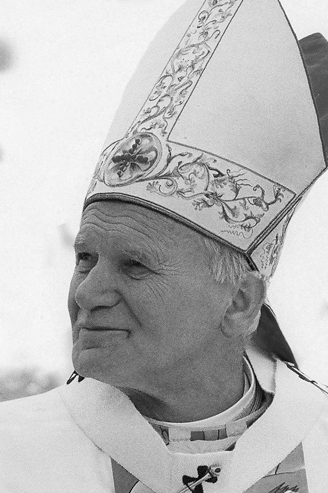
ADDRESS OF HIS HOLINESS JOHN PAUL II AT THE CONCLUSION OF THE STATIONS OF THE CROSS AT THE COLOSSEUM Good Friday, 13 April 1979 When we make the Way of the Cross from one station to the next, in spirit we are always at the spot wherethis journey had its “historical” place: where it[…]Continue reading→
A Meditation for Good Friday: How To Undo the Effects of Sin?
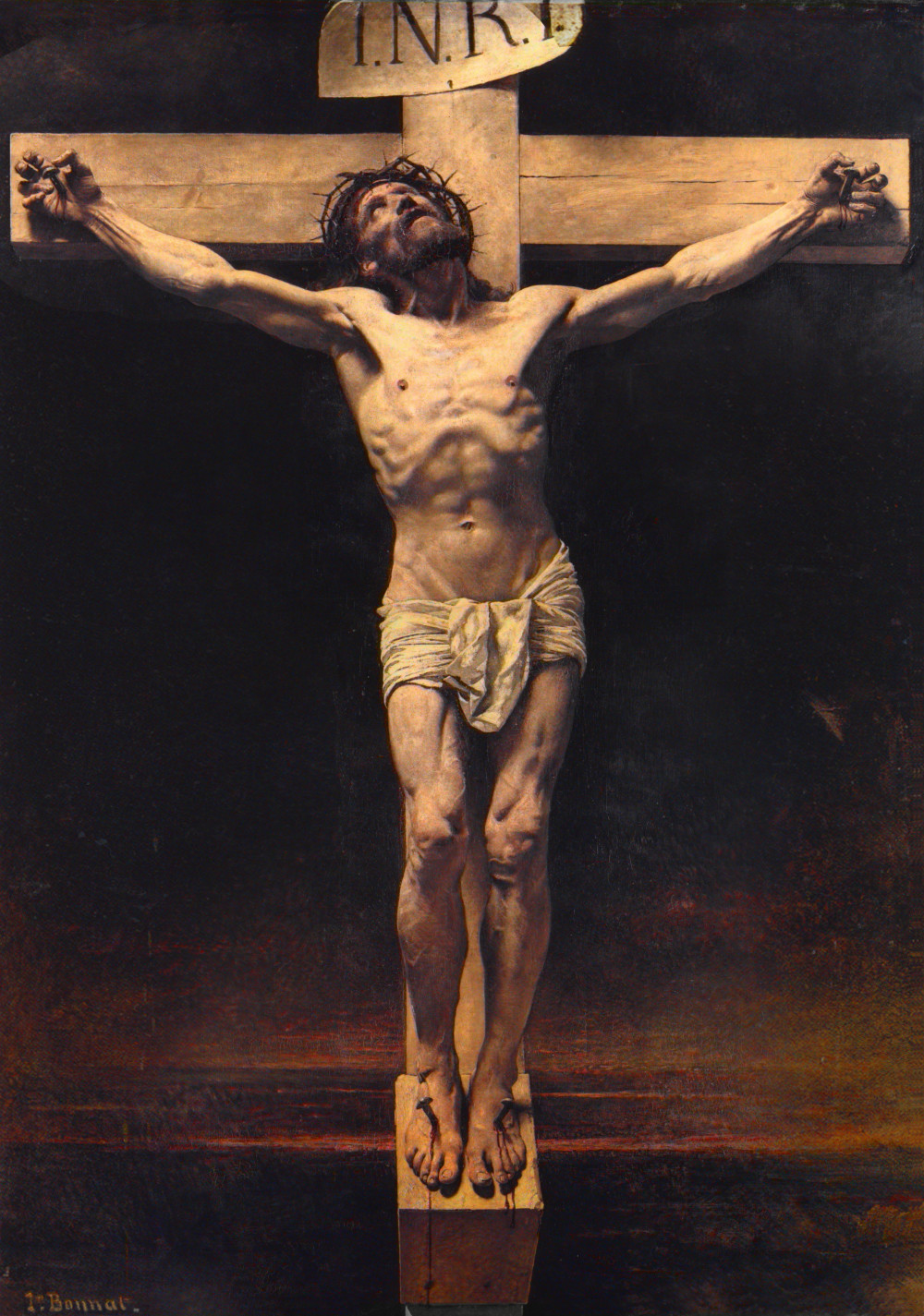
Cardinal Newman, now Saint John Henry Newman, was a towering figure of nineteenth-century Catholicism who is almost universally admired. I say “almost” because not everyone likes him. I knew a priest once, Arthur Caulkins, who has become disenchanted with Newman. As an undergraduate Arthur had been enamoured of Newman, and this interest continued when he[…]Continue reading→
Pope Benedict’s Last Holy Thursday Homily
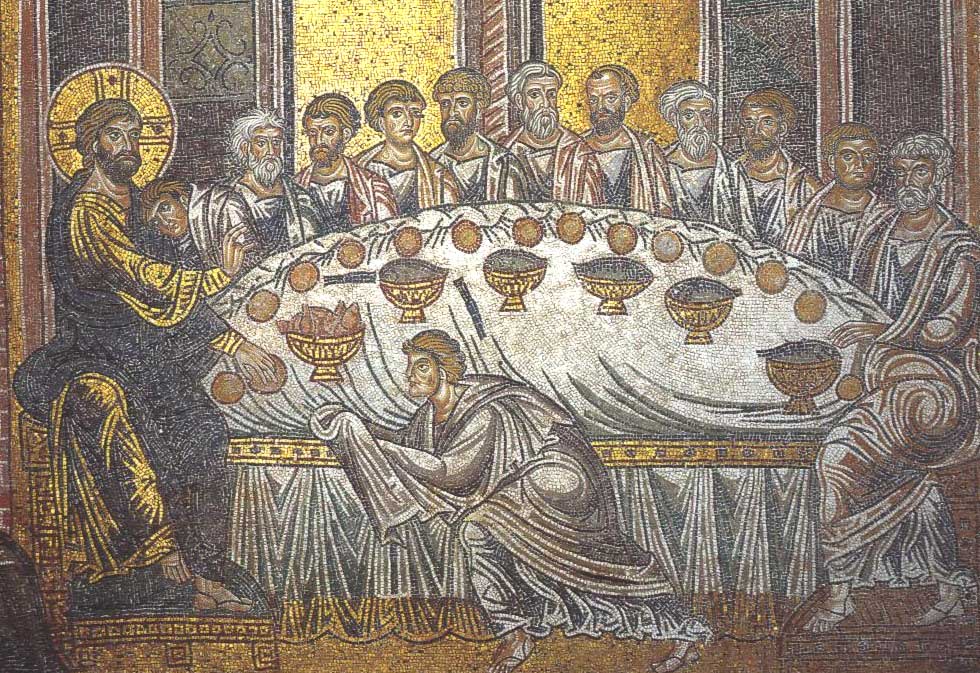
MASS OF THE LORD’S SUPPER HOMILY OF HIS HOLINESS BENEDICT XVI Basilica of St John Lateran Holy Thursday, 5 April 2012 Photo Gallery (Video) Dear Brothers and Sisters! Holy Thursday is not only the day of the institution of the Most Holy Eucharist, whose splendour bathes all else and in some ways draws it to[…]Continue reading→