
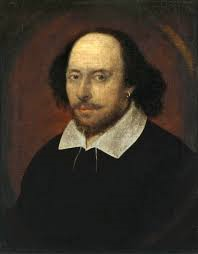
Shakespeare the Catholic
William Shakespeare was born at Stratford-on-Avon on April 23rd, 1564. His formal education, it is speculated, was limited. Some believe that not being university educated was likely to his advantage so far as his future career was concerned. Little is known of his life, perhaps because he was not so fully recognized for his genius as he would be in later centuries, but perhaps also because biography had not yet come into its own as a literary type. He married Anne Hathaway, who bore him three children. He probably appeared as an actor in many theatrical productions and learned his craft before discovering that he had a true gift for language as proven in his 38 plays, 154 sonnets, and two lengthy narrative poems. Shakespeare with others formed the Lord Chamberlain’s Men, a very successful theatrical company that made him one of the wealthiest men in Stratford. He had several grandchildren but none of them carried on the Shakespeare line. He and his wife and elder daughter were buried in the magnificent 800 year old Holy Trinity Church at Stratford, where his grave is visited by 200,000 pilgrims each year.
Was Shakespeare a Catholic? The answer to this question turns partly on whether Shakespeare was really Shakespeare. The Elizabethans were more busy making history than making sure that historical records were fully and accurately kept. The controversy surrounding Shakespeare’s true identity still is not settled, especially for those who love controversy. Several other candidates are proposed as authors of Shakespeare’s works, with the understanding that the actor called Shakespeare must somehow have been talked into taking credit for all those plays and sonnets. The various theories, however, must contend with the fact that Shakespeare’s contemporary, Ben Jonson, a great literary talent in his own right, spoke highly of Shakespeare, even writing a poem in his honor. It is highly unlikely that Jonson could have been duped, or could have joined a conspiracy to keep the real author of Shakespeare’s plays from being found out. But perhaps more to the point, would a Dante, or a Mozart, or a Michelangelo have concealed himself for any reason as the author of works that would surely make him famous forever? If that is unlikely, as it surely is, then it seems just as unlikely that anyone other than the man known as Shakespeare wrote the classics for which he is rightly famous.
Some Protestants lay claim to Shakespeare as one of their own. The case for doing so is that Shakespeare himself and his children were baptized in the Holy Trinity Anglican church. There being records to prove the events, we have little more than those records to establish his Protestant sympathies. It may be that Shakespeare presented himself alternatively as a Catholic or as a Protestant; and may even, like Ben Jonson, have converted back and forth between the Catholic and the Anglican persuasions either from force of conscience or from fear of persecution.
Evidence once surfaced that Shakespeare’s father was Catholic from a “spiritual testament” found under the rooftop of the ancestral home of John Shakespeare at Stratford-on-Avon. The authenticity of the document has been doubted. It is believed that one of Shakespeare’s teachers was the Catholic priest Robert Dibdale, who became a martyr for his faith. Shakespeare’s mother was a Catholic, and her family remained Catholic throughout the reign of Elizabeth. It is not unreasonable to speculate that Shakespeare inherited certain sympathies from his parents that he found it dangerous to publicly admit. After all, Queen Elizabeth, as if to outdo Henry VIII, had at least 200 Catholics executed during her reign. So it would have been injudicious for Shakespeare to have let it out, thus threatening his theatrical company’s prospects, that his background credentials might be those of a loyal Catholic.
Due to the lack of historical records or personal witness, the question that must remain substantially undecided is how loyal a Catholic Shakespeare was. Anglican Archdeacon R. Davies (who for bragging rights might have preferred that Shakespeare died an Anglican) wrote seventy years after Shakespeare’s death that “He dyed a Papyst.” Was Davies’ comment based on an early Protestant tradition for disparaging Shakespeare, since “Papyst” has always been a hostile term that Anglicans used to refer to Catholics? Also, why would Davies have referred to Shakespeare as a papist if it had been common knowledge that he was a Protestant? It would certainly not have interfered with Shakespeare’s rising career to have publicly cast his lot with the Anglican cause and Queen Elizabeth.
But in all likelihood Shakespeare would not have been in the business of trumpeting his Catholic faith, certainly not during an age when Catholics in England were hunted down and persecuted (nearly two hundred were executed during the reign of Elizabeth). Most definitely making a livelihood in the English theater would be a hopeless ambition if one’s plays clearly revealed one as an enemy of the anti-papist Elizabeth.
We may then look into Shakespeare’s works to find clues to his religious sympathies. One clue is that of the characters he created. As critics have noted, he was certainly friendlier to his Catholic friars than to his Protestant parsons. Another clue is that he makes the ghost of Hamlet’s father, in expiation of his sins, wander through purgatory (a specifically Catholic place to be) and confess to Hamlet:
I am thy father’s spirit,
Doomed for a certain term to walk the night,
And for the day confirmed to fast in fires,
Till the foul crimes done in my days of nature
Are burnt and purged away. (Hamlet, Act I, Scene 5)
In Shakespeare’s day, purgatory had been repudiated as against Anglican teaching. Many other interesting allusions to Catholic tradition and doctrine may be found throughout the body of Shakespeare’s work.
Around 1594 a play titled Sir Thomas More by Anthony Munday was written but never produced in his lifetime. Shakespeare, based on the comparison of handwriting in the original manuscript of More with documents known to have been signed by him, evidently wrote about three pages of this generally sympathetic portrayal of the Catholic saint who refused to abandon his principles to please Henry VIII, the founder of the Anglican Church. Though the play follows the politically correct attitude of the day by ending with More’s fall from grace, had Shakespeare been truly Protestant, would he have had any interest at all in helping to memorialize Henry VIII’s great arch-enemy? The play found no backers, but it is uncertain whether this was from the demand for a huge cast, or from a lack of anyone’s willingness to test the waters of political correctness in the court of Elizabeth.
Every faction wants to claim Shakespeare, and no doubt someone somewhere – like the skeptic George Santayana – has already looked to Hamlet’s suicidal despair with an approving nod and concluded that Shakespeare was neither Catholic nor Protestant, and not even a Christian.
But I think Chesterton put his finger on the essential point of all Shakespeare’s plays: “… Shakespeare is possessed through and through with the feeling which is the first and finest of Catholicism – that truth exists whether we like it or not, and that it is for us to accommodate ourselves to it.” Yet if to be “catholic” is to be “universal,” as every dictionary tells us, and if to be universal is to appeal to the beauties and truths that lie in the depths of us all, there was surely never a famous poet or playwright more loved in a “catholic” way than William Shakespeare.
From the Pen of William Shakespeare
Cowards die many times before their deaths, The valiant never taste of death but once.
How poor are they who have not patience!
What wound did ever heal but by degrees?
I wasted time, and now Time doth waste me.
Love looks not with the eyes, but with the mind.
Suspicion always haunts the guilty mind.
We know what we are, but not what we may be.

Remembering Father Alphonse de Valk
(Today marks the sixth anniversary of the death of Father Alphonse de Valk, C.S.B., a faithful, courageous and indefatigable Basilian priest, pro-life-and-family apostle, and the founder of Catholic Insight magazine. Here is what we wrote those on his entering into eternity five years ago, as we continue to remember him in our prayers and thoughts)[…]Continue reading→
Divine Mercy Sunday – An Echo of Every Mass
Reach out your hand and put it in my side. Do not doubt but believe’… ‘My Lord and my God!’ (Jn. 20:18)). Today is Divine Mercy Sunday, and as we celebrate the end of the Easter Octave, we contemplate the wounded side of our Saviour, the Church’s source of life. On Good Friday in the[…]Continue reading→

Saint Stanislaus of Szczepanów
We celebrate Saint Stanislaus today (+ April 11, 1079), in light of this Easter Octave, a bishop and martyr who accepted the episcopacy only at the direct order of Pope Alexander II. He proved a wise and courageous leader of his flock, put to death by his own king, Boleslaus, for rebuking the monarch’s ‘immoral[…]Continue reading→
First Holy Communion: Sermon from May 16, 1943
Here is a sermon from the good old days by +Rev. Msgr. Vincent Nicholas Foy (August 14, 1915 – March 13, 2017), from 1943. Readers may recall that Pope Saint Pius X, by the decree Quam Singulari in 1910, lowered the customary age of reception of Holy Communion – after the rigours of the plague[…]Continue reading→
In the Glorious Light of Easter, Alleluia!
Set your minds on things that are above, not on things that are on earth, for you have died, and your life is hidden with Christ in God. When Christ who is your life is revealed, then you also will be revealed with him in glory (Col. 3:3-4). The Resurrection of Our Lord and Saviour[…]Continue reading→
An Ancient Homily for Holy Saturday
The time between Good Friday and Easter Sunday is one of waiting, in silence, as the world wonders – anticipates – what will happen, after the death of Christ. We re-live this time each year in the anamnesis of our liturgy, and in turn look forward to the glorious re-creation of all things at the[…]Continue reading→
Europe’s Long Descent
(As we meditate on this day on Christ’s burial, and His descent into hell, it is fitting to ponder here with contributor Peter Marcus how the world seems to be heading there as well. The difference is that, although God cannot ‘redeem’ hell, nor those therein, He can and did redeem the world. There is[…]Continue reading→
Pope Saint John Paul II’s First Good Friday Homily
ADDRESS OF HIS HOLINESS JOHN PAUL II AT THE CONCLUSION OF THE STATIONS OF THE CROSS AT THE COLOSSEUM Good Friday, 13 April 1979 When we make the Way of the Cross from one station to the next, in spirit we are always at the spot wherethis journey had its “historical” place: where it[…]Continue reading→
A Meditation for Good Friday: How To Undo the Effects of Sin?
Cardinal Newman, now Saint John Henry Newman, was a towering figure of nineteenth-century Catholicism who is almost universally admired. I say “almost” because not everyone likes him. I knew a priest once, Arthur Caulkins, who has become disenchanted with Newman. As an undergraduate Arthur had been enamoured of Newman, and this interest continued when he[…]Continue reading→
Pope Benedict’s Last Holy Thursday Homily
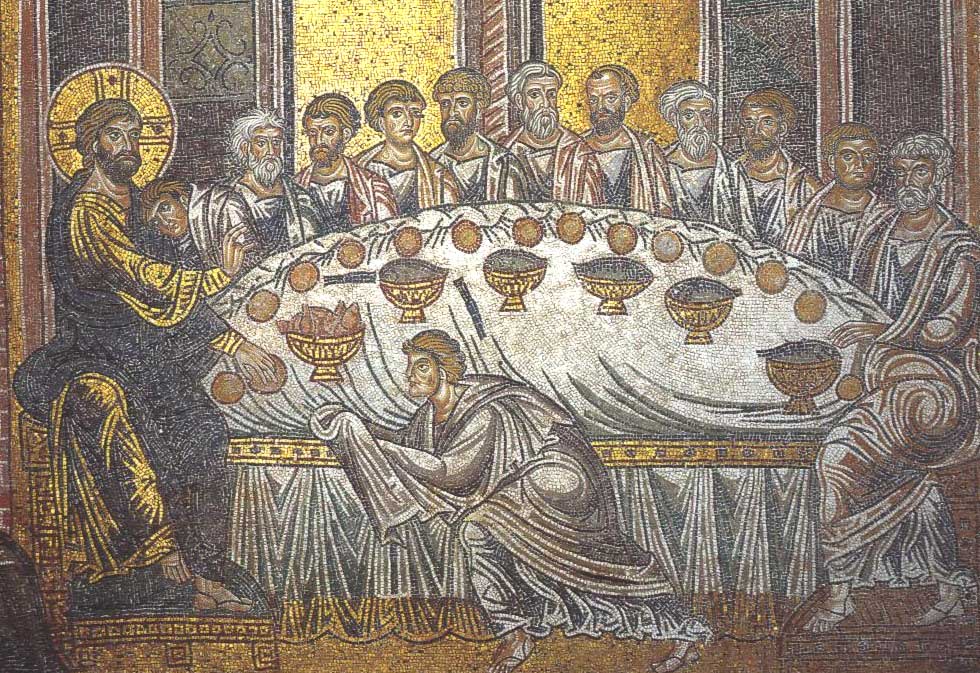
MASS OF THE LORD’S SUPPER HOMILY OF HIS HOLINESS BENEDICT XVI Basilica of St John Lateran Holy Thursday, 5 April 2012 Photo Gallery (Video) Dear Brothers and Sisters! Holy Thursday is not only the day of the institution of the Most Holy Eucharist, whose splendour bathes all else and in some ways draws it to[…]Continue reading→