
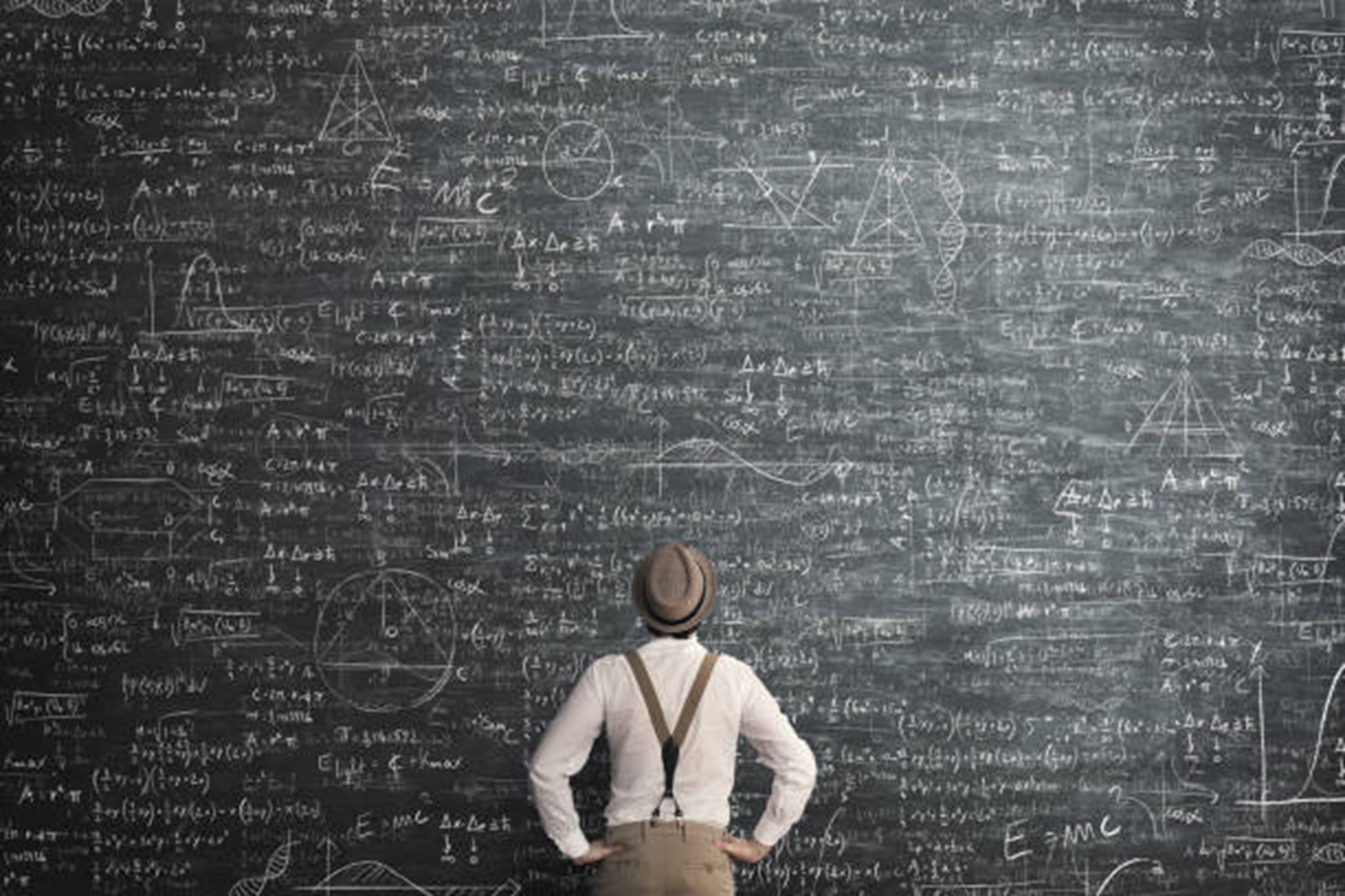
The Dead End of Scientific Materialism
Mostly in modern times has the notion really caught on that the human mind is purely composed of matter in motion, and that its exclusive residence is in the physical brain. Belief in a realm beyond the physical has taken a great hit. Scientific discoveries gradually pushed the main line of thinking this way because it was increasingly noted that various parts of the brain influence various types of mental and physical behavior. Scientists argued and proved that surgically stimulating certain parts of the brain could change behavior in positive or negative ways.
But this insight has not answered the question of the vital difference between metaphysical thought and the material world. All the content of the human mind (as opposed to brain) is not physical, nor is it a miniature reflection of what goes on in the material world. Mathematics, for example, has no mass, volume, or any other physical attributes. That being the case, as Plato noted, how can mathematics exist or be conceived but by a mind that has no mass, volume, or other physical attribute … in other words, the human mind?
The physical home of the mind is in the human brain. The connection between brain and the mind, however, is deeply mysterious, even mystical. The materialists cannot convincingly argue against metaphysical reality, as would be necessary if they are serious about being materialists, that if you open a brain, as you might open a camera, you would find miniature pictures of much larger things … buildings, cars, people … lying about. These things can exist in memory, and can be recalled at will, but only as ghostly images of what we have seen in the real world. Likewise, the human mind can compose images it has never seen in the material world, and can imagine and even sense a world of spirit that exists but is not visible to the senses.
Truth as a Dead End?
Richard Popkin and Avrum Stroll, two philosophers who have excelled at teaching the basic principles of philosophy, note a challenging objection to the materialist theory of mind. They comment that any such theory as materialism is a dead end so far as distinguishing the merit of one truth from another. If truth is merely a collection of atoms and molecules swirling about in the physical brain, why would one swirl be preferable to any other swirl, since all have an equally valid existence as material swirls? The very notions of truth and untruth then become irrelevant in such a theory of the mind. Such a deduction leads inevitably to the triumph of relativism … that truth is only the material swirl we happen to prefer. As to whose material swirl is to prevail, that usually has to be decided by a battle of wills or weapons.
For examples: men can prefer themselves to be transformed as women; women can prefer to believe the unborn child within them has only a right to life if it is convenient to the mother; the state can believe that all power to educate belongs to the state, not the parents; every race of humankind can prefer to believe that every other race is inferior to itself; and so forth.
But the human mind can establish universal mathematical truths. It can also discover absolute moral principles, foretell the future, invent weapons of catastrophic capability, devise vehicles for interplanetary travel, invent computers that can out-think humans at chess and create music, art, and poetry. All these things it can do by a series of electrical impulses in a computerized calculator that doesn’t even know it exists. What, then, is the human mind if it is not something more fine and subtle than electrical impulses in a physical computer? Is the mind not the amorphous tissue that connects the body to the soul’s desire and awareness of an immortal destiny?
In like manner, we live in a material world that depends for its very existence on the Mind of God. Everywhere the universe suggests order and design of one kind or another. The only alternate hypothesis is that it reflects disorder of one kind or another, which is clearly not true. If all were chaos, and there were no laws, there would be no you, no me, no universal quest for meaning even if that meaning is not immediately knowable to all.
Conclusion
Centuries ago Blaise Pascal critiqued the notion that matter is the only fundamental reality worth bothering with and that mind is simply a type of matter in motion. As he put it,
Man is a reed, the weakest in nature, but he is a thinking reed…. Even if the universe should crush him, man would still be nobler than that which kills him, because he knows he dies; and he knows the advantage the universe has over him…. All our dignity, then, resides in thought.
The universe cannot ever know that it once was born and is now dying according to the astronomers. Because we are connected to the mind of God, we can know more about the universe than it can know about itself, and thus scientific materialism is defeated.
Quod erat demonstrandum.

Saint Kateri , Canada’s Protectress
This was the title given to Saint Kateri Tekakwitha, by Pope Benedict XVI, when he canonized her on October 28th, 2012, along with six others, in Saint Peter’ Square (she had been beatified by Pope John Paul II back in 1980). With Saint Joseph as our protector, along with the Canadian martyrs, we seem to[…]Continue reading→

Remembering Father Alphonse de Valk
(Today marks the sixth anniversary of the death of Father Alphonse de Valk, C.S.B., a faithful, courageous and indefatigable Basilian priest, pro-life-and-family apostle, and the founder of Catholic Insight magazine. Here is what we wrote those on his entering into eternity five years ago, as we continue to remember him in our prayers and thoughts)[…]Continue reading→

My Name is Bernadette
April 16th is a propitious day, for besides the anniversary of Father de Valk’s death, who founded Catholic Insight in its print form decades ago, and the commemoration of the ‘two Benedicts’, mentioned in accompanying posts, today we also recall Saint Bernadette Soubirous, the young visionary to whom the Virgin Mary appeared numerous times at[…]Continue reading→
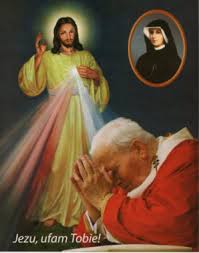
Canonizing Sister Faustina and Divine Mercy
HOMILY OF THE HOLY FATHER MASS IN ST PETER’S SQUARE FOR THE CANONIZATION OF SR MARY FAUSTINA KOWALSKA Sunday, 30 April 2000 1. “Confitemini Domino quoniam bonus, quoniam in saeculum misericordia eius”; “Give thanks to the Lord for he is good; his steadfast love endures for ever” (Ps 118: 1). So the Church sings on the Octave of[…]Continue reading→

Divine Mercy Sunday – An Echo of Every Mass
Reach out your hand and put it in my side. Do not doubt but believe’… ‘My Lord and my God!’ (Jn. 20:18)). Today is Divine Mercy Sunday, and as we celebrate the end of the Easter Octave, we contemplate the wounded side of our Saviour, the Church’s source of life. On Good Friday in the[…]Continue reading→

Saint Stanislaus of Szczepanów
We celebrate Saint Stanislaus today (+ April 11, 1079), in light of this Easter Octave, a bishop and martyr who accepted the episcopacy only at the direct order of Pope Alexander II. He proved a wise and courageous leader of his flock, put to death by his own king, Boleslaus, for rebuking the monarch’s ‘immoral[…]Continue reading→

First Holy Communion: Sermon from May 16, 1943
Here is a sermon from the good old days by +Rev. Msgr. Vincent Nicholas Foy (August 14, 1915 – March 13, 2017), from 1943. Readers may recall that Pope Saint Pius X, by the decree Quam Singulari in 1910, lowered the customary age of reception of Holy Communion – after the rigours of the plague[…]Continue reading→
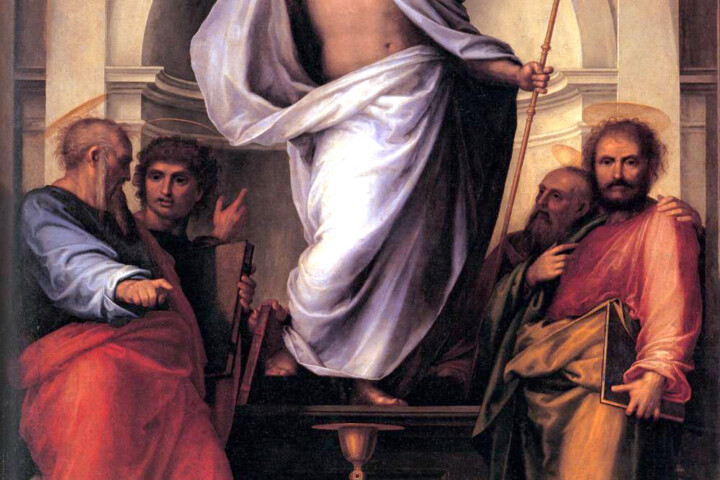
In the Glorious Light of Easter, Alleluia!
Set your minds on things that are above, not on things that are on earth, for you have died, and your life is hidden with Christ in God. When Christ who is your life is revealed, then you also will be revealed with him in glory (Col. 3:3-4). The Resurrection of Our Lord and Saviour[…]Continue reading→
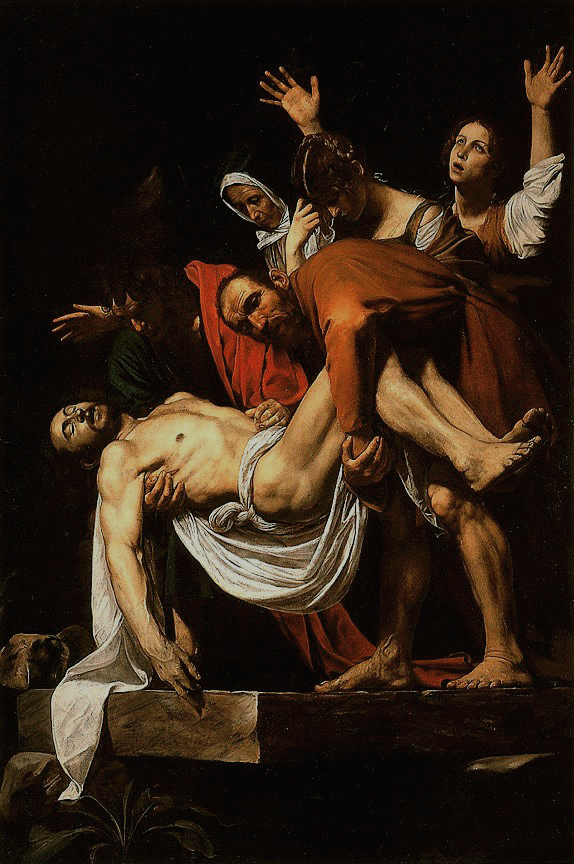
An Ancient Homily for Holy Saturday
The time between Good Friday and Easter Sunday is one of waiting, in silence, as the world wonders – anticipates – what will happen, after the death of Christ. We re-live this time each year in the anamnesis of our liturgy, and in turn look forward to the glorious re-creation of all things at the[…]Continue reading→
Europe’s Long Descent
(As we meditate on this day on Christ’s burial, and His descent into hell, it is fitting to ponder here with contributor Peter Marcus how the world seems to be heading there as well. The difference is that, although God cannot ‘redeem’ hell, nor those therein, He can and did redeem the world. There is[…]Continue reading→