
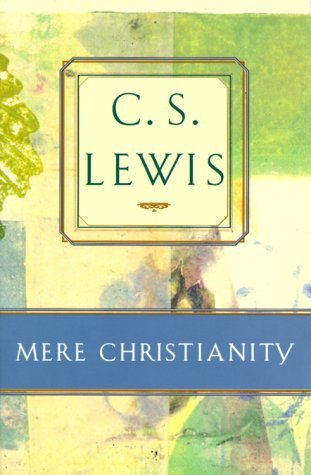
Mere Christianity: A Critical Analysis
The signature work of the most iconic Christian writer of the 20th century, C. S. Lewis’ Mere Christianity is a powerful weapon in the arsenal of any intentional apologist. Few who read it are not touched in some way through its compelling approach.
Personally speaking, Lewis’ work is refreshing, an exercise in depth of thought, expressed simply. Most appealing was his call for total death to self, in order that one might live solely for Christ
In an overall manner of speaking, this work shows why Lewis is rightly considered a unifying figure in Christianity. His approach to Christianity mainly conforms itself to what Christianity always has been: a religion that values its historicity.
The elements of basic, or ‘mere’ Christianity that he espouses truly are integral to an authentic Christian faith. These primary beliefs, such as the existence of Free Will, the necessity of individual acceptance of grace in Salvation, and the necessity of both Faith and Works in that same process, are not only represented in Sacred Scripture, but are also fundamental in early Christian Tradition.
And it is precisely this reliance on Christian Tradition in union with Sacred Scripture that allows him to illustrate and defend his points so well. Not only the beliefs themselves, but also the substance of many of his arguments are grounded in this unified understanding.
He explains this approach aptly, likening those who preach Christianity without an understanding of Tradition to “a man who has no instrument but a pair of old field glasses setting out to put all the real astronomers to right.”
However, for all that Lewis observed correctly regarding the proper role and harmony of Scripture and Tradition, his analysis breaks down when it comes to considering the third element of authority: Universal teaching, the fruit of Scripture and Tradition.
The necessity of this third means as a qualification for Christian belief can be seen clearly in the history of the early Church. In 110 AD, St. Ignatius, Bishop of Antioch, was already describing in his teachings the Church as ‘Katholikos’, a Greek word meaning Universal.
In conjunction with his description of the Church as Catholic, Universal, St. Ignatius also taught that this term referred to one, true Church, distinct from those “who are of a different opinion with respect to the grace of Christ which has come unto us, [and who are] opposed… to the will of God.”
Since the earliest times of the Church, as can be seen, the teaching of this universality did not extend to allowing competing views on Church doctrines and disciplines, as this was contrary to the Church’s foundation, the singular Teaching of Christ and His apostles.
St. Irenaeus, Bishop of Lyons, wrote in 180 AD that the Church as a teaching voice instructs Christians to “seek not the truth among others which it is easy to obtain from the Church; since the apostles, like a rich man [depositing his money] in a bank, lodged in her hands… all things pertaining to the truth: so that every man, whosoever will, can draw from her the water of life. (cf Revelation 22:17) For she is the entrance to life; all others are thieves and robbers.”
St. Ignatius and St. Irenaeus, like many Church Fathers, deliberately referred to the Church as a singular institution, even though, at that time, there were numerous other groups of “christians” who were not aligned with the teachings of the apostles, or their successors. These “denominations” were professed false by St. Irenaeus precisely because “they are of recent formation, and cannot trace their origin up to the apostles.”
This leads us to the single, perhaps greatest flaw in Lewis’ otherwise admirable work: his under-emphasis of the importance of doctrine in defining true Christianity.
He rightly describes a Christian as “one who accepts the teaching of the apostles,” but then turns from this, leaving each to determine his own path once inside “the hall of Christianity,” provided he follows a specific one, and does not remain in the entry indefinitely.
The Apostle Paul, however, teaches otherwise. Confronted with multiple “denominations” in Corinth, he rebukes them in 1 Corinthians 1:12-13, writing “Now this I say, that every one of you saith: I indeed am of Paul; and I am of Apollo; and I am of Cephas; and I of Christ. Is Christ divided?” Like Irenaus and Ignatius, St. Paul proclaims that there is but one Church founded by Christ, and confirms in 1 Timothy 3:15 that this Church is “The Church of the living God, the Pillar and Ground of the Truth.”
At the heart of this teaching is the fact that Christianity does not merely establish a set of basic principles that relate to the individual alone– it also denotes a specific institution with a role which Christ instituted to keep his teaching pure until the end of time.
And, while Lewis rightly points out that “the discussion of these disputed points has no tendency at all to bring an outsider into the Christian fold,” it does not follow that these disputed points are not of importance in living as a Christian, or even determining whether an institution or belief system is truly Christian.
It can be seen clearly from Our Lord’s teaching in St. John 10:16 as well as that of His apostles, that there is but “one flock and one shepherd” which are truly His, and this establishes that only one “denomination” has a fully consistent relationship with the Truth of Christ. While there can, and certainly are varying degrees of fidelity to this Truth among the various denominations and those believers within, there cannot be more than one Truth, just as there cannot be more than one Christ.
What is written here is controversial, of that there can be no doubt. Yet, just as Our Lord and His apostles never shied away from “preaching the truth in season and out of season,” (2 Tim 4:2) so too must we, as true Christians uphold this particularly contentious truth.
In the eighty-one years since the first publication of Mr. Lewis’ notable work, there has been a significant shift in the cultural and religious atmosphere– from a widespread acceptance of objective Truth to an outright rejection of it by numerous contemporary commentators.
Many Christian denominations in the past eighty one years have conformed to varying degrees of this ideology, including Lewis’ own Anglican church. This has led some within these denominations, such as Lewis’ own secretary, Walter Hooper, to leave them, in search of the Church not interested in conforming to the world.
Hooper’s search led him to the one Church that can point historically to its foundation by Christ. And, when Hooper was asked whether he thought that if Lewis had lived another decade, he, too, would have become a Catholic, his answer was a resounding ‘yes.’
Hooper proclaimed that like himself, Lewis would have had no other choice but “to go where the faith actually still is Christian.” Ironically, perhaps the hint of relativism that crept into Lewis’ work would also be the catalyst for his coming into the Church which Pope Benedict XVI declared in 2005 to be “the Enemy of Relativism.”
In conclusion, to those who wish to apply the principles of a ‘mere Christianity’ to the search for a definitive Christianity, the parting comment stands: Denominations come and go, but one Church is forever. If 2,000 years of history have not proven this, what will?

Remembering Father Alphonse de Valk
(Today marks the sixth anniversary of the death of Father Alphonse de Valk, C.S.B., a faithful, courageous and indefatigable Basilian priest, pro-life-and-family apostle, and the founder of Catholic Insight magazine. Here is what we wrote those on his entering into eternity five years ago, as we continue to remember him in our prayers and thoughts)[…]Continue reading→

Divine Mercy Sunday – An Echo of Every Mass
Reach out your hand and put it in my side. Do not doubt but believe’… ‘My Lord and my God!’ (Jn. 20:18)). Today is Divine Mercy Sunday, and as we celebrate the end of the Easter Octave, we contemplate the wounded side of our Saviour, the Church’s source of life. On Good Friday in the[…]Continue reading→

Saint Stanislaus of Szczepanów
We celebrate Saint Stanislaus today (+ April 11, 1079), in light of this Easter Octave, a bishop and martyr who accepted the episcopacy only at the direct order of Pope Alexander II. He proved a wise and courageous leader of his flock, put to death by his own king, Boleslaus, for rebuking the monarch’s ‘immoral[…]Continue reading→

First Holy Communion: Sermon from May 16, 1943
Here is a sermon from the good old days by +Rev. Msgr. Vincent Nicholas Foy (August 14, 1915 – March 13, 2017), from 1943. Readers may recall that Pope Saint Pius X, by the decree Quam Singulari in 1910, lowered the customary age of reception of Holy Communion – after the rigours of the plague[…]Continue reading→

In the Glorious Light of Easter, Alleluia!
Set your minds on things that are above, not on things that are on earth, for you have died, and your life is hidden with Christ in God. When Christ who is your life is revealed, then you also will be revealed with him in glory (Col. 3:3-4). The Resurrection of Our Lord and Saviour[…]Continue reading→

An Ancient Homily for Holy Saturday
The time between Good Friday and Easter Sunday is one of waiting, in silence, as the world wonders – anticipates – what will happen, after the death of Christ. We re-live this time each year in the anamnesis of our liturgy, and in turn look forward to the glorious re-creation of all things at the[…]Continue reading→

Europe’s Long Descent
(As we meditate on this day on Christ’s burial, and His descent into hell, it is fitting to ponder here with contributor Peter Marcus how the world seems to be heading there as well. The difference is that, although God cannot ‘redeem’ hell, nor those therein, He can and did redeem the world. There is[…]Continue reading→
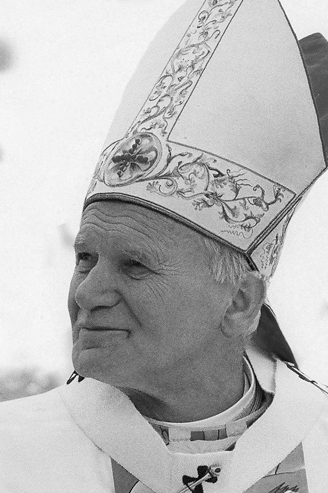
Pope Saint John Paul II’s First Good Friday Homily
ADDRESS OF HIS HOLINESS JOHN PAUL II AT THE CONCLUSION OF THE STATIONS OF THE CROSS AT THE COLOSSEUM Good Friday, 13 April 1979 When we make the Way of the Cross from one station to the next, in spirit we are always at the spot wherethis journey had its “historical” place: where it[…]Continue reading→
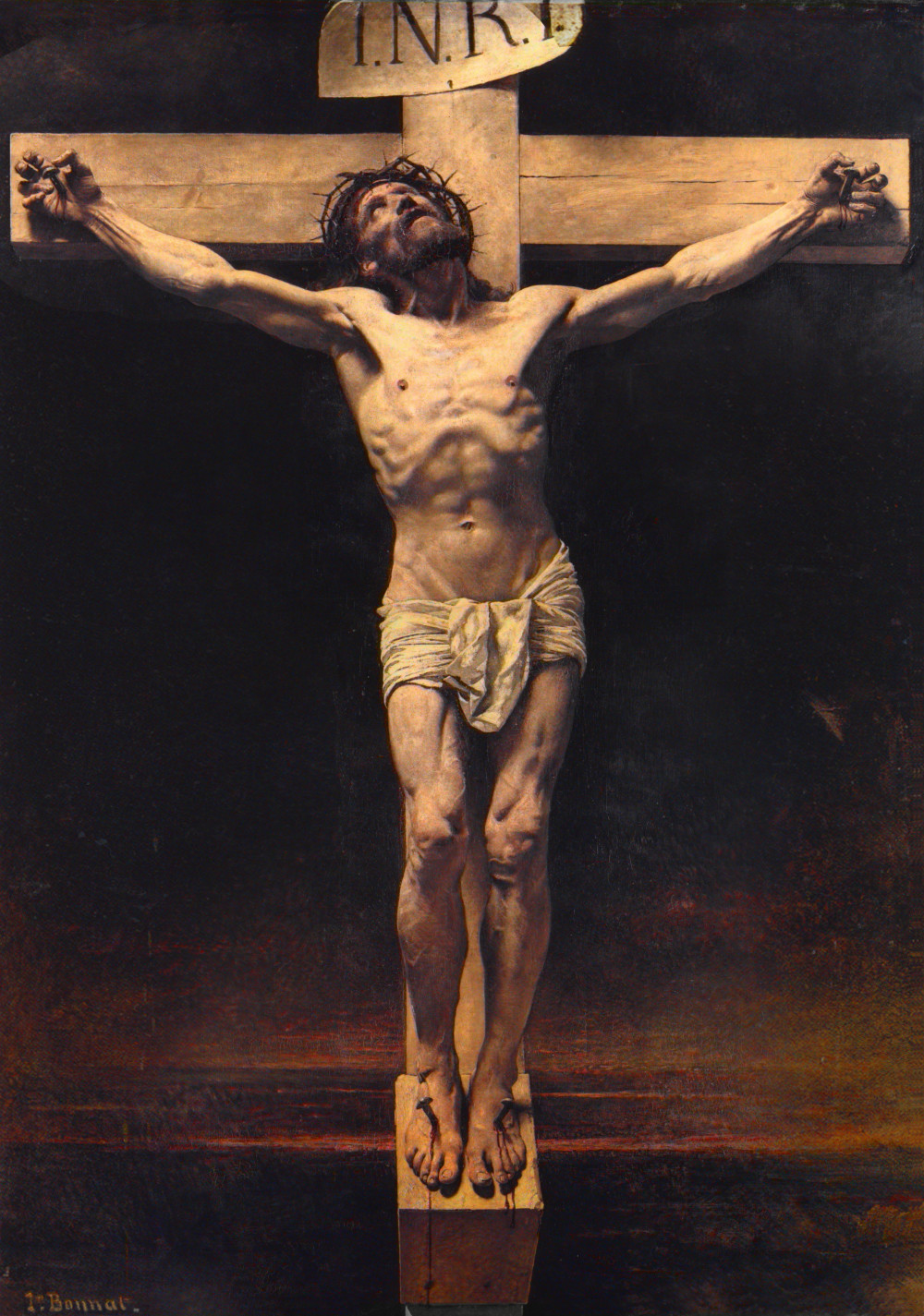
A Meditation for Good Friday: How To Undo the Effects of Sin?
Cardinal Newman, now Saint John Henry Newman, was a towering figure of nineteenth-century Catholicism who is almost universally admired. I say “almost” because not everyone likes him. I knew a priest once, Arthur Caulkins, who has become disenchanted with Newman. As an undergraduate Arthur had been enamoured of Newman, and this interest continued when he[…]Continue reading→
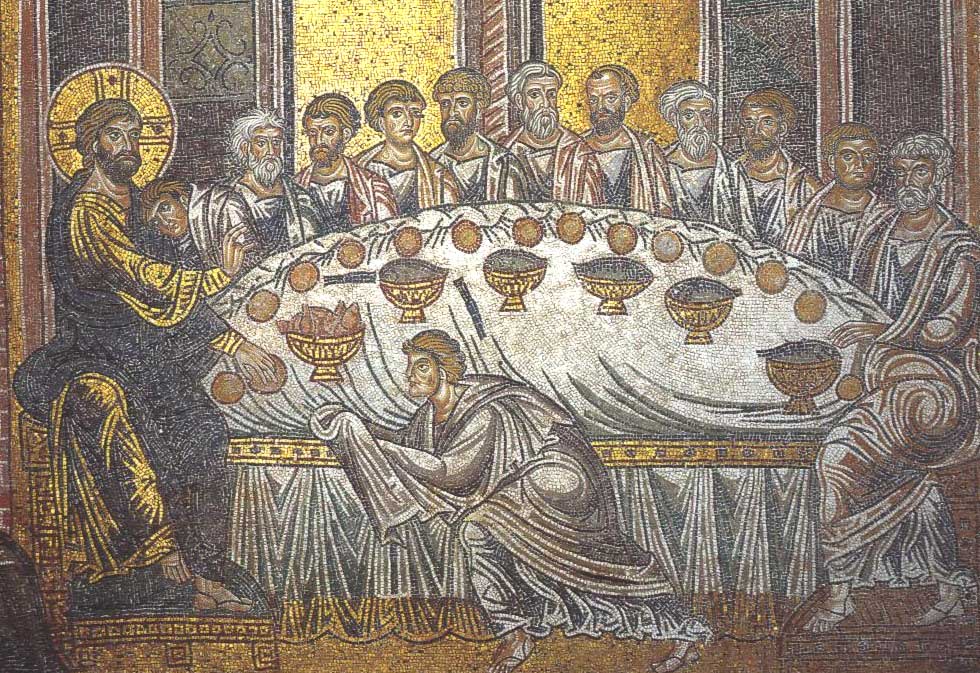
Pope Benedict’s Last Holy Thursday Homily
MASS OF THE LORD’S SUPPER HOMILY OF HIS HOLINESS BENEDICT XVI Basilica of St John Lateran Holy Thursday, 5 April 2012 Photo Gallery (Video) Dear Brothers and Sisters! Holy Thursday is not only the day of the institution of the Most Holy Eucharist, whose splendour bathes all else and in some ways draws it to[…]Continue reading→