
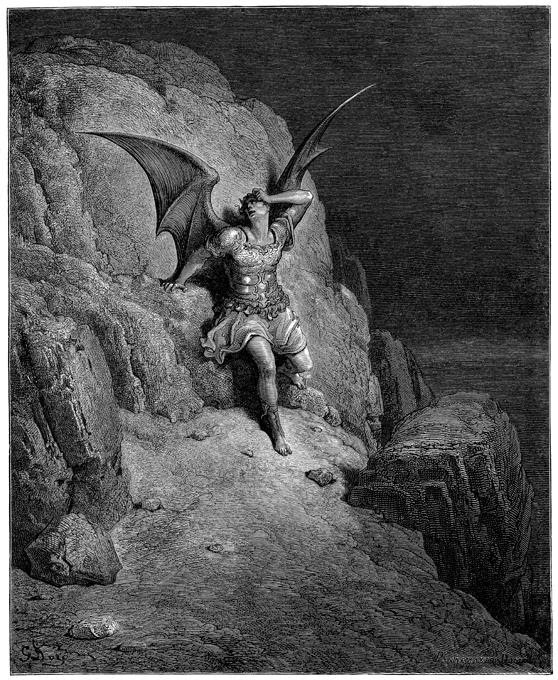
The Problem of Evil
There is no better way to solve the problem of evil than by starting with a definition of what evil is, or is not. According to the German philosopher Arthur Schopenhauer, the universe itself is fundamentally evil. He said that those who wish to escape this evil are justified in committing suicide. For Schopenhauer evil has a real existence, not an imaginary one. It is good, not evil, that is illusory. As he plainly put it:
Human life must be some kind of mistake. The truth of this will be sufficiently obvious if we only remember that man is a compound of needs and necessities hard to satisfy; and that even when they are satisfied, all he obtains is a state of painlessness, where nothing remains to him but abandonment to boredom. This is direct proof that existence has no real value in itself; for what is boredom but the feeling of the emptiness of life?
Elsewhere, Schopenhauer says this:
That a man who no longer wishes to live for himself must go on living merely as a machine for others to use is an extravagant demand.
The Judaeo-Christian tradition teaches precisely the contrary.
At the end of each day of the Creation account in the Book of Genesis, we are told that what God saw He had created was good. Evil therefore must be accounted for not as something created by God, but as the absence of what God created. Evil exists not objectively, but as the relative absence of the good that God created. Evil is ‘subjective’, in that it ultimately exists within the soul of moral agents, specifically in their will, and how they choose to act, moved by their thoughts and feelings.
Think of it this way, we have notions of order and chaos. That order exists is true because we see it all the time. Science tells us that order exists even within an atom. Has anyone ever seen pure chaos? Randomness, yes; but chaos, no. Or is chaos what we might call splitting the atom and releasing chaos into the world?
Now the natural death of a child is not an objective evil, though it may cause immense sadness and suffering. But the death of a child by abortion is objectively evil because the event deliberately defies the objective good of bringing a child into the world. Abortion is not a good, but rather the empty illusion of a positive good (convenience for the mother, financial profit for the abortionist). Abortion is the absence of the good will we should have toward the unborn, the same good will we all should have toward all of humankind.
According to both Augustine and Thomas Aquinas, evil exists only in the state of mind and heart of the doer of acts that are contrary to the will of God, who is Goodness itself. God permits these departures from His will because, if they were not permitted, humans and angels would have no free will of their own. Free will in itself is a good. Only by means of free will can we choose to love God. Without free will we would be mere collections of robotic molecules which move about only as a consequence of being influenced by other collections of robotic molecules. Those who complain that God did not create a perfect universe complain in vain. The argument that God permits evil cannot be used as proof that the Christian God, if he exists, must be diabolical, as some like to insist, any more than the notion that a wicked child is proof that its parents are diabolical.
Some people are of the opinion that evil is good. These are diabolical people very much under the influence of evil spirits. The evil spirit will seek to persuade us that an evil act is an actual good (something pleasant or useful) that exists in its own right. But as Archbishop Fulton Sheen put it in Three to Get Married:
Evil, in order to be attractive must at least wear the guise of goodness. Hell has to be gilded with gold of paradise, or men would never want its evil. If evil were always called by its right name, it would lose much of its appeal.
What is evil’s right name? Since evil is the negation of good, perhaps we should call it “Nothing.” That fits, doesn’t it? We realize that greedy souls, lustful souls, ambitious souls, arrogant souls, murderous souls bring nothing of their boasts with them into their graves. Nobody even cares to remember them except perhaps those who are headed with empty hearts into the same shallow and shameful graves. Those few who might honor or cherish the memory of evil people deserve the censure of Isaiah 5:20: “Woe to those who call evil good and good evil.”
They have confused Being with Nothingness. Jean-Paul Sartre, perhaps the most famous atheist of the modern age, wrote a book titled Being and Nothingness. It is one of the darkest and most irrational books ever written. Yet many years later Sartre seems to have begun to see the light when, as illness plagued him in old age, he returned to examine anew the Jewish heritage he had abandoned in his youth. Perhaps before his last breath he was attracted to the goodness of God’s Being and repulsed by the Satanic lure of Nothingness.
After all, why should the embrace of Nothingness be preferred to embracing God?

Saint Kateri , Canada’s Protectress
This was the title given to Saint Kateri Tekakwitha, by Pope Benedict XVI, when he canonized her on October 28th, 2012, along with six others, in Saint Peter’ Square (she had been beatified by Pope John Paul II back in 1980). With Saint Joseph as our protector, along with the Canadian martyrs, we seem to[…]Continue reading→

Remembering Father Alphonse de Valk
(Today marks the sixth anniversary of the death of Father Alphonse de Valk, C.S.B., a faithful, courageous and indefatigable Basilian priest, pro-life-and-family apostle, and the founder of Catholic Insight magazine. Here is what we wrote those on his entering into eternity five years ago, as we continue to remember him in our prayers and thoughts)[…]Continue reading→

My Name is Bernadette
April 16th is a propitious day, for besides the anniversary of Father de Valk’s death, who founded Catholic Insight in its print form decades ago, and the commemoration of the ‘two Benedicts’, mentioned in accompanying posts, today we also recall Saint Bernadette Soubirous, the young visionary to whom the Virgin Mary appeared numerous times at[…]Continue reading→

Canonizing Sister Faustina and Divine Mercy
HOMILY OF THE HOLY FATHER MASS IN ST PETER’S SQUARE FOR THE CANONIZATION OF SR MARY FAUSTINA KOWALSKA Sunday, 30 April 2000 1. “Confitemini Domino quoniam bonus, quoniam in saeculum misericordia eius”; “Give thanks to the Lord for he is good; his steadfast love endures for ever” (Ps 118: 1). So the Church sings on the Octave of[…]Continue reading→
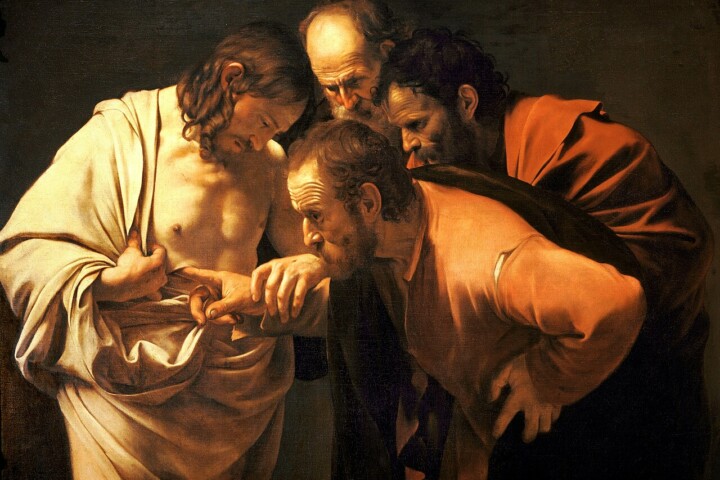
Divine Mercy Sunday – An Echo of Every Mass
Reach out your hand and put it in my side. Do not doubt but believe’… ‘My Lord and my God!’ (Jn. 20:18)). Today is Divine Mercy Sunday, and as we celebrate the end of the Easter Octave, we contemplate the wounded side of our Saviour, the Church’s source of life. On Good Friday in the[…]Continue reading→

Saint Stanislaus of Szczepanów
We celebrate Saint Stanislaus today (+ April 11, 1079), in light of this Easter Octave, a bishop and martyr who accepted the episcopacy only at the direct order of Pope Alexander II. He proved a wise and courageous leader of his flock, put to death by his own king, Boleslaus, for rebuking the monarch’s ‘immoral[…]Continue reading→
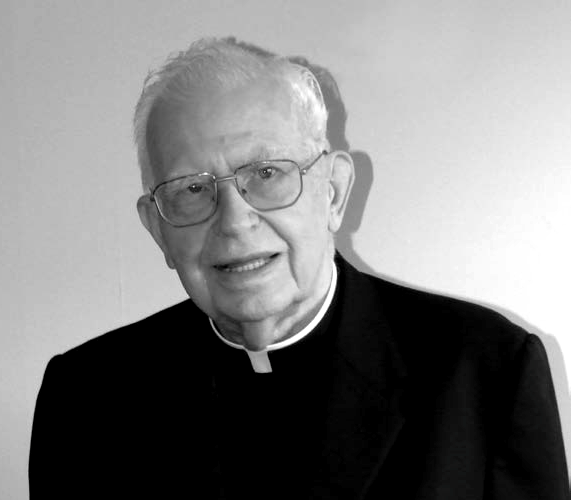
First Holy Communion: Sermon from May 16, 1943
Here is a sermon from the good old days by +Rev. Msgr. Vincent Nicholas Foy (August 14, 1915 – March 13, 2017), from 1943. Readers may recall that Pope Saint Pius X, by the decree Quam Singulari in 1910, lowered the customary age of reception of Holy Communion – after the rigours of the plague[…]Continue reading→
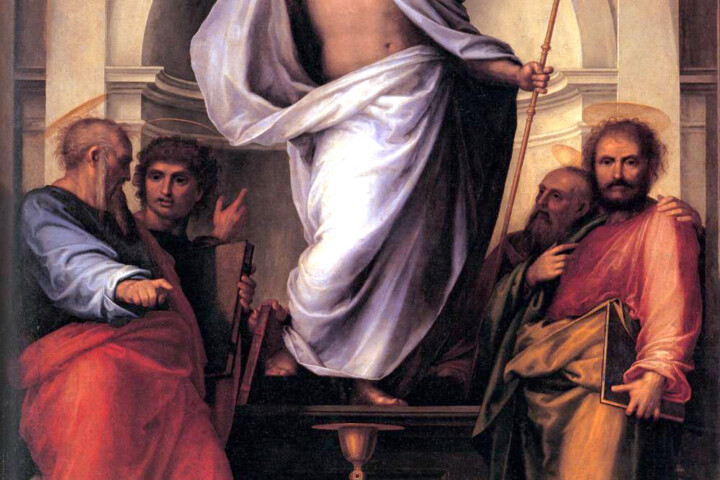
In the Glorious Light of Easter, Alleluia!
Set your minds on things that are above, not on things that are on earth, for you have died, and your life is hidden with Christ in God. When Christ who is your life is revealed, then you also will be revealed with him in glory (Col. 3:3-4). The Resurrection of Our Lord and Saviour[…]Continue reading→
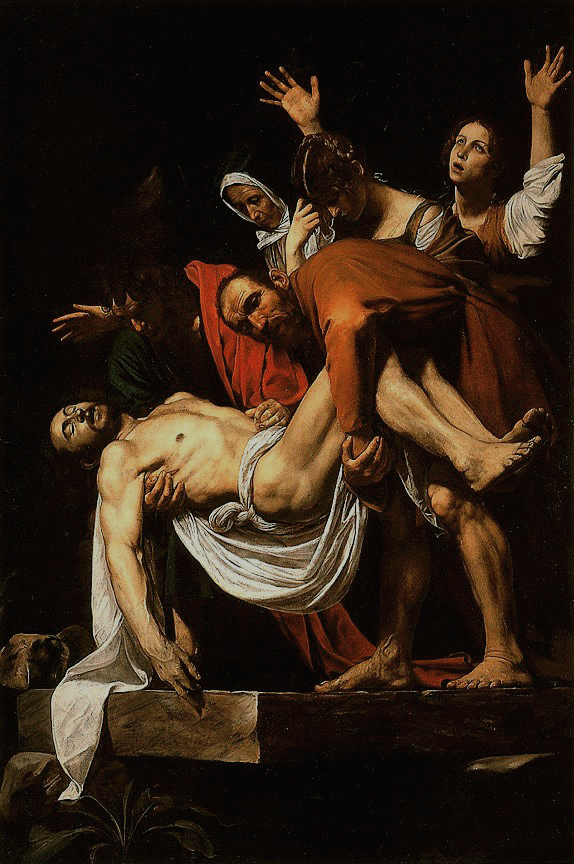
An Ancient Homily for Holy Saturday
The time between Good Friday and Easter Sunday is one of waiting, in silence, as the world wonders – anticipates – what will happen, after the death of Christ. We re-live this time each year in the anamnesis of our liturgy, and in turn look forward to the glorious re-creation of all things at the[…]Continue reading→
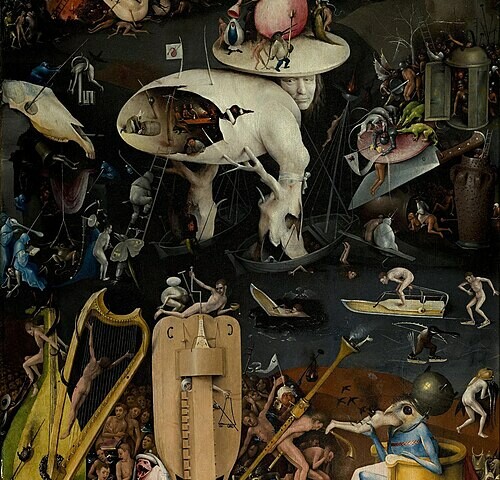
Europe’s Long Descent
(As we meditate on this day on Christ’s burial, and His descent into hell, it is fitting to ponder here with contributor Peter Marcus how the world seems to be heading there as well. The difference is that, although God cannot ‘redeem’ hell, nor those therein, He can and did redeem the world. There is[…]Continue reading→