
From the Heart of a Woman: What It Really Means to Be a Man
What does it really mean to be a man? Well, I cannot tell you firsthand. I am a woman. However, I believe that it is women who have the profound ability to reveal certain characteristics of masculinity that men could otherwise never see. The same goes for men in how they reveal feminity in a deep and unique sense. In their complementarity, the two sexes reveal hidden mysteries about the other. Writing upon this basis, I will now give an account of what it means to be a man. I pray this piece will inspire admiration for the masculine genius and encourage men to resolutely embrace their life mission.
I look at our society and can tell you with ease what it looks like not to live into the role of a man. To put it frankly, we live in a world plagued by effeminacy. The Latin word “effeminando” translates literally “to unman.” It must not be mistaken with the Latin term “femininus” meaning “feminine.” St. Thomas Aquinas in his famous Summa Theologiae defines effeminacy as an unwillingness to put aside one’s pleasure to pursue what is arduous.[1] He puts effeminacy at odds with the virtue of perseverance as a kind of unnatural softness. Effeminacy does not deal with the quest for pleasure as much as it deals with the unwillingness to suffer for what is good. Aquinas says that a thing is said to be soft if it “readily yields to the touch.”[2] He adds that “a man is not said to be effeminate if he yields to heavy blows.”[3] Heavy blows call for an act of supernatural courage. The issue, rather, lies in the man who is not willing to endure the everyday trials and sufferings to do the right thing. While sloth is an aversion to what is hard, effeminacy is an attachment to pleasure. Christ, on the other hand, took on all responsibility, choosing the greatest sacrifice, greatest suffering, and the greatest displeasure of the bitter cross.[4] It is precisely in saying yes to the call to sacrifice in daily life that men conquer effeminacy and begin living lives of purpose in accord with their design.
Though “the Church does not have a singular, definitive document on what it means to be masculine,” she makes it known through Christ’s example that a man’s purpose is most fully realized in sacrificial love.[5] In an article entitled “Real Masculinity: Sacrificial Love and a Servant’s Heart,” Jake Geis states, “Jesus blazed a path that all men long to follow, though few have the guts to walk.”[6] The heart of every man longs to be the hero, the doer of great deeds. Deep down, every man wants to make a heroic sacrifice of himself. What many men today lose sight of is not the desire itself, but that it is a reasonable one, one that is practical for their everyday life. In the presence of radical feminism that breeds an antipathy toward men, it follows that men feel restrained from giving of themselves. In many ways, men feel both unwanted and unneeded by the women around them. Coupled with this, an abundance of comforts and easy pleasures constantly within reach leaves men questioning this urge to go outside of themselves. The reality is that men are called to daily acts of sacrifice and only in sacrifice will they find purpose and fulfillment in life. Christ displays this in His act of sacrificial love on the Cross, the act that flipped effeminacy on its head. For this reason, what Christ accomplished on Calvary stands as the manliest act of all time. The Cross remains the greatest act of love, but men must also look to the ordinary, everyday life of Christ for guidance. Christ exhibited His power in making Himself a servant. His entire life leading up to Calvary was outward-focused.[7] He consistently made a sacrifice of Himself for others. The boy who recognizes this calling quickly becomes a man.
While many women today claim to want a man who is complacent, pliant, and always agreeable, deep down no woman would prefer such a man over a virtuous, sacrificial man who knows how to make decisions and follow through. Women do not need “other Adams” who will remain silent in the face of harm and temptation, but rather other Christs who will risk their reputation and even their lives in order to do what is right and what aligns with true love. Imagine a world where men lived into their role of sacrificial love and women recognized their desire for it? Men, let the words of St. Catherine of Siena penetrate your heart; “Be who God created you to be and you will set the world on fire.” Do not be afraid to sacrifice, to put aside what is easy and pleasurable to pursue a life that is rich in meaning and in charity. It is in even the smallest, most hidden of sacrifices that Christ is glorified and our humanity restored.
Saint Joseph and Saint Joachim, pray for us!
[1] St. Thomas Aquinas, Summa Theologiae, trans. Fathers of the English Dominican Province (Online Edition Copyright © 2017 by Kevin Knight), II-II, q. 138, respondeo.
[2] Aquinas, ST II-II, q. 138, respondeo.
[3] Aquinas, ST II-II, q. 138, respondeo.
[4] Fr. Chad Ripperger, “How to Raise a Man”, Sensuum Fidelium, April 11, 2014, https://www.youtube.com/watch?v=z7V1W967ofA.
[5] Jake Geis, “Real Masculinity: Sacrificial Love and a Servant’s Heart”, (The Bishop’s Bulletin: Catholic Diocese of Sioux Falls, June 5, 2023), https://www.sfcatholic.org/bishopsbulletin/real-masculinity-sacrificial-love-and-a-servants-heart/.
[6] Geis, “Real Masculinity”.
[7] Geis, “Real Masculinity”.

Remembering Father Alphonse de Valk
(Today marks the sixth anniversary of the death of Father Alphonse de Valk, C.S.B., a faithful, courageous and indefatigable Basilian priest, pro-life-and-family apostle, and the founder of Catholic Insight magazine. Here is what we wrote those on his entering into eternity five years ago, as we continue to remember him in our prayers and thoughts)[…]Continue reading→

Divine Mercy Sunday – An Echo of Every Mass
Reach out your hand and put it in my side. Do not doubt but believe’… ‘My Lord and my God!’ (Jn. 20:18)). Today is Divine Mercy Sunday, and as we celebrate the end of the Easter Octave, we contemplate the wounded side of our Saviour, the Church’s source of life. On Good Friday in the[…]Continue reading→

Saint Stanislaus of Szczepanów
We celebrate Saint Stanislaus today (+ April 11, 1079), in light of this Easter Octave, a bishop and martyr who accepted the episcopacy only at the direct order of Pope Alexander II. He proved a wise and courageous leader of his flock, put to death by his own king, Boleslaus, for rebuking the monarch’s ‘immoral[…]Continue reading→
First Holy Communion: Sermon from May 16, 1943
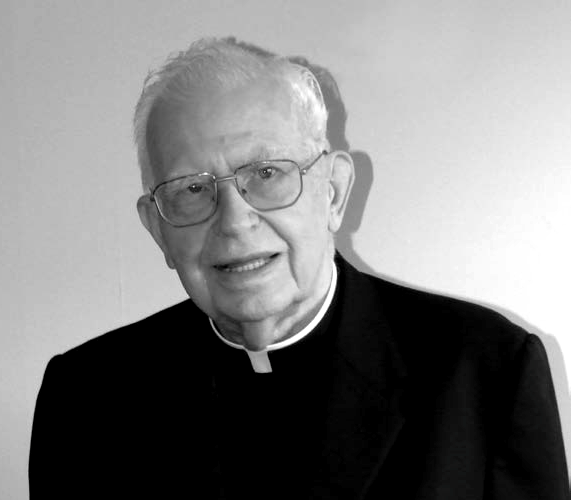
Here is a sermon from the good old days by +Rev. Msgr. Vincent Nicholas Foy (August 14, 1915 – March 13, 2017), from 1943. Readers may recall that Pope Saint Pius X, by the decree Quam Singulari in 1910, lowered the customary age of reception of Holy Communion – after the rigours of the plague[…]Continue reading→

In the Glorious Light of Easter, Alleluia!
Set your minds on things that are above, not on things that are on earth, for you have died, and your life is hidden with Christ in God. When Christ who is your life is revealed, then you also will be revealed with him in glory (Col. 3:3-4). The Resurrection of Our Lord and Saviour[…]Continue reading→

An Ancient Homily for Holy Saturday
The time between Good Friday and Easter Sunday is one of waiting, in silence, as the world wonders – anticipates – what will happen, after the death of Christ. We re-live this time each year in the anamnesis of our liturgy, and in turn look forward to the glorious re-creation of all things at the[…]Continue reading→
Europe’s Long Descent
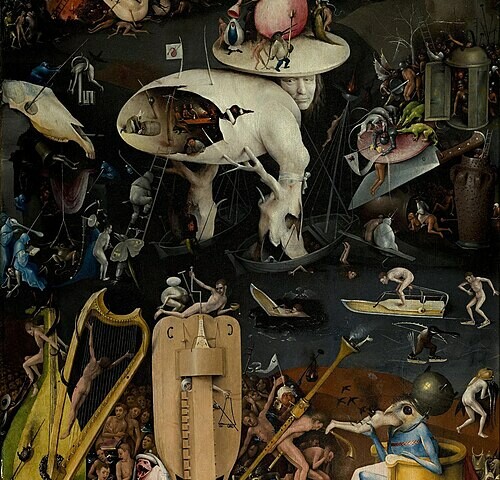
(As we meditate on this day on Christ’s burial, and His descent into hell, it is fitting to ponder here with contributor Peter Marcus how the world seems to be heading there as well. The difference is that, although God cannot ‘redeem’ hell, nor those therein, He can and did redeem the world. There is[…]Continue reading→
Pope Saint John Paul II’s First Good Friday Homily
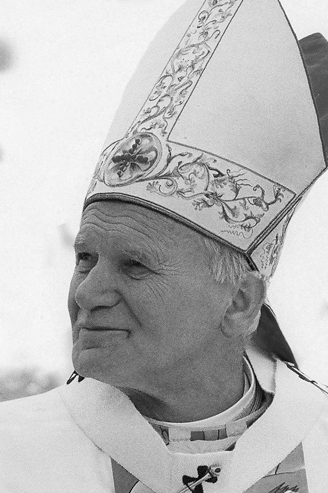
ADDRESS OF HIS HOLINESS JOHN PAUL II AT THE CONCLUSION OF THE STATIONS OF THE CROSS AT THE COLOSSEUM Good Friday, 13 April 1979 When we make the Way of the Cross from one station to the next, in spirit we are always at the spot wherethis journey had its “historical” place: where it[…]Continue reading→
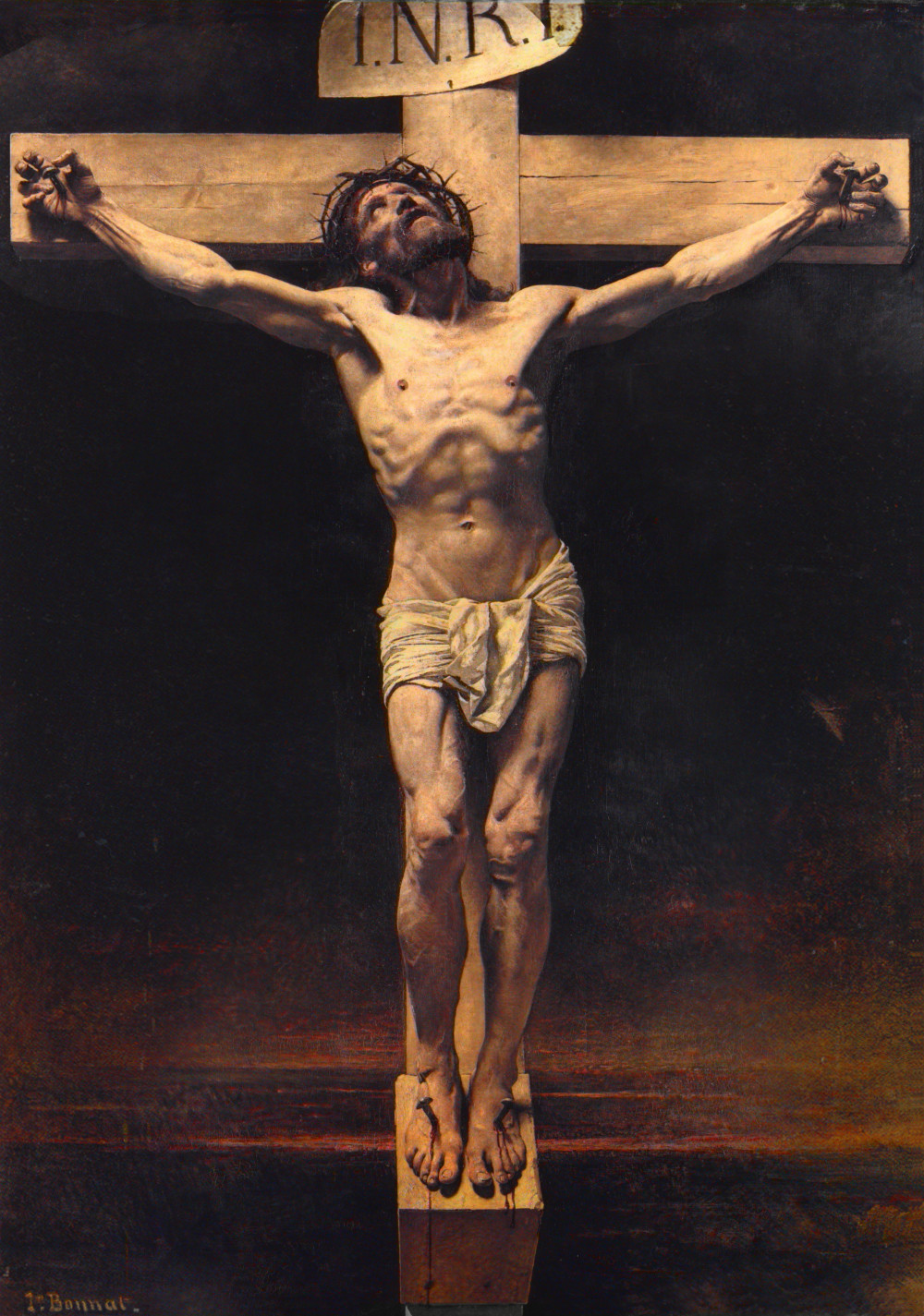
A Meditation for Good Friday: How To Undo the Effects of Sin?
Cardinal Newman, now Saint John Henry Newman, was a towering figure of nineteenth-century Catholicism who is almost universally admired. I say “almost” because not everyone likes him. I knew a priest once, Arthur Caulkins, who has become disenchanted with Newman. As an undergraduate Arthur had been enamoured of Newman, and this interest continued when he[…]Continue reading→
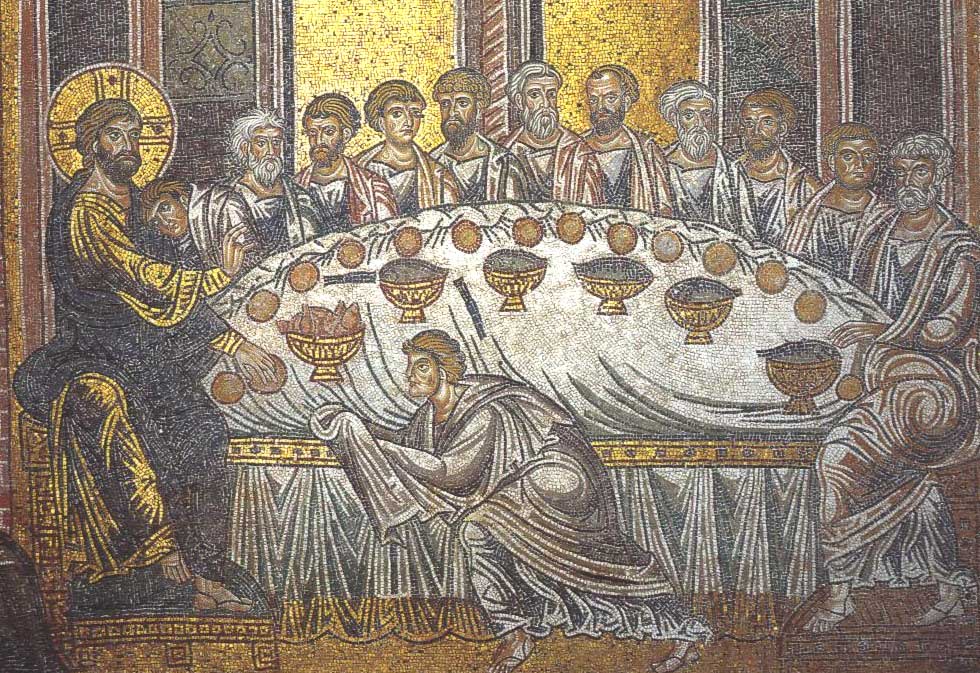
Pope Benedict’s Last Holy Thursday Homily
MASS OF THE LORD’S SUPPER HOMILY OF HIS HOLINESS BENEDICT XVI Basilica of St John Lateran Holy Thursday, 5 April 2012 Photo Gallery (Video) Dear Brothers and Sisters! Holy Thursday is not only the day of the institution of the Most Holy Eucharist, whose splendour bathes all else and in some ways draws it to[…]Continue reading→