

Christianity and Altruism
“Greater love has no man than this, that a man lay down his life for his friends.” – John 15:13
In his play No Exit Jean Paul Sartre had one of his characters describe hell as “other people.” But Christ preached that holiness, which is the path to heaven, is living for other people; that is, we live with charity in our hearts for all, even our enemies. Modern philosophers present us with the ethical belief called altruism, a drably scientific term coined by the sociologist Auguste Comte in the 19th Century.
But true altruism is not merely a good feeling toward others that is detected among all races of mankind. It is summed up best in the “Love one another” of Jesus Christ (John 13:34). Religious altruism is the belief that when we love others we are loving Christ, who made all, and therefore is in all, and therefore must be loved in all. The perfect expression of this is the remark of Jesus in Matthew 25:40. At the Last Judgment souls will stand before the King and he will judge them according to how they have loved. “I tell you the truth,” Jesus says, “whatever you did for one of the least of these brothers of mine, you did for me.”
G.K. Chesterton rightly took Frederick Nietzsche to task for taking the view that altruism is merely a device invented by the poor and the weak to garner the sympathy of the strong and the rich; Chesterton thought this kind of logic suggests someone rather deranged. Or, as he put it, “Every man who will not have softening of the heart must at least have softening of the brain.” Nietzsche’s last days in a mental asylum demonstrate the truth of Chesterton’s remark.
Altruism does not even begin in the corridors of the rich and the powerful. It begins in the holiness of the family. A father and mother seek the welfare of their children, and sacrifice everything they have, to ensure that welfare. Joseph and Mary fled to Egypt to save their child from Herod’s wicked desire to kill him in his cradle. All parents see in their children what Joseph and Mary saw in Jesus, the love of God planted as a seed and needing the love of a mother and a father to help it grow and protect it from harm.
Imagine what life would be like if we lived only for ourselves. Do we not envisage an image of pure and unadulterated hell? People believe a profound lie if they think just satisfying their own needs without regard to the needs of others can fulfill their lives. In such a world, to paraphrase the poet, they only turn out to be “alone and afraid in a world they have made.” Broken marriages are abundant proof that when parents deprive their children of a happy and secure upbringing, not only one or both of the parents, but some of their fragile children are at risk to become “alone and afraid in a world their parents made.”
A necessary part of altruism, as the Church teaches, consists often of giving alms for the needy. Jesus preached almsgiving, but almsgiving with the right purpose. “Be careful not to do your ‘acts of righteousness’ in front of others, to be seen by them. If you do, you will have no reward from your Father in heaven.” (Matthew 6:1) That kind of giving is egotistic, and is done that we may shine in the presence of others, when where we only really need to shine is in the presence of our Lord.
Moreover, almsgiving is relative to what one has to give. “He looked up and saw the rich putting their gifts into the treasury. And He saw a poor widow putting in two small copper coins. And He said, ‘Truly I say to you, this poor widow put in more than all of them; for they all out of their surplus put into the offering; but she out of her poverty put in all that she had to live on.’” Luke 21:1-4
As Archbishop Fulton Sheen advised, “The way to win friends and influence them is not to flatter them, but to be selfless. The greatest happiness in life comes not from having, but from giving. From the Christian point of view the true master is the servant.”
So the truest Master who ever lived was the Servant who, agonizing with his arms outstretched and fingers clutching at the sky, offered up his innocence to lessen the penalty for all our blackest sins.

Saint Kateri , Canada’s Protectress
This was the title given to Saint Kateri Tekakwitha, by Pope Benedict XVI, when he canonized her on October 28th, 2012, along with six others, in Saint Peter’ Square (she had been beatified by Pope John Paul II back in 1980). With Saint Joseph as our protector, along with the Canadian martyrs, we seem to[…]Continue reading→

Remembering Father Alphonse de Valk
(Today marks the sixth anniversary of the death of Father Alphonse de Valk, C.S.B., a faithful, courageous and indefatigable Basilian priest, pro-life-and-family apostle, and the founder of Catholic Insight magazine. Here is what we wrote those on his entering into eternity five years ago, as we continue to remember him in our prayers and thoughts)[…]Continue reading→

My Name is Bernadette
April 16th is a propitious day, for besides the anniversary of Father de Valk’s death, who founded Catholic Insight in its print form decades ago, and the commemoration of the ‘two Benedicts’, mentioned in accompanying posts, today we also recall Saint Bernadette Soubirous, the young visionary to whom the Virgin Mary appeared numerous times at[…]Continue reading→
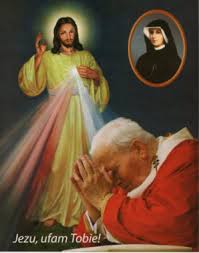
Canonizing Sister Faustina and Divine Mercy
HOMILY OF THE HOLY FATHER MASS IN ST PETER’S SQUARE FOR THE CANONIZATION OF SR MARY FAUSTINA KOWALSKA Sunday, 30 April 2000 1. “Confitemini Domino quoniam bonus, quoniam in saeculum misericordia eius”; “Give thanks to the Lord for he is good; his steadfast love endures for ever” (Ps 118: 1). So the Church sings on the Octave of[…]Continue reading→
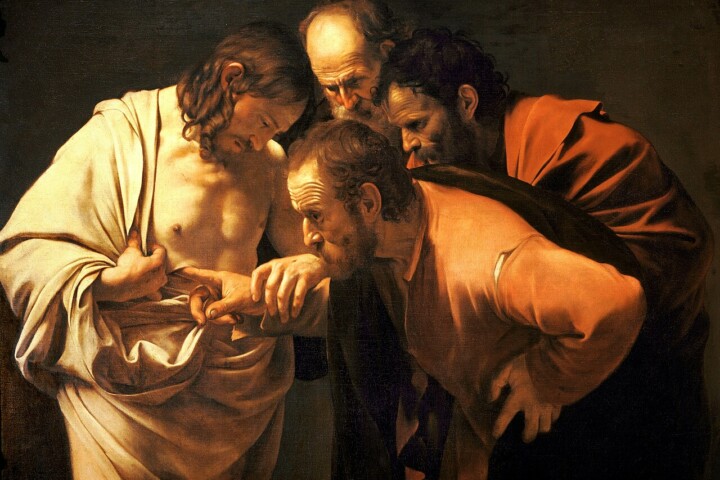
Divine Mercy Sunday – An Echo of Every Mass
Reach out your hand and put it in my side. Do not doubt but believe’… ‘My Lord and my God!’ (Jn. 20:18)). Today is Divine Mercy Sunday, and as we celebrate the end of the Easter Octave, we contemplate the wounded side of our Saviour, the Church’s source of life. On Good Friday in the[…]Continue reading→

Saint Stanislaus of Szczepanów
We celebrate Saint Stanislaus today (+ April 11, 1079), in light of this Easter Octave, a bishop and martyr who accepted the episcopacy only at the direct order of Pope Alexander II. He proved a wise and courageous leader of his flock, put to death by his own king, Boleslaus, for rebuking the monarch’s ‘immoral[…]Continue reading→
First Holy Communion: Sermon from May 16, 1943
Here is a sermon from the good old days by +Rev. Msgr. Vincent Nicholas Foy (August 14, 1915 – March 13, 2017), from 1943. Readers may recall that Pope Saint Pius X, by the decree Quam Singulari in 1910, lowered the customary age of reception of Holy Communion – after the rigours of the plague[…]Continue reading→
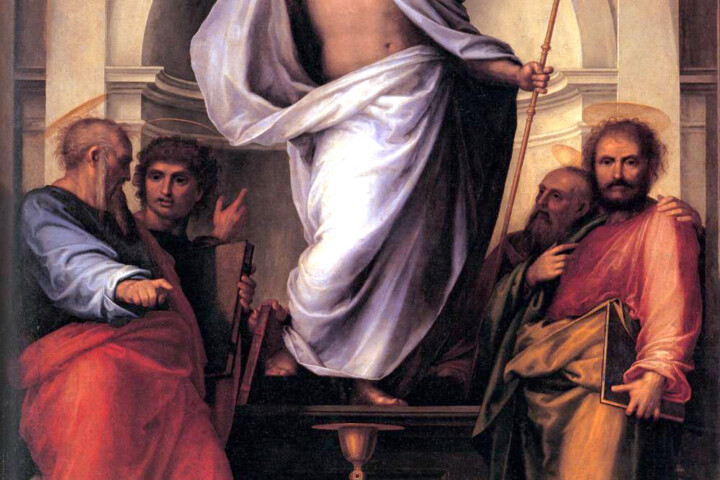
In the Glorious Light of Easter, Alleluia!
Set your minds on things that are above, not on things that are on earth, for you have died, and your life is hidden with Christ in God. When Christ who is your life is revealed, then you also will be revealed with him in glory (Col. 3:3-4). The Resurrection of Our Lord and Saviour[…]Continue reading→
An Ancient Homily for Holy Saturday
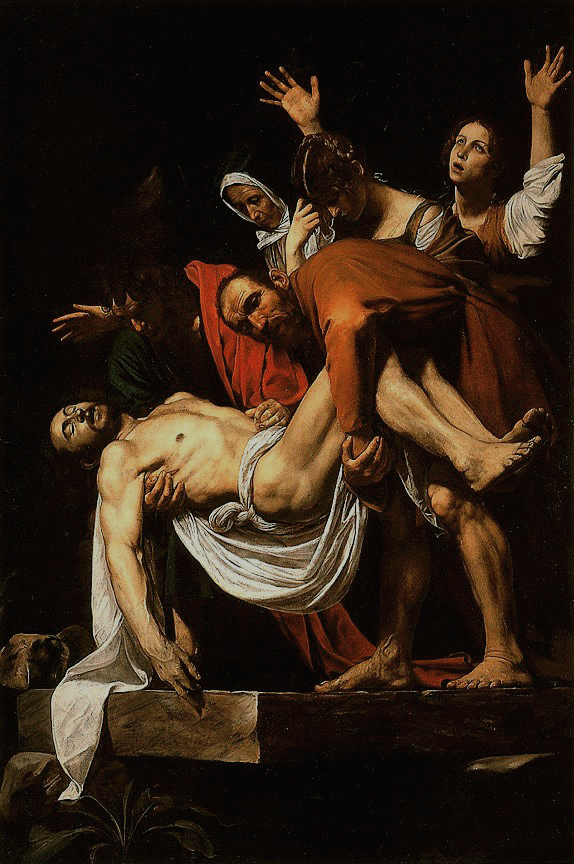
The time between Good Friday and Easter Sunday is one of waiting, in silence, as the world wonders – anticipates – what will happen, after the death of Christ. We re-live this time each year in the anamnesis of our liturgy, and in turn look forward to the glorious re-creation of all things at the[…]Continue reading→
Europe’s Long Descent
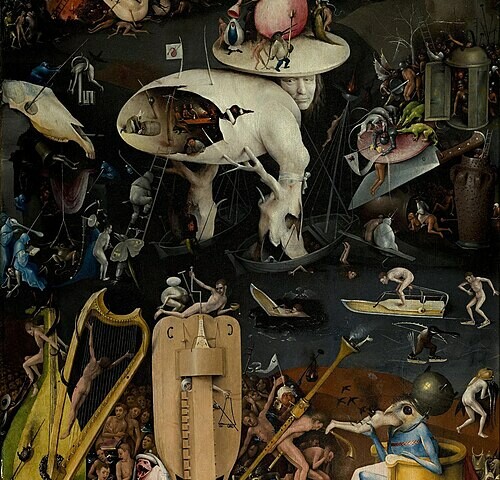
(As we meditate on this day on Christ’s burial, and His descent into hell, it is fitting to ponder here with contributor Peter Marcus how the world seems to be heading there as well. The difference is that, although God cannot ‘redeem’ hell, nor those therein, He can and did redeem the world. There is[…]Continue reading→