
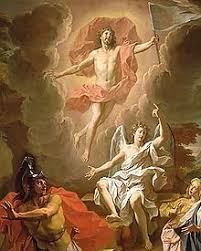
The Fathers of the Church on the Resurrection of Jesus
Today is the solemnity of Easter! After three days in the tomb Jesus has fulfilled his promise that He would resurrect for life eternal. As an infinite loving God He resurrected us with Him. Blessed are we if we assent in faith to let Him do so!
The Church Fathers spoke at length on this central tenet of our Christian faith. For instance, Pope St Clement I of Rome tells us that Christ’s resurrection heralds our future resurrection too. In his Letter to the Corinthians he writes: Let us consider, beloved, how the Master is continually proving to us that there will be a future resurrection, of which he has made the Lord Jesus Christ the firstling, by raising him from the dead. Let us look, beloved, at the resurrection which is taking place seasonally. Day and night make known the resurrection to us. The night sleeps, the day arises. Consider the plants that grow. How and in what manner does the sowing take place? The sower went forth and cast each of the seeds onto the ground; and they fall to the ground, parched and bare, where they decay. Then from their decay the greatness of the master’s providence raises them up, and from the one grain more grow and bring forth fruit.
Walking on the same trail of Clement of Rome, St Ignatius of Antioch also affirms his ardent belief in the bodily resurrection particularly in his Epistle to the Smyrneans. Within the same letter this apostolic father accentuates on the bodily nature of Christ’s resurrection by recalling the Gospel information when Jesus’ resurrected body was touched by contrasting it with the body-less demons. In so doing St Ignatius showed how faithful he was to the Apostles’ teaching concerning their belief in the bodily resurrection.
For He suffered all these things for our sakes [that we might be saved]; and He suffered truly, as also He raised Himself truly; not as certain unbelievers say, that He suffered in semblance, being themselves mere semblance. And according as their opinions are, so shall it happen to them, for they are without body and demon-like. For I know and believe that He was in the flesh even after the resurrection; and when He came to Peter and his company, He said to them, “Lay hold and handle me, and see that I am not a demon without body.” And straightway they touched Him, and they believed, being joined unto His flesh and His blood. Wherefore also they despised death, nay they were found superior to death. And after His resurrection He ate with them and drank with them as one in the flesh, though spiritually He was united with the Father (Epistle to the Smyrnaeans Chapters 2-3).
In teaching St John Chrysostom by the resurrection of Christ death, hell and the demons are all defeated at once. In his Paschal Sermon he preaches: O Death, where is your sting? O Hell, where is your victory? Christ is risen, and you are overthrown. Christ is risen, and the demons are fallen. Christ is risen, and the angels rejoice. Christ is risen, and life reigns. Christ is risen, and not one dead remains in the grave. For Christ, being risen from the dead, become the first fruits of those who have fallen asleep. To Him be glory and dominion unto ages of ages. Amen.
When speaking on the resurrection of Christ Our Lord, and, most specifically, our bodily resurrection, St Methodius of Olympus sees it in perfect parallel of the three days and three nights Jonah spent in the whale’s belly. In his treatise On the Resurrection he writes: As, then, Jonah spent three days and as many nights in the whale’s belly, and was delivered up sound again, so shall we all, who have passed through the three stages of our present life on earth — I mean the beginning, the middle, and the end, of which all this present time consists — rise again. For there are altogether three intervals of time, the past, the future, and the present. And for this reason the Lord spent so many days in the earth symbolically, thereby teaching clearly that when the fore-mentioned intervals of time have been fulfilled, then shall come our resurrection, which is the beginning of the future age, and the end of this.
It is in their strong belief in Jesus’ Resurrection that the Fathers were able to affirm our bodily resurrection after this life. In his Second Letter to the Corinthians, St Clement states: Let none of you say that this flesh is not judged and does not rise again. Just think: In what state were you saved, and in what state did you recover your [spiritual] sight, if not in the flesh? In the same manner, as you were called in the flesh, so you shall come in the flesh. If Christ, the Lord who saved us, though he was originally spirit, became flesh and in this state called us, so also shall we receive our reward in the flesh (Second Clement 9:1–6 [A.D. 150]).
In Jesus’ Resurrection we lose nothing from who we are now when we are resurrected. St Augustine in his Handbook of Faith, Hope, and Charity, observes: God, the wonderful and inexpressible Artisan, will, with a wonderful and inexpressible speed, restore our flesh from the whole of the material of which it was constituted, and it will make no difference to its reconstruction whether hairs go back to hairs and nails go back to nails, or whatever of these had perished be changed to flesh and be assigned to other parts of the body, while the providence of the Artisan will take care that nothing unseemly result” (Handbook of Faith, Hope, and Charity 23:89 [A.D. 421]).
Let us make our own the following prayer of the Early Church on Christ’s resurrection: Blessed be the God and Father of our Lord Jesus Christ, which according to his abundant mercy hath begotten us again unto a lively hope by the resurrection of Jesus Christ from the dead, to an inheritance incorruptible, and undefiled, and that fadeth not away, reserved in heaven for us. Keep us by the power of God through faith unto salvation; that the trial of our faith, being much more precious than of gold that perisheth, though it be tried with fire, might be found unto praise and honour and glory at the appearing of Jesus Christ.
Amen.

Saint Kateri , Canada’s Protectress
This was the title given to Saint Kateri Tekakwitha, by Pope Benedict XVI, when he canonized her on October 28th, 2012, along with six others, in Saint Peter’ Square (she had been beatified by Pope John Paul II back in 1980). With Saint Joseph as our protector, along with the Canadian martyrs, we seem to[…]Continue reading→

Remembering Father Alphonse de Valk
(Today marks the sixth anniversary of the death of Father Alphonse de Valk, C.S.B., a faithful, courageous and indefatigable Basilian priest, pro-life-and-family apostle, and the founder of Catholic Insight magazine. Here is what we wrote those on his entering into eternity five years ago, as we continue to remember him in our prayers and thoughts)[…]Continue reading→

My Name is Bernadette
April 16th is a propitious day, for besides the anniversary of Father de Valk’s death, who founded Catholic Insight in its print form decades ago, and the commemoration of the ‘two Benedicts’, mentioned in accompanying posts, today we also recall Saint Bernadette Soubirous, the young visionary to whom the Virgin Mary appeared numerous times at[…]Continue reading→
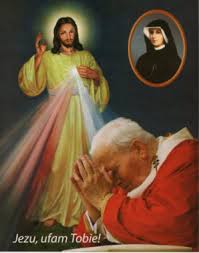
Canonizing Sister Faustina and Divine Mercy
HOMILY OF THE HOLY FATHER MASS IN ST PETER’S SQUARE FOR THE CANONIZATION OF SR MARY FAUSTINA KOWALSKA Sunday, 30 April 2000 1. “Confitemini Domino quoniam bonus, quoniam in saeculum misericordia eius”; “Give thanks to the Lord for he is good; his steadfast love endures for ever” (Ps 118: 1). So the Church sings on the Octave of[…]Continue reading→

Divine Mercy Sunday – An Echo of Every Mass
Reach out your hand and put it in my side. Do not doubt but believe’… ‘My Lord and my God!’ (Jn. 20:18)). Today is Divine Mercy Sunday, and as we celebrate the end of the Easter Octave, we contemplate the wounded side of our Saviour, the Church’s source of life. On Good Friday in the[…]Continue reading→

Saint Stanislaus of Szczepanów
We celebrate Saint Stanislaus today (+ April 11, 1079), in light of this Easter Octave, a bishop and martyr who accepted the episcopacy only at the direct order of Pope Alexander II. He proved a wise and courageous leader of his flock, put to death by his own king, Boleslaus, for rebuking the monarch’s ‘immoral[…]Continue reading→

First Holy Communion: Sermon from May 16, 1943
Here is a sermon from the good old days by +Rev. Msgr. Vincent Nicholas Foy (August 14, 1915 – March 13, 2017), from 1943. Readers may recall that Pope Saint Pius X, by the decree Quam Singulari in 1910, lowered the customary age of reception of Holy Communion – after the rigours of the plague[…]Continue reading→
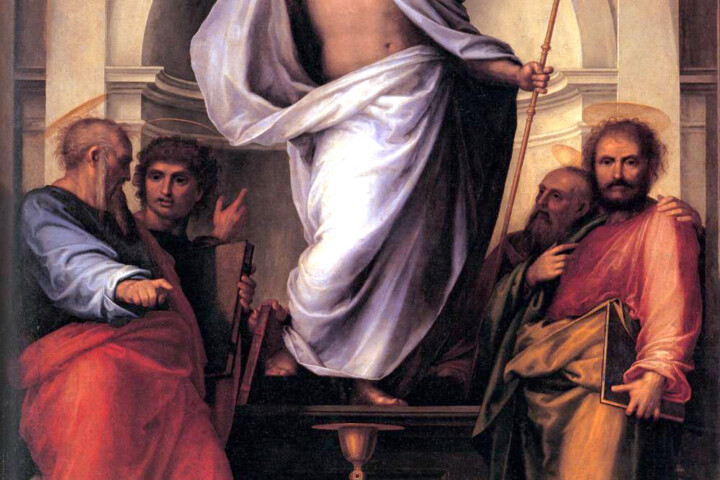
In the Glorious Light of Easter, Alleluia!
Set your minds on things that are above, not on things that are on earth, for you have died, and your life is hidden with Christ in God. When Christ who is your life is revealed, then you also will be revealed with him in glory (Col. 3:3-4). The Resurrection of Our Lord and Saviour[…]Continue reading→
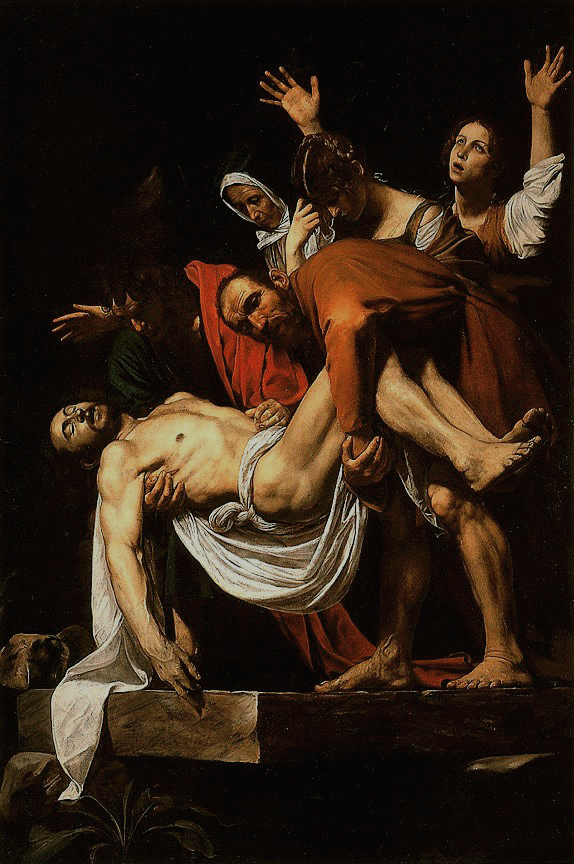
An Ancient Homily for Holy Saturday
The time between Good Friday and Easter Sunday is one of waiting, in silence, as the world wonders – anticipates – what will happen, after the death of Christ. We re-live this time each year in the anamnesis of our liturgy, and in turn look forward to the glorious re-creation of all things at the[…]Continue reading→
Europe’s Long Descent
(As we meditate on this day on Christ’s burial, and His descent into hell, it is fitting to ponder here with contributor Peter Marcus how the world seems to be heading there as well. The difference is that, although God cannot ‘redeem’ hell, nor those therein, He can and did redeem the world. There is[…]Continue reading→