
Wise Words of Guidance From Saint Anthony, Abbot
As we celebrate the feast of St Anthony the Abbot, it comes to my mind the wisdom God has bestowed on this man of great faith and simplicity. It is no wonder than that, in Pope Benedict’s words, St Anthony the Abbot’s life by Athanasius was a bestseller.
In the general audience he gave on Saint Athanasius on Wednesday 20, 2007, Pope Benedict said: Athanasius also wrote meditational texts on the Psalms, subsequently circulated widely, and in particular, a work that constitutes the bestseller of early Christian literature: The Life of Anthony, that is, the biography of St Anthony Abbot. It was written shortly after this Saint’s death precisely while the exiled Bishop of Alexandria was staying with monks in the Egyptian desert. The exemplary biography of this figure dear to Christian tradition soon became very popular, almost immediately translated into Latin, in two editions, and then into various Oriental languages; it made an important contribution to the spread of monasticism in the East and in the West.
But what was special about St Anthony? What made him so popular? St Athanasius gives the following explanation: [T]he fact that his fame has been blazoned everywhere; that all regard him with wonder, and that those who have never seen him long for him, is clear proof of his virtue and God’s love of his soul. For not from writings, nor from worldly wisdom, nor through any art, was Antony renowned, but solely from his piety towards God. That this was the gift of God no one will deny. For from whence into Spain and into Gaul, how into Rome and Africa, was the man heard of who abode hidden in a mountain, unless it was God who makes His own known everywhere, who also promised this to Antony at the beginning? For even if they work secretly, even if they wish to remain in obscurity, yet the Lord shows them as lamps to lighten all, that those who hear may thus know that the precepts of God are able to make men prosper and thus be zealous in the path of virtue.
Saint Anthony’s personal witness was a light for all those who were open to accept his life testimony and his anointed word. In these times where we lack so much guidance and wisdom let us resort to St Anthony’s simple and profound words so that we can draw from them abundant spiritual fruits.
The first advice St Anthony gives us is to avoid bringing about death to our souls particularly through laziness and negligence. He said: If we make every effort to avoid death of the body, still more should it be our endeavor to avoid death of the soul. There is no obstacle for a man who wants to be saved other than negligence and laziness of soul.
Anthony helps us to understand who is the real intelligent person, namely the one who is able to differentiate between good and evil, choosing the good, pursuing it and avoiding evil at all costs. He says: Men are often called intelligent wrongly. Intelligent men are not those who are erudite in the sayings and books of the wise men of old, but those who have an intelligent soul and can discriminate between good and evil. They avoid what is sinful and harms the soul; and with deep gratitude to God they resolutely adhere by dint of practice to what is good and benefits the soul. These men alone should truly be called intelligent.
For Anthony a virtuous life is one wherein the person’s intellect is focused on God’s love in such a way that it does not tolerate the tiniest trace of evil. This great teacher teaches us: One should not say that it is impossible to reach a virtuous life; but one should say that it is not easy. Nor do those who have reached it find it easy to maintain. Those who are devout and whose intellect enjoys the love of God participate in the life of virtue; the ordinary intellect, however, is worldly and wavering, producing both good and evil thoughts, because it is changeful by nature and directed towards material things. But the intellect that enjoys the love of God punishes the evil which arises spontaneously because of man’s laziness.
Drawing from his own experience combating evil Anthony is able to tell us which are the things that keep the devil away from us. He mentions prayer, sacrifices, humility, goodness, love of Jesus and the Cross. Thus he says: The devil is afraid of us when we pray and make sacrifices. He is also afraid when we are humble and good. He is especially afraid when we love Jesus very much. He runs away when we make the Sign of the Cross.
Anthony has a positive view of temptations. He sees them as graces that, when rightly lived, can help us reach heaven easily. He said: Whoever has not experienced temptation cannot enter into the Kingdom of Heaven. Without temptations no-one can be saved. In another saying Anthony says: This is the great work of man: always to take the blame for his own sins before God and to expect temptation to his last breath.
In an age when pride is so glorified it is wise to resort back to what St Anthony teaches us about humility. He says: Learn to love humility, for it will cover all your sins. All sins are repulsive before God, but the most repulsive of all is pride of the heart. Do not consider yourself learned and wise; otherwise, all your efforts will be destroyed, and your boat will reach the harbor empty. If you have great authority, do not threaten anyone with death. Know that, according to nature, you too are susceptible to death, and that every soul sheds its body as its final garment.
Let us now pray to the Lord that, through the intercession of St Anthony the Great we learn God’s saving wisdom to love Him and our brethren.
Dear God, St Anthony the Abbot accepted your call to renounce the world and to love you above all things. He faithfully served you in the solitude of the desert by fasting, prayer, humility and good works. In the Sign of the Cross, he triumphed over the Devil. Through his intercession, may we learn to love you better; with all our hearts, all our souls, all our minds, all our strength and to love our neighbors as we love ourselves. St Anthony the Abbot, great and powerful saint, grant us also this special request […]. Amen.
A Closed, Unsustainable, Descending Loop
As a follow-up to my thoughts on Payette’s payout, here be a stark image of where are here in Canada. As the graph shows in, well, graphic terms, since 2025, the public sector has contributed to 95.5% of economic growth. The private sector – which funds the public sector, or is supposed to – has[…]Continue reading→

Remembering Father Alphonse de Valk
(Today marks the sixth anniversary of the death of Father Alphonse de Valk, C.S.B., a faithful, courageous and indefatigable Basilian priest, pro-life-and-family apostle, and the founder of Catholic Insight magazine. Here is what we wrote those on his entering into eternity five years ago, as we continue to remember him in our prayers and thoughts)[…]Continue reading→
Presidential Pardon of Weronika Krawczyk
As a good news, follow-up to our story from Poland, of the persecution of Weronika Krawczyk for her pro-life views, we heard that she has been granted a presidential pardon. One might still wonder why one needs a presidential pardon for simply holding the long-held belief that the child within the womb is a child,[…]Continue reading→
Pope Leo and a Rosary for Peace
Pope Leo XIV has asked Catholics across the world to join him in a Rosary for peace today, at 18:00 Rome time (6 pm), which would be noon from where I write (EST). If you are able, whether at that time or another, and in whatever way you pray, to join in intercession with the[…]Continue reading→
Payette’s Payout
I was glancing through some headlines, and noticed a mention of Julie Payette – engineer and astronaut and sometime the Queen’s representative in Canada – which brought back vague memories. She was appointed Governor-General by Justin Trudeau in 2017. Ms. Payette resigned in 2021, amidst claims that she created a ‘toxic work environment’, with allegations[…]Continue reading→

Saint Stanislaus of Szczepanów
We celebrate Saint Stanislaus today (+ April 11, 1079), in light of this Easter Octave, a bishop and martyr who accepted the episcopacy only at the direct order of Pope Alexander II. He proved a wise and courageous leader of his flock, put to death by his own king, Boleslaus, for rebuking the monarch’s ‘immoral[…]Continue reading→
Weronika Krawczyk and Injustice in Poland
Catholic Action in Poland has issued a formal statement appealing to the President of the Republic of Poland to pardon Weronika Krawczyk—convicted for warning other women against an abortion-performing gynaecologist. Catholic Action (AK) emphasizes that no apology is owed to a doctor who has performed numerous abortions and proposed others; furthermore, the organization considers the[…]Continue reading→
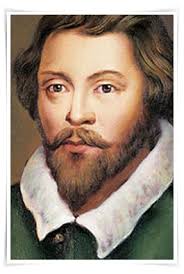
Three Easter Musical Gems: Bach, Palestrina and Byrd
A very blessed and glorious Easter! Christus surrexit vere, alleluia! As we begin this Easter Octave with the great Solemnity of Easter, music to lift the soul would be one of Bach’s Easter cantatas, composed during his time at Leipzig in the early 1700’s, for the six Sundays of this festive season, leading up to[…]Continue reading→
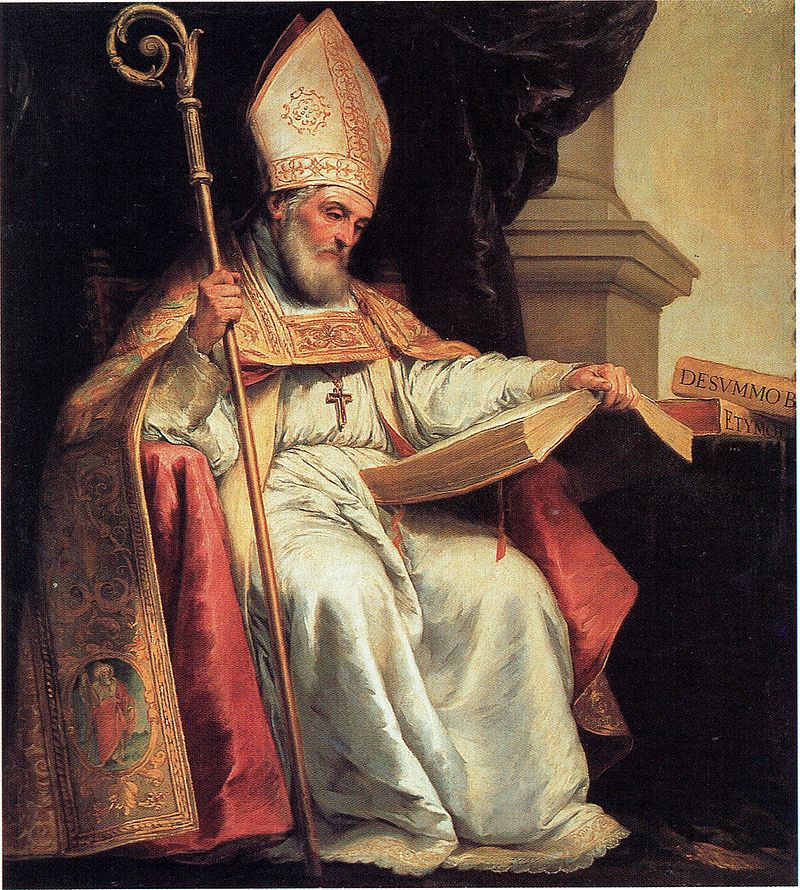
Saint Isidore of Seville, the Internet and Industriousness
Today, April 4th, muted this year by Holy Saturday, is the commemoration of Saint Isidore of Seville (560-636) a bishop and doctor of the Church during a tumultuous age, when civilization was crumbling, coming apart at its very seams, which may sound sort of au courant. Then again, the form of this world has always[…]Continue reading→

An Ancient Homily for Holy Saturday
The time between Good Friday and Easter Sunday is one of waiting, in silence, as the world wonders – anticipates – what will happen, after the death of Christ. We re-live this time each year in the anamnesis of our liturgy, and in turn look forward to the glorious re-creation of all things at the[…]Continue reading→