
The Enigma of Parables
It is odd to find an explanation of a parable, given that its purpose is to tease the imagination, inviting the hearer to uncover its meaning. Consequently, to be effective a parable should have something mysterious about it, something to intrigue the audience, rather like the “unspeakable groanings” [ or “sighs too deep for words” in our translation] of the Holy Spirit that Saint Paul mentions in the first reading; for some things are beyond the power of human speech. It’s something like hearing a foreign language. Inevitably, it seems that important, weighty things are being said. How disappointing it is to learn that they were speaking merely about the weather.[1]
Some great artists have, I think, failed in this regard. Alfred Hitchcock’s Vertigo, e.g., would be a much better movie without the trite resolution of the mystery so effectively and cleverly conveyed in the first part of the film. Dickens, too, often disappoints us by his conventional happily-ever-after endings. As Chesterton noted, in Dickens’s novels:
[t]he secrecy is sensational; the secret is tame. The surface of the thing seems more awful than the core of it. It seems almost as if these grisly figures, Mrs. Chadband and Mrs. Clennam, Miss Havisham, and Miss Flite, Nemo and Sally Brass, were keeping something back from the author as well as from the reader. When the book closes, we do not know their real secret. They soothed the optimistic Dickens with something less terrible than the truth.[2]
Dickens was a sort of Manichaean, in that for him evil is portrayed as being as powerful as goodness, or even more powerful. The beneficence of Mr. Brownlow in Oliver Twist, for instance, seems weak and ineffective compared to cruelty and violence of Fagin and Bill Sikes. Terence Malick successfully faced this Manichaean challenge in his movie The Tree of Life. It’s based on the book of Job, a parable that asks why evil, in the form of loss and physical suffering, is allowed to afflict a just man. In Job, no direct answer is given to the question; rather, at the end of the book God, speaking from the whirlwind, presents to Job the whole of the creation in all its mystery and beauty. The implication is that the God who has created the universe may be depended upon for providential care of each of its parts, of each person. Similarly, in the movie, Malick has a long sequence showing the tremendous beauty and grandeur of the physical and biological worlds. Hence, at the end of the film, there is a resolution of sorts in that a woman, bitter over the loss her son, is reconciled to her grief.
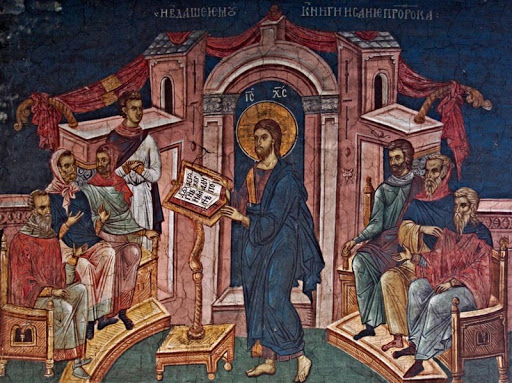
Turning to the parable in today’s reading, I would say that Our Lord presents us with a model to be followed rather than a single interpretation. In other words, we are invited to try our hand at imitating him. The wheat and the tares, for instance, as well as referring to the end of the world could also be applied to the present age, with its mixture of good and bad. A Marxist naively imagines that society can be healed once and for all by revolution: “We have to kill the entire bourgeoisie!” one of them exclaimed.[3] The realist, i.e., the Christian who recognizes the fact of Original Sin, works with things as they are, in the realization that every society needs improvement, but that the struggle must continue, now on this front and now on that. One might equally apply the parable to the individual Christian. Each of us has impulses for good and evil, the fomes peccati of Original Sin. We do not encourage the weeds to grow, but neither do we wait until we are perfect to begin the Christian life. Flawed as we may be, we are summoned to fulfil our obligations to God and society, thus anticipating the judgment at end of time as we struggle to uproot our persistent vices.
What about the parables of the mustard seed and the yeast in three measures of flour, for which Our Lord did not provide an interpretation? These I leave for your private examination. . . .
[1] A famous actress from eastern Europe was once asked to say something in her own language. Her guests listened spellbound as she spoke, grasping nothing beyond the fact that sublime sentiments were being expressed. When she had finished, they asked breathlessly, “What were you reciting?” “The alphabet,” she replied.
[2] G.K. Chesterton, Charles Dickens.
[3] V.S. Naipul, Among the Believers.

Saint Kateri , Canada’s Protectress
This was the title given to Saint Kateri Tekakwitha, by Pope Benedict XVI, when he canonized her on October 28th, 2012, along with six others, in Saint Peter’ Square (she had been beatified by Pope John Paul II back in 1980). With Saint Joseph as our protector, along with the Canadian martyrs, we seem to[…]Continue reading→

Remembering Father Alphonse de Valk
(Today marks the sixth anniversary of the death of Father Alphonse de Valk, C.S.B., a faithful, courageous and indefatigable Basilian priest, pro-life-and-family apostle, and the founder of Catholic Insight magazine. Here is what we wrote those on his entering into eternity five years ago, as we continue to remember him in our prayers and thoughts)[…]Continue reading→

My Name is Bernadette
April 16th is a propitious day, for besides the anniversary of Father de Valk’s death, who founded Catholic Insight in its print form decades ago, and the commemoration of the ‘two Benedicts’, mentioned in accompanying posts, today we also recall Saint Bernadette Soubirous, the young visionary to whom the Virgin Mary appeared numerous times at[…]Continue reading→

Canonizing Sister Faustina and Divine Mercy
HOMILY OF THE HOLY FATHER MASS IN ST PETER’S SQUARE FOR THE CANONIZATION OF SR MARY FAUSTINA KOWALSKA Sunday, 30 April 2000 1. “Confitemini Domino quoniam bonus, quoniam in saeculum misericordia eius”; “Give thanks to the Lord for he is good; his steadfast love endures for ever” (Ps 118: 1). So the Church sings on the Octave of[…]Continue reading→

Divine Mercy Sunday – An Echo of Every Mass
Reach out your hand and put it in my side. Do not doubt but believe’… ‘My Lord and my God!’ (Jn. 20:18)). Today is Divine Mercy Sunday, and as we celebrate the end of the Easter Octave, we contemplate the wounded side of our Saviour, the Church’s source of life. On Good Friday in the[…]Continue reading→

Saint Stanislaus of Szczepanów
We celebrate Saint Stanislaus today (+ April 11, 1079), in light of this Easter Octave, a bishop and martyr who accepted the episcopacy only at the direct order of Pope Alexander II. He proved a wise and courageous leader of his flock, put to death by his own king, Boleslaus, for rebuking the monarch’s ‘immoral[…]Continue reading→

First Holy Communion: Sermon from May 16, 1943
Here is a sermon from the good old days by +Rev. Msgr. Vincent Nicholas Foy (August 14, 1915 – March 13, 2017), from 1943. Readers may recall that Pope Saint Pius X, by the decree Quam Singulari in 1910, lowered the customary age of reception of Holy Communion – after the rigours of the plague[…]Continue reading→

In the Glorious Light of Easter, Alleluia!
Set your minds on things that are above, not on things that are on earth, for you have died, and your life is hidden with Christ in God. When Christ who is your life is revealed, then you also will be revealed with him in glory (Col. 3:3-4). The Resurrection of Our Lord and Saviour[…]Continue reading→

An Ancient Homily for Holy Saturday
The time between Good Friday and Easter Sunday is one of waiting, in silence, as the world wonders – anticipates – what will happen, after the death of Christ. We re-live this time each year in the anamnesis of our liturgy, and in turn look forward to the glorious re-creation of all things at the[…]Continue reading→

Europe’s Long Descent
(As we meditate on this day on Christ’s burial, and His descent into hell, it is fitting to ponder here with contributor Peter Marcus how the world seems to be heading there as well. The difference is that, although God cannot ‘redeem’ hell, nor those therein, He can and did redeem the world. There is[…]Continue reading→