

Knowing the Father, the Way to Life
Today’s Gospel contains an intriguing statement: “No one knows the Son except the Father; and no one knows the Father except the Son, and anyone to whom the Son chooses to reveal him.”[1] What can we conclude? Simply that there is more than one way of knowing, i.e., there is a path to knowledge different from the usual ones.
Normally, we come to know things only gradually, slowly and painfully achieving mastery of the subject, whatever it may be. Consider language. How difficult it is to learn a second one — all those idioms! How could you explain to someone who does not know English expressions such as “It’s time to hit the road” or “He’s three sheets to the wind” or “I had to eat crow.” And speaking of “crows,” I knew a well-educated woman who didn’t know what a crow’s nest was. When I told my brilliant godson this story, he was puzzled. “Well,” he said, “what is a crow’s nest if it isn’t a nest for crows?” You see, we don’t know even our own language. Reflect, too, how slowly and with what Herculean labour science has achieved its successes. Or take music. The great soprano Joan Sutherland once said that her singing was ten percent talent and ninety percent hard work.
Nevertheless, the is another route to knowledge—in a sudden flash of insight such as that by which a Mozart conceives an entire symphony at a glance, as it were. We are told that he could compose one in his mind and then, later, sit down and write out the full score. I think that it was present to him in germ that he knew he could expand into the finished work. Writers must have a similar imaginative process. Charles Dickens would have had a total vision of, say, David Copperfield, needing only pen and paper to write out it in full. I once had a like experience, during an examination in mathematics. I looked at a question and saw at once that I could solve it. But like Mozart and Dickens I had to work it out, to realize in fact what I had intuited. A better example would be romantic love, which is at once total and inchoate. One author has expressed its initial thrill thus: “Love is fusion in the sun’s core. Love is a blurring of pronouns. Love is subject and object. The difference between its presence and its absence is the difference between life and death.”[2]
Such is the experience Jesus is talking about in today’s Gospel, but there is a difference; in this case the flash of insight comes from God. Consider Peter at Caesarea Philippi: “Thou are the Christ, the Son of God.” Jesus replied, “Blessed are thou Simon bar Jona; for flesh and blood has not revealed this to you, but my Father in heaven.” But, as in the cases mentioned above, this insight has implications that were worked out over time—in our creeds, for instance—even though they were all implicit in the original statement, as a full-blown rose is already present in the bud.
Saint Paul’s blinding insight came when he encountered the risen Christ before the gates of Damascus: “I live, now not I,” he cried, “but Christ lives in me.” He came to look on mankind in a new way, for to live in the Spirit is not only to be fully human—physically, emotionally, intellectually— but, at the same time, to be directed by the Holy Spirit to a supernatural end, viz., the beatific vision. It follows that to live “according to the flesh” is to refuse that supernatural vision that comes to us from faith. Paul developed the contents of that initial revelation across a lifetime of serving God, the Gospel and his converts as evinced by what he called his “anxiety for all the churches”: “Who is weak and I am not weak? Who is made to fall and I am not indignant?”[3]
We, too, are called upon to develop the religious view of reality instilled in us when we were baptized into Christ. What a challenge! What a privilege! What a joy!
[1] Matt 11.27.
[2] David Mitchell, The Bone Clocks (New York: Random House, 2014), p. 190.
[3] 2 Cor 11.

Saint Kateri , Canada’s Protectress
This was the title given to Saint Kateri Tekakwitha, by Pope Benedict XVI, when he canonized her on October 28th, 2012, along with six others, in Saint Peter’ Square (she had been beatified by Pope John Paul II back in 1980). With Saint Joseph as our protector, along with the Canadian martyrs, we seem to[…]Continue reading→

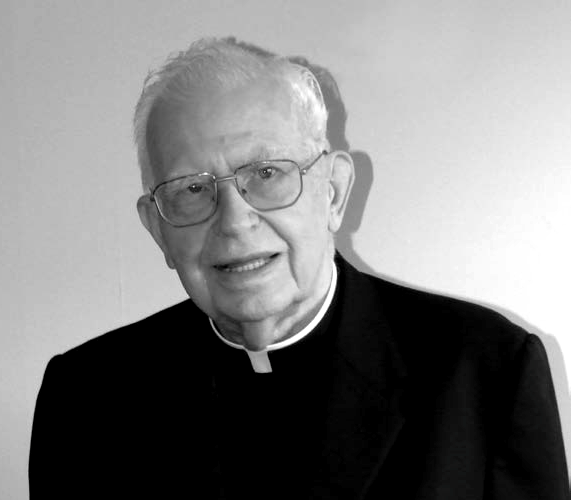
Remembering Father Alphonse de Valk
(Today marks the sixth anniversary of the death of Father Alphonse de Valk, C.S.B., a faithful, courageous and indefatigable Basilian priest, pro-life-and-family apostle, and the founder of Catholic Insight magazine. Here is what we wrote those on his entering into eternity five years ago, as we continue to remember him in our prayers and thoughts)[…]Continue reading→

My Name is Bernadette
April 16th is a propitious day, for besides the anniversary of Father de Valk’s death, who founded Catholic Insight in its print form decades ago, and the commemoration of the ‘two Benedicts’, mentioned in accompanying posts, today we also recall Saint Bernadette Soubirous, the young visionary to whom the Virgin Mary appeared numerous times at[…]Continue reading→
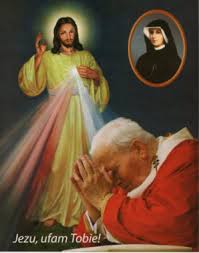
Canonizing Sister Faustina and Divine Mercy
HOMILY OF THE HOLY FATHER MASS IN ST PETER’S SQUARE FOR THE CANONIZATION OF SR MARY FAUSTINA KOWALSKA Sunday, 30 April 2000 1. “Confitemini Domino quoniam bonus, quoniam in saeculum misericordia eius”; “Give thanks to the Lord for he is good; his steadfast love endures for ever” (Ps 118: 1). So the Church sings on the Octave of[…]Continue reading→

Divine Mercy Sunday – An Echo of Every Mass
Reach out your hand and put it in my side. Do not doubt but believe’… ‘My Lord and my God!’ (Jn. 20:18)). Today is Divine Mercy Sunday, and as we celebrate the end of the Easter Octave, we contemplate the wounded side of our Saviour, the Church’s source of life. On Good Friday in the[…]Continue reading→

Saint Stanislaus of Szczepanów
We celebrate Saint Stanislaus today (+ April 11, 1079), in light of this Easter Octave, a bishop and martyr who accepted the episcopacy only at the direct order of Pope Alexander II. He proved a wise and courageous leader of his flock, put to death by his own king, Boleslaus, for rebuking the monarch’s ‘immoral[…]Continue reading→
First Holy Communion: Sermon from May 16, 1943
Here is a sermon from the good old days by +Rev. Msgr. Vincent Nicholas Foy (August 14, 1915 – March 13, 2017), from 1943. Readers may recall that Pope Saint Pius X, by the decree Quam Singulari in 1910, lowered the customary age of reception of Holy Communion – after the rigours of the plague[…]Continue reading→
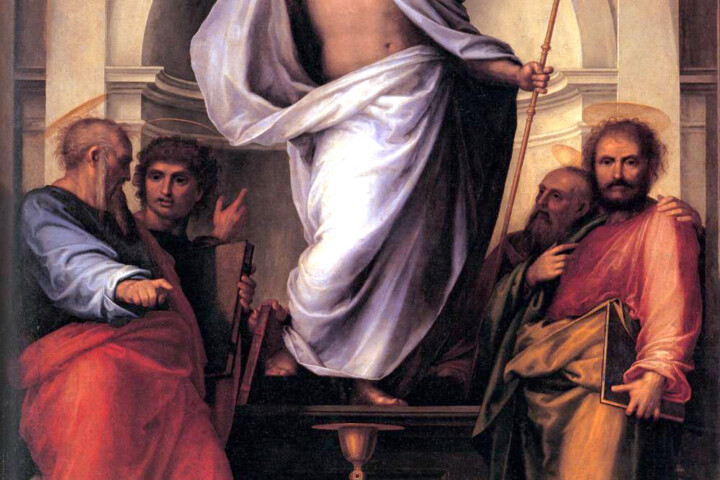
In the Glorious Light of Easter, Alleluia!
Set your minds on things that are above, not on things that are on earth, for you have died, and your life is hidden with Christ in God. When Christ who is your life is revealed, then you also will be revealed with him in glory (Col. 3:3-4). The Resurrection of Our Lord and Saviour[…]Continue reading→
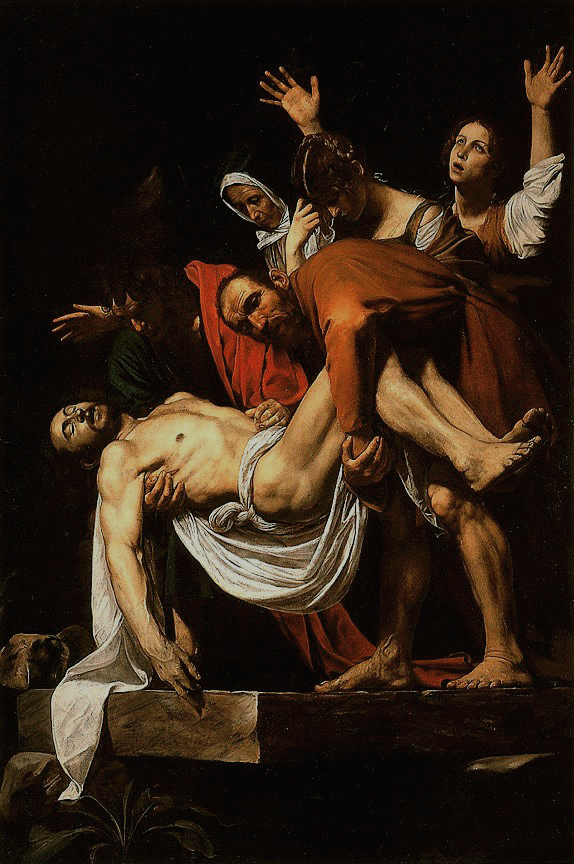
An Ancient Homily for Holy Saturday
The time between Good Friday and Easter Sunday is one of waiting, in silence, as the world wonders – anticipates – what will happen, after the death of Christ. We re-live this time each year in the anamnesis of our liturgy, and in turn look forward to the glorious re-creation of all things at the[…]Continue reading→
Europe’s Long Descent
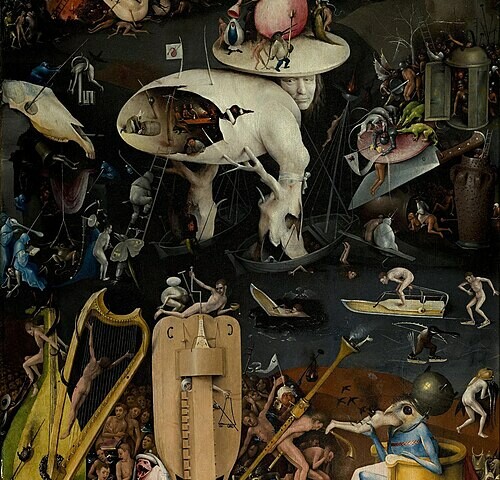
(As we meditate on this day on Christ’s burial, and His descent into hell, it is fitting to ponder here with contributor Peter Marcus how the world seems to be heading there as well. The difference is that, although God cannot ‘redeem’ hell, nor those therein, He can and did redeem the world. There is[…]Continue reading→