
ESG & “Sustainable Development”
Hot Water
A little thought is due considering that institutions are blissfully aligning themselves with the UN’s controversial sustainable development goals, and transforming their perspectives and temperaments in order to be judged favourably according to the ESG (environmental, social and governance) metrics which manifest the UN SDGs (sustainable development goals). Irrespective of whether sustainable development of society and environment is the purpose of a corporation, a university or a dicastery, and irrespective of alignment with UN SDGs by the governments of nations’ that will oblige business and society to conform, the term “sustainable development” does sound fine and dandy. And yet, a pool of water looks quite the same whether it’s hot or cold, and it would be worthwhile probing with your toes prior to jumping in body and mind – individually and institutionally.
Catastrophic Semantics
As in law, when certain terms take on very specific meaning which on occasion are far removed from their meaning and sense in common parlance, so it is with lingua yuena.
The UN’s World Commission on Environment and Development (WCED) was instituted in 1983 by UN Secretary General Perez de Cuellar with the task of formulating a global strategy for sustainable development[1]. The commission’s president was Gro Harlem Brundtland, after whom the commission and the report on Sustainable Development were named[2]. She was primarily famed for her efforts and success in legalising abortion in Norway, and was head of its Labour party which campaigned for abortion on request since 1969. She was eventually three-times the Prime Minister of Norway, elected first vice president of Socialist International in 1996 in the company of other vice presidents such as Tony Blair, Antonio Guterres and Shimon Peres[3], and Director-General of the WHO from 1998 to 2003[4].
The idea of sustainability may in general be applied broadly and extensively. However, the term entered “Our Common Future”, the 1987 report of the Brundtland Commission via the biological discipline of ecology, rooted in studies in the 1950s specifically related to hypotheses on populations[5]. By the seventies, concepts and models useful to the fishing industry such as the “capacity of sustainability” or carrying capacity reached due to scarcity of food – of codfish and sole, began to be applied to humanity. The Brundtland Report brought global prominence to the concept of sustainable development, and it initiated the globalised agenda for muscling and realising the ecologistic sense of sustainability. Despite the innocuous and noncommittal definition of sustainable development that the report begins with, the nature of sustainable development is revealed within. The report deplored the increase of humanity and saw people as an obstacle to development and a bane on the Earth, in an erroneously presumed and empirically disproved zero-sum Erlichian system[6].
“Sustainable Development” called for the reduction of population growth rates particularly in the developing world. The report innovatively proposed the integration of birth control programs into nations’ policies for health, education, development and environment. Thus was conjoined the international battles[7] for the proliferation of abortion[8], abortifacients, contraception, sterilisation, and euthanasia, with programs for socio-economic development and environment protection. These anti-natalist and anti-human objectives were to be enabled by the redefinition of the family, elimination of parental prerogatives and promotion of adolescent and adult libertinism.
The Brundtland Report advocated “change in attitudes” and “reorientation of policies and institutions” and called for an international UN Conference to review, follow-up and set benchmarks. It also proposed the promulgation of what came to be known as the Earth Charter to facilitate the world’s transition into sustainable development – a modern international ethical code to supersede the Universal Declaration of Human Rights in which the centrality and uniqueness of the human being is replaced by a general “community of life” to love and have compassion for, and “gender equity” is pitched in for good measure.
International conferences under the auspices of the UN took place in quick succession starting with the international forum in Amsterdam in 1989[9] to celebrate the twentieth anniversary of the establishment of the UNFPA[10] – which had been established for the very purpose of decreasing the population in the developing world. The UN Conference on Environment and Development (UNCED), often called the Earth Summit was held in Rio de Janeiro in 1992, followed by those in Vienna (1993), Cairo (1994), Copenhagen (1995), Beijing (1995), Istanbul (1995) and Rome (1996) – where governments are represented, and where governments make commitments at the end of each. The twenty-year Plan of Action which constituted Agenda 21, the 21 being a reference to the twenty-first century, was subscribed to in Rio. Agenda 21 affirmed the two points that constitute the essence of Sustainable Development: 1) limit population in poor countries (quantity) and 2) reduce economic growth in rich countries (quality)[11].
Burning
The Agenda 21 formulated in 1992 in response to the Brundtland Report, which presupposed an ecologistic sense of sustainable development made applicable to humanity – regarded as microorganisms in an agar plate, leads into the UN SDGs of 2015 which manifest themselves today via the institutional ESGs which are soon to be standardised and assimilated. This understanding helps to bring into perspective the attempts to confiscate Dutch farmland, the sustenance and escalation of the energy crisis and the 15-minute cities, in addition to the inclusions of quotas[12] and parities for women and the anti-family identities, the expenditures on birth control and abortion instead of on combatting hunger and disease, and perhaps even the promotion of vaccines that caused more harm than the viral pathogen[13].
[1] https://sustainabledevelopment.un.org/content/documents/5987our-common-future.pdf (13 mar)
[2] https://todayinconservation.com/2018/04/april-20-gro-harlem-brundtland-godmother-of-sustainable-development-born-1939/ (22 mar)
[3] https://www.socialistinternational.org/congresses/xx-congress-of-the-socialist-international-new-york/ (accessed 15th March 2023)
[4] https://srhr.org/abortioncare/ (16 mar)
[5] https://c-fam.org/white_paper/sustainable-development/ (13 mar)
[6] https://www.cato.org/economic-development-bulletin/julian-simon-was-right-half-century-population-growth-increasing#findings (21 mar)
[7] Jacqueline R Kasun, The War Against Population: The Economics and Ideology of World Population Control, 1998; and a revised edition, 1999.
[8] https://dreshandias.substack.com/p/abortion-marketing-for-the-third?sd=pf (22 mar)
[9] https://www.jstor.org/stable/1972550 (16 mar)
[10] https://www.pop.org/presidents-page-does-the-world-need-a-global-population-control-agency/ (15 mar)
[11] https://sustainabledevelopment.un.org/content/documents/Agenda21.pdf (accessed 15th March 2023)
[12][12] https://open.substack.com/pub/dreshandias/p/diversity?r=1qgpbn&utm_campaign=post&utm_medium=web
[13] https://open.substack.com/pub/dreshandias/p/remedy-remedy?r=1qgpbn&utm_campaign=post&utm_medium=web

Remembering Father Alphonse de Valk
(Today marks the sixth anniversary of the death of Father Alphonse de Valk, C.S.B., a faithful, courageous and indefatigable Basilian priest, pro-life-and-family apostle, and the founder of Catholic Insight magazine. Here is what we wrote those on his entering into eternity five years ago, as we continue to remember him in our prayers and thoughts)[…]Continue reading→

Divine Mercy Sunday – An Echo of Every Mass
Reach out your hand and put it in my side. Do not doubt but believe’… ‘My Lord and my God!’ (Jn. 20:18)). Today is Divine Mercy Sunday, and as we celebrate the end of the Easter Octave, we contemplate the wounded side of our Saviour, the Church’s source of life. On Good Friday in the[…]Continue reading→

Saint Stanislaus of Szczepanów
We celebrate Saint Stanislaus today (+ April 11, 1079), in light of this Easter Octave, a bishop and martyr who accepted the episcopacy only at the direct order of Pope Alexander II. He proved a wise and courageous leader of his flock, put to death by his own king, Boleslaus, for rebuking the monarch’s ‘immoral[…]Continue reading→
First Holy Communion: Sermon from May 16, 1943
Here is a sermon from the good old days by +Rev. Msgr. Vincent Nicholas Foy (August 14, 1915 – March 13, 2017), from 1943. Readers may recall that Pope Saint Pius X, by the decree Quam Singulari in 1910, lowered the customary age of reception of Holy Communion – after the rigours of the plague[…]Continue reading→

In the Glorious Light of Easter, Alleluia!
Set your minds on things that are above, not on things that are on earth, for you have died, and your life is hidden with Christ in God. When Christ who is your life is revealed, then you also will be revealed with him in glory (Col. 3:3-4). The Resurrection of Our Lord and Saviour[…]Continue reading→
An Ancient Homily for Holy Saturday
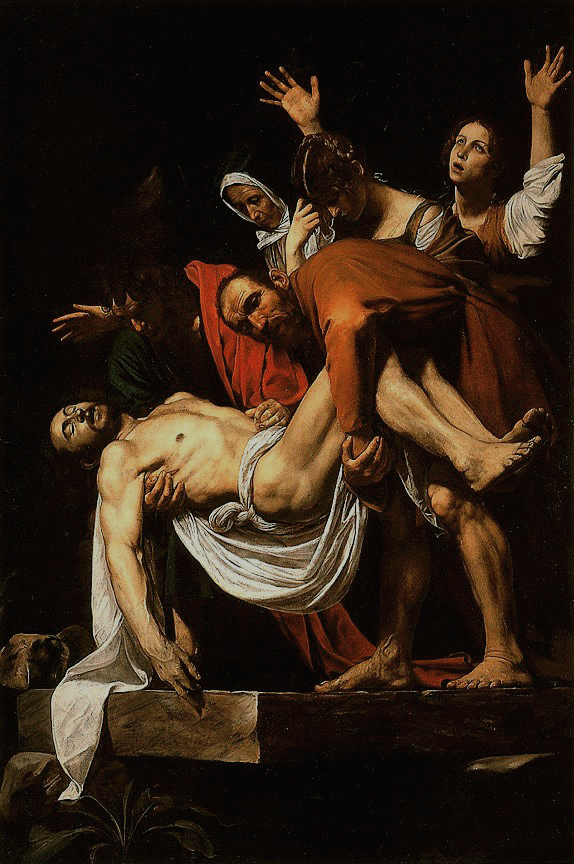
The time between Good Friday and Easter Sunday is one of waiting, in silence, as the world wonders – anticipates – what will happen, after the death of Christ. We re-live this time each year in the anamnesis of our liturgy, and in turn look forward to the glorious re-creation of all things at the[…]Continue reading→
Europe’s Long Descent
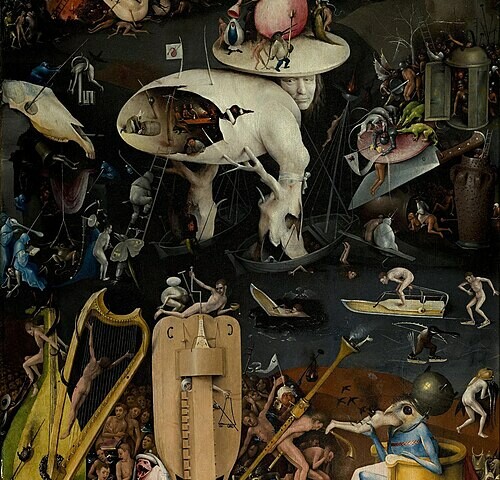
(As we meditate on this day on Christ’s burial, and His descent into hell, it is fitting to ponder here with contributor Peter Marcus how the world seems to be heading there as well. The difference is that, although God cannot ‘redeem’ hell, nor those therein, He can and did redeem the world. There is[…]Continue reading→
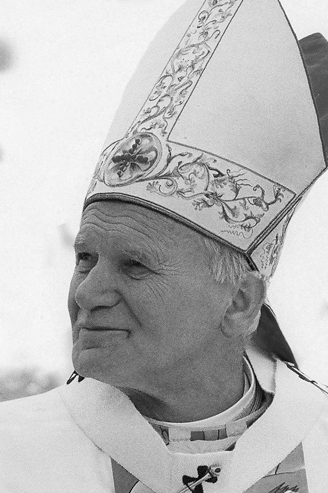
Pope Saint John Paul II’s First Good Friday Homily
ADDRESS OF HIS HOLINESS JOHN PAUL II AT THE CONCLUSION OF THE STATIONS OF THE CROSS AT THE COLOSSEUM Good Friday, 13 April 1979 When we make the Way of the Cross from one station to the next, in spirit we are always at the spot wherethis journey had its “historical” place: where it[…]Continue reading→
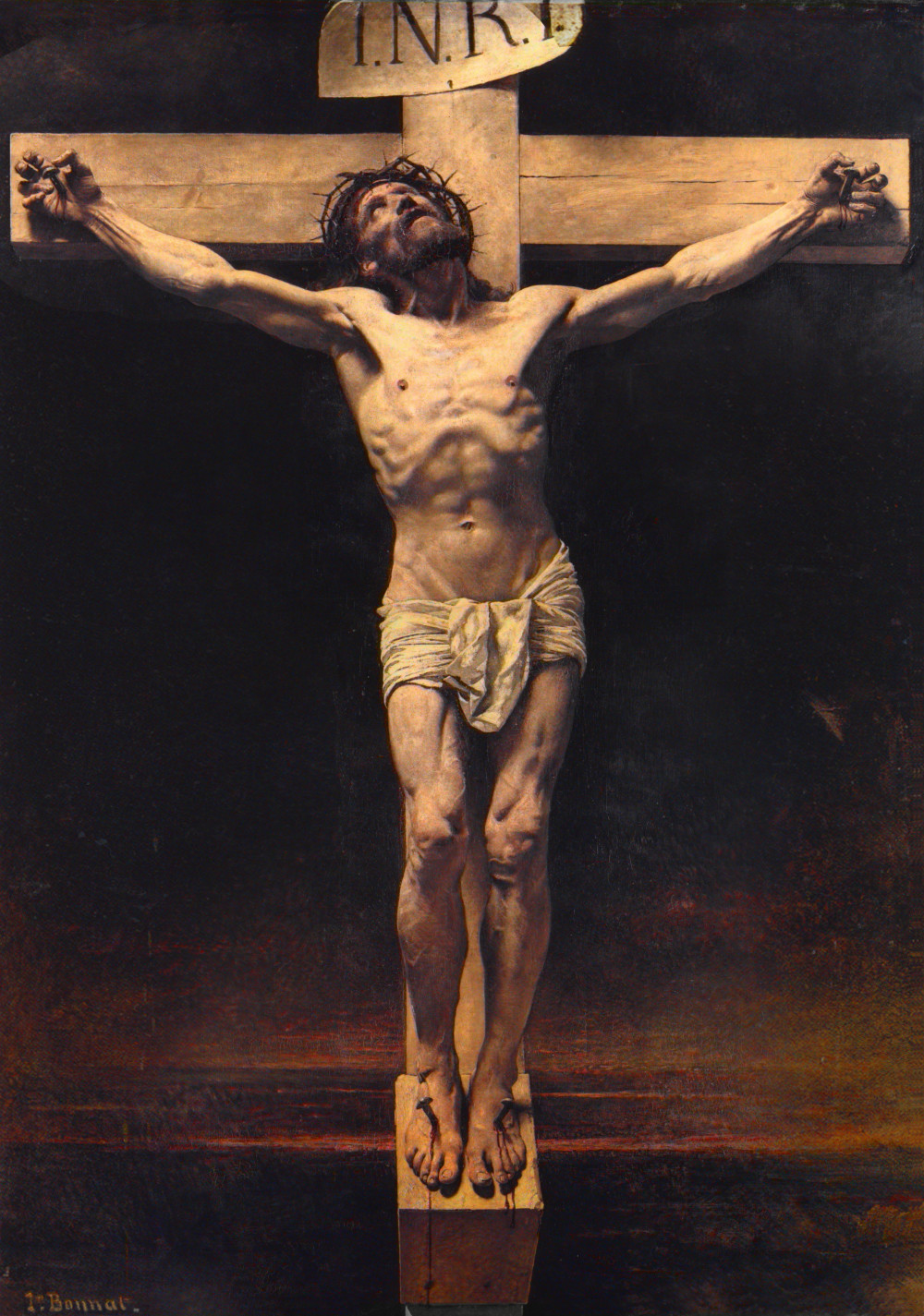
A Meditation for Good Friday: How To Undo the Effects of Sin?
Cardinal Newman, now Saint John Henry Newman, was a towering figure of nineteenth-century Catholicism who is almost universally admired. I say “almost” because not everyone likes him. I knew a priest once, Arthur Caulkins, who has become disenchanted with Newman. As an undergraduate Arthur had been enamoured of Newman, and this interest continued when he[…]Continue reading→
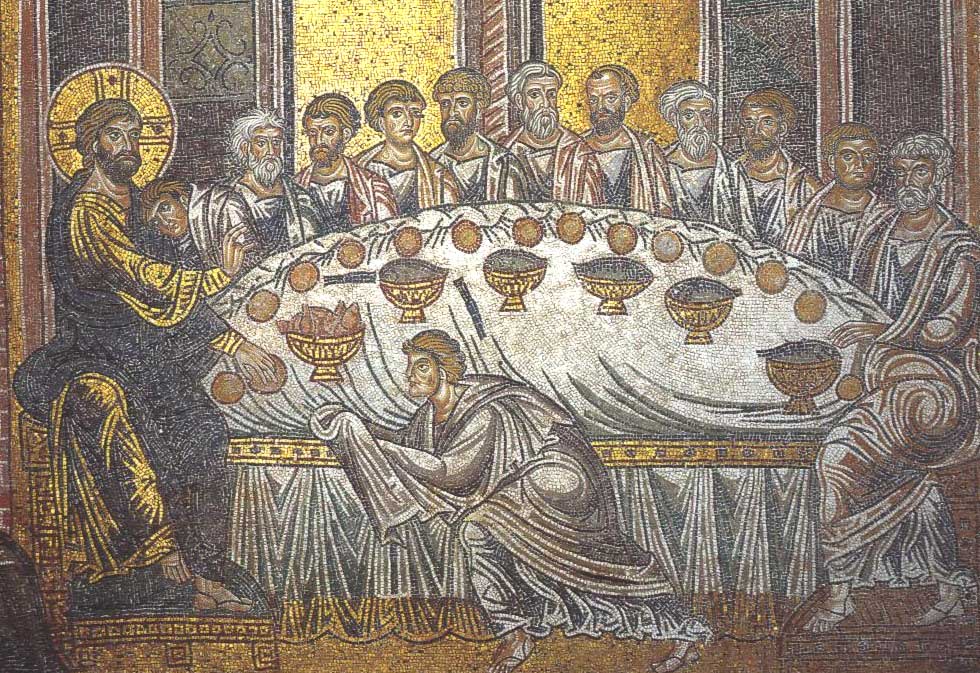
Pope Benedict’s Last Holy Thursday Homily
MASS OF THE LORD’S SUPPER HOMILY OF HIS HOLINESS BENEDICT XVI Basilica of St John Lateran Holy Thursday, 5 April 2012 Photo Gallery (Video) Dear Brothers and Sisters! Holy Thursday is not only the day of the institution of the Most Holy Eucharist, whose splendour bathes all else and in some ways draws it to[…]Continue reading→