
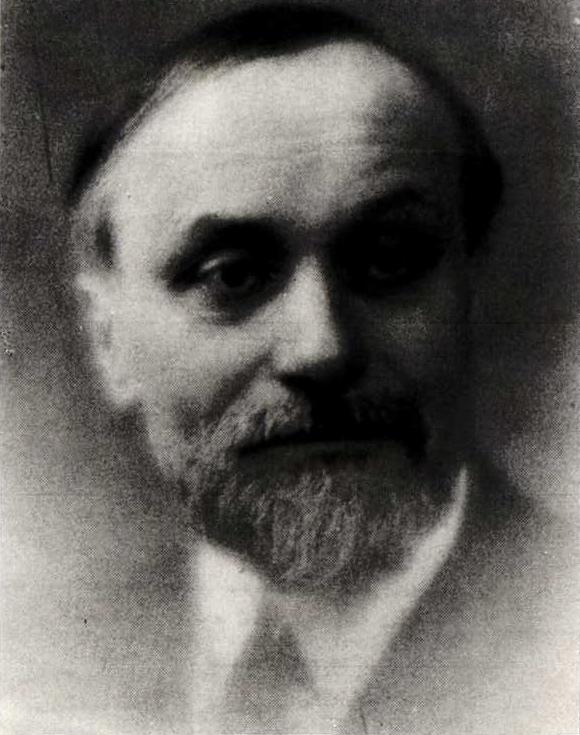
Charles Tournemire and L’Orgue Mystique
In the late 19th and early 20th centuries, France produced a number of famous organist-composers, such as Louis Vierne, Charles-Marie Widor, Marcel Dupré, Maurice Duruflé, and Olivier Messiaen. A neglected member of this period is Charles Tournemire (1870–1939). Born in Bourdeaux, he went on to study with César Franck (1822–1890) in Paris, and eventually became titular organist at the Basilique Ste-Clotilde, where Franck was organist for thirty years. Tournemire was famous for his improvisations, which were frequently based on Gregorian chant melodies. Maurice Duruflé (1902–1986) made transcriptions of five recorded improvisations, of which the Choral-Improvisation sur le “Victimæ Paschali” is often heard in recitals.
Outside of Tournemire’s work as an organist at Ste-Clotilde, he composed eight symphonies (including a choral symphony), four operas, twelve chamber works and eighteen piano pieces, in addition to his many organ compositions. His magnum opus, for which he is best remembered, is his L’Orgue Mystique.
Between 1927 and 1932, Tournemire composed 51 cycles of works for the liturgical year. Each cycle contains five pieces (excluding Holy Saturday, with three): Prélude à l’introït, Offertoire, Élévation, Communion, and Pièce terminale. The first four are always short, but the last, the postlude, often approaches ten minutes in length. The Gregorian Proper chants associated with the particular Feast or Sunday always make an appearance within the elaborate, often mystical textures that Tournemire weaves. Dr. Mária Budáčová explains: “This monumental work was created as a response to the urging of Tournemire’s pupil, Joseph Bonnet, a French organist and composer. Bonnet gave Tournemire the complete collection of Dom Prosper Guéranger’s L’Année liturgique. The former wished to find a composer who would be willing to imitate the concept of Lutheran chorales, which Johann Sebastian Bach transformed into a masterpiece for the Protestant Liturgy. In the following statement, Tournemire explains how he conceived the work:
The master of masters, J. S. Bach, did this and how wonderfully for the Protestant liturgy. I felt it necessary to offer the Catholic Rite a work conceived in the same spirit, with this difference: the greatest of musicians, in the immense part of his work, based his art on the Protestant chorale and the tonal system. As for me, I used the Gregorian chant according to the modal system, which moreover did not exclude chromaticism…[i]
In this way, Tournemire created the Catholic equivalent to J. S. Bach’s Orgelbüchlein, in which the latter set out to compose 164 choral preludes based on the chorales sung in the Lutheran liturgical year, ultimately completing only 46 settings lasting 80 minutes in length. Tournemire’s 51 cycles take approximately 15 hours to perform.
A colossal undertaking, it was successful in its aim, at least in the pre-conciliar era. Henri Gagnon (1887–1961), organist at the Basilique-cathédrale Notre-Dame de Québec for 51 years, wrote to Tournemire in 1933:
“My very dear Maître,
Your L’Orgue Mystique has many fervent performers over here. At Pentecost I played two excerpts from the Office of the Day – whose Finale is wonderfully colorful. Although you may not know it, your name, my dear maître, is associated with many religious feast-days in Canada. I seize the opportunity of telling you how much you are loved and admired by my compatriots and I note with joy that your immense work bears its fruits here; this repertoire, so intimately linked to the beauties of the liturgy, is present daily in the Office, creating the unity you have searched for. I know some young organists, who, in the arabesque of a certain Alleluia, have passed on to me their fervent impressions. I have listened to Marius Cayouette at Saint-Gregoire of Montmorency and to Henry Mercure of Saint-Malo, Quebec, interpret with remarkable style and intelligence certain offices which I have not had the opportunity to play myself. This is to say to you, dear Maître, that in Canada you are one of the benefactors of organ music!”[ii]
Here is the postlude for the feast of Saint Joseph:
Tournemire’s style appears rhapsodic, akin to an improvisation, with striking harmonies that placed him ahead of his time. This forward-looking element of Tournemire’s music is perhaps part of why he remains neglected despite his tremendous contribution to both organ music and sacred musical patrimony of the Church. As the Traditional Mass hopefully returns to more and more parishes, I do hope that L’Orgue Mystique returns to its intended purpose, and is found more at Mass than in the concert hall, and that Tournemire’s magnum opus would also inspire a new generation of organists to learn to improvise on chant in the Mass.
[i] https://escholarship.mcgill.ca/concern/papers/rf55zd668
[ii] https://www.agohq.org/memoirs/

Saint Kateri , Canada’s Protectress
This was the title given to Saint Kateri Tekakwitha, by Pope Benedict XVI, when he canonized her on October 28th, 2012, along with six others, in Saint Peter’ Square (she had been beatified by Pope John Paul II back in 1980). With Saint Joseph as our protector, along with the Canadian martyrs, we seem to[…]Continue reading→

Remembering Father Alphonse de Valk
(Today marks the sixth anniversary of the death of Father Alphonse de Valk, C.S.B., a faithful, courageous and indefatigable Basilian priest, pro-life-and-family apostle, and the founder of Catholic Insight magazine. Here is what we wrote those on his entering into eternity five years ago, as we continue to remember him in our prayers and thoughts)[…]Continue reading→

My Name is Bernadette
April 16th is a propitious day, for besides the anniversary of Father de Valk’s death, who founded Catholic Insight in its print form decades ago, and the commemoration of the ‘two Benedicts’, mentioned in accompanying posts, today we also recall Saint Bernadette Soubirous, the young visionary to whom the Virgin Mary appeared numerous times at[…]Continue reading→

Canonizing Sister Faustina and Divine Mercy
HOMILY OF THE HOLY FATHER MASS IN ST PETER’S SQUARE FOR THE CANONIZATION OF SR MARY FAUSTINA KOWALSKA Sunday, 30 April 2000 1. “Confitemini Domino quoniam bonus, quoniam in saeculum misericordia eius”; “Give thanks to the Lord for he is good; his steadfast love endures for ever” (Ps 118: 1). So the Church sings on the Octave of[…]Continue reading→

Divine Mercy Sunday – An Echo of Every Mass
Reach out your hand and put it in my side. Do not doubt but believe’… ‘My Lord and my God!’ (Jn. 20:18)). Today is Divine Mercy Sunday, and as we celebrate the end of the Easter Octave, we contemplate the wounded side of our Saviour, the Church’s source of life. On Good Friday in the[…]Continue reading→

Saint Stanislaus of Szczepanów
We celebrate Saint Stanislaus today (+ April 11, 1079), in light of this Easter Octave, a bishop and martyr who accepted the episcopacy only at the direct order of Pope Alexander II. He proved a wise and courageous leader of his flock, put to death by his own king, Boleslaus, for rebuking the monarch’s ‘immoral[…]Continue reading→
First Holy Communion: Sermon from May 16, 1943
Here is a sermon from the good old days by +Rev. Msgr. Vincent Nicholas Foy (August 14, 1915 – March 13, 2017), from 1943. Readers may recall that Pope Saint Pius X, by the decree Quam Singulari in 1910, lowered the customary age of reception of Holy Communion – after the rigours of the plague[…]Continue reading→
In the Glorious Light of Easter, Alleluia!
Set your minds on things that are above, not on things that are on earth, for you have died, and your life is hidden with Christ in God. When Christ who is your life is revealed, then you also will be revealed with him in glory (Col. 3:3-4). The Resurrection of Our Lord and Saviour[…]Continue reading→
An Ancient Homily for Holy Saturday
The time between Good Friday and Easter Sunday is one of waiting, in silence, as the world wonders – anticipates – what will happen, after the death of Christ. We re-live this time each year in the anamnesis of our liturgy, and in turn look forward to the glorious re-creation of all things at the[…]Continue reading→
Europe’s Long Descent
(As we meditate on this day on Christ’s burial, and His descent into hell, it is fitting to ponder here with contributor Peter Marcus how the world seems to be heading there as well. The difference is that, although God cannot ‘redeem’ hell, nor those therein, He can and did redeem the world. There is[…]Continue reading→