

Jane Austen’s Sensible Conscience
It’s hard to contain my pleasure or my surprise at the continuing interest in Jane Austen. The more-or-less successful adaptations[1] of her books for film and television as well as a library of offshoot novels indicate that many people who would seem to disagree on every other topic join in admiring her. The agreement, however, is not as extensive as one might think, for each admirer is convinced that he alone understands her; consequently, there are almost as many interpretations of her novels as there are readers: feminist, Marxist, deconstructionist, post-constructionist, materialist. Then there are the old-fashioned readers who hanker for a society where servants were numerous and kept to their place and where people were courteous. And, finally, there is the man in the street who, if he ever thinks of her at all, will ask himself how intelligent people can take seriously trivial stories concerned with nothing more important than, as Kingsley Amis put it, the “distinction between a Tweedledum labelleld ‘well-bred’ and a Tweedledee labelled ‘coarse.’”[2]
How does it happen that one woman, genius that she was, produced texts susceptible of radically different readings? The answer to this question is simple. It is that contemporary critics, reading between the lines, have found fertile ground for speculation in these interlinear spaces. The sub-texts thus uncovered rip to ribbons the bourgeois respectability that an earlier generation found in Jane Austen. She has become recognized, in spite of herself, as rejecting a system that deprived women of their rights and workers of their due. One critic, for example, views Austen as a moral anarchist who created “a world riven by ethical relativity . . . that mocks any pretence of absolute moral standards.”[3] Others find in the open spaces around the written words a repression that will out even when the author herself attempts to silence it.
“Jane Austen’s greatness lies in the fact that, beneath her artistic championing of Sense, she can make us hear those Silences that always lie on the other side of it.”[4] The moralizing in Jane Austen irritates many of her readers, even those that recognize her genius. Amis, for example, in the essay cited above, describes Mansfield Park as “an immoral book. . . . Her judgement and her moral sense were corrupted, and Mansfield Park is the witness of that corruption.”
Paradoxically, this dismissive view provides the best entry into the real Jane Austen by leading us into the complexity and soundness of her moral system. Strong conviction and fine distinctions are not ridiculous, but indications of a conscience that is finely tuned, one which can discern moral collapse in a single lie or a rude remark: “Whoever says, ‘You fool!’ shall be liable to the hell of fire.”[5] Refinement is the mark of mental acuity. It is Jane Austen’s achievement that objective morality comes to life in her characters. Elizabeth Bennet (Pride and Prejudice) and Emma Woodhouse (Emma) have learned to internalize the moral law so that right judgement is not imposed as an external constraint but arises as naturally from within them as it does in Fanny Price (Mansfield Park) and, supremely, in Anne Elliot (Persuasion). Sense and Sensibility makes the point most directly because the older sister, Elinor, is governed throughout by an inner allegiance to the objective moral code which involves keeping one’s word, caring for others’ needs before one’s own, deferring to the demands of society, and assessing realistically the possibilities for action that are available to a moral agent in any situation. What Elinor lacks—passion—is the defining characteristic of her younger sister Marianne, whose moral code is as yet only instinctual. She thus hotly defends a breach of decorum by describing it as pleasant:
“I am afraid,” replied Elinor, “that the pleasantness of an employment does not always evince its propriety.”
“On the contrary, nothing can be stronger proof of it, Elinor, for if there had been any real impropriety in what I did, I should have been sensible of it at the time, for we always know when we are acting wrong, and with such a conviction I could have had no pleasure.”
What is delightful in this exchange is that each sister is correct, and Elinor comes to know pleasure in doing right as Marianne learns that there is no pleasure without conforming her inward impulses to the objective moral code. Conscience must be formed; and later, when Marianne is lamenting her imprudence and the villainy of Willoughby, Elinor asks, “Do you compare your conduct with his?” Marianne is then able to reply, “No, I compare it with what it ought to have been; I compare it with yours.”
What we find portrayed in Elinor is a moral system that has its greatest exponent in Saint Thomas Aquinas, for whom the prudent person is able to apply objective moral principles to a given situation with flexibility and sensitivity. This is not prudence as we commonly conceive of it—cold, calculating and self-interested—but prudence as the moral skill which brings all the other virtues into play to just the right degree and at just the right moment. Jane Austen’s novels are gripping because a skilled moral agent is as exciting to witness in action as a trapeze artist or a coloratura soprano. In each of them, the slightest slip spells disaster. And thus, it is prudence, Thomistic prudence, by which Anne Elliot brings Captain Wentworth to his sense and so to her side.
Where, one asks himself, could Jane Austen have learned this essentially Catholic view of the moral life? I would say it came from her deep commitment to Anglicanism, in its eighteenth-century form, before it was ravaged by liberalism and Tractarianism. The Anglican Book of Common Prayer was composed by pasting together snippets culled from Catholic sources, and familiarity with its contents would have put the worshipper in contact with the Catholicism that formed mediaeval Europe, England included. The optimism of a sacramental piety along with a realistic assessment of man’s sinfulness and its remedy in Christ were ideas that Jane Austen would have absorbed at her parson father’s knee and from her regular attendance at Anglican worship. This was the religious ethos that formed society when Anglicanism truly functioned as a national church, and we are fortunate to have it drawn to our attention today when the need for this brand of moral thinking has never been greater.[6]
Endnotes:
[1] Among the “less successful” adaptations would be Mansfield Park (1999) and EMMA. (2020), directed by Patricia Rozema and Autumn de Wilde respectively. Neither seems even to have read the book, much less to have grasped its moral purpose.
[2] Kingsley Amis: “What Became of Jane Austen” in What Became of Jane Austen and Other Questions (London, 1970).
[3] M. Poovey, The Proper Lady and the Woman Writer (Chicago, 1984).
[4] A. Leighton, Jane Austen: New Perspectives (New York, 1983).
[5] Matt 5.22
[6] An extended version of this essay appeared as “Jane Austen’s Catholic Sensibility,” Mapping the Catholic Cultural Landscape, P.J. Miller, FSE, and R. Fossey, edd. (Lanham [MD], 2004).

Remembering Father Alphonse de Valk
(Today marks the sixth anniversary of the death of Father Alphonse de Valk, C.S.B., a faithful, courageous and indefatigable Basilian priest, pro-life-and-family apostle, and the founder of Catholic Insight magazine. Here is what we wrote those on his entering into eternity five years ago, as we continue to remember him in our prayers and thoughts)[…]Continue reading→

Divine Mercy Sunday – An Echo of Every Mass
Reach out your hand and put it in my side. Do not doubt but believe’… ‘My Lord and my God!’ (Jn. 20:18)). Today is Divine Mercy Sunday, and as we celebrate the end of the Easter Octave, we contemplate the wounded side of our Saviour, the Church’s source of life. On Good Friday in the[…]Continue reading→

Saint Stanislaus of Szczepanów
We celebrate Saint Stanislaus today (+ April 11, 1079), in light of this Easter Octave, a bishop and martyr who accepted the episcopacy only at the direct order of Pope Alexander II. He proved a wise and courageous leader of his flock, put to death by his own king, Boleslaus, for rebuking the monarch’s ‘immoral[…]Continue reading→

First Holy Communion: Sermon from May 16, 1943
Here is a sermon from the good old days by +Rev. Msgr. Vincent Nicholas Foy (August 14, 1915 – March 13, 2017), from 1943. Readers may recall that Pope Saint Pius X, by the decree Quam Singulari in 1910, lowered the customary age of reception of Holy Communion – after the rigours of the plague[…]Continue reading→
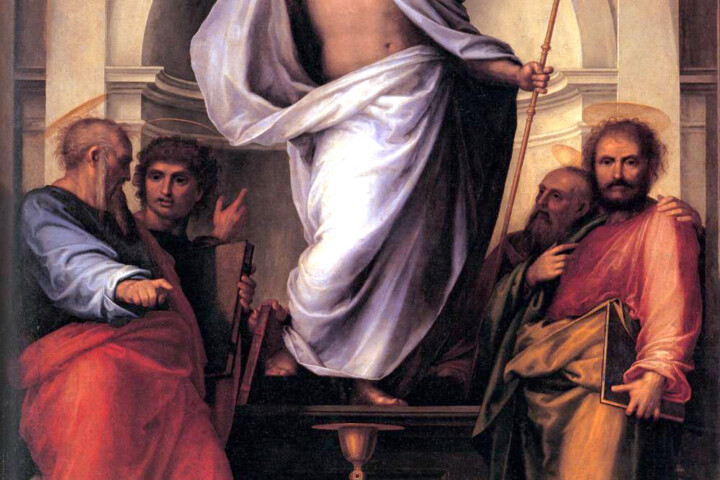
In the Glorious Light of Easter, Alleluia!
Set your minds on things that are above, not on things that are on earth, for you have died, and your life is hidden with Christ in God. When Christ who is your life is revealed, then you also will be revealed with him in glory (Col. 3:3-4). The Resurrection of Our Lord and Saviour[…]Continue reading→
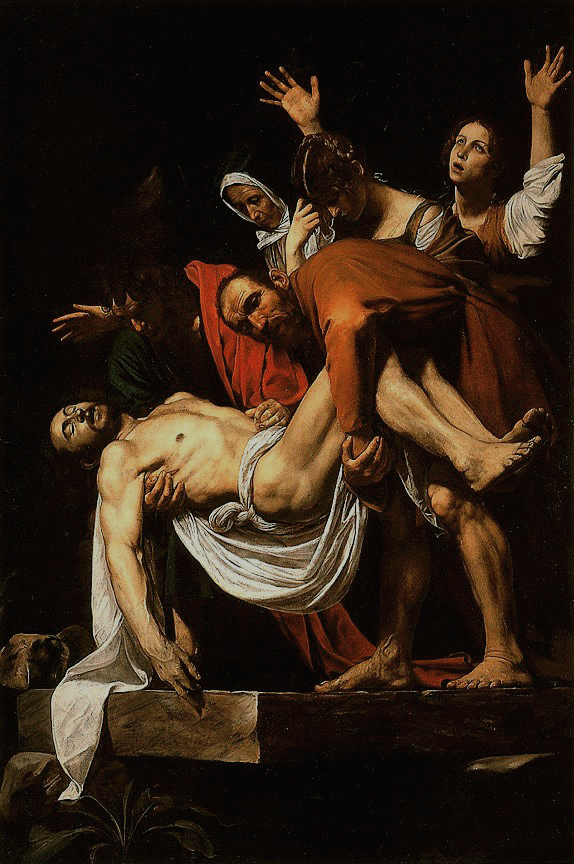
An Ancient Homily for Holy Saturday
The time between Good Friday and Easter Sunday is one of waiting, in silence, as the world wonders – anticipates – what will happen, after the death of Christ. We re-live this time each year in the anamnesis of our liturgy, and in turn look forward to the glorious re-creation of all things at the[…]Continue reading→

Europe’s Long Descent
(As we meditate on this day on Christ’s burial, and His descent into hell, it is fitting to ponder here with contributor Peter Marcus how the world seems to be heading there as well. The difference is that, although God cannot ‘redeem’ hell, nor those therein, He can and did redeem the world. There is[…]Continue reading→
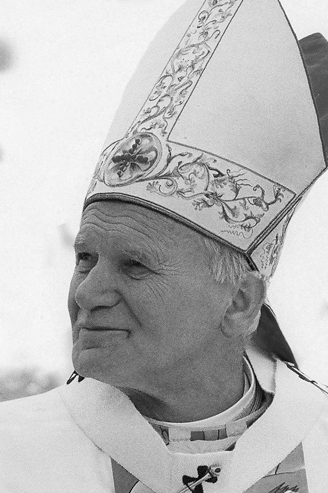
Pope Saint John Paul II’s First Good Friday Homily
ADDRESS OF HIS HOLINESS JOHN PAUL II AT THE CONCLUSION OF THE STATIONS OF THE CROSS AT THE COLOSSEUM Good Friday, 13 April 1979 When we make the Way of the Cross from one station to the next, in spirit we are always at the spot wherethis journey had its “historical” place: where it[…]Continue reading→
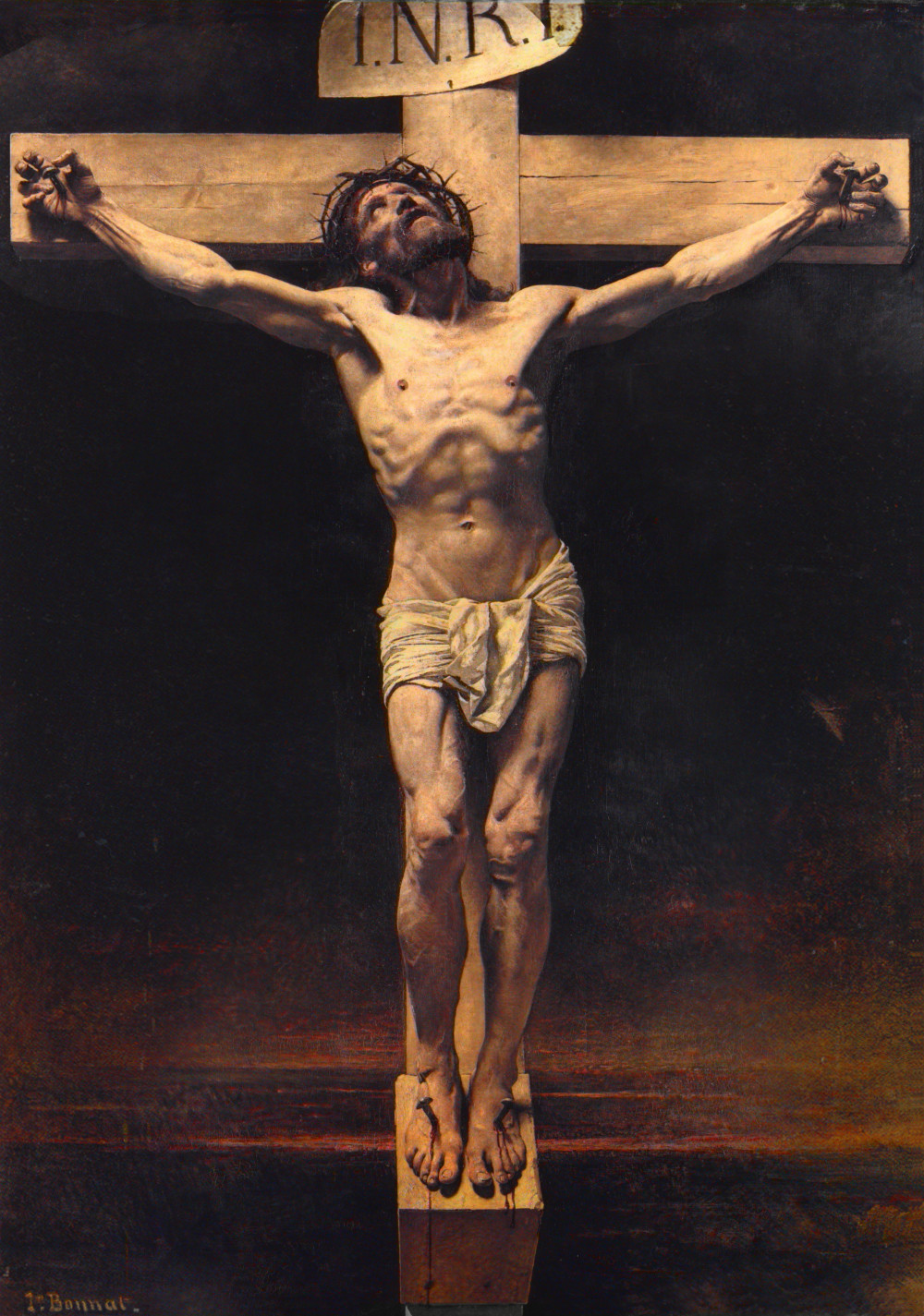
A Meditation for Good Friday: How To Undo the Effects of Sin?
Cardinal Newman, now Saint John Henry Newman, was a towering figure of nineteenth-century Catholicism who is almost universally admired. I say “almost” because not everyone likes him. I knew a priest once, Arthur Caulkins, who has become disenchanted with Newman. As an undergraduate Arthur had been enamoured of Newman, and this interest continued when he[…]Continue reading→
Pope Benedict’s Last Holy Thursday Homily
MASS OF THE LORD’S SUPPER HOMILY OF HIS HOLINESS BENEDICT XVI Basilica of St John Lateran Holy Thursday, 5 April 2012 Photo Gallery (Video) Dear Brothers and Sisters! Holy Thursday is not only the day of the institution of the Most Holy Eucharist, whose splendour bathes all else and in some ways draws it to[…]Continue reading→