
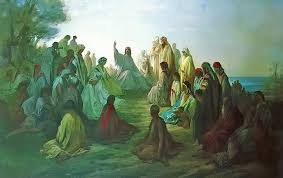
Fifth Sunday: The Salt of the Earth and Light to the World
‘You are the light of the world. A city built on a hill cannot be hidden’ (Mt. 5:14).
Imagine the astonishment of those who heard these words for the very first time. Our Lord extended their importance to universal proportions; and yet He says the same of us and to us in this our hearing. We who listen to Him today are also engaged in a work whose proportion and scope is no less universal. We are Catholic; and we are part of an enterprise of faith whose scope extends far beyond the limits even of time. ‘You are the light of the world. A city built on a hill cannot be hidden’ (Mt. 5:14). This city is the Church, established in the midst of the world and above the world. There is an ancient Christian document, the Letter to Diognetus which states in very clear terms: What the soul is to the body; that Christians are to the world. It goes on to say: As the soul is present in every part of the body, while remaining distinct from it, so Christians are found in all the cities of the world, but cannot be identified with the world…. As the soul benefits from the deprivation of food and drink, so Christians flourish under persecution. Such is the Christian’s lofty and divinely appointed function, from which he is not permitted to excuse himself.
Christians are today the most persecuted religious group in the world. And this is not only the case is Muslim majority nations like Pakistan or in North Korea; here in our own country acts of vandalism against church buildings have become an all-too-common occurrence and anti-Christian sentiments are deemed understandable. Nevertheless, we cannot excuse ourselves from our divinely appointed function. We are not our own masters. The city that we inhabit is the City of God; and all nations stream to this city for strength, instruction and protection. Let your light shine before men, so that they may see your good works and give glory to your Father in Heaven (Mt. 5:16).
This is a lofty calling and yet, we know that with the help of God’s grace, it is possible for us to be faithful to what Our Lord calls us to be and to do. Our Lord calls us not only to be virtuous but to be the salt, that is, to raise the level of flavor of every human activity and thus transform it. What is of itself insipid can be delightful if seasoned with joy and devotion. What would be irretrievably lost to the passage of time and decay can be preserved unto eternity in the Lord by the salt of Christian memory (Erasmo Leiva-Merikakis, Heart of the World, Vol. 1, p. 205). Practically, this means that we submit ourselves to process of transformation that engages each one of us personally and intimately, and in turn, the world around us by permeating the whole of our lives with the salt of Christian memory. We do this principally through the graces of the liturgical year with its feasts and commemorations, especially the commemorations of the Saints, vessels of grace and the lights of the world in their several generations. It is their precious memory that enables us to appreciate and to defend Sacred Tradition as an indispensable element of our life.
As we face the challenges posed by a globalist worldview that either relativizes these realities or negates them altogether, there is a real danger that we risk losing our unique identity and so fail in our obligation to be the light of the world. Tragically and inconceivably, our Sacred Tradition is also sustaining furious attacks from within the Church herself and we must not deny this state of affairs as if in so doing we are somehow disobedient or disloyal. Rather, we must counter and resist this scandalous and inexplicable development. The Church has a history and a culture and she has civilized the world by word and by example. This is why it is so important for us to be brutally honest about the forces at work both in the world – and unfortunately, in the Church herself – that would have us deny our traditions and teachings in the interests of relevance. A house divided against itself cannot stand (Cf. Mk. 3:25). We have absolutely no authority to change the traditional faith of the Church.
There is great unrest in the world and the greater culture that we inhabit has established a different ethical universe; one in which the categories of truth and goodness, logic and life are violently opposed and negated with impunity. The normalisation of degeneracy has, as inescapable consequence, not least the normalisation of more and more degeneracy and it is past time to say ‘enough’. If we wish to survive in any meaningful manner without being overwhelmed in this lawless dystopia, it is now necessary to distance ourselves intentionally and deliberately from this ungodly society, so that we might remain distinct. It was no different for the earliest Christians.
The times are such that we called to live a life of pure faith, which leans on nothing other than God Himself. As we continue to experience the diminishment of the Church amidst internal and external persecutions, only our endurance and constancy, leaning on nothing other than God Himself and our bond of faith and charity will enable us to raise the level of flavor of every human activity and thus transform it. In this light, despite the degeneracy of our times, the natural bond of marriage is still a sacramental sign of God’s faithful love for His people, the gift of human sexuality is seen as sacred, suffering lovingly and patiently borne becomes co-redemptive and a participation in the Passion of Our Lord; and we offer our bodies as a living sacrifice, holy and pleasing to God; this being our true and proper worship. So we do not conform ourselves to the pattern of this world but are transformed by the renewing of our mind (Cf. Rom. 12:1-2). ‘You are the light of the world. A city built on a hill cannot be hidden’ (Mt. 5:14). The work of God that engages us intimately and collectively is our lofty and divinely appointed function not simply for our own benefit but also for the whole world which Our Lord has redeemed with His Most Precious Blood.

Remembering Father Alphonse de Valk
(Today marks the sixth anniversary of the death of Father Alphonse de Valk, C.S.B., a faithful, courageous and indefatigable Basilian priest, pro-life-and-family apostle, and the founder of Catholic Insight magazine. Here is what we wrote those on his entering into eternity five years ago, as we continue to remember him in our prayers and thoughts)[…]Continue reading→

Divine Mercy Sunday – An Echo of Every Mass
Reach out your hand and put it in my side. Do not doubt but believe’… ‘My Lord and my God!’ (Jn. 20:18)). Today is Divine Mercy Sunday, and as we celebrate the end of the Easter Octave, we contemplate the wounded side of our Saviour, the Church’s source of life. On Good Friday in the[…]Continue reading→

Saint Stanislaus of Szczepanów
We celebrate Saint Stanislaus today (+ April 11, 1079), in light of this Easter Octave, a bishop and martyr who accepted the episcopacy only at the direct order of Pope Alexander II. He proved a wise and courageous leader of his flock, put to death by his own king, Boleslaus, for rebuking the monarch’s ‘immoral[…]Continue reading→
First Holy Communion: Sermon from May 16, 1943
Here is a sermon from the good old days by +Rev. Msgr. Vincent Nicholas Foy (August 14, 1915 – March 13, 2017), from 1943. Readers may recall that Pope Saint Pius X, by the decree Quam Singulari in 1910, lowered the customary age of reception of Holy Communion – after the rigours of the plague[…]Continue reading→
In the Glorious Light of Easter, Alleluia!
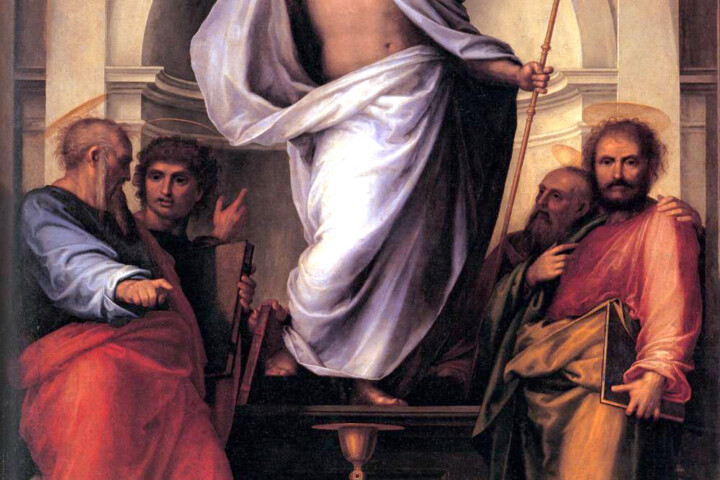
Set your minds on things that are above, not on things that are on earth, for you have died, and your life is hidden with Christ in God. When Christ who is your life is revealed, then you also will be revealed with him in glory (Col. 3:3-4). The Resurrection of Our Lord and Saviour[…]Continue reading→

An Ancient Homily for Holy Saturday
The time between Good Friday and Easter Sunday is one of waiting, in silence, as the world wonders – anticipates – what will happen, after the death of Christ. We re-live this time each year in the anamnesis of our liturgy, and in turn look forward to the glorious re-creation of all things at the[…]Continue reading→
Europe’s Long Descent
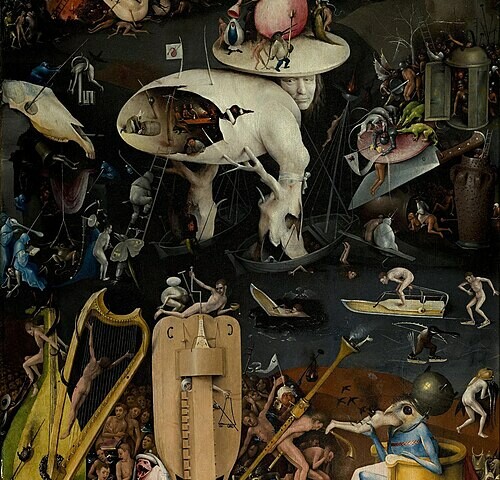
(As we meditate on this day on Christ’s burial, and His descent into hell, it is fitting to ponder here with contributor Peter Marcus how the world seems to be heading there as well. The difference is that, although God cannot ‘redeem’ hell, nor those therein, He can and did redeem the world. There is[…]Continue reading→
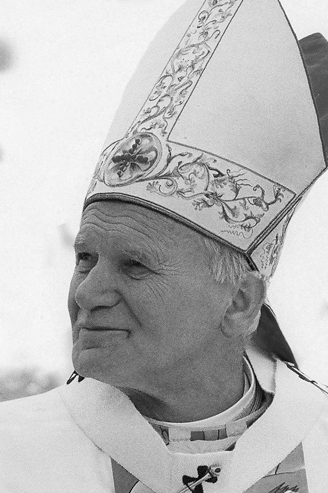
Pope Saint John Paul II’s First Good Friday Homily
ADDRESS OF HIS HOLINESS JOHN PAUL II AT THE CONCLUSION OF THE STATIONS OF THE CROSS AT THE COLOSSEUM Good Friday, 13 April 1979 When we make the Way of the Cross from one station to the next, in spirit we are always at the spot wherethis journey had its “historical” place: where it[…]Continue reading→
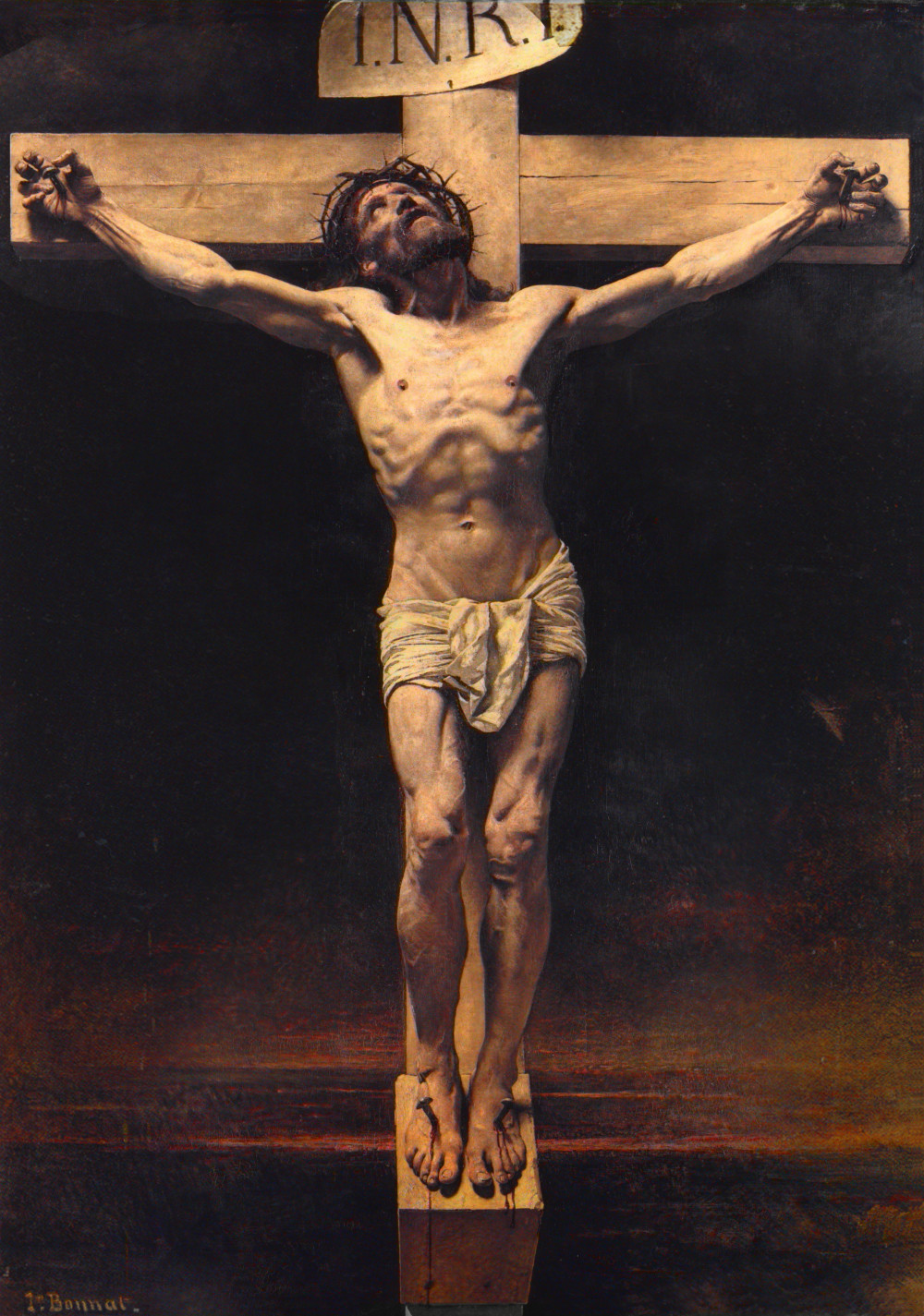
A Meditation for Good Friday: How To Undo the Effects of Sin?
Cardinal Newman, now Saint John Henry Newman, was a towering figure of nineteenth-century Catholicism who is almost universally admired. I say “almost” because not everyone likes him. I knew a priest once, Arthur Caulkins, who has become disenchanted with Newman. As an undergraduate Arthur had been enamoured of Newman, and this interest continued when he[…]Continue reading→
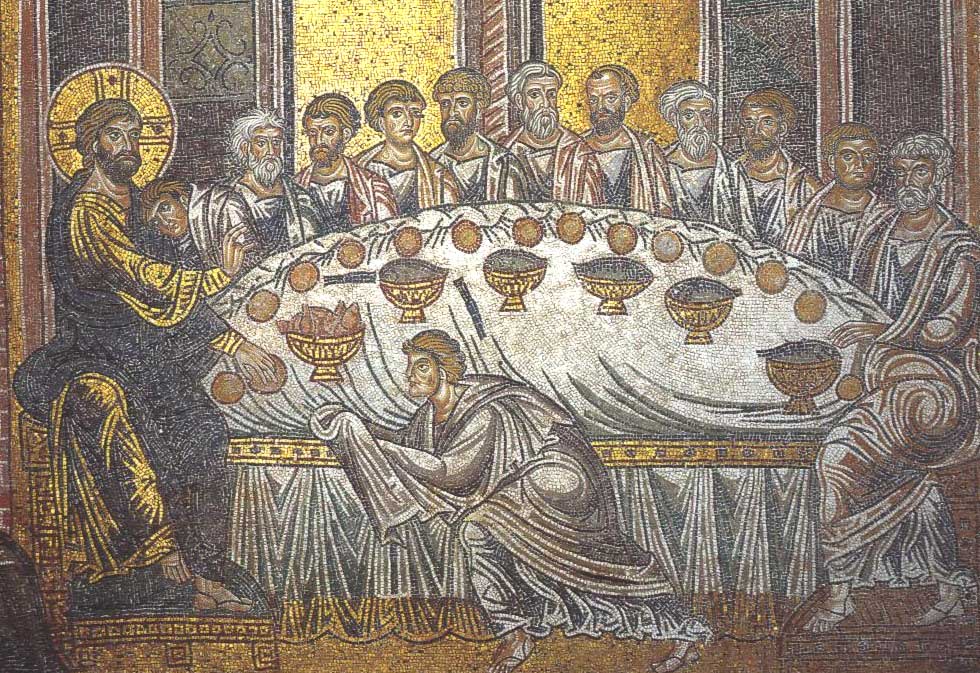
Pope Benedict’s Last Holy Thursday Homily
MASS OF THE LORD’S SUPPER HOMILY OF HIS HOLINESS BENEDICT XVI Basilica of St John Lateran Holy Thursday, 5 April 2012 Photo Gallery (Video) Dear Brothers and Sisters! Holy Thursday is not only the day of the institution of the Most Holy Eucharist, whose splendour bathes all else and in some ways draws it to[…]Continue reading→