
Old Saints and Staying the Course
There is something attractive about the figure of Zacchaeus, isn’t there? He’s exuberant and also uninhibited. Imagine a man of his importance climbing a tree to catch a glimpse Jesus over the heads of the crowd. And yet we know he was a scoundrel, for tax collectors extorted money from the poor to enrich themselves. Nevertheless, we may go a step further by asking if he should not be considered one of the saints of the New Testament, like Mary Magdalen, e.g., a converted sinner, or Saint Mathew, who had also been a tax collector. After all, Zacchaeus did fulfil Saint Paul’s prayer for the people of Thessalonica (first reading), “that God . . . will fulfil by his power every [one of your] good resolutions.” Furthermore, we need such saints, a repentant money man, for financiers are today equally as rapacious as Zacchaeus was at his worst; perhaps even more so. Consider this statement from an article in The Globe and Mail by David Callaghan: “Let us start with money. We live in a time if sky-high inequality. . . . Corporate chief executives, who used to make 30 or 40 times what the average worker makes, now earn more that 300 times more.”[1] Let me translate those figures into cash. If a worker makes, say, $50,000 a year, the CEO will . . . not earn but appropriate more than 300x$50,000 = $15,000,000. Saint Zacchaeus, pray for us!
Perhaps, however, you feel that Zacchaeus’s change of heart was too sudden, too abrupt to be convincing. It may be so, but many genuine saints have had similar experiences. I have mentioned Saint Matthew who left his tax booth to follow Jesus, on the spot. Saint Paul’s conversion occurred at the gate of Damascus, when he fell to the ground an enemy of Christianity and rose its champion. Similarly, Paul Claudel, the French author, poet and diplomat, was a religious sceptic when he entered Notre Dame Cathedral on Christmas eve, 1888 and was a believer when he came out. My favourite among such converts is someone you will never have heard of: Anne de Gonzague, a woman notorious for her loose morals and her religious indifference in the luxurious court of Versailles during the reign of the Sun King, Louis XIV. She liked to say, “The greatest miracle I can imagine would be my believing in Christianity.” But things changed after a dream, which she described as follows:
“One night I dreamt that, walking alone in a sort of forest, I met a blind man in a little grotto. I asked him if he had been blind from birth or if it had come later. He answered that had had been born blind. “Then you don’t know,” I said, “what light is, how beautiful and pleasing, and the sun that is so brilliant and beautiful.” “No,” he replied, “I cannot even imagine it, for, never having seen, I can form no idea of it. But I do not leave off believing that it is very beautiful, very pleasing to the sight.” Then it seemed as if he suddenly altered the tone of his voice and, speaking to me with authority, he said, “That should make you acknowledge that there are excellent and admirable things that are always true and much to be desired even though you cannot comprehend them or even imagine them in any way.”[2]
She rose the next morning a changed woman. Abandoning court life, she devoted her time to prayer and her fortune to serving the poor. When she died in 1684 the great Bishop Bossuet preached at her funeral, and it is that sermon that has kept her memory alive.
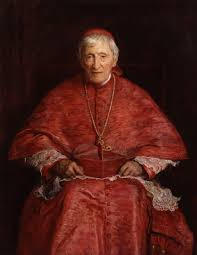
So, it seems, that in an informal way we would be quite justified in adding Zacchaeus to our catalogue of saints. There is, however, one thing that should give us pause. Unlike the others I have mentioned, who we know acted upon their new-found faith throughout their lives, Zacchaeus disappears from sight immediately after this one episode. Did he carry through on his good resolutions? Did he change from greedy self interest to genuine altruism? We do not know, but we do know that fidelity is the mark of true sanctity. Saint Paul told his converts, as he tells us, that we should “lead a live worthy of the Gospel of Christ.”[3] While that may seem—as it is—a tall order, the Catechism of the Catholic Church reminds us that “[we] are made capable of doing so by the grace of Christ and the gifts of his Spirit, which [we] receive through the sacraments and through prayer.”[4] A comment of John Henry Newman is relevant here: “Give me old saints.” What he recognized was that youthful enthusiasms can cool How often have I made good resolutions, only to find that with time I find excuses, quite plausible excuses, for abandoning them. To be faithful day in and day out, no matter what, to keep one’s word, to nourish one’s faith, to be constant in prayer even when it seems mere routine, to put up with the continual chagrins of daily life: such is the prosaic material of sanctity. We all admire the dramatic lives of a Thérèse of Lisieux or an Aloysius Gonzaga that achieved heroic sanctity in a single bound; Thérèse was twenty-four when she died, Aloysius, twenty-three. But—as an old man myself—I find my interest excited more by Saint Philip Neri who died at eighty, Newman, at eighty-nine, and Saint Antony of Egypt who lived to be a hundred and four.
We are in fact called upon to respect the various sorts of holiness that the Church honours. Those young saints seem to have been consumed by a charity too intense for the body to sustain. The enthusiasm and exuberance of youth were sublimated into a higher sphere, and like lovers they were impatient to be joined to their beloved. Old saints represent a slower course, in which through the various periods of human life witness is given to God’s faithful, ongoing love. Each type has its peculiar expression of what faith in Christ means, and all of us, whatever our age or condition, are called upon, have pledged ourselves to a similar witness, each in his unique manner.
[1] The Globe and Mail, 15 October 2022, p. O1.
[2] Une nuit je songeai que, marchant seule dans une espèce de forêt, j’avais rencontré un aveugle dans une petite grotte. Je lui demandai s’il était aveugle de naissance, ou s’il l’était devenu ? Il me répondit qu’il était né aveugle. « Vous ne savez donc pas, lui dis-je, ce que c’est que la lumière qui est si belle et si agréable, et le soleil qui est si éclatant et si beau ? » — « Non, » me répondit-il, « je n’en puis rien imaginer; car n’ayant jamais vu, je ne puis m’en former aucune idée, Je ne laisse pas de croire que c’est quelque chose de très beau et de très agréable à voir. » Alors, il me semble que cet aveugle changea tout d’un coup de ton de voix, et, me parlant avec une manière d’autorité, me dit : « Cela vous doit bien apprendre qu’il y a des choses très exellentes et très admirables qui ne laissent par d’être varies and très désirables, quoiqu’on ni les puisse comprendre ni imginer en aucune façon. » Jacques Bossuet, Oraisons funèbres (Paris: Gallimard, 2004).
[3] Phil 1.27.
[4] Catechism of the Catholic Church, ¶1692.

Saint Kateri , Canada’s Protectress
This was the title given to Saint Kateri Tekakwitha, by Pope Benedict XVI, when he canonized her on October 28th, 2012, along with six others, in Saint Peter’ Square (she had been beatified by Pope John Paul II back in 1980). With Saint Joseph as our protector, along with the Canadian martyrs, we seem to[…]Continue reading→

Remembering Father Alphonse de Valk
(Today marks the sixth anniversary of the death of Father Alphonse de Valk, C.S.B., a faithful, courageous and indefatigable Basilian priest, pro-life-and-family apostle, and the founder of Catholic Insight magazine. Here is what we wrote those on his entering into eternity five years ago, as we continue to remember him in our prayers and thoughts)[…]Continue reading→

My Name is Bernadette
April 16th is a propitious day, for besides the anniversary of Father de Valk’s death, who founded Catholic Insight in its print form decades ago, and the commemoration of the ‘two Benedicts’, mentioned in accompanying posts, today we also recall Saint Bernadette Soubirous, the young visionary to whom the Virgin Mary appeared numerous times at[…]Continue reading→

Canonizing Sister Faustina and Divine Mercy
HOMILY OF THE HOLY FATHER MASS IN ST PETER’S SQUARE FOR THE CANONIZATION OF SR MARY FAUSTINA KOWALSKA Sunday, 30 April 2000 1. “Confitemini Domino quoniam bonus, quoniam in saeculum misericordia eius”; “Give thanks to the Lord for he is good; his steadfast love endures for ever” (Ps 118: 1). So the Church sings on the Octave of[…]Continue reading→

Divine Mercy Sunday – An Echo of Every Mass
Reach out your hand and put it in my side. Do not doubt but believe’… ‘My Lord and my God!’ (Jn. 20:18)). Today is Divine Mercy Sunday, and as we celebrate the end of the Easter Octave, we contemplate the wounded side of our Saviour, the Church’s source of life. On Good Friday in the[…]Continue reading→

First Holy Communion: Sermon from May 16, 1943
Here is a sermon from the good old days by +Rev. Msgr. Vincent Nicholas Foy (August 14, 1915 – March 13, 2017), from 1943. Readers may recall that Pope Saint Pius X, by the decree Quam Singulari in 1910, lowered the customary age of reception of Holy Communion – after the rigours of the plague[…]Continue reading→

In the Glorious Light of Easter, Alleluia!
Set your minds on things that are above, not on things that are on earth, for you have died, and your life is hidden with Christ in God. When Christ who is your life is revealed, then you also will be revealed with him in glory (Col. 3:3-4). The Resurrection of Our Lord and Saviour[…]Continue reading→

An Ancient Homily for Holy Saturday
The time between Good Friday and Easter Sunday is one of waiting, in silence, as the world wonders – anticipates – what will happen, after the death of Christ. We re-live this time each year in the anamnesis of our liturgy, and in turn look forward to the glorious re-creation of all things at the[…]Continue reading→

Europe’s Long Descent
(As we meditate on this day on Christ’s burial, and His descent into hell, it is fitting to ponder here with contributor Peter Marcus how the world seems to be heading there as well. The difference is that, although God cannot ‘redeem’ hell, nor those therein, He can and did redeem the world. There is[…]Continue reading→
Pope Saint John Paul II’s First Good Friday Homily
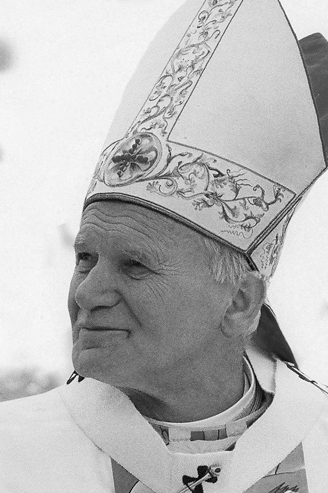
ADDRESS OF HIS HOLINESS JOHN PAUL II AT THE CONCLUSION OF THE STATIONS OF THE CROSS AT THE COLOSSEUM Good Friday, 13 April 1979 When we make the Way of the Cross from one station to the next, in spirit we are always at the spot wherethis journey had its “historical” place: where it[…]Continue reading→