
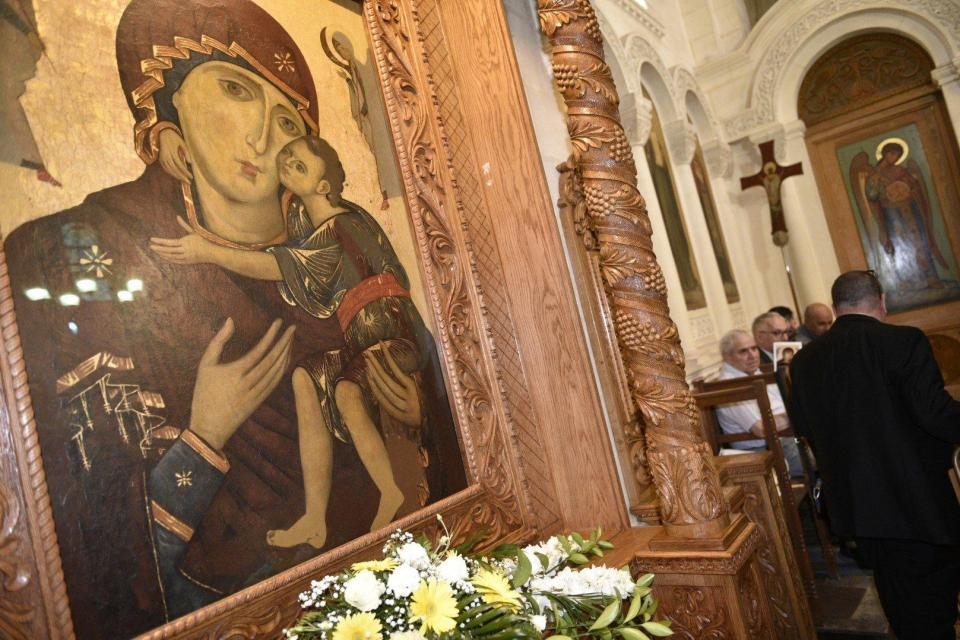
The Inauguration of the Restored Icon of Our Lady of Damascus
Last Thursday, June 30th, 2022, the restored miraculous icon of Our Lady of Damascus, which dates back almost one thousand years, was officially inaugurated at the Greek-Catholic church in Valletta, Malta. Such a great project of conservation and restoration, which lasted three years to end, was effectively executed by the firm Atelier del Restauro.
The task in question was both very difficult as well as delicate, given that the icon is a millenarian and badly needed consolidation, after long years of unprotected exposure to various elements. Thankfully, the conserved and restored icon is presently housed in a beautifully sculptured oak niche and protected by special (acrylic) glass. Furthermore, it is being regularly checked for humidity as well as other factors which might ruin it. The icon of Our Lady of Damascus can now be appreciated and venerated in all its spiritual and artistic beauty.
Present at the event of the inauguration was Dr George Vella, President of Malta, and Mrs Vella; Archbishop Charles Scicluna, National Heritage Minister Owen Bonnici, the chairman and officials from APS Bank, part-sponsors of the project; various ambassadors; members of the Greek-Catholic community; and other distinguished guests.
The evening’s programme, which was directed by Papàs Martin Zammit, the actual parish priest of the Greek-Catholic community, comprised a brief talk regarding the history of the icon, by Mgr George Mifsud, parish priest emeritus together with a presentation about the conservation and restoration of the icon by Maria Grazia Zenzani of the Atelier del Restauro, and brief addresses by Archbishop Scicluna followed by the president of the Republic of Malta, George Vella. Finally, the programme also included three Marian hymns sung by the choir of the Greek-Catholic church for the occasion.
When you visit Malta do not forget to go at the heart of Valletta, facing the Palace of the Grand Masters of the Order of Malta, where there stands the small church of Our Lady of Damascus, Byzantine in style, and rich in history and in works of sacred art, especially icons. It is among the religious treasures found there are two ancient Marian icons: the early 12th-century icon of “Our Lady of Damascus” (Damaskinì) and the early 14th-century icon of “Our Lady of Mercy” (Eleimonitria).
The Our Lady of Damascus icon is the more ancient icon, which was originally venerated in Damascus (Syria), from where it took its name. It was said to have reached Rhodes under miraculous circumstances in 1475. From the first it was intimately associated with another wonder-working icon, the Eleimonitria. When the Turks besieged Rhodes in 1522, the two icons were together taken, for safety’s sake, to the church of St. Demetrius within the city walls. The Eleimonitria seems always to have been in Rhodes in its own church.
The two icons and the churches that contained them were owned, in hereditary patronage (jus patronatus), by the Calamias family, of Greek origin, with a fine record of service to the local Church. The first known member of the family was the priest, Papàs Dikeos, who had a son, also a priest, Papàs Nicholas, Vicar General of the Metropolitan diocese of Rhodes. When Nicholas got married, his wife Joanna brought him as dowry the two precious icons and their respective churches. Papàs Nicholas died before the siege, and it was his widow Joanna who was responsible for the transportation of the icons from Rhodes to Malta. This was possible through the good offices of a kinsman, Joannettino Camus, who was barber-surgeon on the Order’s great ship, the Gran Carracca Sant’Anna. The icons were taken aboard and placed in a cabin where they could be venerated, and so reached Malta.
The Greeks in Malta were under the special protection of the Order of St. John. By brief of Pope Clement VII dated October 1, 1530, they were exempted from the jurisdiction of the local bishop and placed under that of the Grand Prior of the Order. Significantly, they were in full ecclesial communion with their Latin brethren, for under the Order’s rule in Rhodes, Church union was maintained, and Latin Archbishop and Greek Metropolitan functioned peacefully side by side. So, the Greeks in Malta were at once provided with three churches in the Borgo (later called Vittoriosa): St. Catherine, situated in the churchyard of St. Lawrence, and re-named “Our Lady of Damascus,” because of the presence of the precious icon; St. Agatha, re-named St. Anthony, which housed the Eleimonitria; and St. Nicholas, re-named St. George.
The Knights held the two icons of the Mother of God in great veneration, as did the local Maltese population. As mentioned in our previous article, on the Chapel of the Nativity of the Blessed Virgin in Fort St. Angelo, Grand Master Jean Parisot de la Valette, in particular, was a fervent devotee and prayed regularly before the Damascene icon, particularly during the Great Siege of 1565. When the siege was raised, the grateful Grand Master, on his way to a service of thanksgiving at St. Lawrence Church, stopped to pray before the icon of Our Lady in the Greek church and there presented his hat and sword as a votive offering and gesture of gratitude. They still hang there today, even though the Greek parish in Vittoriosa ceased to exist in 1832.
After the Great Siege of Malta in 1565, the Order of St. John decided to build a new city on the promontory dividing the Grand Harbor from Marsamxett Harbor, naming it Valletta after the victorious Grand Master. In 1569 the Greek community was granted a site in the new city for their own parish church, close to the Order’s hospital: this church was dedicated to St. Nicholas of Myra and is still in use as a Greek-Catholic church.
Just before the Great Siege, Joannes Calamias planned to build one or two churches as shrines for his two precious icons. Initially, he had some difficulty in vindicating his claim of ownership, but was easily able to prove his case before a special commission of senior Knights. In point of fact, only one church was built in Valletta on its present site: it was dedicated to Our Lady of Damascus and also housed the Eleimonitria. He did not live to see his church completed: but his executors proceeded with construction until it was finished in 1580.
After a few years, this church became the parish church for the Greek community on the Maltese Islands. In 1587 the Damascene icon was transferred with great pomp and ceremony from Vittoriosa to its new church in Valletta. In 1639 the parish priest Papàs Ioannis Metaxi conceded, without prejudice to his parochial rights, the use of the church to the Sodality of the Holy Souls, which subsequently re-structured and enlarged it.
On October 25, 1931, the icon of Our Lady of Damascus was solemnly crowned by the Vatican Chapter on the occasion of the celebration of the 15th Centenary of the Council of Ephesus (431 A.D.), when the Blessed Virgin was universally recognized and acclaimed as Theotokos, that is, the Mother of God. The date also coincided with the fourth centenary of the icon’s arrival in Malta.
During World War II the Church of Our Lady of Damascus was totally destroyed by enemy action in one of the air raids on the Grand Harbor on March 24, 1942, and some 30 icons and other liturgical objects were lost forever. However, reconstruction work was completed by 1951. Fortunately, the titular icon had been removed to a safe place and did not suffer war damage. But the Eleimonitria icon, which had been left in the church, was reduced to fragments. The fragments were piously collected and preserved; and in the 1980s, the pieces were carefully re-assembled, and the icon restored by our capable restorers at the National Museum of Fine Arts. It is now exposed for the veneration of the faithful in a specially sculptured oak wood niche.
Due to its old age and checkered history, the icon of Our Lady of Damascus was in a very poor state of preservation. Already in 1930 it had undergone urgent restoration at the hands of the two brothers, Vincenzo and Carmelo Bonello. It received more thorough restoration in the years 1963-1966 at the Central Institute of Art Restoration in Rome (Istituto Centrale del Restauro): layers of later and very inferior over-painting were removed, and this made possible the re-discovery of the original appearance of the wondrous icon.
In the post-war years the Church of Our Lady of Damascus was re-built in Byzantine style on the design of a local architect, Orazio Diacono. The new church was consecrated on August 15, 1951, by Bishop George Kalevassy, Apostolic Exarch and Pastor of the Greek-Catholic community in Greece. In the church one can admire a fine collection of icons, and among these a striking 16th-century icon of the Deposition from the Cross (Epitaphios) attributed to Emanuel Lambardos; a whole series of icons by the Russian iconographer Grigorij Maltzev; an icon of the Nativity of Mary by the Ukrainian monk-iconographer Father Juvenalij; and a Crucified Christ by the famous Maltese painter, Anton Inglott.
In front of the spiritual and artistic splendour of Our Lady of Damascus what comes to mind is the first Kontakion and Ikos from the Akathist Hymn to Our Lady the Merciful:
Kontakion 1
To Our Lady the Merciful, who loves the faithful and despises not the sorrowful, we sing earnest praises and make humble supplication. Show your compassion to the needy, fulfill the hope of the suffering, bestow your blessings upon the repentant, for we hasten to you and cry out:
Rejoice, Our Lady the Merciful, for you delight in salvation.
Ikos 1
We lift our hearts unto your holy icon, O Theotokos, and we behold your Heavenly beauty and we trust in your nurturing disposition. We who have sinned, we who are beset with troubles, and we who are afflicted with illness hereby place our confidence in your boundless mercy:
Rejoice, our constant help in daily work and prayer.
Rejoice, for you watch over those who love you.
Rejoice, our perpetual aid throughout the passing years.
Rejoice, for you never ignore those who love your Son.
Rejoice, our Directress on the path of righteousness.
Rejoice, for you embody all the virtues and commandments.
Rejoice, our Mediatress on the journey of discipleship.
Rejoice, for you love humankind with the love of Christ.
Rejoice, our utmost example of a pure heart.
Rejoice, for you shine forth the light of holy discernment.
Rejoice, our glorious image of a humble soul.
Rejoice, for you obey and exalt God your Savior.
Rejoice, Our Lady the Merciful, for you delight in salvation.

Saint Kateri , Canada’s Protectress
This was the title given to Saint Kateri Tekakwitha, by Pope Benedict XVI, when he canonized her on October 28th, 2012, along with six others, in Saint Peter’ Square (she had been beatified by Pope John Paul II back in 1980). With Saint Joseph as our protector, along with the Canadian martyrs, we seem to[…]Continue reading→

Remembering Father Alphonse de Valk
(Today marks the sixth anniversary of the death of Father Alphonse de Valk, C.S.B., a faithful, courageous and indefatigable Basilian priest, pro-life-and-family apostle, and the founder of Catholic Insight magazine. Here is what we wrote those on his entering into eternity five years ago, as we continue to remember him in our prayers and thoughts)[…]Continue reading→

My Name is Bernadette
April 16th is a propitious day, for besides the anniversary of Father de Valk’s death, who founded Catholic Insight in its print form decades ago, and the commemoration of the ‘two Benedicts’, mentioned in accompanying posts, today we also recall Saint Bernadette Soubirous, the young visionary to whom the Virgin Mary appeared numerous times at[…]Continue reading→

Canonizing Sister Faustina and Divine Mercy
HOMILY OF THE HOLY FATHER MASS IN ST PETER’S SQUARE FOR THE CANONIZATION OF SR MARY FAUSTINA KOWALSKA Sunday, 30 April 2000 1. “Confitemini Domino quoniam bonus, quoniam in saeculum misericordia eius”; “Give thanks to the Lord for he is good; his steadfast love endures for ever” (Ps 118: 1). So the Church sings on the Octave of[…]Continue reading→
Divine Mercy Sunday – An Echo of Every Mass
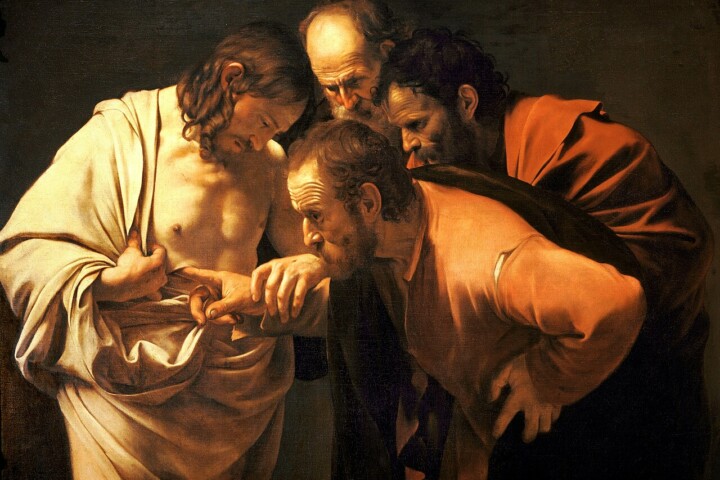
Reach out your hand and put it in my side. Do not doubt but believe’… ‘My Lord and my God!’ (Jn. 20:18)). Today is Divine Mercy Sunday, and as we celebrate the end of the Easter Octave, we contemplate the wounded side of our Saviour, the Church’s source of life. On Good Friday in the[…]Continue reading→

Saint Stanislaus of Szczepanów
We celebrate Saint Stanislaus today (+ April 11, 1079), in light of this Easter Octave, a bishop and martyr who accepted the episcopacy only at the direct order of Pope Alexander II. He proved a wise and courageous leader of his flock, put to death by his own king, Boleslaus, for rebuking the monarch’s ‘immoral[…]Continue reading→
First Holy Communion: Sermon from May 16, 1943
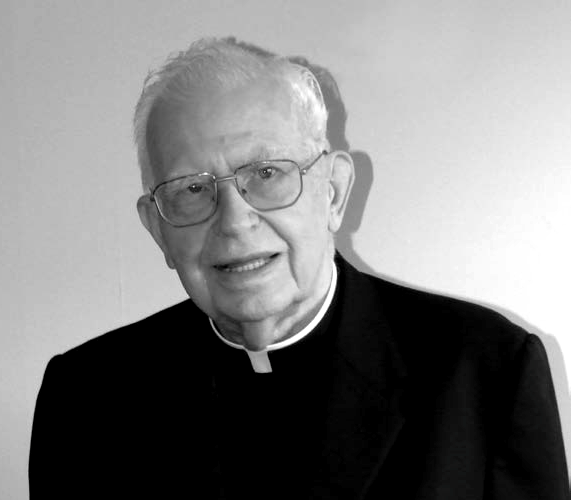
Here is a sermon from the good old days by +Rev. Msgr. Vincent Nicholas Foy (August 14, 1915 – March 13, 2017), from 1943. Readers may recall that Pope Saint Pius X, by the decree Quam Singulari in 1910, lowered the customary age of reception of Holy Communion – after the rigours of the plague[…]Continue reading→
In the Glorious Light of Easter, Alleluia!
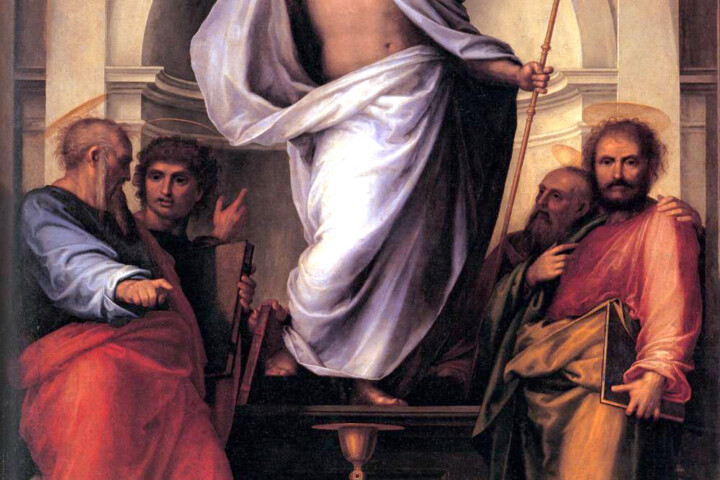
Set your minds on things that are above, not on things that are on earth, for you have died, and your life is hidden with Christ in God. When Christ who is your life is revealed, then you also will be revealed with him in glory (Col. 3:3-4). The Resurrection of Our Lord and Saviour[…]Continue reading→
An Ancient Homily for Holy Saturday
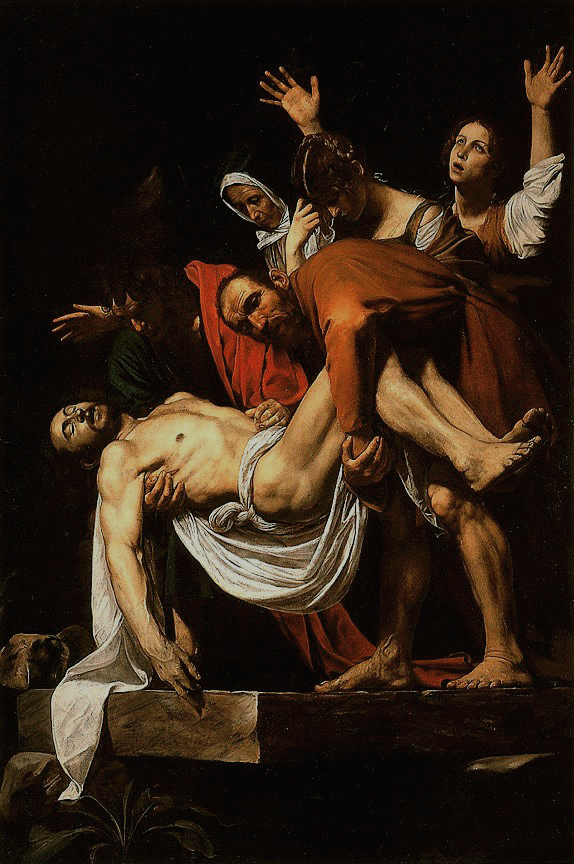
The time between Good Friday and Easter Sunday is one of waiting, in silence, as the world wonders – anticipates – what will happen, after the death of Christ. We re-live this time each year in the anamnesis of our liturgy, and in turn look forward to the glorious re-creation of all things at the[…]Continue reading→
Europe’s Long Descent
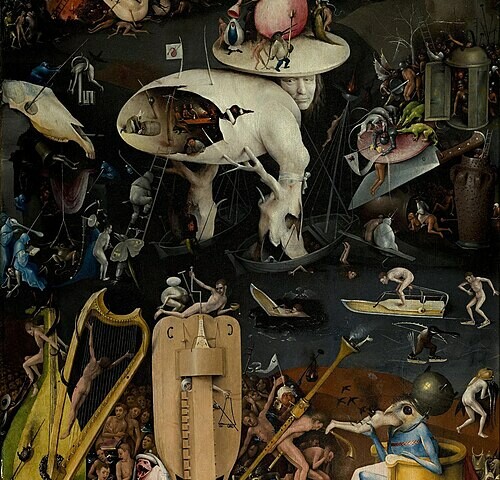
(As we meditate on this day on Christ’s burial, and His descent into hell, it is fitting to ponder here with contributor Peter Marcus how the world seems to be heading there as well. The difference is that, although God cannot ‘redeem’ hell, nor those therein, He can and did redeem the world. There is[…]Continue reading→