
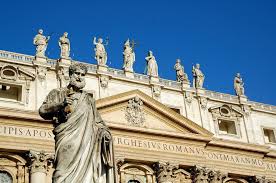
Ascension, Bishops and the Church
When was the Church founded? Many would say that it emerged from the opened side of Jesus on the cross, like a new Eve from the new Adam. Others point to Pentecost when, with Peter’s great sermon, the Church began its mission of evangelization.[1] No one to my knowledge has suggested the Ascension, but Luke’s Gospel, like the others, presents it as the occasion on which Jesus entrusted to the Apostles the universal proclamation of the Good News: “Thus it is written, that the Christ is to suffer and to rise from the dead on the third day, and that repentance and forgiveness of sins is to be proclaimed in his name to all nations. … You are witnesses of these things.”[2]
The novena between Ascension Thursday and Pentecost may thus be regarded as a time of withdrawal and prayer during which the nascent Church, under the leadership of the Apostles, prepared itself for the coming of the Holy Spirit: “All these [Apostles] with one accord devoted themselves to prayer, together with the women and Mary the mother of Jesus, and with his brothers.”[3] The Church has ever since continued this twofold pattern of prayer and action, under the guidance and direction of our bishops and the pope. We would do well, then, to consider how, and to what extent the pope and his fellow bishops are the successors of the Apostles and also to locate their special role in the context of the universal Church.
I was once required to ponder these matters by a challenge from a Protestant minister. He based his rejection of the Church as hierarchical on the parallel passage in Mark: “Go into the whole world and preach the Gospel to the whole creation. . . . And these signs will accompany those who believe: in my name . . . they will pick up serpents and if the drink any deadly thing, it will not hurt them.”[4] “Since you claim,” he said, that your bishops are the successors of the Apostles, let them prove it by handling venomous snakes and drinking coffee laced with arsenic.” It was easy, at one level, to demolish his statement, for Saint Mark’s text applies, not primarily to the Apostles but to whomsoever “believes and is baptised,” that is, to every Christian. Hence, as my interlocuter professed to follow the Bible to the letter, I pointed out that he should be the one to prove his faith by experimenting with snakes and arsenic. My riposte, naturally, had no effect on him, but it set me thinking. For the fact is that our bishops do not duplicate in all respects the vocation of the Apostles. For instance, the basis of the commissioning of the Apostles was their having encountered the risen Lord.[5] Obviously, that cannot be passed on; and thus, we may expect that other aspects of the Apostles’ role in the Church would also be absent in the bishops, including emerging unscathed from an encounter with a poisonous snake or beverage. What, then, is their peculiar function? It is simply this: to proclaim and preserve the deposit of the faith: “O Timothy, guard what has been entrusted to you.”[6]
In order that the full and vital Gospel might always be preserved in the Church the Apostles left bishops as their successors. They gave them their own position of teaching authority.[7]
In short, they exercise apostolic authority in the diocese and, if need be, in a general council. If I may use an unflattering image, a bishop is rather like a watchdog, raising the alarm when a teaching detrimental to the faith has appeared. There’s nothing of originality or even of enthusiasm in this aspect of their role in the teaching Church. For imaginative discourse, we must go to the schools, in which, with a certain ingenuity, theologians explore new avenues that are opened by the encounter of revelation with contemporary society. And enthusiasm arises from the vehement attachment of ordinary Catholics to some religious devotion or experience. The Marian shrines provide a good instance of what I mean. I do not deny for a moment that a bishop or pope may be innovative in his thinking, i.e., may act as a theologian. The papal encyclicals amply demonstrate this fact or, more explicitly, Pope Benedict’s statement in the forward to Jesus of Nazareth, that he was writing as a private theologian and not as the sovereign pontiff.[8] Nor will any given bishop be a stranger to devotion in his following of Christ. But these are separate from his exercise of the Church’s magisterium.[9]
The pleasing thing about all this is that each Catholic will on occasion fill all three of these roles. For we all ponder the truths of the faith—and thereby act as theologians—and we all, from time to time, find ourselves moved by the beauty and sublimity of the faith—and thereby demonstrate our common membership in the Church. And, simply as having been baptized, we share in the Magisterium, in that the bishops are called upon to confirm what has become explicit in the consensus of belief:
The whole body of the faithful. . . cannot err in matters of belief. This characteristic is shown in the supernatural appreciation of faith (sensus fidei) on the part of the whole people, when, from the bishops to the last of the faithful, they manifest a universal consent in matters of faith and morals.[10]
In other words, the authentic expression of the faith of the Church is found in the lived experience of all the baptised, learned, devout or ordained. The formal role of the bishop is authoritatively to assure us that seeming novelties will be in continuity with the faith of the primitive Church and, for that matter, the Church of the Fathers, the Middle Ages and the Counter-Reformation. If it sounds messy, it is. We must, therefore, thank God for the presence of the Holy Spirit . . . about whom we shall hear much next Sunday, on the feast of Pentecost.
[1] Cf. Acts 1.8: “You will receive power when the Holy Spirit has come upon you, and you will be my witnesses in Jerusalem and in all Judea and Samaria and to the end of the earth.”
[2] Lk 24.46-47.
[3] Acts 1.14.
[4] Mk 16.15-18.
[5] Acts 1.22.
[6] Cf. 1 Tim 6.20.
[7] Catechism of the Catholic Church, no. 77.
[8] “It goes without saying that this book is in no way an exercise of the magisterium, but is solely an expression of my personal search for ‘the face of the Lord’ (cf. Ps 27:8).” Joseph Ratzinger (Benedict XVI), Jesus of Nazareth (New York: Doubleday, 2007), p. xxxix.
[9] The differing and complementary roles of the magisterium, theologians and the faithful are treated with great insight in the 1877 “Preface” to John Henry Newman’s The Via Media of the Anglican Church, available at www.newmanreader.org.
[10] Catechism of the Catholic Church, no. 92. Saint Vincent of Lérins (d. ca 450) provided the classic statement of the threefold test of Catholicity: “what has been believed always, everywhere and by all.” The practical difficulties of implementing this principle are obviated by the commission of our bishops to enunciate and safeguard Catholic doctrine.

Remembering Father Alphonse de Valk
(Today marks the sixth anniversary of the death of Father Alphonse de Valk, C.S.B., a faithful, courageous and indefatigable Basilian priest, pro-life-and-family apostle, and the founder of Catholic Insight magazine. Here is what we wrote those on his entering into eternity five years ago, as we continue to remember him in our prayers and thoughts)[…]Continue reading→

Divine Mercy Sunday – An Echo of Every Mass
Reach out your hand and put it in my side. Do not doubt but believe’… ‘My Lord and my God!’ (Jn. 20:18)). Today is Divine Mercy Sunday, and as we celebrate the end of the Easter Octave, we contemplate the wounded side of our Saviour, the Church’s source of life. On Good Friday in the[…]Continue reading→

Saint Stanislaus of Szczepanów
We celebrate Saint Stanislaus today (+ April 11, 1079), in light of this Easter Octave, a bishop and martyr who accepted the episcopacy only at the direct order of Pope Alexander II. He proved a wise and courageous leader of his flock, put to death by his own king, Boleslaus, for rebuking the monarch’s ‘immoral[…]Continue reading→
First Holy Communion: Sermon from May 16, 1943
Here is a sermon from the good old days by +Rev. Msgr. Vincent Nicholas Foy (August 14, 1915 – March 13, 2017), from 1943. Readers may recall that Pope Saint Pius X, by the decree Quam Singulari in 1910, lowered the customary age of reception of Holy Communion – after the rigours of the plague[…]Continue reading→

In the Glorious Light of Easter, Alleluia!
Set your minds on things that are above, not on things that are on earth, for you have died, and your life is hidden with Christ in God. When Christ who is your life is revealed, then you also will be revealed with him in glory (Col. 3:3-4). The Resurrection of Our Lord and Saviour[…]Continue reading→

An Ancient Homily for Holy Saturday
The time between Good Friday and Easter Sunday is one of waiting, in silence, as the world wonders – anticipates – what will happen, after the death of Christ. We re-live this time each year in the anamnesis of our liturgy, and in turn look forward to the glorious re-creation of all things at the[…]Continue reading→
Europe’s Long Descent
(As we meditate on this day on Christ’s burial, and His descent into hell, it is fitting to ponder here with contributor Peter Marcus how the world seems to be heading there as well. The difference is that, although God cannot ‘redeem’ hell, nor those therein, He can and did redeem the world. There is[…]Continue reading→
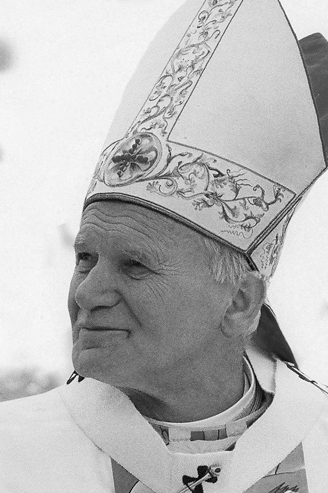
Pope Saint John Paul II’s First Good Friday Homily
ADDRESS OF HIS HOLINESS JOHN PAUL II AT THE CONCLUSION OF THE STATIONS OF THE CROSS AT THE COLOSSEUM Good Friday, 13 April 1979 When we make the Way of the Cross from one station to the next, in spirit we are always at the spot wherethis journey had its “historical” place: where it[…]Continue reading→
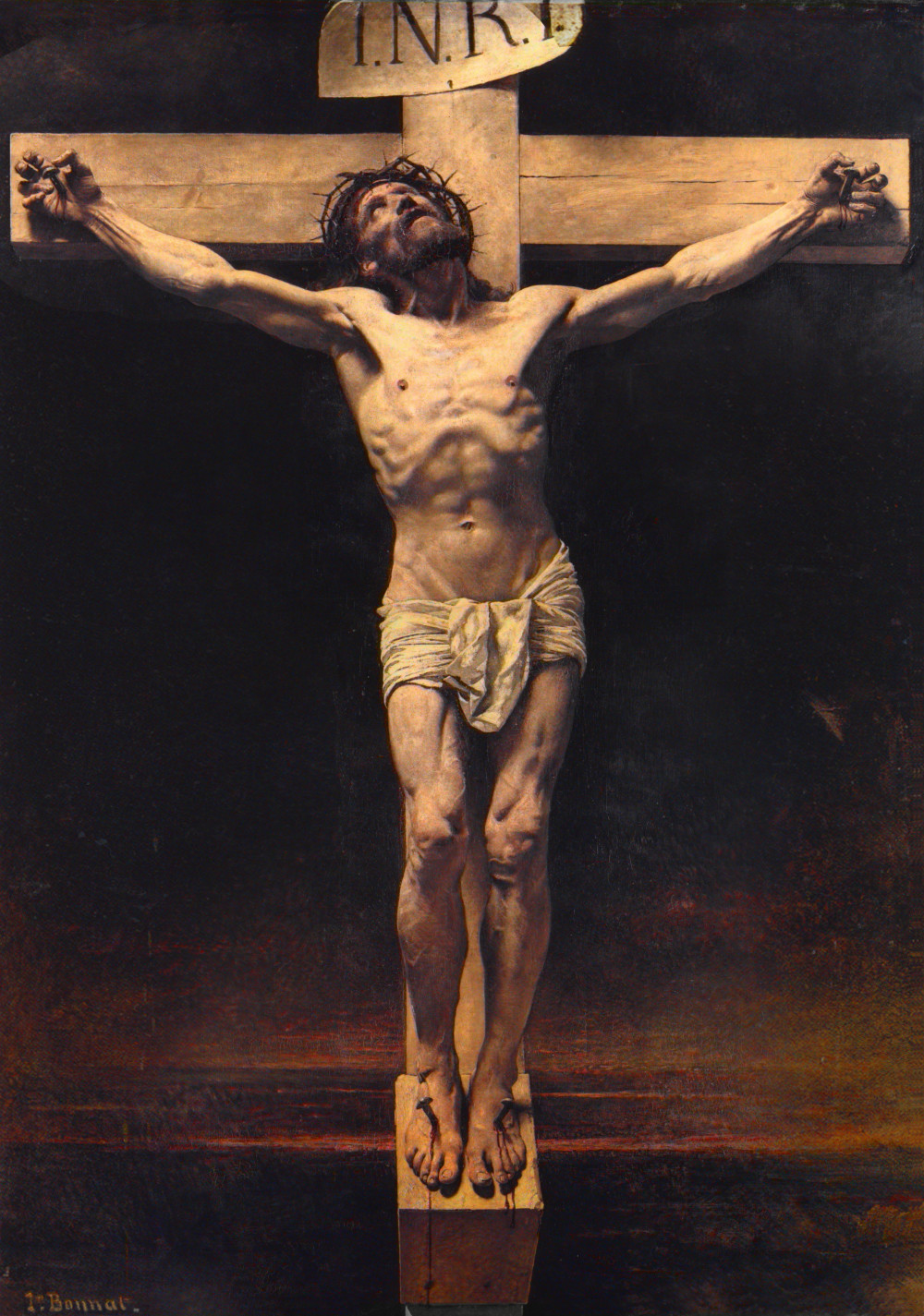
A Meditation for Good Friday: How To Undo the Effects of Sin?
Cardinal Newman, now Saint John Henry Newman, was a towering figure of nineteenth-century Catholicism who is almost universally admired. I say “almost” because not everyone likes him. I knew a priest once, Arthur Caulkins, who has become disenchanted with Newman. As an undergraduate Arthur had been enamoured of Newman, and this interest continued when he[…]Continue reading→
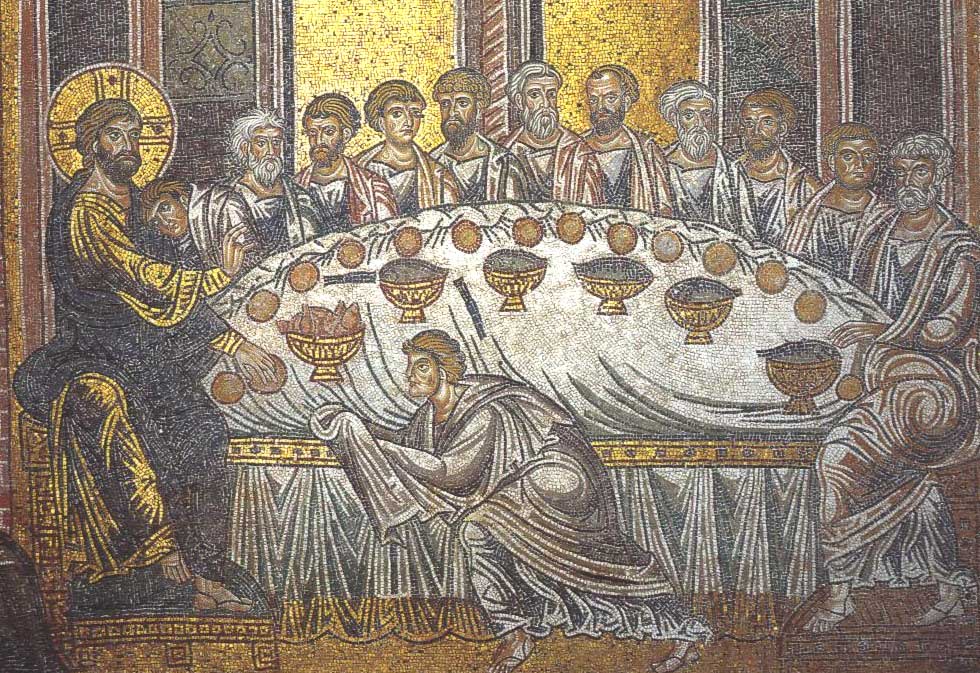
Pope Benedict’s Last Holy Thursday Homily
MASS OF THE LORD’S SUPPER HOMILY OF HIS HOLINESS BENEDICT XVI Basilica of St John Lateran Holy Thursday, 5 April 2012 Photo Gallery (Video) Dear Brothers and Sisters! Holy Thursday is not only the day of the institution of the Most Holy Eucharist, whose splendour bathes all else and in some ways draws it to[…]Continue reading→