
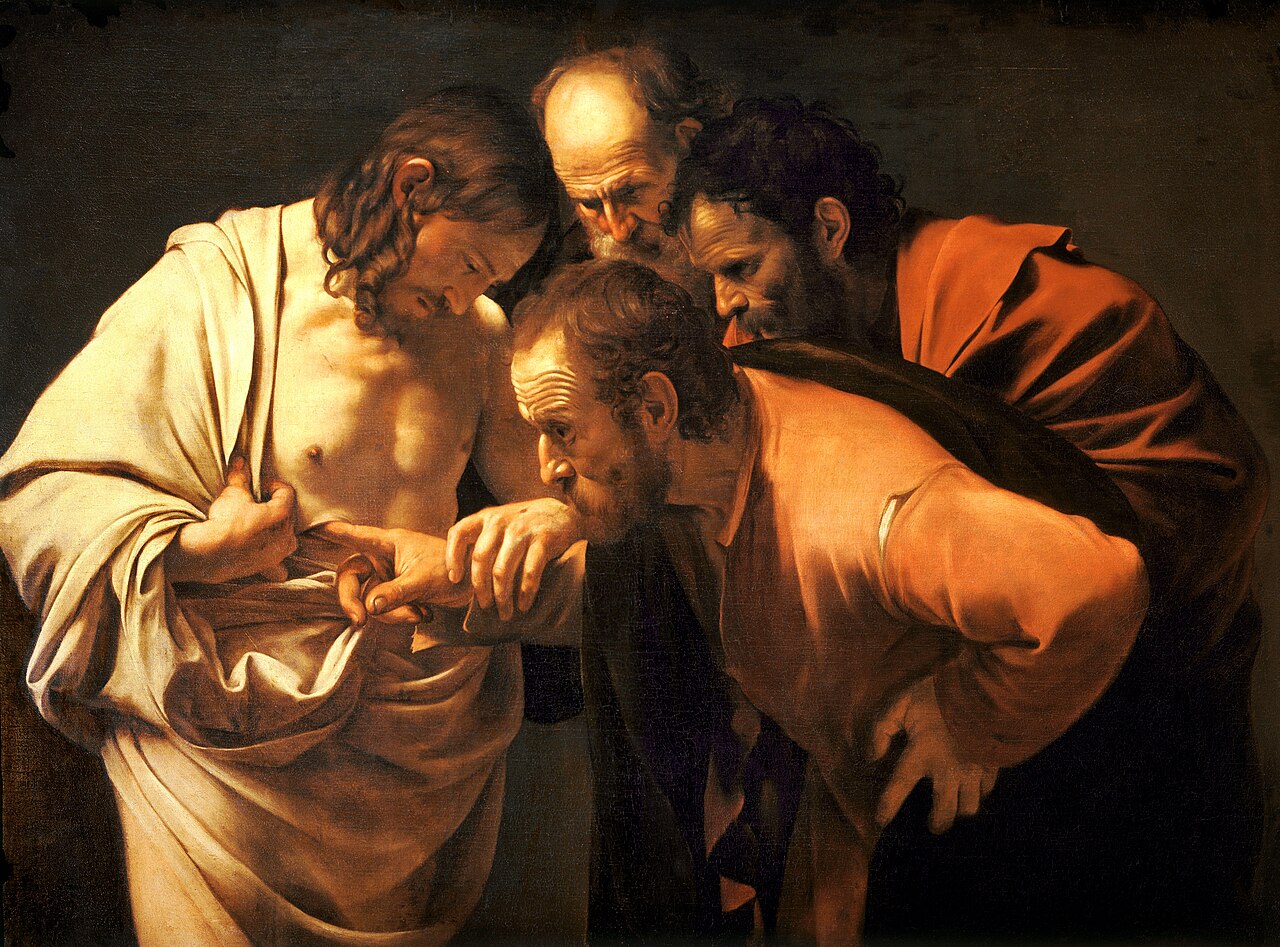
Divine Mercy Sunday – An Echo of Every Mass
Reach out your hand and put it in my side. Do not doubt but believe’… ‘My Lord and my God!’ (Jn. 20:18)).
Today is Divine Mercy Sunday, and as we celebrate the end of the Easter Octave, we contemplate the wounded side of our Saviour, the Church’s source of life. On Good Friday in the commemoration of the Lord’s Passion, St John recorded that as Our Lord hung in death upon the Cross, one of the soldiers pierced his side with a spear and at once there came out blood and water (Jn. 19:34). These living streams which continue to flow from the Sacred Heart of Our Risen Lord are the saving waters of Baptism by which we are born again and become a new creation, and the Precious Blood of the Eucharist which nourishes this life. St. John Chrysostom explains: As God took a rib from Adam’s side to fashion a woman, so Christ has given us blood and water from his side to fashion the Church. God took the rib when Adam was in a deep sleep, and in the same way Christ gave us the blood and water after his own death…. As a woman nourishes her child with her own blood and milk, so does Christ unceasingly nourish with His own blood those to whom He Himself has given life (The Liturgy of the Hours, Vol. II, p. 275).
We know that each time we participate in the Holy Sacrifice of the Mass the fullness of Good Friday, Easter and Pentecost is conveyed to us. Each time we participate in the sacred mysteries, the Pascha Domini (the Passover of the Lord), we die with Christ, we rise with Him and receive from Him the Spirit of Promise who transforms us and unites us to the Father in and through Christ (Fr. M. Louis Merton, Seasons of Celebration). The Mass is the Paschal Mystery. So we always celebrate the Mass, every Mass with the unleavened bread of purity and truth; that is to say, with faith and devotion, reverence, gratitude and love. The understanding of this truth is what we should seek to grasp and rightly understand (Collect, Second Sunday of Easter; The Roman Missal). This is the grace that we especially implore on this beautiful Feast.
The water that flows from the Heart of Our Saviour is no less the water of wisdom (Sir. 15); for with St. Paul we count all things as loss because of the surpassing worth of knowing Christ Jesus [Our] Lord (Phil. 3:8). This is true wisdom for in knowing Christ, we also come to know ourselves in Christ. This may sound strange at first hearing; but it is only in the light of Christ that we come to understand our true value and worth, and by extension the value and worth of our neighbour. Saint Anthony of Padua’s eloquent exhortation is worthy of reflection: Christ, who is your life, hangs before you, so that you can gaze upon the cross as if in a mirror… If you look upon him, you will be able to see the greatness of your dignity and worth… Nowhere else can we better recognize our own value, than by looking into the mirror of the cross (Sermones dominicales et festivi, III, pp. 213-214).
This is why the Passion of Our Lord reveals to us everything we need to know; and on this Divine Mercy Sunday Our Lord invites us to contemplate the glorious marks of His Passion: Reach out your hand and put it in my side. Do not doubt but believe’. With the Apostle Thomas we say: ‘Thou art my Lord and my God!’ Knowledge of the true God leads us to the possession of true knowledge of ourselves in Christ, in whom we have redemption, the forgiveness of sins (Col. 1:14). The journey to self-knowledge is perhaps the one aspect of Christian discipleship that least appeals to us, but without self-knowledge the transformation of our hearts and minds in Christ remains an alien concept and we fail to mature and grow never reaching the measure of stature of the fullness of Christ (Eph. 4:13).
This is the nature of knowledge; that as we arrive at the knowledge of one truth we are led to another. In this sense, we never cease to learn. Eastertide is a privileged time of instruction or particular catechesis known as mystagogy; that is, instruction in the mysteries: when we proceed from the visible to the invisible, from the sign to the thing signified, from the sacraments to the mysteries (Catechism of the Catholic Church, 1075). Its aim is to lead us ever more deeply into the Mystery of Christ. ‘Reach out your hand and put it in my side. Do not doubt but believe’. So we contemplate the wounded side of Christ and we enter into the Mystery of Our Lord’s Sacred Heart whose love and mercy we receive and share with the world. This form of liturgical catechesis rightly presupposes a commitment to prayer, personal prayer that is reflective, silent and meaningful; and a serious effort to become mature in the practice of our faith. Because the ultimate Mystery is God Himself, we can easily understand why in the contemplation of this Mystery we are always beginners, always in need of initiation; and because we grow and change and our lives change, the reality of this Mystery must be brought to bear on the different stages of our lives. So we celebrate Easter anew this year and never exhaust the treasures of knowledge and wisdom that Our Saviour communicates to us through grace.
As we celebrate Divine Mercy Sunday, we recall that in our age God revealed the immeasurable riches of His grace through the witness of St. Faustina, a messenger of the Merciful Heart of Jesus. To her Our Lord entrusted the message of Divine Mercy and specifically the devotional prayer which we know as the Chaplet of Divine Mercy. The chaplet is in essence, an extension of the Mass, the perfect prayer given to us by Our Lord. The Mass is Calvary and in the Mass Our Lord provides everyone who loves Him with an opportunity to be with Him on Calvary, where, for the world’s salvation He offered the Sacrifice of His Life. The prayers of the chaplet echo the Solemn Intercessions of Good Friday which embrace the whole world and its needs. The Church lives from the Sacrifice of her Lord, the Sacrifice of Calvary. This Sacrifice is what sustains us and gives us hope. In His infinite goodness Our Lord has revealed to us a prayer that enables us wherever we are, to unite ourselves with His Sacrifice and offer to the eternal Father the Body and Blood, Soul and Divinity of our Lord Jesus Christ; In atonement for our sins and those who the whole world.
We place our trust in the Risen Lord; and we ask that with the help of His grace we may be generous in the practice of the corporal and spiritual works of mercy, confident in the saving knowledge that is ours in Christ; in whom are hid all the treasures of wisdom and knowledge… in whom the fullness of deity dwells bodily and in whom we have come to the fullness of life (Cf. Col. 2:3,9-10). ⧾

Remembering Father Alphonse de Valk
(Today marks the sixth anniversary of the death of Father Alphonse de Valk, C.S.B., a faithful, courageous and indefatigable Basilian priest, pro-life-and-family apostle, and the founder of Catholic Insight magazine. Here is what we wrote those on his entering into eternity five years ago, as we continue to remember him in our prayers and thoughts)[…]Continue reading→

Saint Stanislaus of Szczepanów
We celebrate Saint Stanislaus today (+ April 11, 1079), in light of this Easter Octave, a bishop and martyr who accepted the episcopacy only at the direct order of Pope Alexander II. He proved a wise and courageous leader of his flock, put to death by his own king, Boleslaus, for rebuking the monarch’s ‘immoral[…]Continue reading→

First Holy Communion: Sermon from May 16, 1943
Here is a sermon from the good old days by +Rev. Msgr. Vincent Nicholas Foy (August 14, 1915 – March 13, 2017), from 1943. Readers may recall that Pope Saint Pius X, by the decree Quam Singulari in 1910, lowered the customary age of reception of Holy Communion – after the rigours of the plague[…]Continue reading→

In the Glorious Light of Easter, Alleluia!
Set your minds on things that are above, not on things that are on earth, for you have died, and your life is hidden with Christ in God. When Christ who is your life is revealed, then you also will be revealed with him in glory (Col. 3:3-4). The Resurrection of Our Lord and Saviour[…]Continue reading→

An Ancient Homily for Holy Saturday
The time between Good Friday and Easter Sunday is one of waiting, in silence, as the world wonders – anticipates – what will happen, after the death of Christ. We re-live this time each year in the anamnesis of our liturgy, and in turn look forward to the glorious re-creation of all things at the[…]Continue reading→

Europe’s Long Descent
(As we meditate on this day on Christ’s burial, and His descent into hell, it is fitting to ponder here with contributor Peter Marcus how the world seems to be heading there as well. The difference is that, although God cannot ‘redeem’ hell, nor those therein, He can and did redeem the world. There is[…]Continue reading→
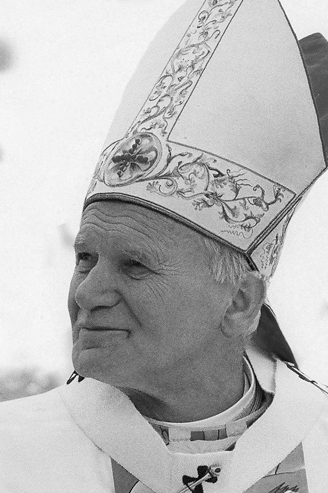
Pope Saint John Paul II’s First Good Friday Homily
ADDRESS OF HIS HOLINESS JOHN PAUL II AT THE CONCLUSION OF THE STATIONS OF THE CROSS AT THE COLOSSEUM Good Friday, 13 April 1979 When we make the Way of the Cross from one station to the next, in spirit we are always at the spot wherethis journey had its “historical” place: where it[…]Continue reading→
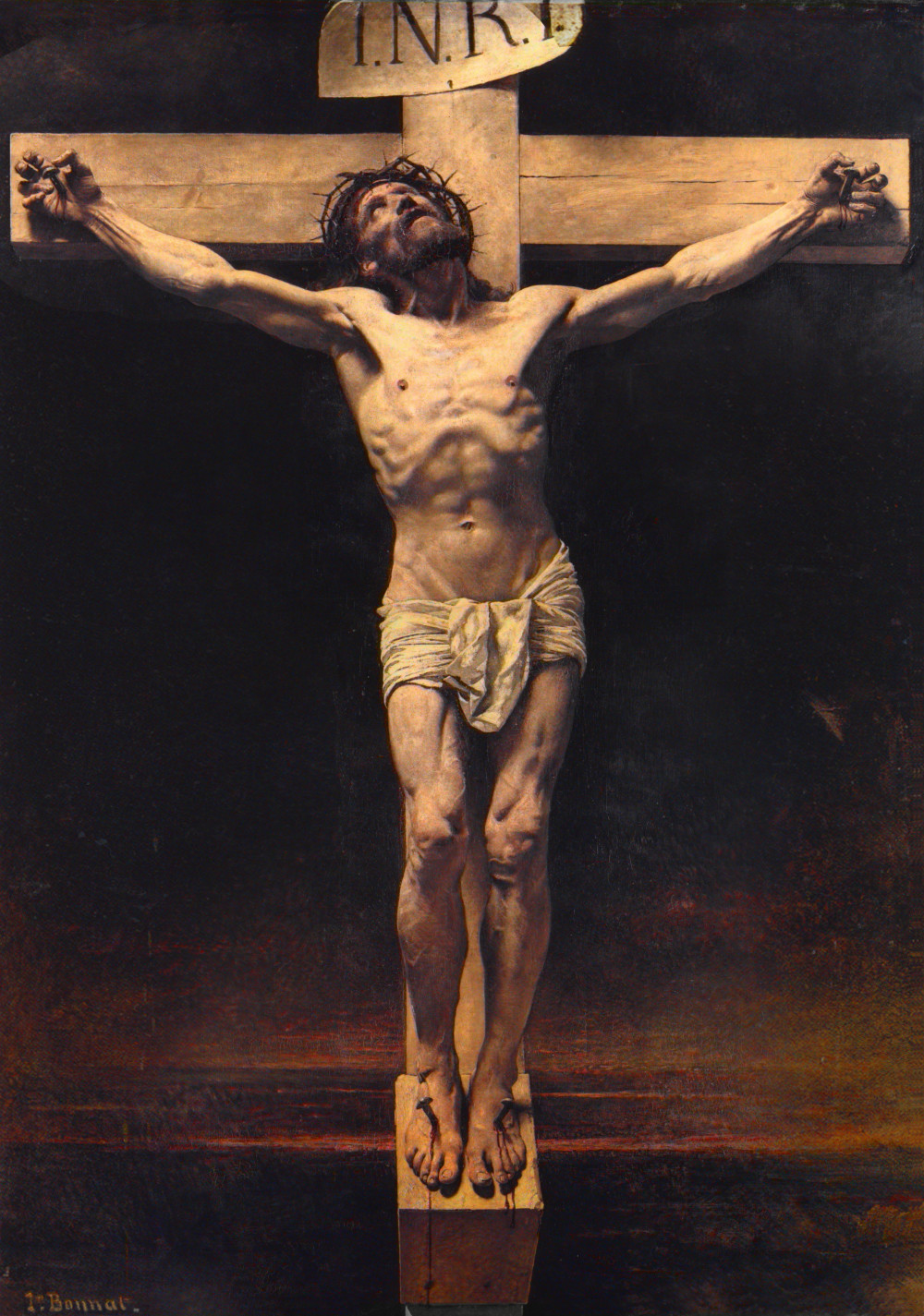
A Meditation for Good Friday: How To Undo the Effects of Sin?
Cardinal Newman, now Saint John Henry Newman, was a towering figure of nineteenth-century Catholicism who is almost universally admired. I say “almost” because not everyone likes him. I knew a priest once, Arthur Caulkins, who has become disenchanted with Newman. As an undergraduate Arthur had been enamoured of Newman, and this interest continued when he[…]Continue reading→
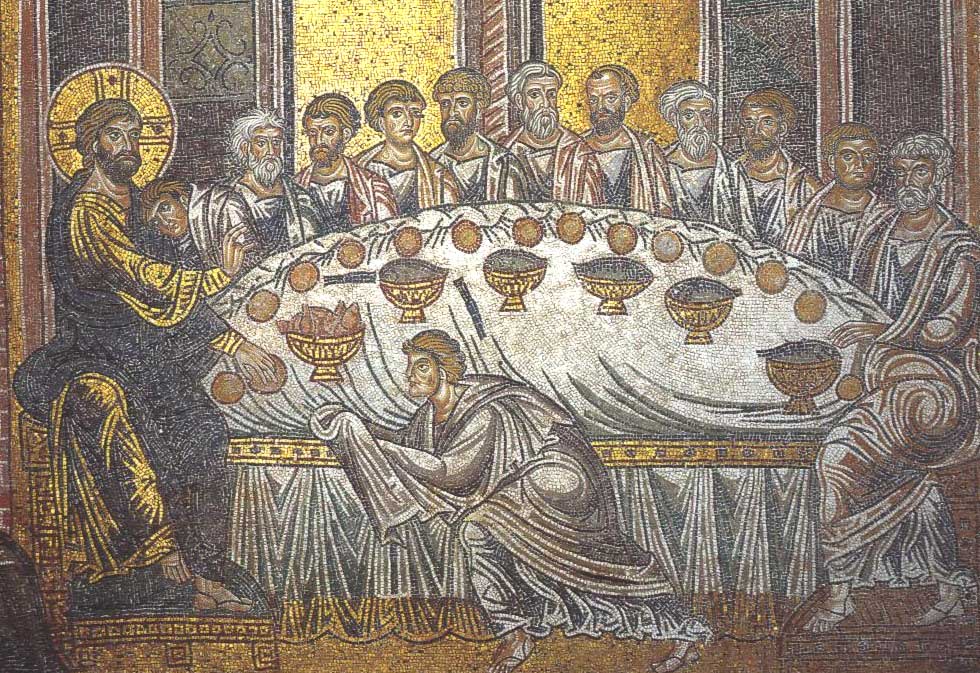
Pope Benedict’s Last Holy Thursday Homily
MASS OF THE LORD’S SUPPER HOMILY OF HIS HOLINESS BENEDICT XVI Basilica of St John Lateran Holy Thursday, 5 April 2012 Photo Gallery (Video) Dear Brothers and Sisters! Holy Thursday is not only the day of the institution of the Most Holy Eucharist, whose splendour bathes all else and in some ways draws it to[…]Continue reading→
Pope Saint John Paul II’s Last Passion Sunday
(This is the last of Pope Saint John Paul II’s Passion-Palm Sunday homilies, given in 2004, before his own passion and death the following year, when he was unable – for the first time – to celebrate Mass on this Holy Day. Yet he worked in the Lord’s vineyard right up until the end, having[…]Continue reading→