
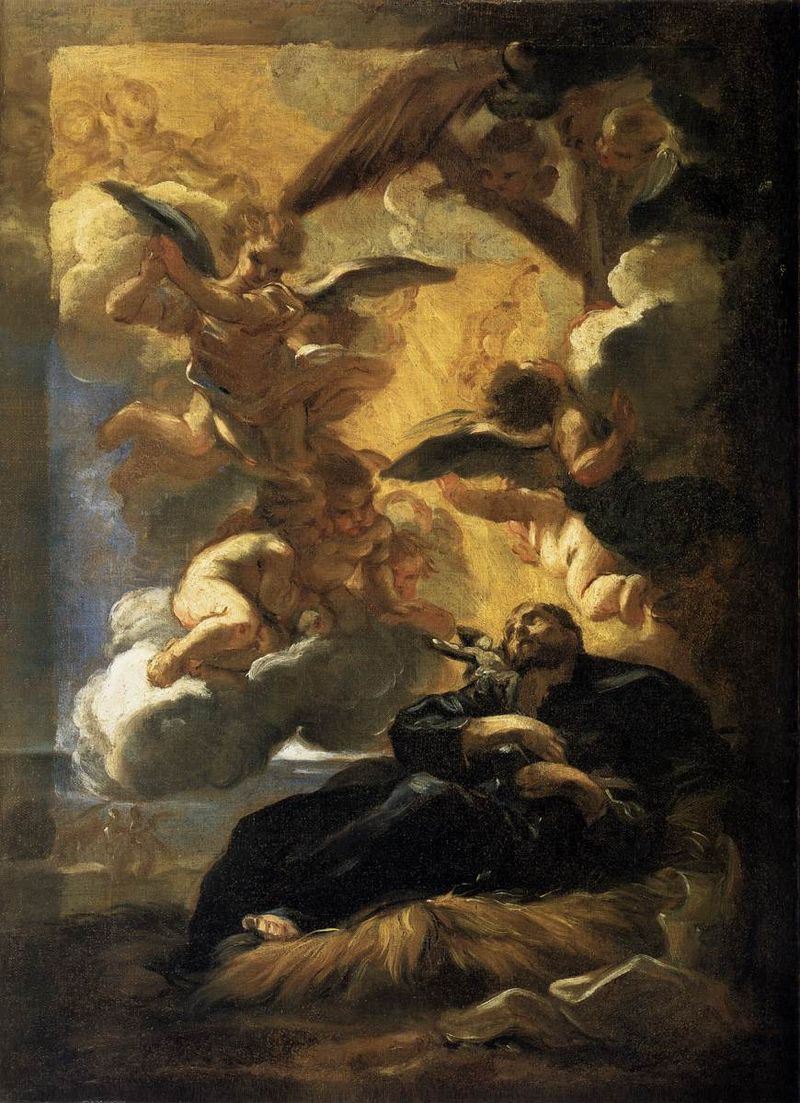
Second Sunday of Lent, and Seeing Beyond Our Eyes
Are old people wise? Have they learned anything from experience? Or are they all curmudgeons, continually grumbling about the young generation and contrasting it unfavourably with the way things used to be? Well, as an old man myself, I may observe that it is possible to be both wise and curmudgeonly at one and the same time. So . . . what, then, is my complaint about the youth of today? What makes 2022 different from those halcyon days when I was young? What I dislike—and there is biblical support for my opinion—is the contemporary compulsion to record everything, like the young groom whose wedding was being filmed: “I can’t wait,” he said, “to see the video.” Was he even present at his own wedding? It doesn’t matter if he was or not, because he can always catch anything he may have missed when he watches it later.
I’m not alone in my suspicions of recordings. You may not have heard of Papias, a bishop of the early Church, who died around A.D. 130, just at the time that the Gospels were gaining wide circulation in the Church. He was opposed to writing down what had till then had been an oral tradition of the life of Jesus, “for, “he said, “once they have a written text, people won’t bother memorizing these accounts, and so they won’t have them impressed upon their souls.” As a committed reader of Scripture, and of everything else, I cannot agree completely with Papias, but I do recognize the validity of what he said: our memories are nothing like those of the ancients, who could recite by heart all of Homer’s Iliad and Odyssey, for example, or the entire books of Psalms. The fact is that every technical advance necessarily involves a loss. Consider DVDs, for instance, or the internet. We have easy access at any time and place to the greatest, the most sublime music ever composed . . . and we use it as background noise in a dentist’s office or in an elevator. We train ourselves not to listen to or even to hear music! Contrast our experience with that of a musician from the country who happened to be in Vienna when Beethoven was conducting a new symphony. Our musician would have been all ears, conscious that this would in all likelihood be the one time in his life that he would hear the symphony. Can you imagine his concentration as he tried to etch every nuance, every note into his memory? In the village he would be famous as the man who had heard the Eroica when it was premiered. I’m not suggesting that the invention of the phonograph was a mistake; only that we recognize that there was a price to be paid for it. It’s not all gain, for something valuable has been lost.
There is one area of life that still today has to be experienced directly or not al all, that cannot be recorded for later diversion. It’s found throughout Scripture and is an important feature of today’s readings. And what is this unique remnant of a non-electronic age? It is dreams. Have you ever remarked on how frequent and how important they are in the Bible? Adam received Eve when he allowed himself to be cast into a deep sleep, where mysterious and wonderful things occur. Similarly, the patriarch Joseph saw in Pharaoh’s dreams the coming seven years of plenty and the seven years of want that were crucial events in the history of the chosen people. Do you recall Jacob’s dream, about a ladder reaching from earth to heaven? Jesus himself invoked it: “Amen, amen, I say to you, you will see the heavens opened and the angels of God ascending descending on the Son of Man.”[1] There are dreams in the New Testament too. Saint Joseph fled Herod because of a dream, and the Magi avoided him on similar grounds. And then we have the sleepers in today’s lessons: first Abraham and the then the three Apostles—Peter, James and John—at the transfiguration.
In his dream, Abraham saw God as a flaming torch that passed between the dismembered bodies of the animals that were used to solemnize the covenant between God and the house of Abraham. In this scene we are in an era, not only before recordings but before writing was in general use. In those days, keeping one’s word was the only means of entering into a binding agreement. A man’s word was a sacred commitment. That’s why “he has lying lips” was the worst thing you could say about anyone, as we find it in the book of Proverbs. “Lying lips are an abomination to the Lord.”[2] To solemnize a pact, treaty or covenant, the parties involved would pass between the dismembered limbs of a sacrificial animal, the implication being, “May this happen to me if I break my word.”
That God himself would participate in the covenant—the flaming torch of today’s first reading—shows an astonishing condescension. The Lord is here acting as a human agent in establishing a covenant with the progenitor of the chosen people. As a somnolent Abraham saw a manifestation of God in the flaming torch, so the disciples—Peter, James and John—who were “weighed down with sleep,” saw the glory of God in the transfigured Christ. When you think of it, the glorious radiance was always in Jesus, but it became available to the disciples only when they, as it were, abandoned the everyday powers of sight to enter that mysterious soporific state which breaks through the limitations inherent external vision. The poet Blake expressed it well: “We are led to believe a lie when we see not through the eye.”[3] It’s a clever line because he takes an obvious fact, that we see through having eyes, and then turns it on its head, because to see through something or someone is not to be deceived by external appearances, but to penetrate to the inner reality of the object we are looking at: “I see through you,” as the saying goes. To see through the eyes then, is to recognize the limitations of purely physical sight. ‘There is more to it than meets the eye,” we like to say when things are not as they seem.
Like the Apostles on Mount Tabor we are called to open our eyes to the reality of God’s action among men. The discipline of Lent is designed to restore our spiritual vision by giving us insight into what is really, but not obviously, present in our world. “Blessed are the pure of heart, Jesus said, “for they shall see God.”[4] Lent reminds us that a power of vision which has been purified by our turning away from sin and embracing virtue, day by day, will provide us with insight—I like that word, in that it conveys the notion of really penetrating something—with insight into the glorious presence of God’s grace in the here and now, which is opaque to the man without faith, but shines with the glory of the transfigured Christ for us who believe.
[1] Jn 1.51.
[2] Prov 12.22.
[3] William Blake, Auguries of Innocence.
[4] Matt 5.8.

Remembering Father Alphonse de Valk
(Today marks the sixth anniversary of the death of Father Alphonse de Valk, C.S.B., a faithful, courageous and indefatigable Basilian priest, pro-life-and-family apostle, and the founder of Catholic Insight magazine. Here is what we wrote those on his entering into eternity five years ago, as we continue to remember him in our prayers and thoughts)[…]Continue reading→

Divine Mercy Sunday – An Echo of Every Mass
Reach out your hand and put it in my side. Do not doubt but believe’… ‘My Lord and my God!’ (Jn. 20:18)). Today is Divine Mercy Sunday, and as we celebrate the end of the Easter Octave, we contemplate the wounded side of our Saviour, the Church’s source of life. On Good Friday in the[…]Continue reading→

Saint Stanislaus of Szczepanów
We celebrate Saint Stanislaus today (+ April 11, 1079), in light of this Easter Octave, a bishop and martyr who accepted the episcopacy only at the direct order of Pope Alexander II. He proved a wise and courageous leader of his flock, put to death by his own king, Boleslaus, for rebuking the monarch’s ‘immoral[…]Continue reading→
First Holy Communion: Sermon from May 16, 1943
Here is a sermon from the good old days by +Rev. Msgr. Vincent Nicholas Foy (August 14, 1915 – March 13, 2017), from 1943. Readers may recall that Pope Saint Pius X, by the decree Quam Singulari in 1910, lowered the customary age of reception of Holy Communion – after the rigours of the plague[…]Continue reading→
In the Glorious Light of Easter, Alleluia!
Set your minds on things that are above, not on things that are on earth, for you have died, and your life is hidden with Christ in God. When Christ who is your life is revealed, then you also will be revealed with him in glory (Col. 3:3-4). The Resurrection of Our Lord and Saviour[…]Continue reading→
An Ancient Homily for Holy Saturday
The time between Good Friday and Easter Sunday is one of waiting, in silence, as the world wonders – anticipates – what will happen, after the death of Christ. We re-live this time each year in the anamnesis of our liturgy, and in turn look forward to the glorious re-creation of all things at the[…]Continue reading→
Europe’s Long Descent
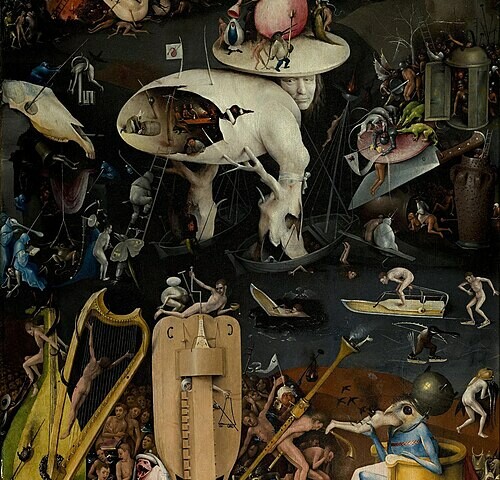
(As we meditate on this day on Christ’s burial, and His descent into hell, it is fitting to ponder here with contributor Peter Marcus how the world seems to be heading there as well. The difference is that, although God cannot ‘redeem’ hell, nor those therein, He can and did redeem the world. There is[…]Continue reading→
Pope Saint John Paul II’s First Good Friday Homily
ADDRESS OF HIS HOLINESS JOHN PAUL II AT THE CONCLUSION OF THE STATIONS OF THE CROSS AT THE COLOSSEUM Good Friday, 13 April 1979 When we make the Way of the Cross from one station to the next, in spirit we are always at the spot wherethis journey had its “historical” place: where it[…]Continue reading→
A Meditation for Good Friday: How To Undo the Effects of Sin?
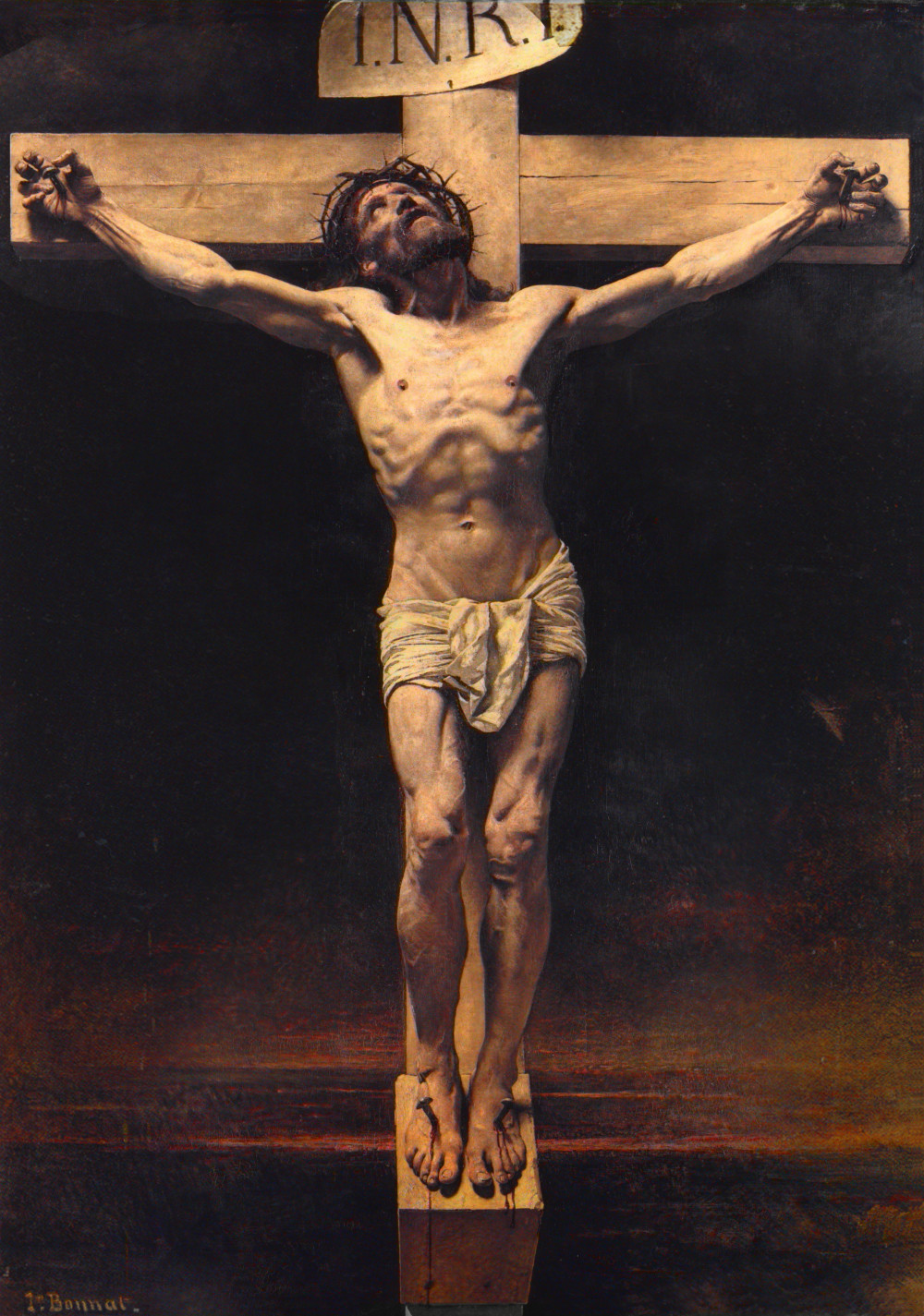
Cardinal Newman, now Saint John Henry Newman, was a towering figure of nineteenth-century Catholicism who is almost universally admired. I say “almost” because not everyone likes him. I knew a priest once, Arthur Caulkins, who has become disenchanted with Newman. As an undergraduate Arthur had been enamoured of Newman, and this interest continued when he[…]Continue reading→
Pope Benedict’s Last Holy Thursday Homily
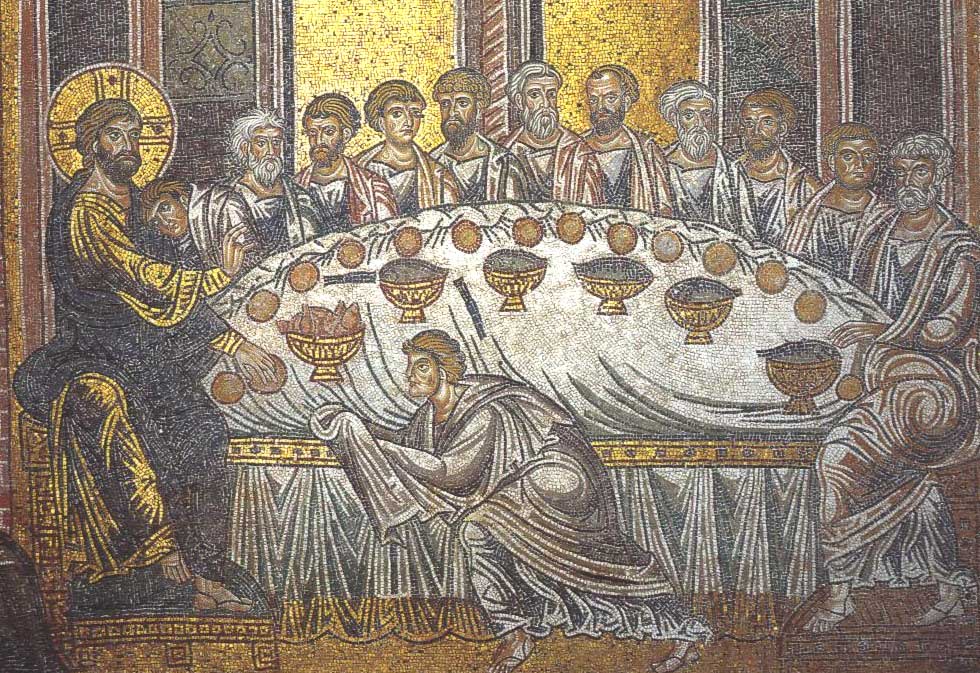
MASS OF THE LORD’S SUPPER HOMILY OF HIS HOLINESS BENEDICT XVI Basilica of St John Lateran Holy Thursday, 5 April 2012 Photo Gallery (Video) Dear Brothers and Sisters! Holy Thursday is not only the day of the institution of the Most Holy Eucharist, whose splendour bathes all else and in some ways draws it to[…]Continue reading→