
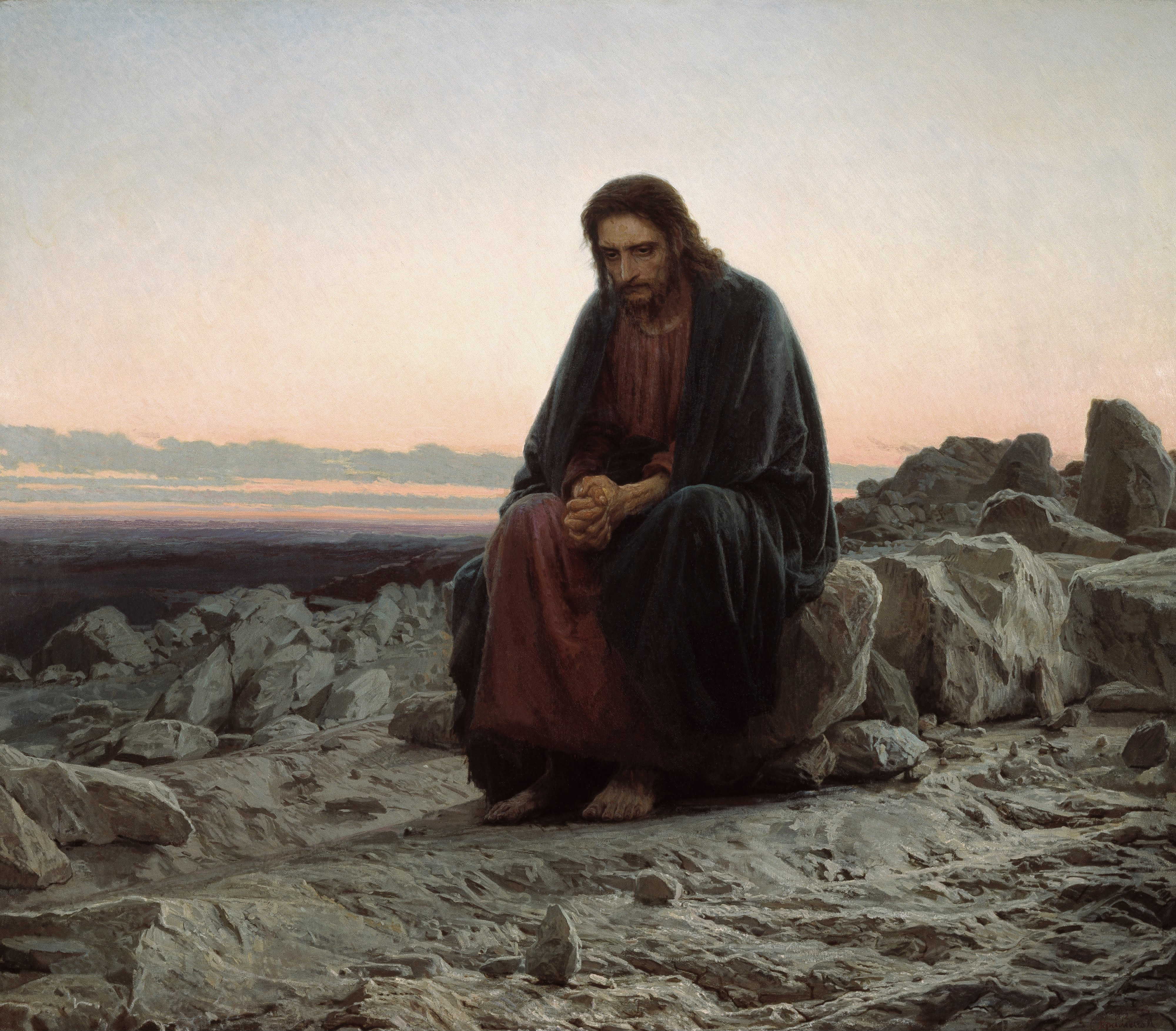
Lent with the Fathers of the Church and Some Spiritual Writers
Lent is a privileged time in the liturgical year, preparing us for the celebration of Easter. However, our whole life should be a journey of transformation until the time that we enter into the Heavenly Kingdom for our Eternal Easter.
Both the Fathers of the Church and eminent spiritual writers certainly give us a rich taste of what Lent is, as a time wherein we discover the importance and the power of fasting. St Athanasius tells us: Devils take great delight in fullness, and drunkenness and bodily comfort. Fasting possesses great power and it works glorious things. To fast is to banquet with angels. What a marvelous idea of thinking of fasting as fasting with the angels!
In the Father’s reflection, fasting is a multi-layered process which practically envelopes our whole person. Let us appreciate what St Tikhon of Zadonsk says: Let thy mind fast from vain thoughts; let thy memory fast from remembering evil; let thy will fast from evil desire; let thine eyes fast from bad sights: turn away thine eyes that thou mayest not see vanity; let thine ears fast from vile songs and slanderous whispers; let thy tongue fast from slander, condemnation, blasphemy, falsehood, deception, foul language and every idle and rotten word; let thy hands fast from killing and from stealing another’s goods; let thy legs fast from going to evil deeds: Turn away from evil, and do good.
Lack of fasting can impede us from entering deeply in our relationship with God. The great St Seraphim of Sarov, in his little treatise The Spiritual Instructions to Laymen and Monks, affirms: One should not think about the doings of God when one’s stomach is full; on a full stomach there can be no vision of the Divine mysteries.
In another treatise called Conversation on the Goal of the Christian Life, the same St. Seraphim of Sarov conveys to us the teaching that fasting, prayer and good deeds help us to attain the Holy Spirit. He says: Fasting, prayer, alms, and every other good Christian deed is good in itself, but the purpose of the Christian life consists not only in the fulfillment of one or another of them. The true purpose of our Christian life is the acquisition of the Holy Spirit of God. But fasting, prayer, alms and every good deed done for the sake of Christ is a means to the attainment of the Holy Spirit. Note that only good deeds done for the sake of Christ bear the fruit of the Holy Spirit. Everything else that is not done for the sake of Christ, even if it is good, does not bring us a reward in the life to come, not does it bring the grace of God in this life. This is why our Lord Jesus Christ said, ‘Whoever gathereth not with me scattereth’ (Matt. 12:30).
For St Maximus the Confessor the Lenten journey helps us orient our actions to their unique right purpose, God’s glory. He tells us: Many human activities, good in themselves, are not good because of the motive for which they are done. For example, fasting, vigils, prayer, psalmody [the singing of hymns], acts of charity and hospitality are by nature good. But when performed for the sake of self-esteem [vainglory, self-glorification] they are not good. In everything we do, God searches out our purpose to see whether we do it for Him or for some other motive . . .quite clearly He bestows blessings only when something is done for the right purpose. For God’s judgment looks not at the actions, but at the purpose behind them.
In St Theophan the Recluse’s view, prayer and fasting banish away and protect us from the influence of the devil in our lives. He writes:
This kind goeth not out but by prayer and fasting.” [Matthew 17:14-23] If this kind goes out by the prayer and fasting of another person, then it is even less able to enter one who fasts and prays. What protection! Although there are a slew of demons and all the air is packed with them, they cannot do anything to one who is protected by prayer and fasting. Fasting is universal temperance, prayer is universal communication with God; the former defends from the outside, whereas the latter from within directs a fiery weapon against the enemies. The demons can sense a faster and man of prayer from a distance, and they run far away from him so as to avoid a painful blow. Is it feasible to think that where there is no fasting and prayer, there already is a demon? Yes, it is. The demons lodging in a person, do not always reveal their presence, but lurk there, stealthily teaching their host every evil and turning him away from every good thing; so this person is certain that he is doing everything on his own, but meanwhile he is only fulfilling the will of his enemy. Just commence prayer and fasting and the enemy will immediately depart, then wait on the side for an opportunity to somehow return again. And he truly will return, as soon as prayer and fasting are abandoned.
The true spirit of Lent is the one which makes us hunger for God by hungering for fastings and watchings to grow urgently in virtues. Again, St Macarius the Great tells us: The soul that really loves God and Christ, though it may do ten thousand righteousnesses, esteems itself as having wrought nothing, by reason of its insatiable aspiration after God. Though it should exhaust the body with fastings, with watchings, its attitude towards the virtues is as if it had not yet even begun to labour for them.
Fasting positively influences all our different areas of being human. St John of Kronstadt, in his writing My Life in Christ, writes: It is necessary for a Christian to fast, in order to clear his mind, to rouse and develop his feelings, and to stimulate his will to useful activity. These three human capabilities we darken and stifle above all by ‘surfeiting, and drunkenness, and cares of this life’ (Lk. 21:34).”
Finally, for St Gregory Palamas, as he tells us in The Homilies, Lent is the time in which we act contrarily to what Adam did. During this privileged time we are to prefer God’s commandment and counsel to receive eternal life. He says:
“… Adam chose the treason of the serpent, the originator of evil, in preference to God’s commandment and counsel, and broke the decreed fast. Instead of eternal life he received death and instead of the place of unsullied joy he received this sinful place full of passions and misfortunes, or rather, he was sentenced to Hades and nether darkness. Our nature would have stayed in the infernal regions below the lurking places of the serpent who initially beguiled it, had not Christ come. He started off by fasting (cf. Mk. 1:13) and in the end abolished the serpent’s tyranny, set us free and brought us back to life.”
May the Holy Spirit, through these Fathers of the Church and spiritual writers, together with many others, help us to mature in fasting, prayer and almsgiving! Amen!

Saint Kateri , Canada’s Protectress
This was the title given to Saint Kateri Tekakwitha, by Pope Benedict XVI, when he canonized her on October 28th, 2012, along with six others, in Saint Peter’ Square (she had been beatified by Pope John Paul II back in 1980). With Saint Joseph as our protector, along with the Canadian martyrs, we seem to[…]Continue reading→

Remembering Father Alphonse de Valk
(Today marks the sixth anniversary of the death of Father Alphonse de Valk, C.S.B., a faithful, courageous and indefatigable Basilian priest, pro-life-and-family apostle, and the founder of Catholic Insight magazine. Here is what we wrote those on his entering into eternity five years ago, as we continue to remember him in our prayers and thoughts)[…]Continue reading→

My Name is Bernadette
April 16th is a propitious day, for besides the anniversary of Father de Valk’s death, who founded Catholic Insight in its print form decades ago, and the commemoration of the ‘two Benedicts’, mentioned in accompanying posts, today we also recall Saint Bernadette Soubirous, the young visionary to whom the Virgin Mary appeared numerous times at[…]Continue reading→
Canonizing Sister Faustina and Divine Mercy
HOMILY OF THE HOLY FATHER MASS IN ST PETER’S SQUARE FOR THE CANONIZATION OF SR MARY FAUSTINA KOWALSKA Sunday, 30 April 2000 1. “Confitemini Domino quoniam bonus, quoniam in saeculum misericordia eius”; “Give thanks to the Lord for he is good; his steadfast love endures for ever” (Ps 118: 1). So the Church sings on the Octave of[…]Continue reading→

Divine Mercy Sunday – An Echo of Every Mass
Reach out your hand and put it in my side. Do not doubt but believe’… ‘My Lord and my God!’ (Jn. 20:18)). Today is Divine Mercy Sunday, and as we celebrate the end of the Easter Octave, we contemplate the wounded side of our Saviour, the Church’s source of life. On Good Friday in the[…]Continue reading→

Saint Stanislaus of Szczepanów
We celebrate Saint Stanislaus today (+ April 11, 1079), in light of this Easter Octave, a bishop and martyr who accepted the episcopacy only at the direct order of Pope Alexander II. He proved a wise and courageous leader of his flock, put to death by his own king, Boleslaus, for rebuking the monarch’s ‘immoral[…]Continue reading→
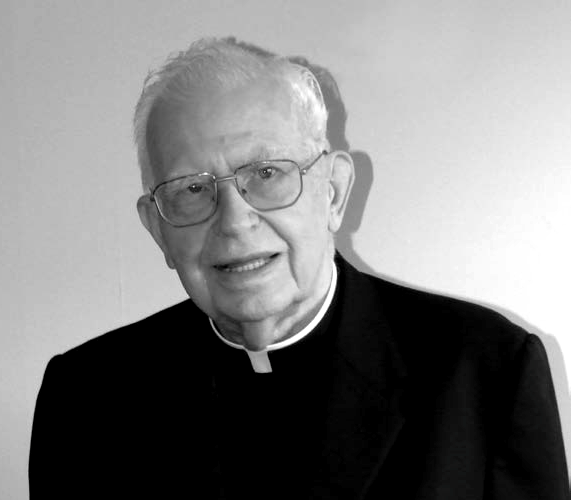
First Holy Communion: Sermon from May 16, 1943
Here is a sermon from the good old days by +Rev. Msgr. Vincent Nicholas Foy (August 14, 1915 – March 13, 2017), from 1943. Readers may recall that Pope Saint Pius X, by the decree Quam Singulari in 1910, lowered the customary age of reception of Holy Communion – after the rigours of the plague[…]Continue reading→
In the Glorious Light of Easter, Alleluia!
Set your minds on things that are above, not on things that are on earth, for you have died, and your life is hidden with Christ in God. When Christ who is your life is revealed, then you also will be revealed with him in glory (Col. 3:3-4). The Resurrection of Our Lord and Saviour[…]Continue reading→

An Ancient Homily for Holy Saturday
The time between Good Friday and Easter Sunday is one of waiting, in silence, as the world wonders – anticipates – what will happen, after the death of Christ. We re-live this time each year in the anamnesis of our liturgy, and in turn look forward to the glorious re-creation of all things at the[…]Continue reading→
Europe’s Long Descent
(As we meditate on this day on Christ’s burial, and His descent into hell, it is fitting to ponder here with contributor Peter Marcus how the world seems to be heading there as well. The difference is that, although God cannot ‘redeem’ hell, nor those therein, He can and did redeem the world. There is[…]Continue reading→