
Second Sunday: Do Whatever He Tells You
His mother said to the servants, ‘Do whatever he tells you’ (Jn. 2:5). ⧾
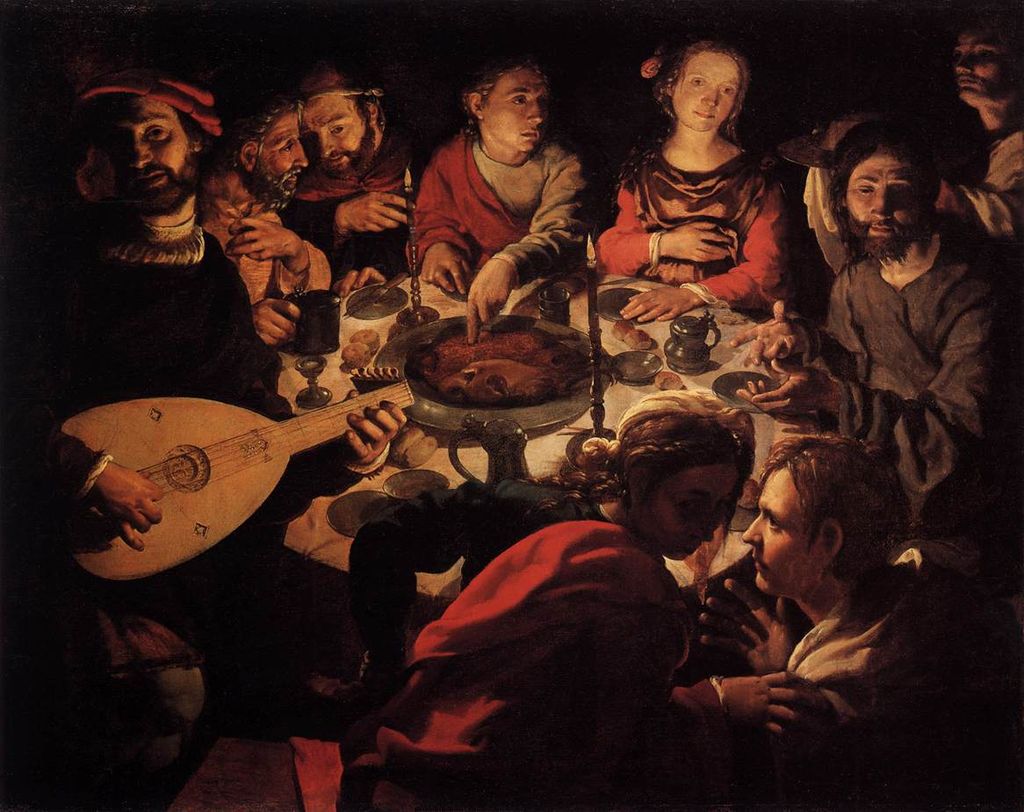
In the Gospel of St. John which we have just heard, Our Lord reveals his glory, that is, His divinity by means of seven signs; and the miracle just recounted is the first of these, as well as the beginning of His public life. Jesus did this, the first of his signs, in Cana of Galilee and revealed his glory; and his disciples believed in him (Jn. 2:11). The role of Our Lady as advocate is very clear: ‘They have no wine.’ In our meditation last Sunday we saw how St. Matthew and St. Luke present Our Lady as the Gebirah, the Queen Mother who presents her Son to the world as King (Mt. 2:2), Saviour and Lord (Lk. 2:11). The queen mother of Israel interceded on behalf of the subjects of the kingdom. She was their most powerful, and therefore preferred, advocate. She stood at the king’s right hand, a place of honour. Our gospel reading today shows how Our Lady fulfills this intercessory role and so we rightly invoke her as our most gracious advocate. Our text also includes Our Lady’s last recorded words: ‘Do whatever he tells you’ (Jn. 2:5). They are as it were, last words of advice given to us by a loving Mother who wishes only what is best for her children.
Just as our Lady’s last words concern Her Son, some of Our Lord’s last words as He hung upon the Cross concern His loving Mother: ‘Behold your mother!’ (Jn. 19:27). Though spoken to the Beloved Disciple, we have always understood that each faithful disciple of Jesus must likewise receive our Lady into the intimacy of his own life. This is not a matter of mere sentimentality. Our Lady’s faith precedes and accompanies us as a beacon and a model of Christian maturity for we contemplate her steadfast and faithful presence (ύπομονή) at the foot of the Cross and we understand that in the intimate connection among the mysteries of the Christian faith (nexus mysteriorum) Our Lady is never absent.
Salvation history is illumined by the presence of God’s Son. As the Church walks the pilgrimage of the ages amidst the persecutions of the world and consolations of God – to paraphrase St. Augustine – salvation history is also illumined by the loving presence of the Mother of God. As Mother of the Church and Queen she intercedes for a wayward humanity whose rejection of the laws of God always results in misery, despair and anguish. Historians have observed that the second half of the nineteenth century marked the beginning of the Marian century, in which the Blessed Mother came with messages of hope and a call to conversion (Warren Carroll, A History of Christendom: The Crisis of Christendom, Vol. 6, p.145). The Marian apparitions of the last two centuries, from Rue du Bac in Paris where our Lady gave us the Miraculous Medal, the Medal of the Immaculate Conception, to Fatima where our Lady made known the devotion to her Immaculate Heart, these Marian apparitions bear witness to the role of Our Lady as Queen in the establishment of the social kingship of Jesus Christ. These apparitions were special gifts from God destined to awaken new hope in people and no less a call to conversion and return to the truth of God whom Our Saviour has taught us to call Our Father and who also plainly said: ‘Think not that I have come to abolish the law and the prophets; I have come not to abolish them but to fulfill them’ (Mt. 5:17).
The Psalmist declares: The law of the Lord is perfect, reviving the soul; the testimony of the Lord is sure, making wise the simple; the precepts of the Lord are right, rejoicing the heart (19:7-8). The social kingship of Jesus Christ is based on this law. It is an order governed by justice and truth. When laws do not express these truths they are unjust and we are not bound to follow them. In fact, we have a duty to oppose them. The greater culture that we must now guard against with great vigilance lest we lose our faith, no longer believes in objective truth. In two generations our culture has modified itself in radically unexpected ways. Ours has become a culture in which meaning and fact are deliberately deconstructed. We have redefined and altered the meaning of human sexuality, the marriage act, marriage itself, gender, life, and even death. Consequently we have become both unbelieving and unthinking, abandoning and rejecting even the natural law, to say nothing of the divine law. When things are deprived of their true meaning, anything goes; chaos ensues and the weak and the vulnerable are always victimized. The abortion and euthanasia laws of our country are proof enough of this state of moral chaos.
The Catechism of the Catholic Church teaches us that before Our Lord’s second coming the Church must pass through a final trial that will shake the faith of many believers. The persecution that accompanies her pilgrimage on earth will unveil the ‘mystery of iniquity’ in the form of a religious deception offering men an apparent solution to their problems at the price of apostasy from the truth. The supreme religious deception is that of the Antichrist, a pseudo-messianism by which man glorifies himself in place of God and his Messiah come in the flesh (675).
It is not an exaggeration to state unequivocally, especially in view of the medical dictatorship now afflicting us that we may be living in this time. So we must heed the call for the endurance[i] of the saints, those who keep the commandments of God and the faith of Jesus (Rev. 14:12). We do so confident in the loving presence and protection of our most gracious advocate, our Lady, our Mother and our Queen; and in the fulfillment of her promise that in the end, her Immaculate Heart will triumph. May she obtain for us the grace of patient endurance, final perseverance and fidelity to her words of maternal love: ‘Do whatever he tells you’ (Jn. 2:5). With confidence we entrust ourselves to the loving protection of the Queen of the Most Holy Rosary ⧾
[i] ύπομονή – patient endurance, steadfastness, perseverance.

Remembering Father Alphonse de Valk
(Today marks the sixth anniversary of the death of Father Alphonse de Valk, C.S.B., a faithful, courageous and indefatigable Basilian priest, pro-life-and-family apostle, and the founder of Catholic Insight magazine. Here is what we wrote those on his entering into eternity five years ago, as we continue to remember him in our prayers and thoughts)[…]Continue reading→

Divine Mercy Sunday – An Echo of Every Mass
Reach out your hand and put it in my side. Do not doubt but believe’… ‘My Lord and my God!’ (Jn. 20:18)). Today is Divine Mercy Sunday, and as we celebrate the end of the Easter Octave, we contemplate the wounded side of our Saviour, the Church’s source of life. On Good Friday in the[…]Continue reading→

Saint Stanislaus of Szczepanów
We celebrate Saint Stanislaus today (+ April 11, 1079), in light of this Easter Octave, a bishop and martyr who accepted the episcopacy only at the direct order of Pope Alexander II. He proved a wise and courageous leader of his flock, put to death by his own king, Boleslaus, for rebuking the monarch’s ‘immoral[…]Continue reading→
First Holy Communion: Sermon from May 16, 1943
Here is a sermon from the good old days by +Rev. Msgr. Vincent Nicholas Foy (August 14, 1915 – March 13, 2017), from 1943. Readers may recall that Pope Saint Pius X, by the decree Quam Singulari in 1910, lowered the customary age of reception of Holy Communion – after the rigours of the plague[…]Continue reading→

In the Glorious Light of Easter, Alleluia!
Set your minds on things that are above, not on things that are on earth, for you have died, and your life is hidden with Christ in God. When Christ who is your life is revealed, then you also will be revealed with him in glory (Col. 3:3-4). The Resurrection of Our Lord and Saviour[…]Continue reading→

An Ancient Homily for Holy Saturday
The time between Good Friday and Easter Sunday is one of waiting, in silence, as the world wonders – anticipates – what will happen, after the death of Christ. We re-live this time each year in the anamnesis of our liturgy, and in turn look forward to the glorious re-creation of all things at the[…]Continue reading→
Europe’s Long Descent
(As we meditate on this day on Christ’s burial, and His descent into hell, it is fitting to ponder here with contributor Peter Marcus how the world seems to be heading there as well. The difference is that, although God cannot ‘redeem’ hell, nor those therein, He can and did redeem the world. There is[…]Continue reading→
Pope Saint John Paul II’s First Good Friday Homily
ADDRESS OF HIS HOLINESS JOHN PAUL II AT THE CONCLUSION OF THE STATIONS OF THE CROSS AT THE COLOSSEUM Good Friday, 13 April 1979 When we make the Way of the Cross from one station to the next, in spirit we are always at the spot wherethis journey had its “historical” place: where it[…]Continue reading→
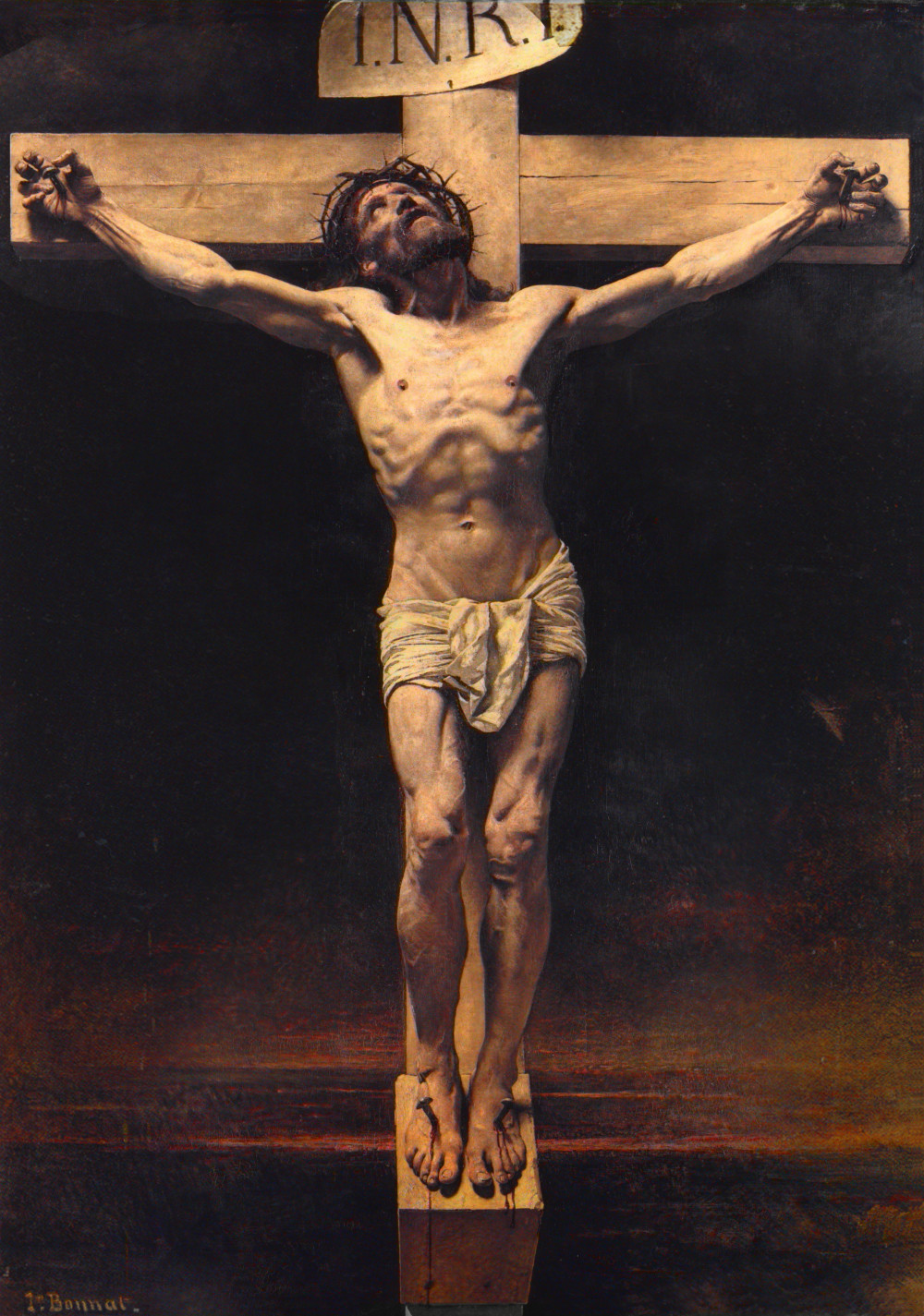
A Meditation for Good Friday: How To Undo the Effects of Sin?
Cardinal Newman, now Saint John Henry Newman, was a towering figure of nineteenth-century Catholicism who is almost universally admired. I say “almost” because not everyone likes him. I knew a priest once, Arthur Caulkins, who has become disenchanted with Newman. As an undergraduate Arthur had been enamoured of Newman, and this interest continued when he[…]Continue reading→
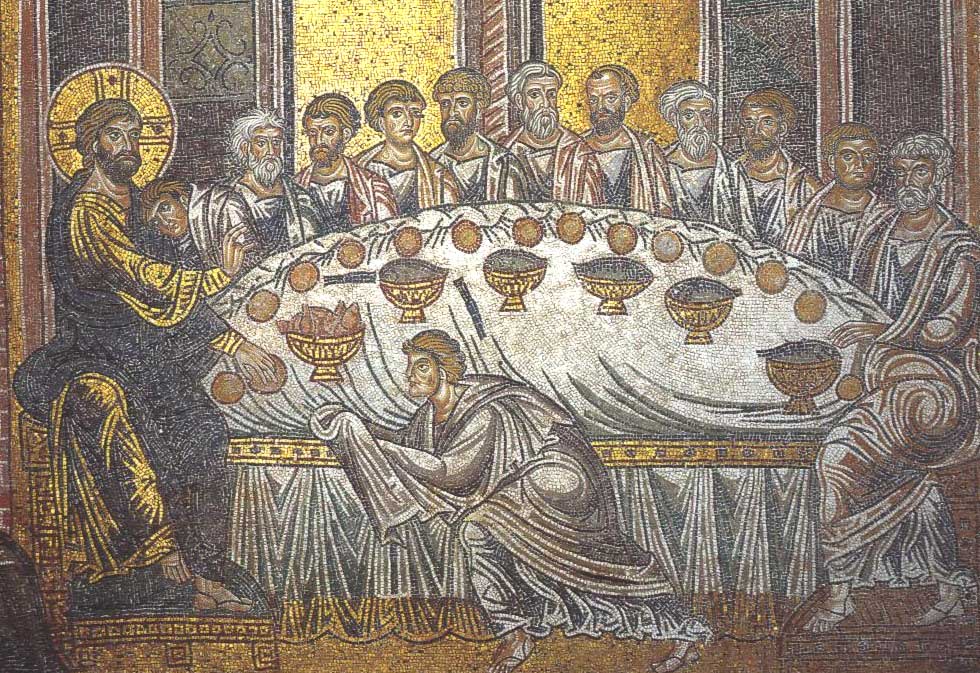
Pope Benedict’s Last Holy Thursday Homily
MASS OF THE LORD’S SUPPER HOMILY OF HIS HOLINESS BENEDICT XVI Basilica of St John Lateran Holy Thursday, 5 April 2012 Photo Gallery (Video) Dear Brothers and Sisters! Holy Thursday is not only the day of the institution of the Most Holy Eucharist, whose splendour bathes all else and in some ways draws it to[…]Continue reading→