
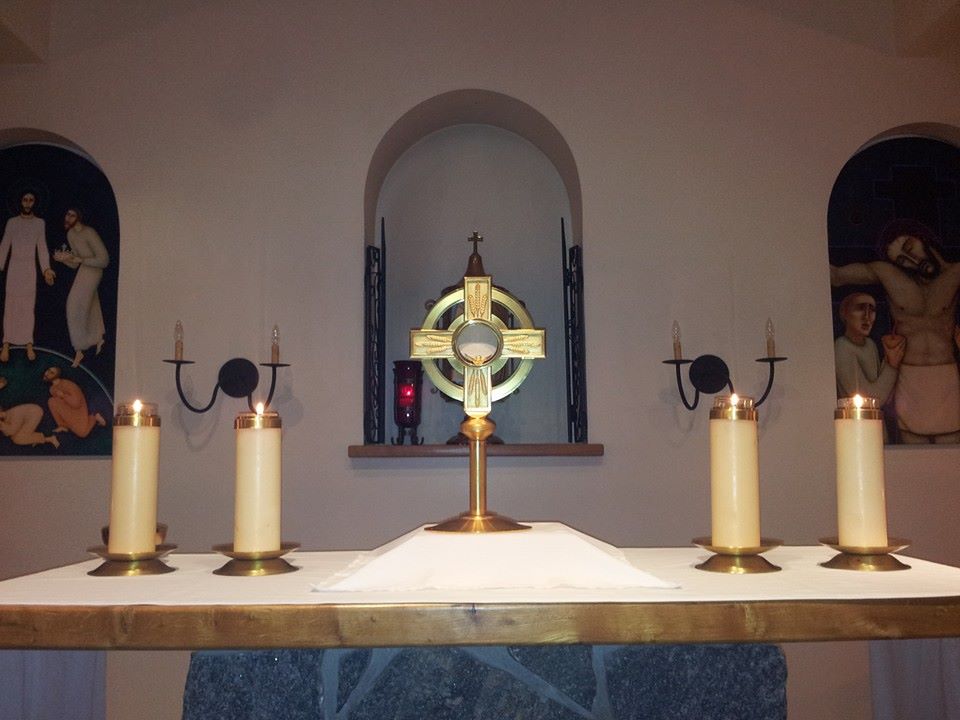
Adoration: The Blaze of the Fire of Charity
“Could you not watch one hour with Me?” (Matthew, 26:40)
I came to set fire upon the earth, and how I wish it were already blazing! (Luke 12:49)
With the vacation season in full swing, so many people choose to expose their bodies to the direct rays of the sun. Sadly, so few decide to expose their souls to the Divine Rays which heal us from inside out.
Regrettably, the findings of the 2019 pew survey research show that only one in five US Catholics believes in transubstantiation despite awareness of the Church’s teaching. It therefore comes as no surprise that in some places the practice of Eucharistic adoration has been almost completely abandoned.
Last June 18th, Auxiliary Bishop Andrew Cozzens of St. Paul and Minneapolis and chair of the bishops’ evangelization committee, introduced the program to his fellow bishops aiming to support and “start a fire” of devotion to the Eucharist. According to CAN, his Excellency repeatedly underlined the importance of spreading the practice of Eucharistic adoration, especially since he had noticed the positive effect that adoration continues to have on young people.
The Catechism teaches us that, “Adoration is the first attitude of man acknowledging that he is a creature before his Creator. It exalts the greatness of the Lord who made us and the almighty power of the Savior who sets us free from evil. Adoration is homage of the spirit to the “King of Glory,” respectful silence in the presence of the “ever greater” God. Adoration of the thrice-holy and sovereign God of love blends with humility and gives assurance to our supplications.” (CCC 2628)
In 1981 Pope St. John Paul II started Perpetual Eucharistic Adoration of the Most Blessed Sacrament in the Vatican. The Eucharist and adoration progressively became the fulcrum of his life and the soul of his pontificate, as he spent long periods of time in the Presence of the Lord, often prostrate, particularly before any missionary trip he would undertake. In his teaching he often made explicit reference to Eucharist adoration – “It is the responsibility of Pastors to encourage, also by their personal witness, the practice of Eucharistic adoration, and exposition of the Blessed Sacrament in particular, as well as prayer of adoration before Christ present under the Eucharistic species.” (Ecclesia de Eucharisia, 25)
For centuries, through frequent visits to the Most Blessed Sacrament, countless numbers of saints and blesseds drew strength to suffer superhuman trials and accomplish extraordinary deeds, and received graces for themselves and others.
Here are but a few examples of holy persons encouraging us to Adoration:
Saint Alphonsus Liguori (†1787) – “Know also that you will probably gain more by praying fifteen minutes before the Blessed Sacrament than by all the other spiritual exercises of the day. True, Our Lord hears our prayers anywhere, for He has made the promise, ‘Ask, and you shall receive,’ but He has revealed to His servants that those who visit Him in the Blessed Sacrament will obtain a more abundant measure of grace.”
Saint John Vianney (†1859) – “If we really love the good God, we should make it our joy and happiness to come a few minutes to adore Him, and ask Him for the grace of forgiveness. We should regard those moments as the happiest in our lives.”
Saint Faustina Kowalska (†1938) – “+ April 2, 1937. In the morning, during Mass, I heard these words: Tell the Superior that I want adoration to take place here for the intention of imploring mercy for the world..” (1070 Diary)
Saint Teresa of Calcutta (†1997) – “The time you spend with Jesus in the Blessed Sacrament is the best time that you will spend on earth. Each moment that you spend with Jesus will deepen your union with Him and make your soul everlastingly more glorious and beautiful in heaven, and will help bring about an everlasting peace on earth.”
It is no secret to anyone that huge swaths of American society have fallen into moral decay because of a refusal to acknowledge the moral law. The mainstream media are dutifully providing constant reporting that we are more at risk than ever from the inevitable Delta, Omega, or Theta virus mutations. This propaganda of fear is crippling the lives of millions of people, threatening whole countries with devastating lockdowns and continuous ‘quarantines’, and preventing the so-keenly anticipated return to normalcy. To break the destructive spiral of anxiety and decadence extraordinary measures must be implemented. One such measure is Eucharistic Adoration.
A devotion to the Most Blessed Sacrament underscores all cloistered religious communities, both contemplative or semi-contemplative, including the Benedictines, the Cistercians, the Discalced Carmelites, the Dominican Nuns, the Holy Adoration Sisters, the Sister Adorers of the Precious Blood, the Sisters of Children of Mary, the Poor Clares, and many other Catholic convents in the United States today, the majority the offshoots of Orders founded in Europe during the Middle Ages. Nuns often credit the practice of adoration with reconciling feuding neighbors and squabbling spouses. It is said that Mass attendance and vocations can increase with adoration and the renewal of Catholic family life is bound to flourish.
Ciudad Juarez, located in the state of Chihuahua in northern Mexico, was regarded from 2008 to 2010 as one of the most dangerous cities in the world, due to the constant struggles for power and territory between the cartels and drug trafficking violence. Fr. Patricio Hileman, a priest who is dedicated to establishing adoration chapels throughout Latin America, claims that Eucharistic adoration is partly responsible for a drop in the number of homicides from 3,766 in 2010, to 265 in 2015. “When a parish adores God day and night, the city is transformed,” Fr. Hileman said.
I enjoy adoring the Host and find it spiritually enriching. Daily Eucharistic adoration nourishes our love and charity, gives light to the mind and strength to the will, and finally releases us from unfounded fear and trepidation. All in all, it is more powerful than you can possibly imagine. I believe that the combined power of adoration and the Rosary can be compared to a spiritual explosive that Our Lord has given us to destroy the strongholds of evil and make America holy.
Eucharistic adoration is a long-standing Catholic tradition that fell into disuse. Thus we all are invited to return to our core values. Taking time out of our busy schedules to spend a Holy Hour with Jesus is something that will certainly bear fruit. If your parish does not have perpetual adoration, you might go to http://www.therealpresence.org/states/perp.htm and choose your state and click to see on the map its precise location. (Readers may search for similar sites in Canada and other countries. Editor) Participating in online adoration is never a replacement for the Eucharist adoration in person.
To close, let’s reflect on the instruction received from Jesus by contemporary Polish mystic and stigmatic, Alicja Lenczewska (+2012), “I desire adoration not for myself, but to heal the deepest parts of your soul where every thought pops up, every word and every act [comes to life] – every reaction sparks off.” (Testimony, 837)
May a fire of love and reverence for the Eucharist blaze in the hearts of all bishops and priests, spread throughout dioceses, parishes and families, and prepare the Country for His final coming. Amen.

Remembering Father Alphonse de Valk
(Today marks the sixth anniversary of the death of Father Alphonse de Valk, C.S.B., a faithful, courageous and indefatigable Basilian priest, pro-life-and-family apostle, and the founder of Catholic Insight magazine. Here is what we wrote those on his entering into eternity five years ago, as we continue to remember him in our prayers and thoughts)[…]Continue reading→

Divine Mercy Sunday – An Echo of Every Mass
Reach out your hand and put it in my side. Do not doubt but believe’… ‘My Lord and my God!’ (Jn. 20:18)). Today is Divine Mercy Sunday, and as we celebrate the end of the Easter Octave, we contemplate the wounded side of our Saviour, the Church’s source of life. On Good Friday in the[…]Continue reading→

Saint Stanislaus of Szczepanów
We celebrate Saint Stanislaus today (+ April 11, 1079), in light of this Easter Octave, a bishop and martyr who accepted the episcopacy only at the direct order of Pope Alexander II. He proved a wise and courageous leader of his flock, put to death by his own king, Boleslaus, for rebuking the monarch’s ‘immoral[…]Continue reading→
First Holy Communion: Sermon from May 16, 1943
Here is a sermon from the good old days by +Rev. Msgr. Vincent Nicholas Foy (August 14, 1915 – March 13, 2017), from 1943. Readers may recall that Pope Saint Pius X, by the decree Quam Singulari in 1910, lowered the customary age of reception of Holy Communion – after the rigours of the plague[…]Continue reading→
Weronika Krawczyk and Injustice in Poland
Catholic Action in Poland has issued a formal statement appealing to the President of the Republic of Poland to pardon Weronika Krawczyk—convicted for warning other women against an abortion-performing gynaecologist. Catholic Action (AK) emphasizes that no apology is owed to a doctor who has performed numerous abortions and proposed others; furthermore, the organization considers the[…]Continue reading→
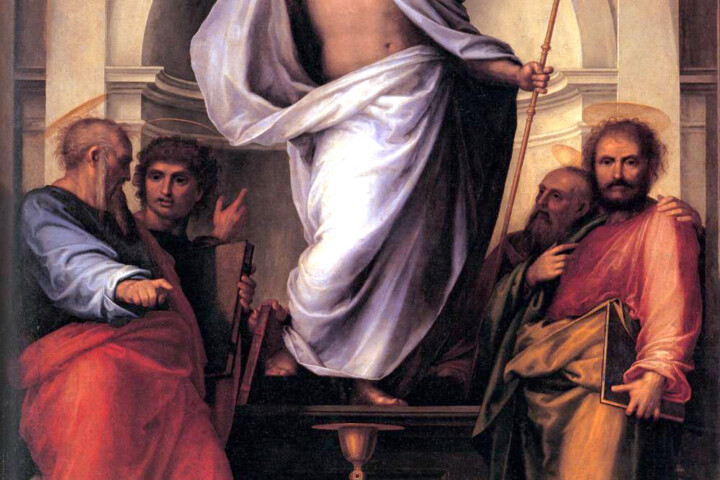
In the Glorious Light of Easter, Alleluia!
Set your minds on things that are above, not on things that are on earth, for you have died, and your life is hidden with Christ in God. When Christ who is your life is revealed, then you also will be revealed with him in glory (Col. 3:3-4). The Resurrection of Our Lord and Saviour[…]Continue reading→
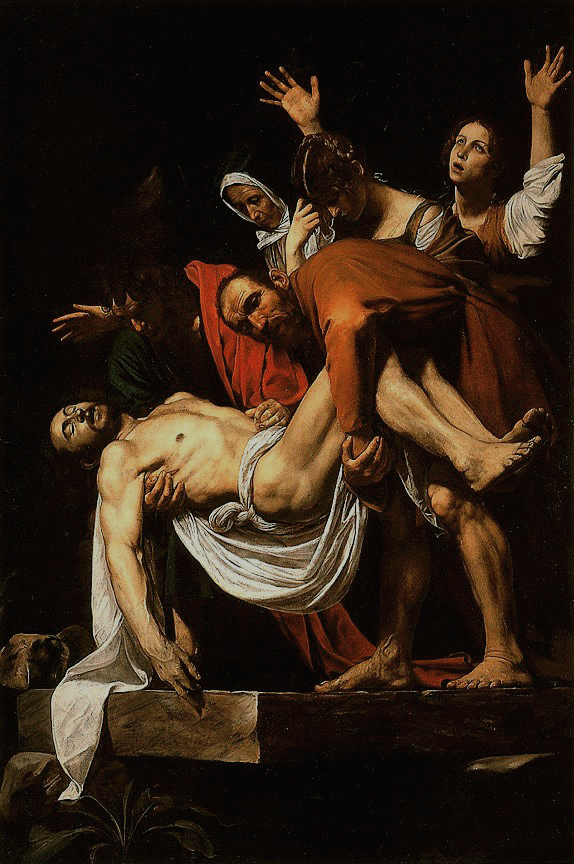
An Ancient Homily for Holy Saturday
The time between Good Friday and Easter Sunday is one of waiting, in silence, as the world wonders – anticipates – what will happen, after the death of Christ. We re-live this time each year in the anamnesis of our liturgy, and in turn look forward to the glorious re-creation of all things at the[…]Continue reading→
Europe’s Long Descent
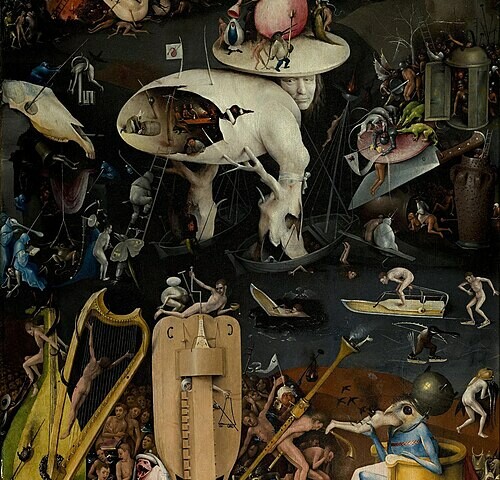
(As we meditate on this day on Christ’s burial, and His descent into hell, it is fitting to ponder here with contributor Peter Marcus how the world seems to be heading there as well. The difference is that, although God cannot ‘redeem’ hell, nor those therein, He can and did redeem the world. There is[…]Continue reading→
Pope Saint John Paul II’s First Good Friday Homily
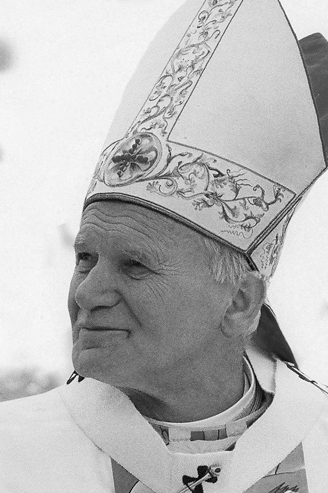
ADDRESS OF HIS HOLINESS JOHN PAUL II AT THE CONCLUSION OF THE STATIONS OF THE CROSS AT THE COLOSSEUM Good Friday, 13 April 1979 When we make the Way of the Cross from one station to the next, in spirit we are always at the spot wherethis journey had its “historical” place: where it[…]Continue reading→
A Meditation for Good Friday: How To Undo the Effects of Sin?
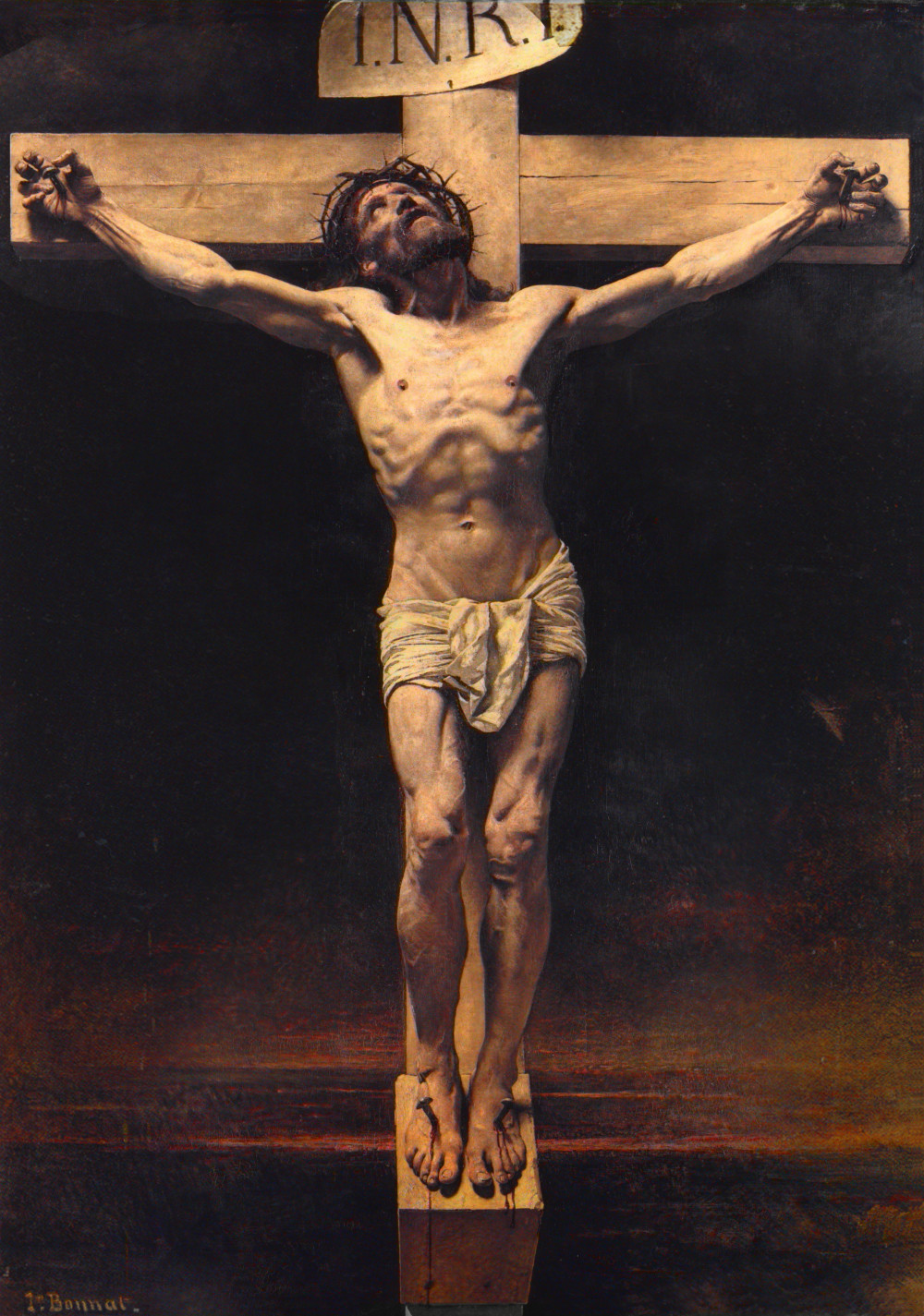
Cardinal Newman, now Saint John Henry Newman, was a towering figure of nineteenth-century Catholicism who is almost universally admired. I say “almost” because not everyone likes him. I knew a priest once, Arthur Caulkins, who has become disenchanted with Newman. As an undergraduate Arthur had been enamoured of Newman, and this interest continued when he[…]Continue reading→