
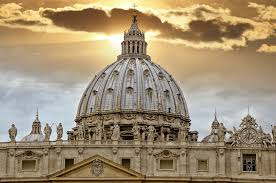
Traditionis Custodes and the Faithful’s Response: Parrhesia
On July 16th, Pope Francis issued the Motu Proprio Traditionis Custodes, On the Use of the Roman Liturgy Prior to the Reform of 1970. Many bishops it would seem have wisely granted themselves what the document does not; a vacatio legis or period before the law takes effect. Whatever the reasons for this document, should it be applied with all its rigour, its fullest impact will be felt by the lay faithful who attend the Usus Antiquior; even if only because their number is greater than those who celebrate this liturgy. The promulgation of this document as a fait accompli has resulted in both consternation and disappointment. This may be a moment in history, and there have been others, when as St. John Henry Newman observed, the voice of tradition may express itself in the communis fidelium sensus – the shared sense of the faithful. The fact that so many faithful lay people are attached to the Traditional liturgy is a phenomenon that cannot be ignored or dismissed.
For this reason, the best response to this document on the part of the laity may very well be provided for in the Church’s Code of Canon Law, specifically in Canon 212:
- 1. Conscious of their own responsibility, the Christian faithful are bound to follow with Christian obedience those things which the sacred pastors, inasmuch as they represent Christ, declare as teachers of the faith or establish as rulers of the Church.
- 2. The Christian faithful are free to make known to the pastors of the Church their needs, especially spiritual ones, and their desires.
- 3. According to the knowledge, competence, and prestige which they possess, they have the right and even at times the duty to manifest to the sacred pastors their opinion on matters which pertain to the good of the Church and to make their opinion known to the rest of the Christian faithful, without prejudice to the integrity of faith and morals, with reverence toward their pastors, and attentive to common advantage and the dignity of persons.
The Holy Father has often spoken of the importance of parrhesia as a way of speaking with straightforward simplicity, filial trust, joyous assurance, humble boldness, the certainty of being loved (The Catechism of the Catholic Church, 2778). We pray for our Holy Father daily both at Holy Mass and in our own private prayers and in the face of what appears incomprehensible, given the youthfulness, vibrancy and fervour of communities that celebrate the Traditional liturgy, this is definitely a time for the Christian faithful to make their spiritual needs and desires know to the chief shepherd of the Church.
I have written to the Holy Father and I briefly shared with him how the celebration of Holy Mass in the Usus Antiquior which I began at the request of the faithful has deepened my understanding of the sacrificial nature of priestly life. The spirit of sacrifice that pervades the Traditional liturgy is perhaps its most attractive attribute spiritually speaking, because it speaks to the essence of Christian life. This may in part explain the appeal of the Traditional liturgy to so many young people and young families who recognise that only the spirit of sacrifice can make our lives meaningful and purposeful. The hedonism of so much that is characteristic of modern culture is exhausting; and the tranquility of order that the Traditional liturgy communicates fulfills the deepest yearnings of the soul that yearns for the living waters that flow from the Sacred Heart of our Saviour. A physical letter written with straightforward simplicity will surely be favourably received by the Holy Father; for what father would not welcome a letter written by a son or daughter with the certainty of being loved?
I have composed a template that may be of help to those who wish to make their spiritual desires and needs known to the Holy Father:
His Holiness, Pope Francis
Apostolic Palace
00120 Vatican City
Your Holiness,
I am writing this letter to express my dismay and consternation of soul at the promulgation of the Motu Proprio Traditionis custodes which restricts the celebration of the Holy Sacrifice of the Mass according to the Missale Romanum (editio typica, 1962) in use prior to the promulgation of the Novus Ordo Missae in 1970.
Since the promulgation of the Motu Proprio of Summorum Pontificum of Pope Benedict XVI in 2007, I have been privileged to attend the celebration of the Holy Sacrifice of the Mass on a regular basis/ somewhat regular basis at …. Parish in….. I would like Your Holiness to know that I have derived immense spiritual benefits from the celebration of this Mass and the instruction I have received during it. My participation has been conscious, active and fruitful. As a result, my commitment to our faith has deepened. Our community has grown in fervour and charity and I have come to know, to understand and to love our faith more deeply. My commitment to Christian life spiritually and in active charity has intensified because of the spiritual nourishment I have received.
I am asking Your Holiness to consider the spiritual needs of your children. We are sons and daughters of the Church who desire the greater glory of God, the salvation of our own soul and the salvation of all people. The charity of Christ Our Saviour which excludes no one, has urged me to write this letter; and it is my hope that Your Holiness will rescind your Motu Proprio bearing in mind what your venerable predecessor Pope Benedict XVI observed in the letter accompanying Summorum pontificum: what earlier generations held as sacred, remains sacred and great for us too, and it cannot be all of a sudden entirely forbidden or even considered harmful.
I have the honour to profess myself with the most profound respect, a faithful son/daughter of Holy Mother Church and Your Holiness’ humble servant,
(For a pdf version of the sample letter, please see: Letter to Pope Francis in Response to Traditionis Custodes

Remembering Father Alphonse de Valk
(Today marks the sixth anniversary of the death of Father Alphonse de Valk, C.S.B., a faithful, courageous and indefatigable Basilian priest, pro-life-and-family apostle, and the founder of Catholic Insight magazine. Here is what we wrote those on his entering into eternity five years ago, as we continue to remember him in our prayers and thoughts)[…]Continue reading→

Divine Mercy Sunday – An Echo of Every Mass
Reach out your hand and put it in my side. Do not doubt but believe’… ‘My Lord and my God!’ (Jn. 20:18)). Today is Divine Mercy Sunday, and as we celebrate the end of the Easter Octave, we contemplate the wounded side of our Saviour, the Church’s source of life. On Good Friday in the[…]Continue reading→

Saint Stanislaus of Szczepanów
We celebrate Saint Stanislaus today (+ April 11, 1079), in light of this Easter Octave, a bishop and martyr who accepted the episcopacy only at the direct order of Pope Alexander II. He proved a wise and courageous leader of his flock, put to death by his own king, Boleslaus, for rebuking the monarch’s ‘immoral[…]Continue reading→

First Holy Communion: Sermon from May 16, 1943
Here is a sermon from the good old days by +Rev. Msgr. Vincent Nicholas Foy (August 14, 1915 – March 13, 2017), from 1943. Readers may recall that Pope Saint Pius X, by the decree Quam Singulari in 1910, lowered the customary age of reception of Holy Communion – after the rigours of the plague[…]Continue reading→

In the Glorious Light of Easter, Alleluia!
Set your minds on things that are above, not on things that are on earth, for you have died, and your life is hidden with Christ in God. When Christ who is your life is revealed, then you also will be revealed with him in glory (Col. 3:3-4). The Resurrection of Our Lord and Saviour[…]Continue reading→

An Ancient Homily for Holy Saturday
The time between Good Friday and Easter Sunday is one of waiting, in silence, as the world wonders – anticipates – what will happen, after the death of Christ. We re-live this time each year in the anamnesis of our liturgy, and in turn look forward to the glorious re-creation of all things at the[…]Continue reading→

Europe’s Long Descent
(As we meditate on this day on Christ’s burial, and His descent into hell, it is fitting to ponder here with contributor Peter Marcus how the world seems to be heading there as well. The difference is that, although God cannot ‘redeem’ hell, nor those therein, He can and did redeem the world. There is[…]Continue reading→
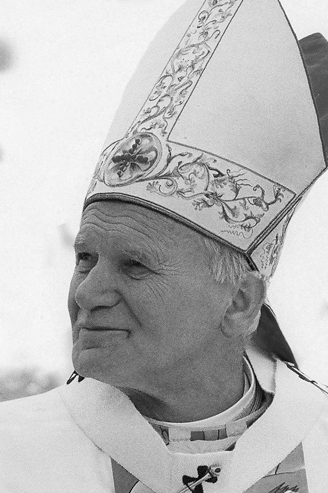
Pope Saint John Paul II’s First Good Friday Homily
ADDRESS OF HIS HOLINESS JOHN PAUL II AT THE CONCLUSION OF THE STATIONS OF THE CROSS AT THE COLOSSEUM Good Friday, 13 April 1979 When we make the Way of the Cross from one station to the next, in spirit we are always at the spot wherethis journey had its “historical” place: where it[…]Continue reading→
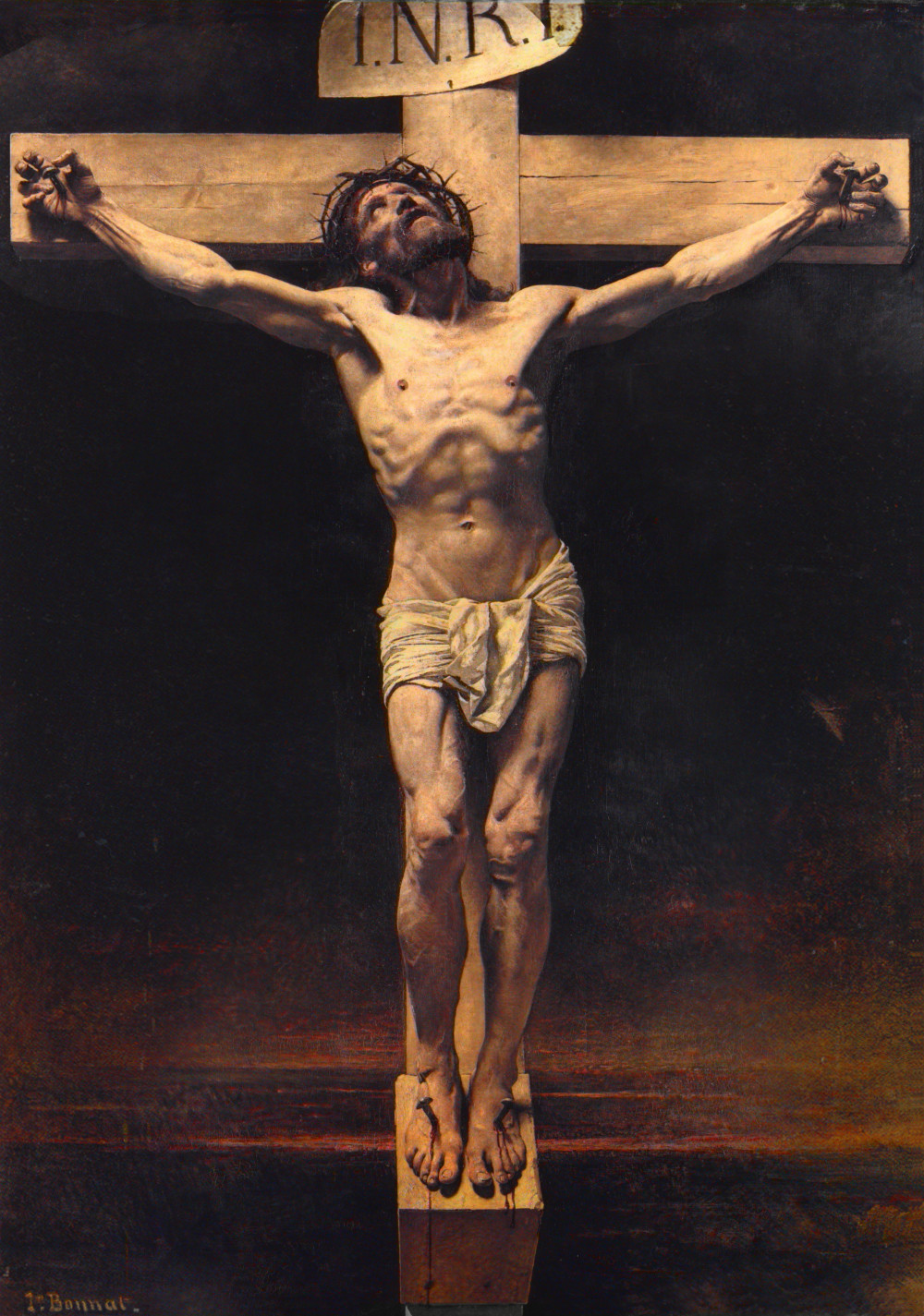
A Meditation for Good Friday: How To Undo the Effects of Sin?
Cardinal Newman, now Saint John Henry Newman, was a towering figure of nineteenth-century Catholicism who is almost universally admired. I say “almost” because not everyone likes him. I knew a priest once, Arthur Caulkins, who has become disenchanted with Newman. As an undergraduate Arthur had been enamoured of Newman, and this interest continued when he[…]Continue reading→
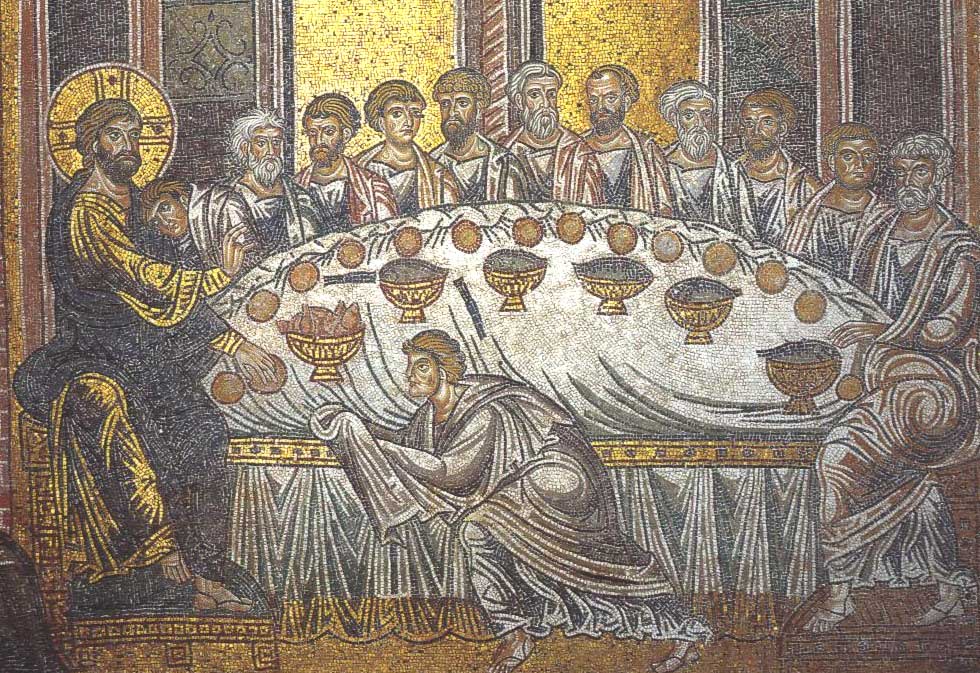
Pope Benedict’s Last Holy Thursday Homily
MASS OF THE LORD’S SUPPER HOMILY OF HIS HOLINESS BENEDICT XVI Basilica of St John Lateran Holy Thursday, 5 April 2012 Photo Gallery (Video) Dear Brothers and Sisters! Holy Thursday is not only the day of the institution of the Most Holy Eucharist, whose splendour bathes all else and in some ways draws it to[…]Continue reading→