
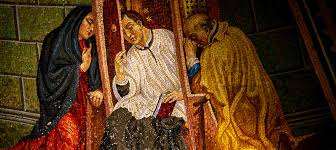
Interior Freedom By Frequent Confession
(The question of how often to go to the sacrament of confession is a very personal one for Catholics, made deep within one’s conscience, and covered by the anonymity of the sacrament itself. The author here, who wishes to remain anonymous, makes a case for weekly reception. Whatever we may decide, the conclusions he draws from his own practice are worth pondering. Many saints went weekly, or at least very regularly, and the fruits are, well, obvious. This theme also complements today’s feast of Mary Magdalene – patron saint of ‘metanoia’, repentance and conversion. Editor).
- Why do you go to confession every week?
- How many sins can you possibly commit in a week?
- What is it that you need to confess so much?
- Doesn’t the church teach confession on a yearly basis?
- Do you think you’re holier than everybody else by your frequent confessions?
- Do you think God loves you more because of your frequent confession?
- If these questions were asked of you, how would you answer them?
These are only some of the possible questions one may be asked from friends, family and parishioners in the light of practicing weekly confession. Responding to these questions and explaining the reasons for weekly confession is no easy task and more complicated than one may think. Questions may stem from curiosity, confusion, suspicion or in some cases from accusations and judgement of being eccentric. Rather than being encouraged, confession is at time regarded with indifference or for those unenlightened Catholics of old. Several years ago, I decided to make confession a monthly priority. Part of me was intrigued to see what effect, if any, confessing on a monthly basis would have on my life.
- Would I somehow act and think differently?
- Would weekly confession affect how, what and who I prayed for?
- Would I look at the world or the Church differently?
- What about my relationships? Would anyone notice a difference in how and what I think, or act?
- Would there be a change in my attitude? And how would others respond if at all?
Monthly confessions resulted in minor subtle external changes but hardly noticeable. What was very noticeable was the internal change. Over time I found myself anxiously waiting for the first Saturday of the month to go to confession. The anxious waiting soon turned into a yearning to go more often. Monthly confession turned into by-weekly and soon after that, weekly. It is when weekly confession became a regular part of my life that both external and internal changes became more apparent. My actions, thoughts, prayers, relationships and specifically, my attitude, all began to noticeably change. What is extremely important to understand is all the external and internal changes did not change me into a different person. I did NOT become a different person. Weekly confessions returned me to the person God had created. Sin had made internal and external changes in the way I acted, how and what I thought, my attitude toward the Church and the world and most importantly my relationships. My sins chained my soul into bondage, and imprisoned its freedom turning me away from God and who he had created me to be.
I was a practicing Catholic and very comfortable in my Catholic Faith. Attending Mass every week, praying the rosary almost daily, but with a kind of indifference toward confession. Confession was more of an imposition and obligation I would fulfill, if and when, the opportunity presented itself. And even then, there are many times I would not. Like many Catholics, I bought into the lie to not worry about the state of my soul and the burden of confession. Focusing on God’s incredible love for me was sufficient and nothing I did or did not do could change that. It was fear that God did not love you enough that was what was truly harmful to the soul, not what you did or did not do. God’s love was like an eternal life insurance policy for your salvation, with the premiums already paid in full.
Instead of heavenly coverage, the eternal life insurance policy was drawing me further away from God’s grace and deeper into bondage. All the while believing I was free and not to worry about the state of my soul. When I began to confess monthly, my soul awakened and began to rattle the chains of its bondage in order to awaken my conscience. The noisier the sound of chains, the more my conscience awakened and the stronger my yearning for confession grew. With each weekly confession, the grace of God loosened the chains of bondage allowing greater freedom to my soul. The more freedom returned to my soul, the more of me was returning to God.
- How many sins can you possibly commit in a week?
- Central to this question is not a numerical issue, it is the issue of self awareness. How many mortal sins do you commit: that you are aware of? Going to weekly confession changed my AWARENESS of sin rather than the number. God opened my eyes to see how not only how many times I offended HIM during the week but in how many other ways. How often I gave my consent to think thoughts that I never realized were sinful. How both action and inaction could be sinful. Many of my inactions, which I never gave a second thought to, were actually sinful. Each week I never failed to have something to confess as God brought my soul back to its created freedom.
- What is it that you need to confess so much?
- Central to this question is not so much actions requiring necessity. This is a relational issue. Going to weekly confession is an expression of the importance of being in a relationship with God that is based in freedom. It does not stem from a need so much as from a deep yearning. It is a longing that is deeply embedded not only in my mind and heart but also in my soul.
- Doesn’t the church teach confession on a yearly basis ?
- Once a year is the absolute minimum. Central to this question is one of presence. With the deepening of any loving relationship there is a sense of incompleteness when you are not in the presence of each other. You are free to be more like your true self when you are in the presence of someone you deeply love. Being in the presence of anyone once a year affects that freedom. Within a year a person changes in many ways and not seeing someone for an entire year brings back that sense of incompleteness. God does not change but our thoughts about HIM do, our love for Him diminishes because of the affects of the binding and blinding effect of mortal sin.
Q Do you think you’re holier than everybody else because you go to confession so much?
- Central to this question is not judgement of others, but rather judgement of self. Weekly confession brings forth the realization of the lack in humility in one’s daily life. When one thinks of others, it is not on levels of holiness but rather on levels of charity. How have I failed to be charitable toward others in my thoughts, in my words, in my actions?
Q Do you think God loves you more because of your frequent confessions?
- Central to this final question is not God’s love for us, it is our love for God. The number of confessions does not increase or decrease God’s love for us but it does increase or decrease our love for God. The greater freedom a soul has from its attachment to venial (or even mortal) sin the greater its capacity to love God and their neighbour as themselves. This will be the change that others see in you. They will see increased virtues that you have embraced in your soul and most of all they will see real JOY in you perhaps for the very first time.
The result of going to weekly confession has been a RETURNING of the self to its created freedom. The freedom of the soul from the chains and bondage of sin that changed how I acted, what and how I thought, my relationships and my attitude toward the Church and the world.

Remembering Father Alphonse de Valk
(Today marks the sixth anniversary of the death of Father Alphonse de Valk, C.S.B., a faithful, courageous and indefatigable Basilian priest, pro-life-and-family apostle, and the founder of Catholic Insight magazine. Here is what we wrote those on his entering into eternity five years ago, as we continue to remember him in our prayers and thoughts)[…]Continue reading→

Divine Mercy Sunday – An Echo of Every Mass
Reach out your hand and put it in my side. Do not doubt but believe’… ‘My Lord and my God!’ (Jn. 20:18)). Today is Divine Mercy Sunday, and as we celebrate the end of the Easter Octave, we contemplate the wounded side of our Saviour, the Church’s source of life. On Good Friday in the[…]Continue reading→

Saint Stanislaus of Szczepanów
We celebrate Saint Stanislaus today (+ April 11, 1079), in light of this Easter Octave, a bishop and martyr who accepted the episcopacy only at the direct order of Pope Alexander II. He proved a wise and courageous leader of his flock, put to death by his own king, Boleslaus, for rebuking the monarch’s ‘immoral[…]Continue reading→
First Holy Communion: Sermon from May 16, 1943
Here is a sermon from the good old days by +Rev. Msgr. Vincent Nicholas Foy (August 14, 1915 – March 13, 2017), from 1943. Readers may recall that Pope Saint Pius X, by the decree Quam Singulari in 1910, lowered the customary age of reception of Holy Communion – after the rigours of the plague[…]Continue reading→
In the Glorious Light of Easter, Alleluia!
Set your minds on things that are above, not on things that are on earth, for you have died, and your life is hidden with Christ in God. When Christ who is your life is revealed, then you also will be revealed with him in glory (Col. 3:3-4). The Resurrection of Our Lord and Saviour[…]Continue reading→
An Ancient Homily for Holy Saturday
The time between Good Friday and Easter Sunday is one of waiting, in silence, as the world wonders – anticipates – what will happen, after the death of Christ. We re-live this time each year in the anamnesis of our liturgy, and in turn look forward to the glorious re-creation of all things at the[…]Continue reading→
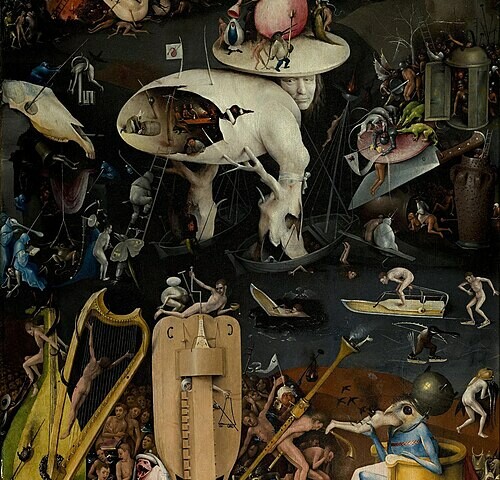
Europe’s Long Descent
(As we meditate on this day on Christ’s burial, and His descent into hell, it is fitting to ponder here with contributor Peter Marcus how the world seems to be heading there as well. The difference is that, although God cannot ‘redeem’ hell, nor those therein, He can and did redeem the world. There is[…]Continue reading→
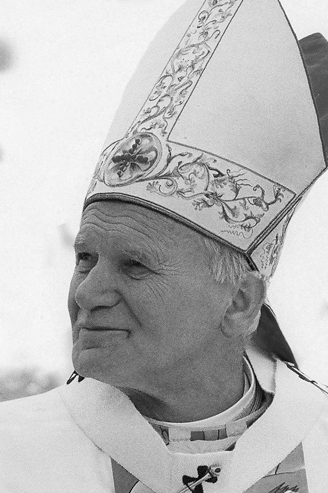
Pope Saint John Paul II’s First Good Friday Homily
ADDRESS OF HIS HOLINESS JOHN PAUL II AT THE CONCLUSION OF THE STATIONS OF THE CROSS AT THE COLOSSEUM Good Friday, 13 April 1979 When we make the Way of the Cross from one station to the next, in spirit we are always at the spot wherethis journey had its “historical” place: where it[…]Continue reading→
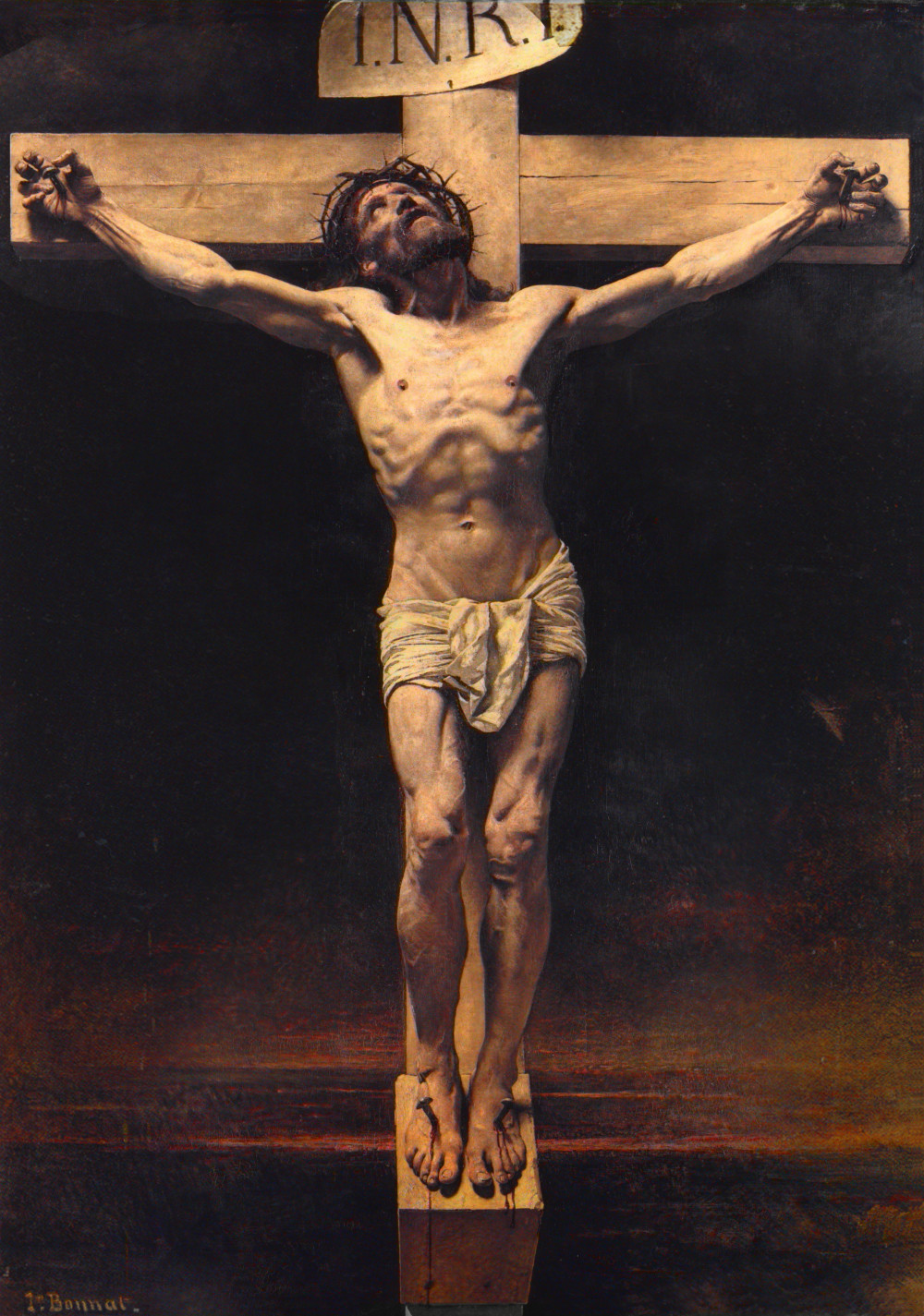
A Meditation for Good Friday: How To Undo the Effects of Sin?
Cardinal Newman, now Saint John Henry Newman, was a towering figure of nineteenth-century Catholicism who is almost universally admired. I say “almost” because not everyone likes him. I knew a priest once, Arthur Caulkins, who has become disenchanted with Newman. As an undergraduate Arthur had been enamoured of Newman, and this interest continued when he[…]Continue reading→
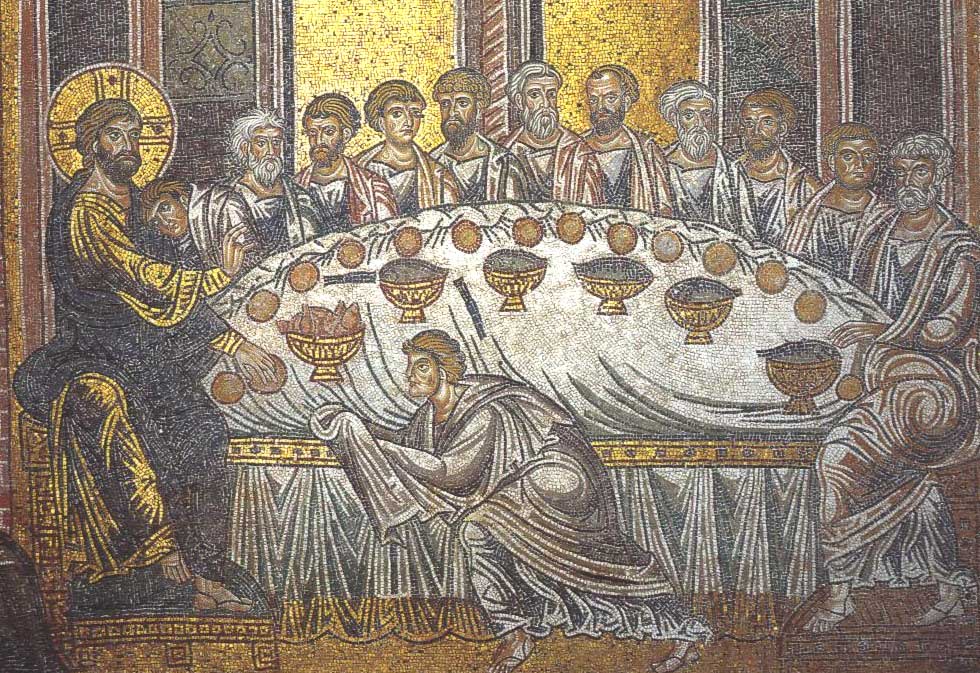
Pope Benedict’s Last Holy Thursday Homily
MASS OF THE LORD’S SUPPER HOMILY OF HIS HOLINESS BENEDICT XVI Basilica of St John Lateran Holy Thursday, 5 April 2012 Photo Gallery (Video) Dear Brothers and Sisters! Holy Thursday is not only the day of the institution of the Most Holy Eucharist, whose splendour bathes all else and in some ways draws it to[…]Continue reading→