
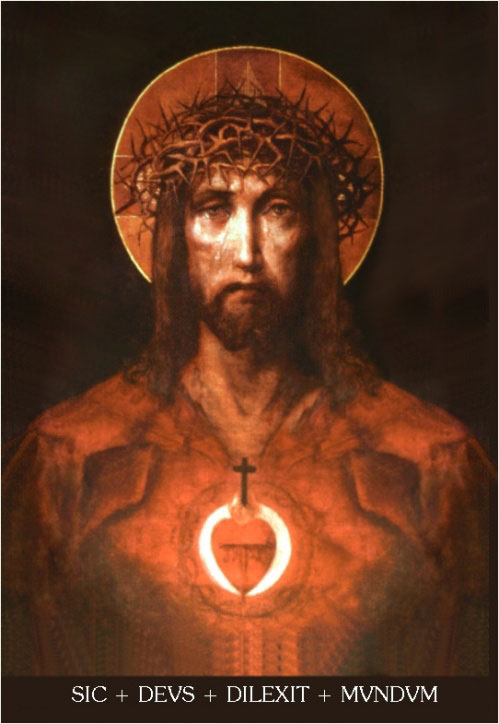
July and the Most Precious Blood
Traditionally, the month of July is dedicated to the Precious Blood of Jesus. Hence, before entering into the reason why this is so it would be wise to have a look at what the Bible have to say on the Precious Blood of Jesus.
The blood of Christ is precious, unblemished, and spotless. In the First letter of Peter we find: You know that you were ransomed from the futile ways inherited from your fathers, not with perishable things such as silver or gold, but with the precious blood of Christ, like that of a lamb without blemish or spot (1 Pt 1:18-19). In this perspective, we can say that Christ’s blood is so precious that it is certainly priceless, for Christ’s blood forgives sins. In Matthew 26 verse 28 Jesus tells us: For this is my blood of the covenant, which is poured out for many for the forgiveness of sins (Matt 26:28). Jesus’ divine sonship, lordship and the salvation of fallen Man, is marked by Christ’s blood. This is he who came by water and blood, Jesus Christ, not with the water only but with the water and the blood (1 John 5:6). And, once again, John, in the following verse, highlights so beautifully that Jesus’ blood cleanses all of us from sin. He states: And the blood of Jesus his Son cleanses us from all sin (1 John 1:7).
The Fathers of the Church nurtured a great love for the blood of Christ. In his letter to the Romans, Saint Ignatius of Antioch expresses an ardent desire to drink the blood of Christ, which is a love that is imperishable. He says: I have no taste for corruptible food nor for the pleasures of this life. I desire the bread of God, which is the flesh of Jesus Christ, who was of the seed of David; and for drink I desire his blood, which is love incorruptible (Letter to the Romans 7:3 [A.D. 110]).
For Saint Justin the Martyr the blood of Christ is the vehicle of our salvation, the nurture of our lives and the powerful sign that the Son of God incarnate in the person of Jesus Christ. In his First Apology, St Justin writes: We call this food Eucharist, and no one else is permitted to partake of it, except one who believes our teaching to be true and who has been washed in the washing which is for the remission of sins and for regeneration [i.e., has received baptism] and is thereby living as Christ enjoined. For not as common bread nor common drink do we receive these; but since Jesus Christ our Savior was made incarnate by the word of God and had both flesh and blood for our salvation, so too, as we have been taught, the food which has been made into the Eucharist by the Eucharistic prayer set down by him, and by the change of which our blood and flesh is nurtured, is both the flesh and the blood of that incarnated Jesus (First Apology 66 [A.D. 151]).
In St Irenaeus of Lyon’s understanding, the blood of Christ shows that He is from the Father. In his treatise Against Heresies, St Irenaeus says: If the Lord were from other than the Father, how could he rightly take bread, which is of the same creation as our own, and confess it to be his body and affirm that the mixture in the cup is his blood? (Against Heresies 4:33–32 [A.D. 189]). For Clement of Alexandria, Christ’s blood helps us mature in our faith as children of God. Clement of Alexandria writes: “‘Eat my flesh,’ [Jesus] says, ‘and drink my blood.’ The Lord supplies us with these intimate nutrients, he delivers over his flesh and pours out his blood, and nothing is lacking for the growth of his children” (The Instructor of Children 1:6:43:3 [A.D. 191]).
Finally, Aphraahat the Persian Sage harped as well on the importance that Christ’s blood be drunk when he wrote in his Treatises: After having spoken thus [at the Last Supper], the Lord rose up from the place where he had made the Passover and had given his body as food and his blood as drink, and he went with his disciples to the place where he was to be arrested. But he ate of his own body and drank of his own blood, while he was pondering on the dead. With his own hands the Lord presented his own body to be eaten, and before he was crucified he gave his blood as drink (Treatises 12:6 [A.D. 340]).
The saints saw in the blood of Christ an immense resource both for their holiness as well as for those of the people around them. Hence, for Saint Catherine of Siena, Christ’s blood is the primary source of many graces. She says: Precious Blood, ocean of divine mercy: Flow upon us! Precious Blood, most pure offering: Procure us every grace! Precious Blood, hope and refuge of sinners: Atone for us! Precious Blood, delight of holy souls: Draw us! Amen. For Pope Saint John XXIII, Devotion to the Precious Blood is the devotion of our time . . . It is a devotion for all souls, for the whole world. Amazed by the unparalleled power of the Blood of Christ, Saint Thomas Aquinas openly confesses: This Blood that but one drop of has the power to win all the world forgiveness of its world of sin. Pope Clement is stupefied by the incredible efficacy of the Blood of Christ, so much so that he said: Let us fix our gaze on the Blood of Christ and realize how truly precious It is, seeing that it was poured out for our salvation and brought the grace of conversion to the whole world.
From the font of this biblical, patristic and spiritual richness popular piety has evolved its own contribution to foster that much-needed love and devotion to the Precious blood of Christ. It is for this reason that in the Litany of the Most Precious Blood of Christ we invoke this blood to be our salvation. In other words, we invoke the Blood of Christ to save us because it is the blood of the only Son of the Father, the Incarnate Word. It is the blood of the new and eternal covenant. It is the blood that was spilled to the ground, flowed at the scourging and was dripping from Christ’s crown of thorns. Christ’s blood was shed on the cross, the price of our redemption and, as such, it is our only claim to pardon. Since it is a torrent of mercy which overcomes evil, the blood of Christ is our blessing cup in which we are washed. Knowing its undisputed strength it acted as the endurance of the saints. The blood of Christ makes the barren fruitful, is the protection of those who are threatened, the comfort of the weary, the solace of the mourner, the hope of the repentant, the consolation of the dying, our peace and refreshment, our pledge of life thanks to which we pass to glory. O blood of Christ, by what you have done for us in Christ, you are really the most worthy of honour!
Now I can understand why the Church has rightly evolved different feasts to the Precious Blood, and Pope Blessed Pius IX’s institution of the Feast of the Precious Blood, which Pope Pius X officially assigned on July 1 as its celebration. Now, it makes perfect sense to me why a votive Mass was established for the Precious Blood of Christ after Vatican II, which can be celebrated both in the month of July as well as during the other months of the year.
O God, who by the Precious Blood of your Only Begotten Son have redeemed the whole world, preserve in us the work of your mercy, so that, ever honoring the mystery of our salvation, we may merit to obtain its fruits. Through Christ our Lord. R/. Amen.

Saint Kateri , Canada’s Protectress
This was the title given to Saint Kateri Tekakwitha, by Pope Benedict XVI, when he canonized her on October 28th, 2012, along with six others, in Saint Peter’ Square (she had been beatified by Pope John Paul II back in 1980). With Saint Joseph as our protector, along with the Canadian martyrs, we seem to[…]Continue reading→

Remembering Father Alphonse de Valk
(Today marks the sixth anniversary of the death of Father Alphonse de Valk, C.S.B., a faithful, courageous and indefatigable Basilian priest, pro-life-and-family apostle, and the founder of Catholic Insight magazine. Here is what we wrote those on his entering into eternity five years ago, as we continue to remember him in our prayers and thoughts)[…]Continue reading→

My Name is Bernadette
April 16th is a propitious day, for besides the anniversary of Father de Valk’s death, who founded Catholic Insight in its print form decades ago, and the commemoration of the ‘two Benedicts’, mentioned in accompanying posts, today we also recall Saint Bernadette Soubirous, the young visionary to whom the Virgin Mary appeared numerous times at[…]Continue reading→
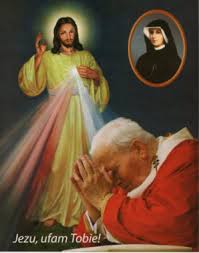
Canonizing Sister Faustina and Divine Mercy
HOMILY OF THE HOLY FATHER MASS IN ST PETER’S SQUARE FOR THE CANONIZATION OF SR MARY FAUSTINA KOWALSKA Sunday, 30 April 2000 1. “Confitemini Domino quoniam bonus, quoniam in saeculum misericordia eius”; “Give thanks to the Lord for he is good; his steadfast love endures for ever” (Ps 118: 1). So the Church sings on the Octave of[…]Continue reading→

Divine Mercy Sunday – An Echo of Every Mass
Reach out your hand and put it in my side. Do not doubt but believe’… ‘My Lord and my God!’ (Jn. 20:18)). Today is Divine Mercy Sunday, and as we celebrate the end of the Easter Octave, we contemplate the wounded side of our Saviour, the Church’s source of life. On Good Friday in the[…]Continue reading→

Saint Stanislaus of Szczepanów
We celebrate Saint Stanislaus today (+ April 11, 1079), in light of this Easter Octave, a bishop and martyr who accepted the episcopacy only at the direct order of Pope Alexander II. He proved a wise and courageous leader of his flock, put to death by his own king, Boleslaus, for rebuking the monarch’s ‘immoral[…]Continue reading→

First Holy Communion: Sermon from May 16, 1943
Here is a sermon from the good old days by +Rev. Msgr. Vincent Nicholas Foy (August 14, 1915 – March 13, 2017), from 1943. Readers may recall that Pope Saint Pius X, by the decree Quam Singulari in 1910, lowered the customary age of reception of Holy Communion – after the rigours of the plague[…]Continue reading→
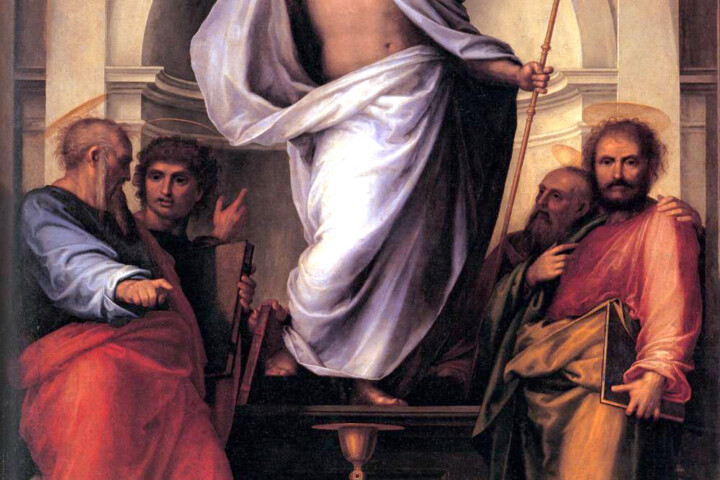
In the Glorious Light of Easter, Alleluia!
Set your minds on things that are above, not on things that are on earth, for you have died, and your life is hidden with Christ in God. When Christ who is your life is revealed, then you also will be revealed with him in glory (Col. 3:3-4). The Resurrection of Our Lord and Saviour[…]Continue reading→
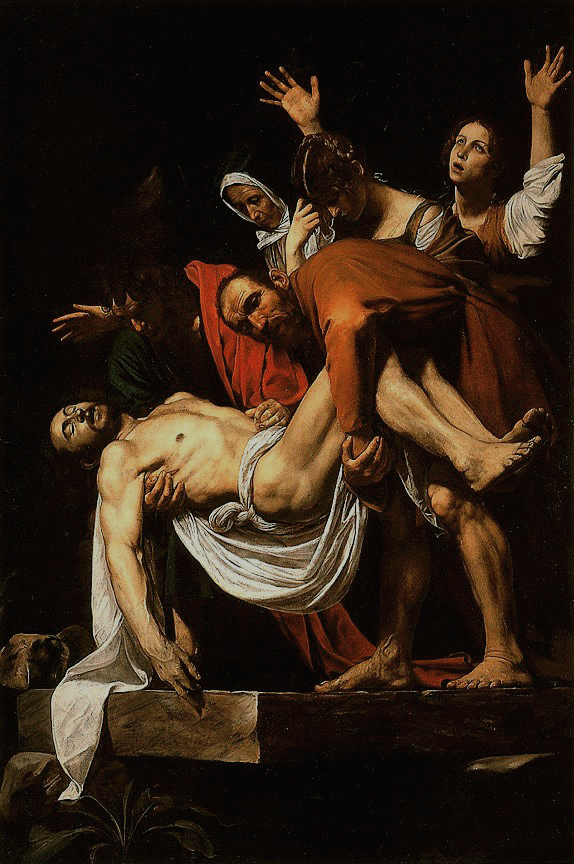
An Ancient Homily for Holy Saturday
The time between Good Friday and Easter Sunday is one of waiting, in silence, as the world wonders – anticipates – what will happen, after the death of Christ. We re-live this time each year in the anamnesis of our liturgy, and in turn look forward to the glorious re-creation of all things at the[…]Continue reading→
Europe’s Long Descent
(As we meditate on this day on Christ’s burial, and His descent into hell, it is fitting to ponder here with contributor Peter Marcus how the world seems to be heading there as well. The difference is that, although God cannot ‘redeem’ hell, nor those therein, He can and did redeem the world. There is[…]Continue reading→