

Should We Care About Pride?
This is a question that I find myself pondering with some regularity, but for the last few years during the month of June – I cannot seem to escape it. The formerly oppressed minority in the interminably increasing alphabet soup of sexual and gender identities and now a host of social justice causes among the avant-garde have taken their quest for tolerance and inclusion into a much wider and more aggressive stage – acceptance and participation. To not do so is grounds for cancellation. After all, in their lexicon – silence is violence. As recently as yesterday, someone I consider a good man and a decent friend posted his pledge of support for pride month on a social media platform, then abruptly directed that anyone who does not agree with him should immediately un-friend him. I disagree with him, though silently, and have not yet done as he directed. So, again, why should I care?
It comes down to an answer that is grounded in a theological anthropology that is at least as old as the book of Genesis – that all men and women are created in the Image and Likeness of God. That foundational understanding of the nature of a human person is what lies at the crux of this whole discussion. From the Christian view, a human being is a composite creation, possessing a physical body and an immortal soul. The physical body is subject to decay and death, like any animal. But the soul, once created by God, since it lacks matter, cannot be destroyed in the same way. It, therefore, must endure. That begs another question, how does this endurance come about, practically speaking? The body dies, the soul lives on, but where? That answer is also found in Christian Scripture and Tradition. The soul lives either with God in heaven, or suffers eternal separation which is the essence of hell with Satan. One has two outcomes from a choice to believe God or not.
In the modern secular world view, mankind has become no different from a highly evolved hairless ape. In the context of a living and sentient animal who has only an animal nature and once that nature passes, that’s it, the idea of eternal consequences seems frivolous, at best. If one does not possess an immortal spirit, then the idea of that spirit suffering an eternity of separation from its creator does not hold any water. And I fear this is where a great majority of our well-intended friends find themselves. This leads to several other errors, among them being abortion, euthanasia, and the death penalty. Each of these impose a conditional acceptance of the killing of a human being. While an argument can be made for the liceity of the last, the former two are nearly impossible to justify – ever. At the risk of conflating these life issues with sexual mores, I only bring this up to discuss the wayward mindset our secular friends. Just a few days ago, I was labelled a “forced birth extremist” by one of these lost souls who tried to convince me that there were occasions in which killing a baby is good, for the sake of “bodily autonomy”, a hallmark of the alphabet pride movement. But, I fear I may digress too much… The point being, this physical existence, right here and now, is all they think we have. For them, there is no immortal spirit, and therefore, no eternal consequence – for anything.
I thank God for the gift of faith in Him and in His Son and in the Holy Spirit. I once numbered myself among the pagans and found it easy to espouse the “who am I to judge?” mindset. Like all of us, I was guilty of terrible sin, and the idea of being convicted for that sin and sent to spend eternity in hell was frightening, so I ignored it and questioned the existence of anything immortal. Then I began to pray, God opened His arms to this prodigal son, and I have found a pearl of great price. That is why I care! I want everyone else to know that this is not the end of it all. We will live on, and we have a choice to make about how that turns out.
I do not wish to engage in the mental gymnastics that are necessary to justify sinful behaviour. I want to avoid it. I can only avoid it by knowing what it is. I want to know precisely what I might do that risks separating me from God, unequivocally and infallibly. I do that by reading Sacred Scripture and then by comparing my understanding of it to that which the Church has taught for the last two millennia – then I have to decide. Part of our divine Image and Likeness is that free-will, after all. God loves us too much to force Himself on us. It is up to us to choose, wisely or poorly, our own destination. Satan tempted Jesus to choose a perceived physical good in food, power, or safety, and he will likewise temp us to choose any number of sensual pleasures, or worse – trick us into thinking that he does not exist at all.
So, again, that is why I care. Dante started his pyramidal structure of the seven deadly sins with the sin of pride at its base. I think that was because it is that sin from which so many others follow. Once you have stood on the pedestal of pride, making a god out of your own arrogance, it is much easier to reach the heights of depravity in gluttony, avarice, envy and so on. Pride, being proud of what you do – no matter if it is right or not that you do it – is the first and worst error a person can make. And now we are meant to suffer a month-long immersion in it.
Please don’t think for a minute that I believe myself better than anyone. That is a failure of many Christians, to think themselves superior because they know better. For me, it is anything but. Pope Francis was asked early in his pontificate, “who is this Jorge Bergoglio?” to which he responded “a sinner”. I know, like the Holy Father, that I have historically and frequently fallen short of the Christian ideal. It is a daily struggle, and it should be for us all.
That is why I care. I want better for myself. I want to shed this mortal coil and find myself in the loving embrace of my Creator when I have taken my last physical breath. And I want it for everyone. I care, because I love you. I want for you that which God wants for you, that you come to know his salvific love and grace. I was reminded in one of today’s readings in the Liturgy of the Hours from Isaiah 66:2, “This is the one whom I approve: the lowly and afflicted man who trembles at my word.” Lowly, afflicted, and trembling seems like the opposite of pride to me.

Saint Kateri , Canada’s Protectress
This was the title given to Saint Kateri Tekakwitha, by Pope Benedict XVI, when he canonized her on October 28th, 2012, along with six others, in Saint Peter’ Square (she had been beatified by Pope John Paul II back in 1980). With Saint Joseph as our protector, along with the Canadian martyrs, we seem to[…]Continue reading→

Remembering Father Alphonse de Valk
(Today marks the sixth anniversary of the death of Father Alphonse de Valk, C.S.B., a faithful, courageous and indefatigable Basilian priest, pro-life-and-family apostle, and the founder of Catholic Insight magazine. Here is what we wrote those on his entering into eternity five years ago, as we continue to remember him in our prayers and thoughts)[…]Continue reading→

My Name is Bernadette
April 16th is a propitious day, for besides the anniversary of Father de Valk’s death, who founded Catholic Insight in its print form decades ago, and the commemoration of the ‘two Benedicts’, mentioned in accompanying posts, today we also recall Saint Bernadette Soubirous, the young visionary to whom the Virgin Mary appeared numerous times at[…]Continue reading→
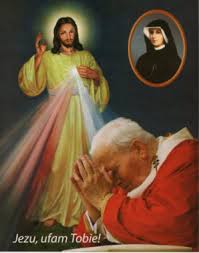
Canonizing Sister Faustina and Divine Mercy
HOMILY OF THE HOLY FATHER MASS IN ST PETER’S SQUARE FOR THE CANONIZATION OF SR MARY FAUSTINA KOWALSKA Sunday, 30 April 2000 1. “Confitemini Domino quoniam bonus, quoniam in saeculum misericordia eius”; “Give thanks to the Lord for he is good; his steadfast love endures for ever” (Ps 118: 1). So the Church sings on the Octave of[…]Continue reading→

Divine Mercy Sunday – An Echo of Every Mass
Reach out your hand and put it in my side. Do not doubt but believe’… ‘My Lord and my God!’ (Jn. 20:18)). Today is Divine Mercy Sunday, and as we celebrate the end of the Easter Octave, we contemplate the wounded side of our Saviour, the Church’s source of life. On Good Friday in the[…]Continue reading→

Saint Stanislaus of Szczepanów
We celebrate Saint Stanislaus today (+ April 11, 1079), in light of this Easter Octave, a bishop and martyr who accepted the episcopacy only at the direct order of Pope Alexander II. He proved a wise and courageous leader of his flock, put to death by his own king, Boleslaus, for rebuking the monarch’s ‘immoral[…]Continue reading→
First Holy Communion: Sermon from May 16, 1943
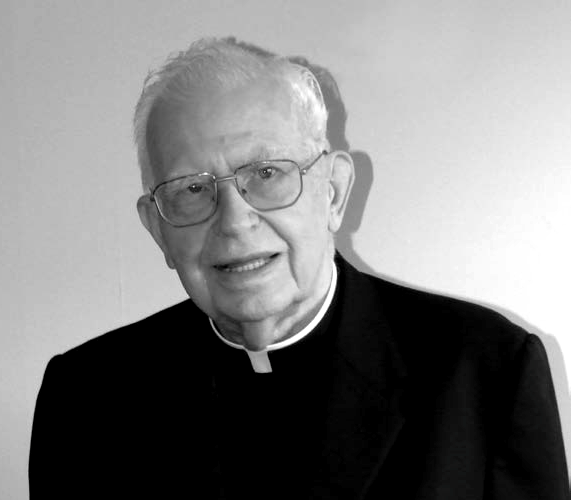
Here is a sermon from the good old days by +Rev. Msgr. Vincent Nicholas Foy (August 14, 1915 – March 13, 2017), from 1943. Readers may recall that Pope Saint Pius X, by the decree Quam Singulari in 1910, lowered the customary age of reception of Holy Communion – after the rigours of the plague[…]Continue reading→
In the Glorious Light of Easter, Alleluia!
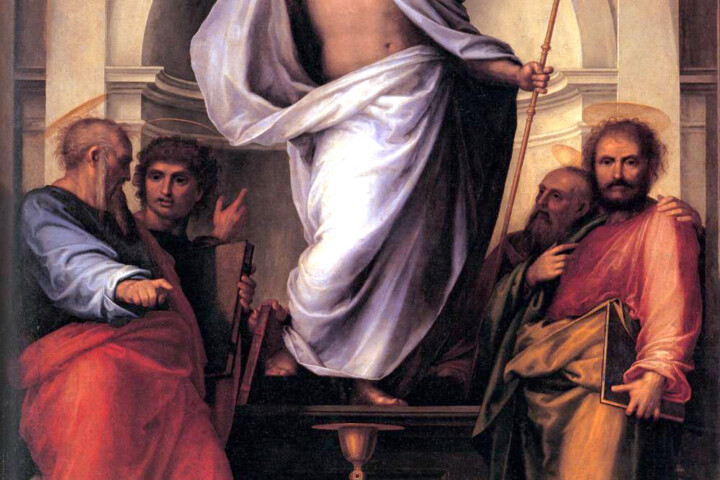
Set your minds on things that are above, not on things that are on earth, for you have died, and your life is hidden with Christ in God. When Christ who is your life is revealed, then you also will be revealed with him in glory (Col. 3:3-4). The Resurrection of Our Lord and Saviour[…]Continue reading→
An Ancient Homily for Holy Saturday
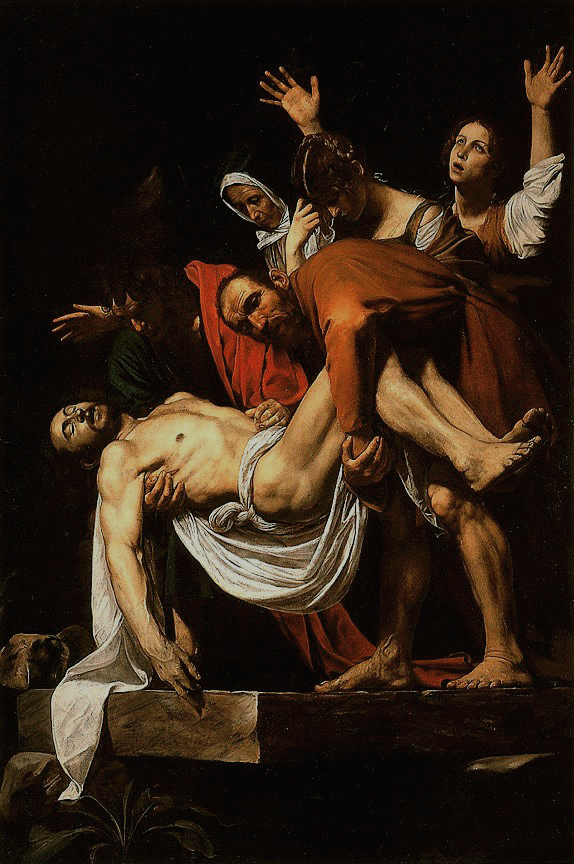
The time between Good Friday and Easter Sunday is one of waiting, in silence, as the world wonders – anticipates – what will happen, after the death of Christ. We re-live this time each year in the anamnesis of our liturgy, and in turn look forward to the glorious re-creation of all things at the[…]Continue reading→
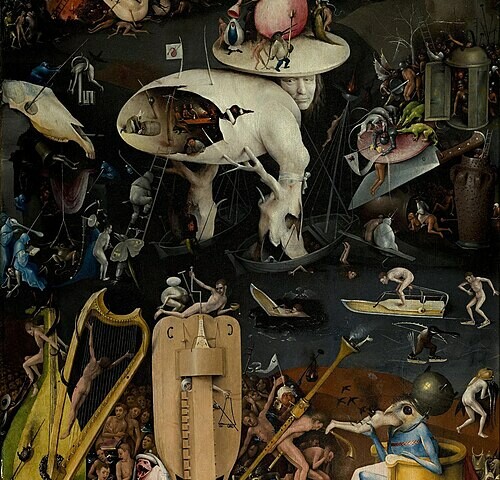
Europe’s Long Descent
(As we meditate on this day on Christ’s burial, and His descent into hell, it is fitting to ponder here with contributor Peter Marcus how the world seems to be heading there as well. The difference is that, although God cannot ‘redeem’ hell, nor those therein, He can and did redeem the world. There is[…]Continue reading→