
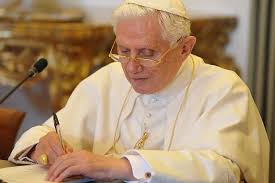
Pope Benedict and the Maid of Orleans
(Today, the penultimate day of May, is the memorial of Saint Joan of Arc, and I thought readers would enjoy this address from Pope Benedict XVI on the remarkable teenage saint, put to death by her own Church – or, more to the point, corrupt representatives thereof in an unfair trial. A fitting saint for our times, and all times – she has, I think, an eschatological significance, as do all God’s holy ones)
BENEDICT XVI
GENERAL AUDIENCE
Paul VI Audience Hall
Wednesday, 26 January 2011
[Video]
Saint Joan of Arc
Dear Brothers and Sisters,
Today I would like to talk to you about Joan of Arc, a young Saint who lived at the end of the Middle Ages who died at the age of 19, in 1431. This French Saint, mentioned several times in the Catechism of the Catholic Church, is particularly close to St Catherine of Siena, Patroness of Italy and of Europe, of whom I spoke in a recent Catechesis. They were in fact two young women of the people, lay women consecrated in virginity, two committed mystics, not in the cloister, but in the midst of the most dramatic reality of the Church and the world of their time. They are perhaps the most representative of those “strong women” who, at the end of the Middle Ages, fearlessly bore the great light of the Gospel in the complex events of history. We could liken them to the holy women who stayed on Calvary, close to the Crucified Jesus and to Mary his Mother, while the Apostles had fled and Peter himself had denied him three times.
The Church in that period was going through the profound crisis of the great schism of the West, which lasted almost 40 years. In 1380, when Catherine of Siena died, there was not only a Pope but also an antipope; when Joan was born, in 1412, there was a Pope as well as two antipopes. In addition to this internal laceration in the Church, were the continuous fratricidal wars among the Christian peoples of Europe, the most dramatic of which was the protracted Hundred Years’ War between France and England.
Joan of Arc did not know how to read or write, but the depths of her soul can be known thanks to two sources of exceptional historical value: the two Trials that concern her. The first, the Trial of Condemnation (PCon), contains the transcription of the long and numerous interrogations to which Joan was subjected in the last months of her life (February-May 1431) and reports the Saint’s own words. The second, the Trial of Nullity of the Condemnation or of “rehabilitation” (PNul), contains the depositions of about 120 eyewitnesses of all the periods of her life (cf. Procès de Condamnation de Jeanne d’Arc, 3 vol. and Procès en Nullité de la Condamnation de Jeanne d’Arc, 5 vol., ed. Klincksieck, Paris, 1960-1989).
Joan was born at Domremy, a little village on the border between France and Lorraine. Her parents were well-off peasants, known to all as good Christians. From them she received a sound religious upbringing, considerably influenced by the spirituality of the Name of Jesus, taught by St Bernardine of Siena and spread in Europe by the Franciscans.
The Name of Mary was always associated with the Name of Jesus and thus, against the background of popular piety, Joan’s spirituality was profoundly Christocentric and Marian. From childhood, she showed great love and compassion for the poorest, the sick and all the suffering, in the dramatic context of the war.
We know from Joan’s own words that her religious life developed as a mystical experience from the time when she was 13 (PCon, I, p. 47-48). Through the “voice” of St Michael the Archangel, Joan felt called by the Lord to intensify her Christian life and also to commit herself in the first person to the liberation of her people. Her immediate response, her “yes”, was her vow of virginity, with a new commitment to sacramental life and to prayer: daily participation in Mass, frequent Confession and Communion and long periods of silent prayer before the Crucified One or the image of Our Lady.
(To continue reading, please see here).

Saint Kateri , Canada’s Protectress
This was the title given to Saint Kateri Tekakwitha, by Pope Benedict XVI, when he canonized her on October 28th, 2012, along with six others, in Saint Peter’ Square (she had been beatified by Pope John Paul II back in 1980). With Saint Joseph as our protector, along with the Canadian martyrs, we seem to[…]Continue reading→

Remembering Father Alphonse de Valk
(Today marks the sixth anniversary of the death of Father Alphonse de Valk, C.S.B., a faithful, courageous and indefatigable Basilian priest, pro-life-and-family apostle, and the founder of Catholic Insight magazine. Here is what we wrote those on his entering into eternity five years ago, as we continue to remember him in our prayers and thoughts)[…]Continue reading→

My Name is Bernadette
April 16th is a propitious day, for besides the anniversary of Father de Valk’s death, who founded Catholic Insight in its print form decades ago, and the commemoration of the ‘two Benedicts’, mentioned in accompanying posts, today we also recall Saint Bernadette Soubirous, the young visionary to whom the Virgin Mary appeared numerous times at[…]Continue reading→
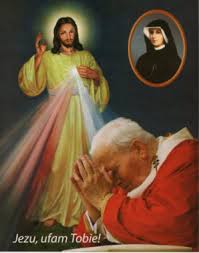
Canonizing Sister Faustina and Divine Mercy
HOMILY OF THE HOLY FATHER MASS IN ST PETER’S SQUARE FOR THE CANONIZATION OF SR MARY FAUSTINA KOWALSKA Sunday, 30 April 2000 1. “Confitemini Domino quoniam bonus, quoniam in saeculum misericordia eius”; “Give thanks to the Lord for he is good; his steadfast love endures for ever” (Ps 118: 1). So the Church sings on the Octave of[…]Continue reading→
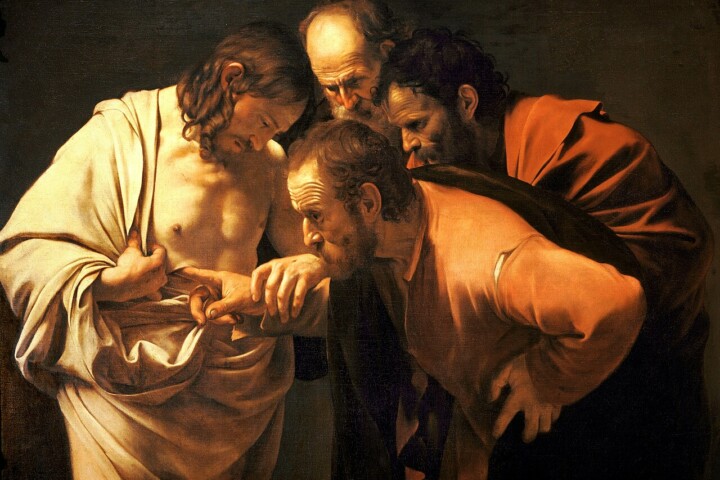
Divine Mercy Sunday – An Echo of Every Mass
Reach out your hand and put it in my side. Do not doubt but believe’… ‘My Lord and my God!’ (Jn. 20:18)). Today is Divine Mercy Sunday, and as we celebrate the end of the Easter Octave, we contemplate the wounded side of our Saviour, the Church’s source of life. On Good Friday in the[…]Continue reading→
First Holy Communion: Sermon from May 16, 1943
Here is a sermon from the good old days by +Rev. Msgr. Vincent Nicholas Foy (August 14, 1915 – March 13, 2017), from 1943. Readers may recall that Pope Saint Pius X, by the decree Quam Singulari in 1910, lowered the customary age of reception of Holy Communion – after the rigours of the plague[…]Continue reading→
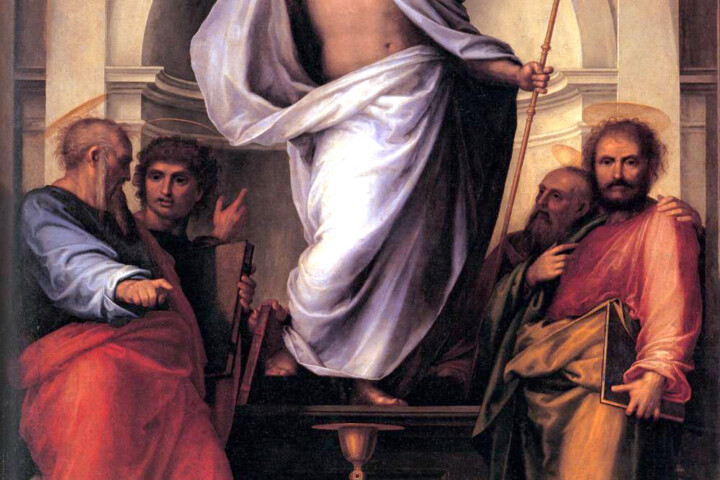
In the Glorious Light of Easter, Alleluia!
Set your minds on things that are above, not on things that are on earth, for you have died, and your life is hidden with Christ in God. When Christ who is your life is revealed, then you also will be revealed with him in glory (Col. 3:3-4). The Resurrection of Our Lord and Saviour[…]Continue reading→
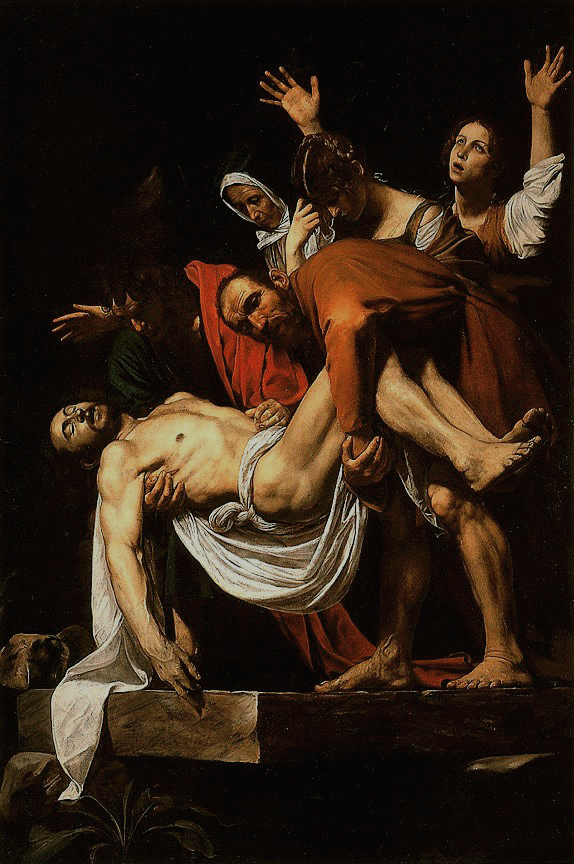
An Ancient Homily for Holy Saturday
The time between Good Friday and Easter Sunday is one of waiting, in silence, as the world wonders – anticipates – what will happen, after the death of Christ. We re-live this time each year in the anamnesis of our liturgy, and in turn look forward to the glorious re-creation of all things at the[…]Continue reading→
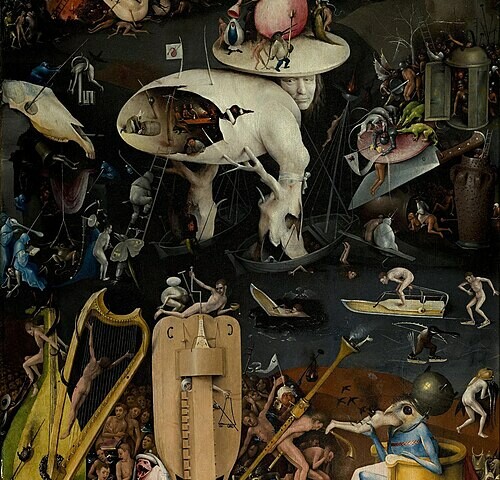
Europe’s Long Descent
(As we meditate on this day on Christ’s burial, and His descent into hell, it is fitting to ponder here with contributor Peter Marcus how the world seems to be heading there as well. The difference is that, although God cannot ‘redeem’ hell, nor those therein, He can and did redeem the world. There is[…]Continue reading→
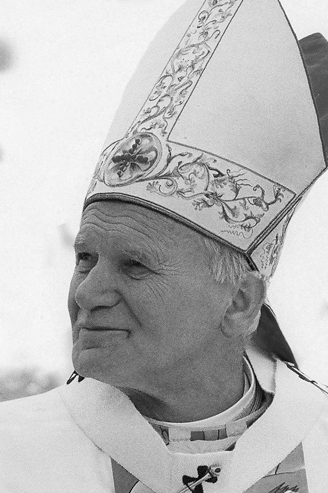
Pope Saint John Paul II’s First Good Friday Homily
ADDRESS OF HIS HOLINESS JOHN PAUL II AT THE CONCLUSION OF THE STATIONS OF THE CROSS AT THE COLOSSEUM Good Friday, 13 April 1979 When we make the Way of the Cross from one station to the next, in spirit we are always at the spot wherethis journey had its “historical” place: where it[…]Continue reading→