
Dialogue with a Reader on the ‘Virtual’ Mass
(What follows is an exchange with a faithful reader, having his own qualms about ‘virtual’ Masses – I thought our dialogue, slightly adapted, might help others. The reader’s questions are in italics, and my own replies, such as they are, follow. Editor)
I read your recent Catholic Insight essay on virtual Masses. Couldn’t agree more! I haven’t watched one since last April and won’t ever again. Christians have no idea what it is like to suffer for their faith — the Church (institution) folded without a fight.
But, I am disturbed by the notion of the sacraments working ex opere operato. Seen in the best way, this means that that the sacraments have power to bless because it is God who is acting. But the perversion of this is a notion I’ve come across and which I suspect has been behind the lightning quick shut-down of Masses — as long as the clergy say the Mass, Christ’s work continues to work. No masses needed for the Masses! Am I completely wrong in this?
Your question is very a propos. There is truth in the claim that is made, that it is better for the Mass to be said at all, even in private by a priest alone, which brings many graces down upon the world, ex opere operato (from the ‘work having been worked’, or from the very sacrament itself being performed). What we have now is better than a total proscription and cessation of the Mass.
But we should not discount or minimize the ex opere operantis aspect of the Mass, which cannot be dissociated or separated from the ex opere operato (from which it derives). Each Mass is more efficacious for us when we are physically, bodily present at the Mass, and the more we participate ‘body and soul’, with all of our being, the better. Hence, the need for solid homilies, transcendent music and architecture, holy priests and so on.
Hence, we should not get too comfortable with the way things are. It is not enough for Mass just to be ‘said by the priest’. Although God can provide for what is lacking, we must admit that things are still lacking, grace less ‘operative’. People will begin to drift away, even interiorly, and already have.
I too stopped watching on-line Masses almost from the get-go, as I implied in the article. Far better, from my perspective, to participate some other way, more incarnational and real.
I have a follow-up question: is that notion that it is better for the Mass to be said at all, even in private by a priest alone dogmatic Truth? Or is this simply a doctrinal implication? I will confess that, being someone who starts with Scripture in thinking through God’s interactions with humans, the sacrifice in the Tabernacle or Temple would have been null and void without the bringer of the sacrifice. He demands the participation of supplicants. The priests alone — in their intermediary status — did not suffice. And so I have some deep reservations about the efficacy of the Mass without any worshippers other than the priest, who is at critical moments in the liturgy acting in persona Christi.
To clarify, a priest saying Mass is, at one level, a more powerful example of anyone praying ‘in secret’, which would have spiritual effectiveness. When a priest, monk or nun recites the Divine Office, whether alone or in community, they are praying for the whole world.
This is even more powerful when a priest says Mass, for it is not he who is offering the sacrifice, but Christ, for the priest prays in persona Christi capitis, in the person of Christ the Head. Hence, every Mass, regardless of how ‘private’, is Christ Himself, not only interceding for us, but offering Himself for us, in his eternal sacrifice.
This is a deep mystery, which we accept on Faith, and upon whose truth we might meditate for a lifetime. Which is what we do, each time we participate in Mass, even from a distance.
That all said, I do hold the point about the greater efficacy of Mass quoad nos – in reference to us – when we participate personally and incarnationally. This is a bit of a spectrum, as someone might be ‘there’, but ‘not there’, in spirit; while someone else, may be more ‘there’, even though somewhat removed.
But all are in some way present at every Mass, for Christ, through His priest, includes all men in the offering of the Mass.
I hope this helps.
Indeed, it has been a difficult year here, and we know not what next year might yet hold. We must trust, and hope that God’s will is perfectly done, in all its joys and sorrows.
A Closed, Unsustainable, Descending Loop
As a follow-up to my thoughts on Payette’s payout, here be a stark image of where are here in Canada. As the graph shows in, well, graphic terms, since 2025, the public sector has contributed to 95.5% of economic growth. The private sector – which funds the public sector, or is supposed to – has[…]Continue reading→

Remembering Father Alphonse de Valk
(Today marks the sixth anniversary of the death of Father Alphonse de Valk, C.S.B., a faithful, courageous and indefatigable Basilian priest, pro-life-and-family apostle, and the founder of Catholic Insight magazine. Here is what we wrote those on his entering into eternity five years ago, as we continue to remember him in our prayers and thoughts)[…]Continue reading→
Presidential Pardon of Weronika Krawczyk
As a good news, follow-up to our story from Poland, of the persecution of Weronika Krawczyk for her pro-life views, we heard that she has been granted a presidential pardon. One might still wonder why one needs a presidential pardon for simply holding the long-held belief that the child within the womb is a child,[…]Continue reading→
Pope Leo and a Rosary for Peace
Pope Leo XIV has asked Catholics across the world to join him in a Rosary for peace today, at 18:00 Rome time (6 pm), which would be noon from where I write (EST). If you are able, whether at that time or another, and in whatever way you pray, to join in intercession with the[…]Continue reading→
Payette’s Payout
I was glancing through some headlines, and noticed a mention of Julie Payette – engineer and astronaut and sometime the Queen’s representative in Canada – which brought back vague memories. She was appointed Governor-General by Justin Trudeau in 2017. Ms. Payette resigned in 2021, amidst claims that she created a ‘toxic work environment’, with allegations[…]Continue reading→

Saint Stanislaus of Szczepanów
We celebrate Saint Stanislaus today (+ April 11, 1079), in light of this Easter Octave, a bishop and martyr who accepted the episcopacy only at the direct order of Pope Alexander II. He proved a wise and courageous leader of his flock, put to death by his own king, Boleslaus, for rebuking the monarch’s ‘immoral[…]Continue reading→
Weronika Krawczyk and Injustice in Poland
Catholic Action in Poland has issued a formal statement appealing to the President of the Republic of Poland to pardon Weronika Krawczyk—convicted for warning other women against an abortion-performing gynaecologist. Catholic Action (AK) emphasizes that no apology is owed to a doctor who has performed numerous abortions and proposed others; furthermore, the organization considers the[…]Continue reading→
Three Easter Musical Gems: Bach, Palestrina and Byrd
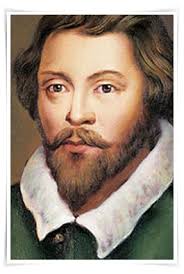
A very blessed and glorious Easter! Christus surrexit vere, alleluia! As we begin this Easter Octave with the great Solemnity of Easter, music to lift the soul would be one of Bach’s Easter cantatas, composed during his time at Leipzig in the early 1700’s, for the six Sundays of this festive season, leading up to[…]Continue reading→
Saint Isidore of Seville, the Internet and Industriousness
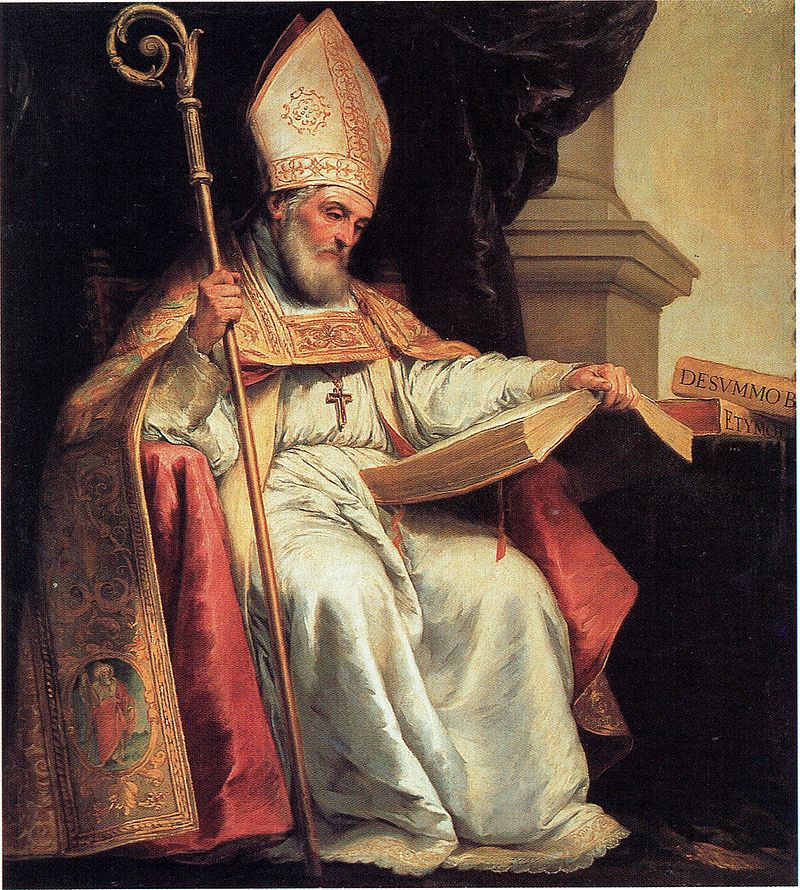
Today, April 4th, muted this year by Holy Saturday, is the commemoration of Saint Isidore of Seville (560-636) a bishop and doctor of the Church during a tumultuous age, when civilization was crumbling, coming apart at its very seams, which may sound sort of au courant. Then again, the form of this world has always[…]Continue reading→
An Ancient Homily for Holy Saturday
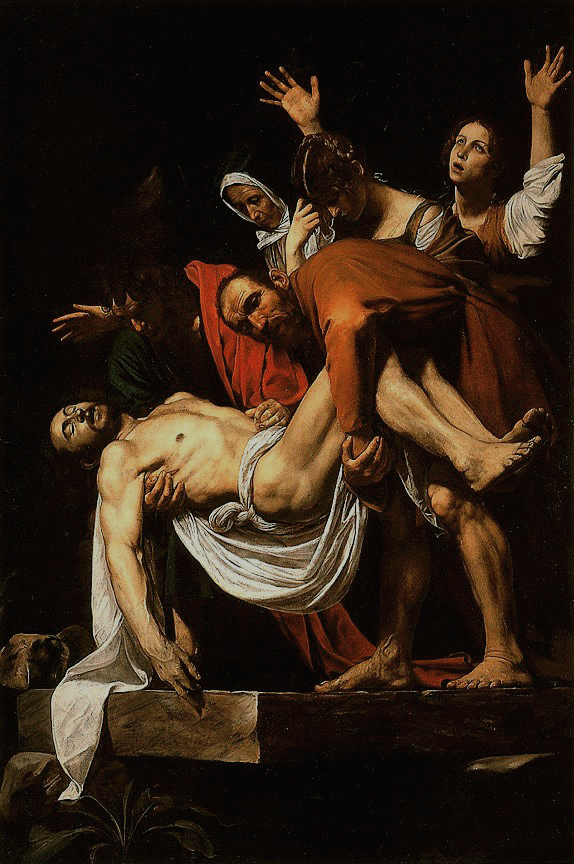
The time between Good Friday and Easter Sunday is one of waiting, in silence, as the world wonders – anticipates – what will happen, after the death of Christ. We re-live this time each year in the anamnesis of our liturgy, and in turn look forward to the glorious re-creation of all things at the[…]Continue reading→