
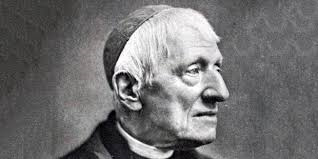
Newman and His Fierce, Unchanging Religion
I will not shrink from uttering my firm conviction, that it would be a gain to this country, were it vastly more superstitious, more bigoted, more gloomy, more fierce in its religion, than at present it shows itself to be.[1] Saint John Henry Newman
Newman’s point in this startling statement is that superstition and religion have something in common, viz., a belief in a spiritual realm that is accessible to human beings. We know that our prayers and rites are pleasing to God and open our hearts to the influence of his grace. The error of superstition, therefore, is not in its recognition of a transcendent reality. Rather is it mistaken in the conviction that by certain formulae and practices it can control these supernatural powers. Many of its practices have become harmless over time, such as knocking on wood to cancel the dangers occasioned by an act of hubris, but some remain harmful, even evil, such as a belief the evil eye or voodoo.
Newman noted that when religion goes wrong it degenerates into superstition. It follows, then, that the purification of superstition will lead back to authentic religion in which prayers and ceremonies will be offered to God in humble submission to his providential care. In other words, superstition lends itself to correction when the element of magic is eliminated. The opposite of superstition is religious scepticism, and it too is the corruption of something good, namely, man’s power of reasoning. Just as, when religion goes wrong, it moves into superstition, so reason degenerates into scepticism when it claims that reality is limited to what human intelligence can discover about the physical world. And as the superstitious person is too gullible, so is the sceptic too dismissive of anything he cannot prove by experiment and in the hard court of logic.
Newman’s insight can be usefully applied to the liturgy, which can go wrong in two ways, one corresponding to superstition and the other to rationalism. The point is that the liturgy is ceremonial: one does something with the assurance that the ritual action has its supernatural effect. A ceremony, by its very nature, must be carefully and properly performed; otherwise, it is not a ceremony. Think, for instance, of the protocol surrounding a royal visit. “Rubrics” is the term used for the directives to the celebrant in his sacramental activity: where to stand, what to say, how to prepare and distribute the sacred elements, and so on. In the past, the ceremonies of the Mass were minutely prescribed: the priest’s arms could not be extended past the shoulders, for instance, candles had to made from beeswax, only linen could be used for the vestments and sacred cloth, are only a few of the numerous rubrics that governed the celebration of Mass. An exclusive concern with such rubrics can move the liturgical celebration in the direction of magic. For the essential characteristic of magic, as with superstition, is absolute fidelity to the words and actions to be performed if the spell is to be effective. A mistake in a name or the use of a wrong gesture can wreak havoc. A common plot in old romances is the administration of a love potion to the wrong person, with the complications that Shakespeare explored in A Midsummer Night’s Dream. Magic is automatic and a magical approach to liturgy transforms it into a mechanical act that has its effect regardless of the devotion or even the attention of the worshippers.
If such was a tendency in the past, it is certainly not one of today, when the temptation is in the opposite direction. As the superstitious believer focuses on outward conformity, so the rationalistic believer tends toward a spiritual individualism, a logical self-sufficiency that ultimately calls into question the effect of the rite. Instead of viewing the Mass as a priceless inheritance that must be handled with the greatest care, it becomes a platform for the celebrant’s particular notions. Hence rubrics are discarded, as prayers are altered to suit his fancy and ceremonies are curtailed or reshaped to coincide with current intellectual or social fads that can be subsumed under the general heading of political correctness. One celebrant may omit the lavabo—the washing of the fingers at the end of the Offertory—as an empty gesture; another omits the trinitarian doxology to the opening prayer (the collect) on the grounds that it is redundant. It seems that the celebrant who is scrupulous about rubrics—unlike the one who is careless about them—can be expected to deepen his spirituality by recognizing their role in fostering devotion and well as ensuring care. On the other hand, it must be admitted that continual revisions of the wording and ceremonies of Mass and the other sacraments on the part of Rome and various bishops has left even the most well-intended clergyman in some confusion about exactly what is expected of him. It is axiomatic that a change in laws or regulation, even when it represents an improvement, weakens the authority of law in general. There are times when this principle would recommend leaving an imperfect law intact because its righting will, in the long run, do more harm to the common good that leaving it be. One can only hope, and pray, that over time a set of rubrics will become firmly established and scrupulously observed for the fostering of reverence and devotion throughout the Church.
[1] John Henry Newman, “The Religion of the Day,” Parochial and Plain Sermons (San Francisco: Ignatius, 1997), p. 205.

Saint Kateri , Canada’s Protectress
This was the title given to Saint Kateri Tekakwitha, by Pope Benedict XVI, when he canonized her on October 28th, 2012, along with six others, in Saint Peter’ Square (she had been beatified by Pope John Paul II back in 1980). With Saint Joseph as our protector, along with the Canadian martyrs, we seem to[…]Continue reading→

Remembering Father Alphonse de Valk
(Today marks the sixth anniversary of the death of Father Alphonse de Valk, C.S.B., a faithful, courageous and indefatigable Basilian priest, pro-life-and-family apostle, and the founder of Catholic Insight magazine. Here is what we wrote those on his entering into eternity five years ago, as we continue to remember him in our prayers and thoughts)[…]Continue reading→

My Name is Bernadette
April 16th is a propitious day, for besides the anniversary of Father de Valk’s death, who founded Catholic Insight in its print form decades ago, and the commemoration of the ‘two Benedicts’, mentioned in accompanying posts, today we also recall Saint Bernadette Soubirous, the young visionary to whom the Virgin Mary appeared numerous times at[…]Continue reading→

Canonizing Sister Faustina and Divine Mercy
HOMILY OF THE HOLY FATHER MASS IN ST PETER’S SQUARE FOR THE CANONIZATION OF SR MARY FAUSTINA KOWALSKA Sunday, 30 April 2000 1. “Confitemini Domino quoniam bonus, quoniam in saeculum misericordia eius”; “Give thanks to the Lord for he is good; his steadfast love endures for ever” (Ps 118: 1). So the Church sings on the Octave of[…]Continue reading→
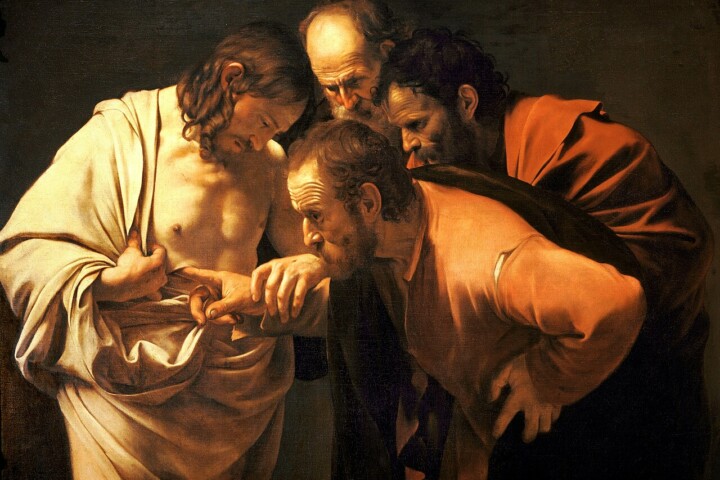
Divine Mercy Sunday – An Echo of Every Mass
Reach out your hand and put it in my side. Do not doubt but believe’… ‘My Lord and my God!’ (Jn. 20:18)). Today is Divine Mercy Sunday, and as we celebrate the end of the Easter Octave, we contemplate the wounded side of our Saviour, the Church’s source of life. On Good Friday in the[…]Continue reading→

Saint Stanislaus of Szczepanów
We celebrate Saint Stanislaus today (+ April 11, 1079), in light of this Easter Octave, a bishop and martyr who accepted the episcopacy only at the direct order of Pope Alexander II. He proved a wise and courageous leader of his flock, put to death by his own king, Boleslaus, for rebuking the monarch’s ‘immoral[…]Continue reading→
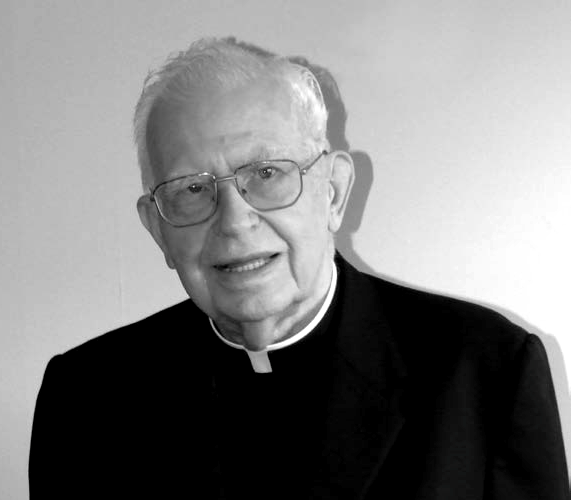
First Holy Communion: Sermon from May 16, 1943
Here is a sermon from the good old days by +Rev. Msgr. Vincent Nicholas Foy (August 14, 1915 – March 13, 2017), from 1943. Readers may recall that Pope Saint Pius X, by the decree Quam Singulari in 1910, lowered the customary age of reception of Holy Communion – after the rigours of the plague[…]Continue reading→
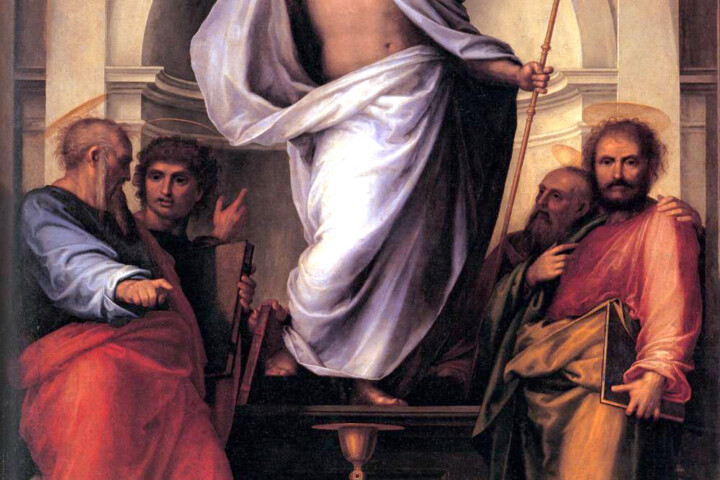
In the Glorious Light of Easter, Alleluia!
Set your minds on things that are above, not on things that are on earth, for you have died, and your life is hidden with Christ in God. When Christ who is your life is revealed, then you also will be revealed with him in glory (Col. 3:3-4). The Resurrection of Our Lord and Saviour[…]Continue reading→
An Ancient Homily for Holy Saturday
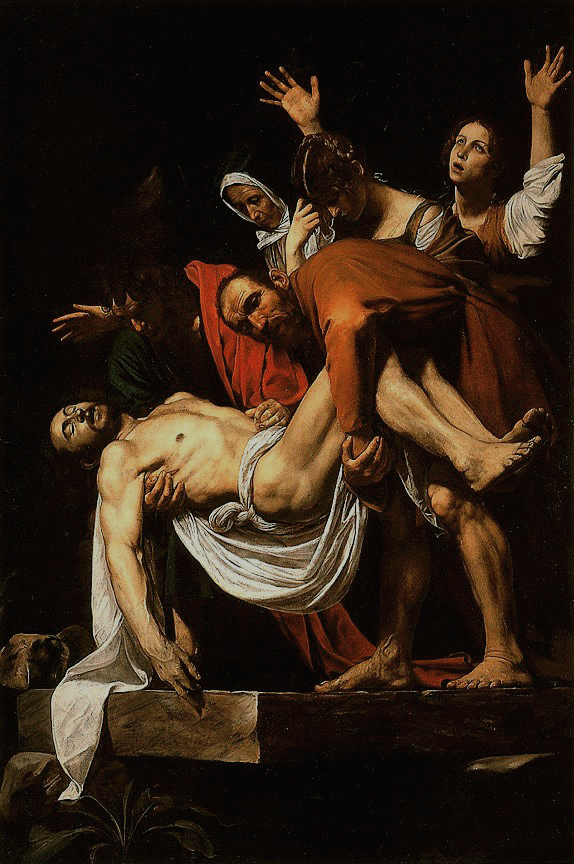
The time between Good Friday and Easter Sunday is one of waiting, in silence, as the world wonders – anticipates – what will happen, after the death of Christ. We re-live this time each year in the anamnesis of our liturgy, and in turn look forward to the glorious re-creation of all things at the[…]Continue reading→
Europe’s Long Descent
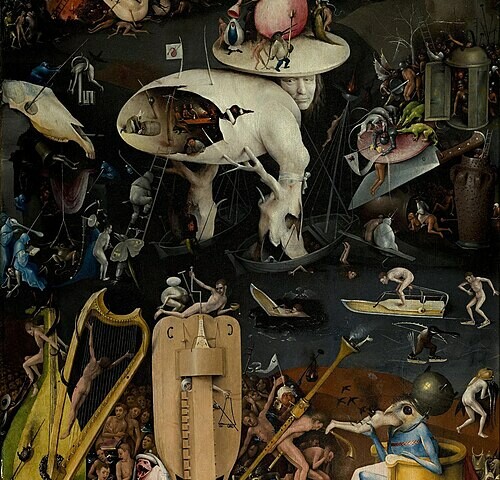
(As we meditate on this day on Christ’s burial, and His descent into hell, it is fitting to ponder here with contributor Peter Marcus how the world seems to be heading there as well. The difference is that, although God cannot ‘redeem’ hell, nor those therein, He can and did redeem the world. There is[…]Continue reading→