
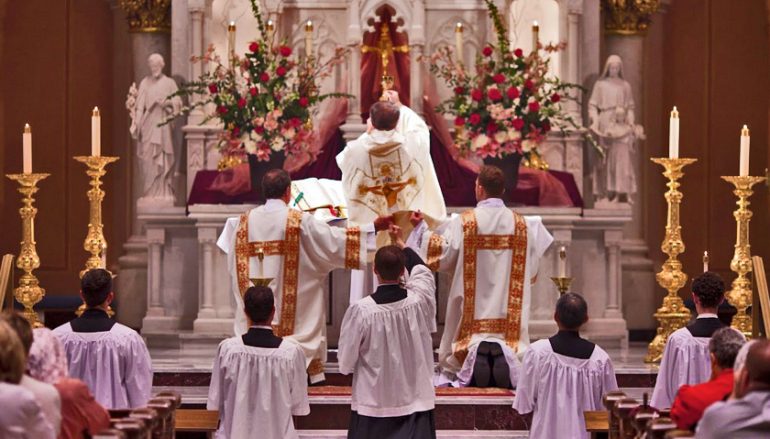
Fifth Sunday of Easter and Union With the Eucharist
Abide in me as I abide in you. Just as the branch cannot bear fruit by itself unless it abides in the vine, neither can you unless you abide in me. (Jn. 15:4).
In today’s Gospel reading, Our Lord speaks of the reality of our union with Him as a mutual indwelling (perichoresis). ‘Abide in me as I abide in you’. These words are not meant to be understood metaphorically or symbolically. They express the reality of our life in Christ through the Sacraments, especially the union that is brought about or effected the through the Blessed Eucharist or what we logically call Holy Communion. As Christians, we bear the name of Christ and though each one of us is rightly constituted as an individual, through our mutual indwelling with Our Lord, we share in His life. No words of Scripture express this truth as effectively as this well-known verse from St. Paul’s Epistle to the Galatians: I have been crucified with Christ; it is no longer I who live, but Christ who lives in me; and the life I now live in the flesh I live by faith in the Son of God, who loved me and gave himself for me (2:20).
When we renewed our Baptismal promises on Easter Sunday, we effectively vowed to deepen our union with Christ Our Lord and to live the mystery of this life in all its fullness. In the traditional order in which the Sacraments are conferred, the Sacrament of the Eucharist completes our initiation in the Mystery of Christ. This is reflected in the liturgical season of Easter. Easter Sunday recalls our Baptism, Pentecost, our Confirmation and the Solemnity of Corpus Christi, the Blessed Eucharist; the Sacrament in which we experience Our Lord’ indwelling in a manner that is most intimate and personal. The Sacred Liturgy forms Christ in us so that we make our own the words of St John the Baptist: He must increase, but I must decrease (Jn. 3:30).
This unity or mutual indwelling is what we experience especially when we receive Holy Communion. Our Saviour Himself bore witness to the reality of this unity when He said, He who eats my flesh and drinks my blood lives in me and I in him (Jn. 6:56). This then, is our union with the Son, a union brought about through the Eucharist. Our Lord also said: As the living Father sent me and I draw life from the Father, so he who eats my flesh will draw life from me (Jn. 6:57). If we but take these words at face value, we see how great is our dignity; that God Himself shares His life with us and we also see how absolutely necessary it is for us to examine how and with what dispositions we approach the Altar for Holy Communion. Our devout participation in the Holy Sacrifice of the Mass is a clear expression of our understanding that the desired end or goal of our participation in the Church’s sacramental life is an experience of and a participation in the Mystery of God’s life, a mutual indwelling; a communion with the Father, and the children of the Father, God and neighbour. The Mass is a weekly reminder of the transcendent purpose of our life and it is always a much needed reminder because it is very easy for us to lose our way; and when this happens it is also easy to lose oneself.
The lockdowns that we have endured and are now again enduring have done great spiritual harm to the faithful, especially the weak in faith, many of whom now say that they are content to “watch the Mass on television or the computer”. In the face of this falling away or apostasy, we do well to recall the words spoken through the Prophet Ezekiel and implore the divine mercy: For thus says the Lord GOD: Behold, I, I myself will search for my sheep and I will seek them out… I will seek the lost, and I will bring back the strayed, and I will bind up the crippled, and I will strengthen the weak (Ez. 34: 11-16). The longer the churches are inaccessible to the faithful, the greater the harm inflicted especially on the weak among the faithful and on the Church herself. Less than a year ago, Archbishop Carlo Maria Vigano observed: It will not be surprising if, in a few months, we learn once again that hidden behind these acts of vandalism and violence are those who hope to profit from the dissolution of the social order so as to build a world without freedoms: Solve et coagula, as the Masonic adage teaches [that is, ‘dissolve and coagulate’ – destroy and build up again.] The Archbishop further explained that a similar struggle is found in religious circles. There are faithful shepherds who care for the flock of Christ, but there are also mercenary infidels who seek to scatter the flock and hand the sheep over to be devoured by ravenous wolves…just as there is a deep state, there is a deep church that betrays its duties and forswears its proper commitments before God. Thus the invisible Enemy, whom good rulers fight against in public affairs, is also fought against by good shepherds in the ecclesiastical sphere. It is a spiritual battle. We are unmistakably involved in a spiritual battle that intensifies with each passing day and for this reason we must all the more take up spiritual arms at our disposal to withstand the efforts of those who seek the destruction of the social order and most especially Christian order. We are engaged in a struggle for salvation or freedom in both the temporal and spiritual spheres of life.
At the natural or human level, the exercise of freedom is inherent to our nature. Our natural state is one of freedom; naturally endowed by God and not subject to state interference or dominance. At the supernatural or spiritual level, we rightly speak of the gift of salvation as not something external – simply a state received; but a sharing in the communion of life that is God. It is a work that Our Savour Jesus Christ accomplishes both for us and with us. If this is what we affirm to be true about revelation and salvation, then we must also affirm that God can only be truly known in a personal way; through prayer. When we arrive at this truth, everything changes because we change and we deliberately endeavour to be transformed into God’s likeness. We become aware of our dignity, we recognize the dignity of every person and we begin also to understand the mystery of the Church established by Jesus Christ as a communion of life, love and truth (Lumen Gentium, 9).
In the Mass we are one with our Lord in His Sacrifice and this Mystery is the source of our never-ending renewal and transformation. Here we heed the Apostle’s exhortation: I appeal to you … by the mercies of God to present your bodies as a living sacrifice, holy and acceptable to God, which is your spiritual worship (Rom. 12:1). St. Peter Chrysologus explains: Each of us is called to be both a sacrifice to God and His priest. Do not forfeit what divine authority confers on you. Put on the garment of holiness…. Keep burning continually the sweet-smelling incense of prayer. Take up the sword of the spirit. Let your heart be an altar. Then with full confidence in God, present your body for sacrifice. God desires not death, but faith; God thirsts not for blood, but for self-surrender; God is appeased not by slaughter, but by the offering of your free will. (St. Peter Chrysologus, Sermon 108, Liturgy of the Hours, Vol. II, p. 772). The offering of our very selves in imitation of Our Saviour is a logical consequence of this mutual indwelling that is ours in Christ Our Lord who has left us an example, that we should follow in his footsteps (Cf. 1Pet. 2:21).
This is why we need the Mass and why the enemies of God are doing so much to deprive us of the ability to actively and fruitfully participate in its celebration. In the celebration of the Mass, we have the privilege of celebrating the immolation of Christ sacramentally in the Eucharist. Each Sunday is truly a new beginning of our lives until at last, having gone from Sabbath to Sabbath we enter into the rest of God in the eternal Sabbath; when God the Father calls us to Himself to dwell in the Heavenly Jerusalem, the city that gleams with the splendour of God (Cf. Rev. 21:11).
As the month of May begins and we honour the memory of Our Lady, let us invoke her powerful protection and intercession; that the Mass may soon be restored to us, and that the faith of Catholics in the truth of the Eucharist may also be restored and strengthened. As we endure this deprivation of the Sacraments we must remember that God never leaves us without the necessary means of salvation. In the absence of the ability to attend Holy Mass, we must all the more reflect on or contemplate the reality of our union with Our Lord as a mutual indwelling (perichoresis). At any given hour the Mass is being offered somewhere in the world or perhaps at a time known to you, in your now shuttered church. Unite yourselves to the exercise of the external priesthood, and in the exercise of your baptismal or internal priesthood, take your inspiration from these words of St. Peter Chrysologus: How marvelous is the priesthood of the Christian, for he is both the victim that is offered on his own behalf, and the priest who makes the offering. He does not need to go beyond himself to seek what he is to immolate to God: with himself and in himself he brings the sacrifice he is to offer to God for himself. The victim remains and the priest remains, always one and the same. Immolated, the victim still lives: the priest who immolates cannot kill. Truly it is an amazing sacrifice in which a body is offered without being slain and blood is offered without being shed (St. Peter Chrysologus, Sermon 108, Liturgy of the Hours, Vol. II, p. 771).
In the awareness that in prayer we always stand before God for all, let our prayer embrace all those who are now suffering both spiritually and physically; that the Church may soon triumph over both her internal and external enemies through the Triumph of Our Lady’s Immaculate Heart.

Remembering Father Alphonse de Valk
(Today marks the sixth anniversary of the death of Father Alphonse de Valk, C.S.B., a faithful, courageous and indefatigable Basilian priest, pro-life-and-family apostle, and the founder of Catholic Insight magazine. Here is what we wrote those on his entering into eternity five years ago, as we continue to remember him in our prayers and thoughts)[…]Continue reading→

Divine Mercy Sunday – An Echo of Every Mass
Reach out your hand and put it in my side. Do not doubt but believe’… ‘My Lord and my God!’ (Jn. 20:18)). Today is Divine Mercy Sunday, and as we celebrate the end of the Easter Octave, we contemplate the wounded side of our Saviour, the Church’s source of life. On Good Friday in the[…]Continue reading→

Saint Stanislaus of Szczepanów
We celebrate Saint Stanislaus today (+ April 11, 1079), in light of this Easter Octave, a bishop and martyr who accepted the episcopacy only at the direct order of Pope Alexander II. He proved a wise and courageous leader of his flock, put to death by his own king, Boleslaus, for rebuking the monarch’s ‘immoral[…]Continue reading→

First Holy Communion: Sermon from May 16, 1943
Here is a sermon from the good old days by +Rev. Msgr. Vincent Nicholas Foy (August 14, 1915 – March 13, 2017), from 1943. Readers may recall that Pope Saint Pius X, by the decree Quam Singulari in 1910, lowered the customary age of reception of Holy Communion – after the rigours of the plague[…]Continue reading→

In the Glorious Light of Easter, Alleluia!
Set your minds on things that are above, not on things that are on earth, for you have died, and your life is hidden with Christ in God. When Christ who is your life is revealed, then you also will be revealed with him in glory (Col. 3:3-4). The Resurrection of Our Lord and Saviour[…]Continue reading→

An Ancient Homily for Holy Saturday
The time between Good Friday and Easter Sunday is one of waiting, in silence, as the world wonders – anticipates – what will happen, after the death of Christ. We re-live this time each year in the anamnesis of our liturgy, and in turn look forward to the glorious re-creation of all things at the[…]Continue reading→

Europe’s Long Descent
(As we meditate on this day on Christ’s burial, and His descent into hell, it is fitting to ponder here with contributor Peter Marcus how the world seems to be heading there as well. The difference is that, although God cannot ‘redeem’ hell, nor those therein, He can and did redeem the world. There is[…]Continue reading→
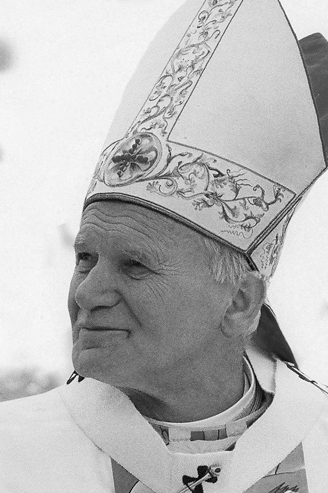
Pope Saint John Paul II’s First Good Friday Homily
ADDRESS OF HIS HOLINESS JOHN PAUL II AT THE CONCLUSION OF THE STATIONS OF THE CROSS AT THE COLOSSEUM Good Friday, 13 April 1979 When we make the Way of the Cross from one station to the next, in spirit we are always at the spot wherethis journey had its “historical” place: where it[…]Continue reading→
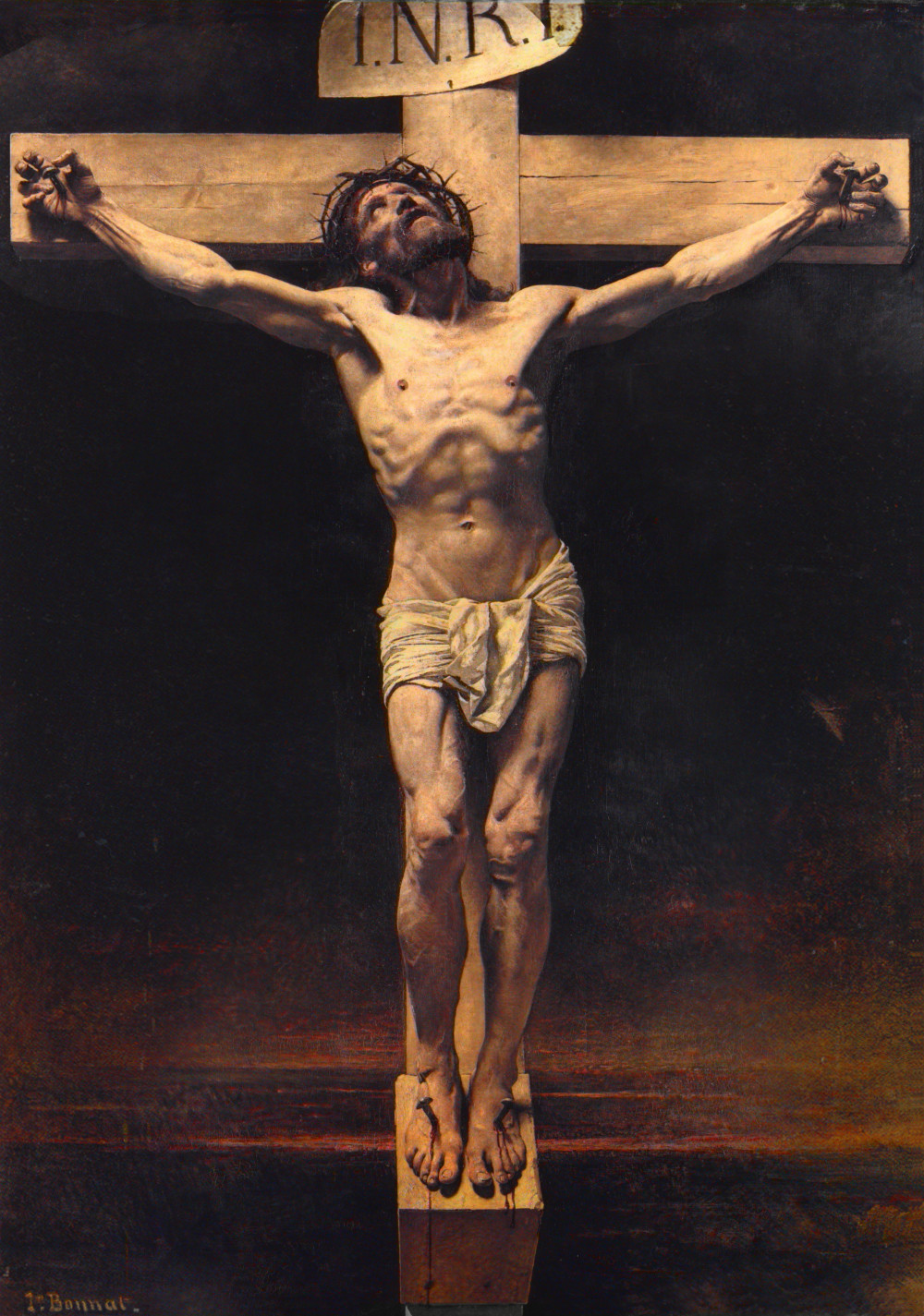
A Meditation for Good Friday: How To Undo the Effects of Sin?
Cardinal Newman, now Saint John Henry Newman, was a towering figure of nineteenth-century Catholicism who is almost universally admired. I say “almost” because not everyone likes him. I knew a priest once, Arthur Caulkins, who has become disenchanted with Newman. As an undergraduate Arthur had been enamoured of Newman, and this interest continued when he[…]Continue reading→
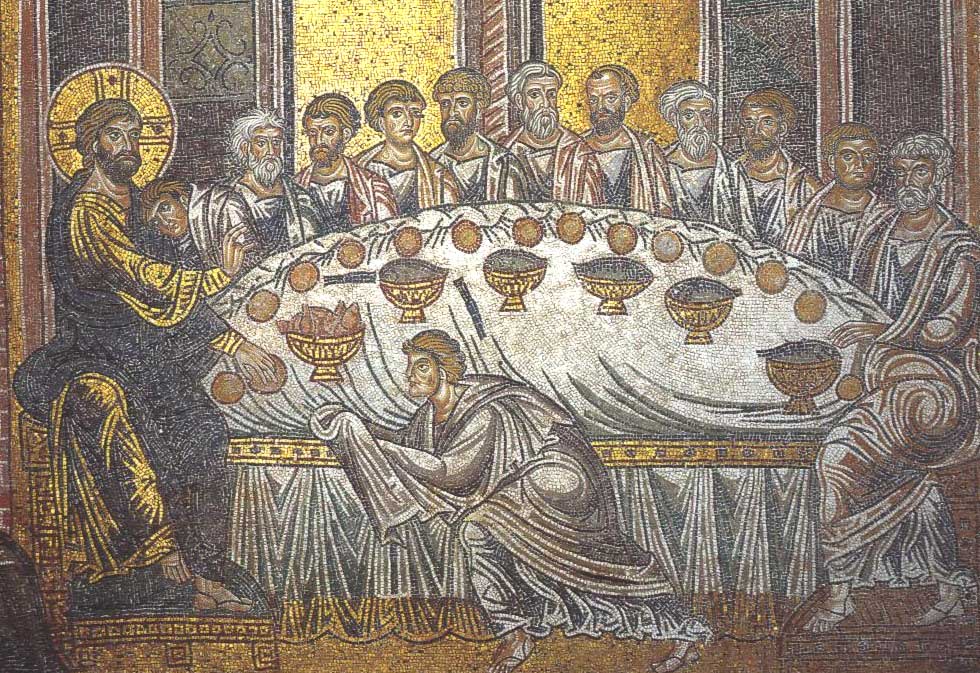
Pope Benedict’s Last Holy Thursday Homily
MASS OF THE LORD’S SUPPER HOMILY OF HIS HOLINESS BENEDICT XVI Basilica of St John Lateran Holy Thursday, 5 April 2012 Photo Gallery (Video) Dear Brothers and Sisters! Holy Thursday is not only the day of the institution of the Most Holy Eucharist, whose splendour bathes all else and in some ways draws it to[…]Continue reading→