
The Inestimable Treasure of the Divine Mercy
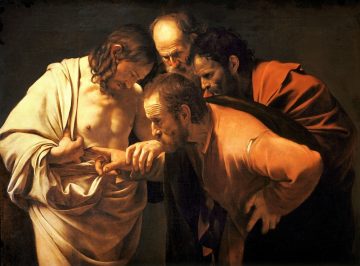
‘Reach out your hand and put it in my side. Do not doubt but believe’… ‘My Lord and my God!’ (Jn. 20:18)).
Today is Divine Mercy Sunday, and as we celebrate the end of the Easter Octave, we contemplate the wounded side of Our Saviour, the Church’s source of life. You recall that on Good Friday as we commemorated the Passion, we heard that as Our Lord hung in death upon the Cross, one of the soldiers pierced his side with a spear and at once there came out blood and water (Jn. 19:34). These living streams which continue to flow from the Sacred Heart of Our Risen Lord are the saving waters of Baptism by which we are born again and become a new creation, and the Precious Blood of the Eucharist which nourishes this life. St. John Chrysostom explains: As God took a rib from Adam’s side to fashion a woman, so Christ has given us blood and water from his side to fashion the Church. God took the rib when Adam was in a deep sleep, and in the same way Christ gave us the blood and water after his own death…. As a woman nourishes her child with her own blood and milk, so does Christ unceasingly nourish with His own blood those to whom He Himself has given life (The Liturgy of the Hours, Vol. II, p. 275).
‘Reach out your hand and put it in my side. Do not doubt but believe’ (Jn. 20:18)). This is much more than an invitation to doubting Thomas, as we have come to know him, to see that it is truly Our Lord who stands before him. This wound is our entry to the very Heart of God. As we read in the Epistle to the Hebrews, Therefore, brethren, since we have confidence to enter the sanctuary by the blood of Jesus, by the new and living way which he opened for us through the curtain, that is, through his flesh…let us draw near with a true heart in full assurance of faith (Heb. 10:19-21). The soldier pierced the Lord’s side, he breached the wall of the sacred temple, and I have found the treasure and made it my own. (From the Catecheses by St. John Chrysostom, The Liturgy of the Hours, Vol. II, p. 472). What the Saints set before us in their contemplation of these mysteries of our salvation can only be grasped and rightly understood by those who are willing to leave the elementary doctrine of Christ and go on to maturity (Heb. 6:1); a spiritual maturity that seeks to cooperate with Our Lord in the ongoing work of salvation by both prayer and active charity. The truth of what we celebrate and contemplate will only become our very own when we recognize that what is revealed to us is no less what we are called to be. True reverence for the Lord’s passion means fixing the eyes of our heart on Jesus crucified and recognizing in Him our own humanity (From a sermon by Pope Saint Leo the Great, The Liturgy of the Hours, Vol. II, p. 313). To recognize in Him our own humanity is to enter into the mystery of both God and man; to ponder the meaning and purpose of human life and the manner in which we are meant to live our lives. The pierced Heart of Our Saviour is an expression of who and what we are called to be. If this sounds strange or mysterious to you, this is good. We are ready to go on to maturity (Heb. 6:1).
In the coming weeks as we celebrate Eastertide with its privileged form of instruction or particular catechesis known as mystagogy; that is, instruction in the mysteries, we will proceed from the visible to the invisible, from the sign to the thing signified, from the sacraments to the mysteries (Catechism of the Catholic Church, 1075). ‘Reach out your hand and put it in my side. Do not doubt but believe’. We will contemplate the wounded side of Christ and enter into the Mystery of Our Lord’s Most Sacred Heart, the Heart of God.
This form of liturgical catechesis or instruction rightly presupposes a commitment to prayer, personal prayer that is reflective, silent and meaningful; and a serious effort to become mature in the practice of our faith. This single-minded, sober approach to understanding and appropriating the truths of our Faith is especially necessary in these our times, when there is so much confusion and it would seem, a concerted effort to deny the faithful access to the sacraments. The mysteries that we commemorate are not theories or fables or myths; they are historical events that by the power and presence of the Holy Spirit are re-presented for our benefit and growth, principally through the exercise of the ministerial or external priesthood. The baptized exercise an interior priesthood that must be nourished and guided by sacramental exercise of the ministerial priesthood.
This pattern is not a human invention but a way of progressing in the knowledge of God established by Him in the Old Testament, and fulfilled by Christ the High Priest in the New Testament. All of the ‘gimmicks’ that were part of the Lenten observances this year, including the imposition of ashes in contrived “rites” and all the virtual activities concocted as a result of the health dictatorship are an affront to Church’s bi-millennial sacramental praxis. This is why we must make every effort this year to keep things real. There is nothing virtual about the sacraments; and the journey into the Heart of God cannot neglect the physical expression of our own sacramental union with the Incarnate Saviour. Sacraments are real. Let us then make every effort to dispose our hearts and minds to be led to the Sacred Heart of Jesus; that we might recognise this wounded and pierced Heart as the fullest expression of the true nature of God and no less, of who and what we are called to be. So we celebrate Easter anew this year and never exhaust the treasures of wisdom and knowledge that Our Saviour communicates to us from His Sacred Heart.
On this Divine Mercy Sunday, we might at least resolve to begin to pray the Chaplet of Divine Mercy as a first but absolutely necessary step in our efforts to conform our own heart to the Sacred and Merciful Heart of Our Saviour. The chaplet is in essence, an extension of the Holy Sacrifice of the Mass. The Chaplet begins with a prayer that summarizes the whole of the Easter Mystery and what Our Lord invites each and every one of us to do in our own lives: You expired, Jesus, but the source of life gushed forth for souls and an ocean of mercy opened up for the whole world. O Fount of Life, unfathomable Divine Mercy, envelop the whole world and empty yourself out upon us. It is the self-emptying (kenosis) of Our Lord that we seek to imitate in our life of prayer and of charity.
This is the mark of the true disciple of Christ. This is what it means to worship the Triune God in spirit and in truth; to exercise the priesthood that is ours by virtue of our baptism, and to imitate Our Lord’s own sacrificial love. On this Divine Mercy Sunday as we rejoice in the peace and glory of the resurrection let us not fail to thank Our Lord for all the marvels that are wrought by all those who through the ages including our own age, are inspired and bound together by the merciful Love of God.

Remembering Father Alphonse de Valk
(Today marks the sixth anniversary of the death of Father Alphonse de Valk, C.S.B., a faithful, courageous and indefatigable Basilian priest, pro-life-and-family apostle, and the founder of Catholic Insight magazine. Here is what we wrote those on his entering into eternity five years ago, as we continue to remember him in our prayers and thoughts)[…]Continue reading→
Divine Mercy Sunday – An Echo of Every Mass
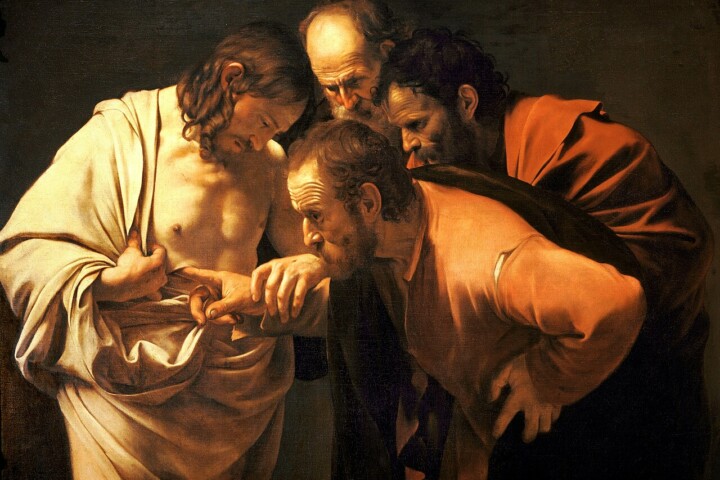
Reach out your hand and put it in my side. Do not doubt but believe’… ‘My Lord and my God!’ (Jn. 20:18)). Today is Divine Mercy Sunday, and as we celebrate the end of the Easter Octave, we contemplate the wounded side of our Saviour, the Church’s source of life. On Good Friday in the[…]Continue reading→

Saint Stanislaus of Szczepanów
We celebrate Saint Stanislaus today (+ April 11, 1079), in light of this Easter Octave, a bishop and martyr who accepted the episcopacy only at the direct order of Pope Alexander II. He proved a wise and courageous leader of his flock, put to death by his own king, Boleslaus, for rebuking the monarch’s ‘immoral[…]Continue reading→
First Holy Communion: Sermon from May 16, 1943
Here is a sermon from the good old days by +Rev. Msgr. Vincent Nicholas Foy (August 14, 1915 – March 13, 2017), from 1943. Readers may recall that Pope Saint Pius X, by the decree Quam Singulari in 1910, lowered the customary age of reception of Holy Communion – after the rigours of the plague[…]Continue reading→
In the Glorious Light of Easter, Alleluia!
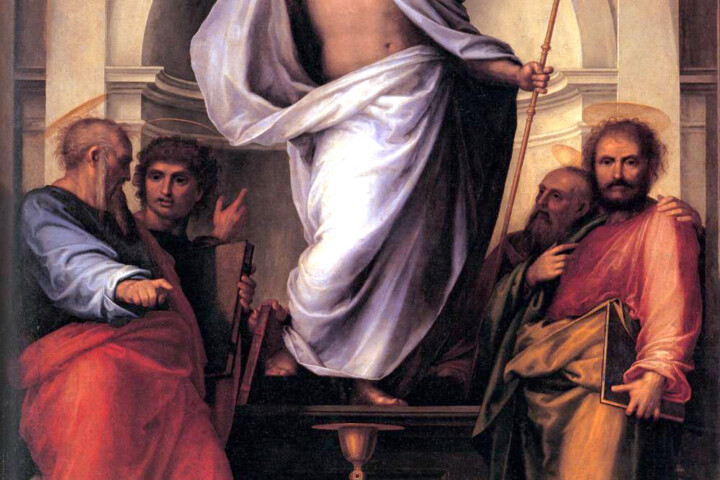
Set your minds on things that are above, not on things that are on earth, for you have died, and your life is hidden with Christ in God. When Christ who is your life is revealed, then you also will be revealed with him in glory (Col. 3:3-4). The Resurrection of Our Lord and Saviour[…]Continue reading→
An Ancient Homily for Holy Saturday
The time between Good Friday and Easter Sunday is one of waiting, in silence, as the world wonders – anticipates – what will happen, after the death of Christ. We re-live this time each year in the anamnesis of our liturgy, and in turn look forward to the glorious re-creation of all things at the[…]Continue reading→
Europe’s Long Descent
(As we meditate on this day on Christ’s burial, and His descent into hell, it is fitting to ponder here with contributor Peter Marcus how the world seems to be heading there as well. The difference is that, although God cannot ‘redeem’ hell, nor those therein, He can and did redeem the world. There is[…]Continue reading→
Pope Saint John Paul II’s First Good Friday Homily
ADDRESS OF HIS HOLINESS JOHN PAUL II AT THE CONCLUSION OF THE STATIONS OF THE CROSS AT THE COLOSSEUM Good Friday, 13 April 1979 When we make the Way of the Cross from one station to the next, in spirit we are always at the spot wherethis journey had its “historical” place: where it[…]Continue reading→
A Meditation for Good Friday: How To Undo the Effects of Sin?
Cardinal Newman, now Saint John Henry Newman, was a towering figure of nineteenth-century Catholicism who is almost universally admired. I say “almost” because not everyone likes him. I knew a priest once, Arthur Caulkins, who has become disenchanted with Newman. As an undergraduate Arthur had been enamoured of Newman, and this interest continued when he[…]Continue reading→
Pope Benedict’s Last Holy Thursday Homily
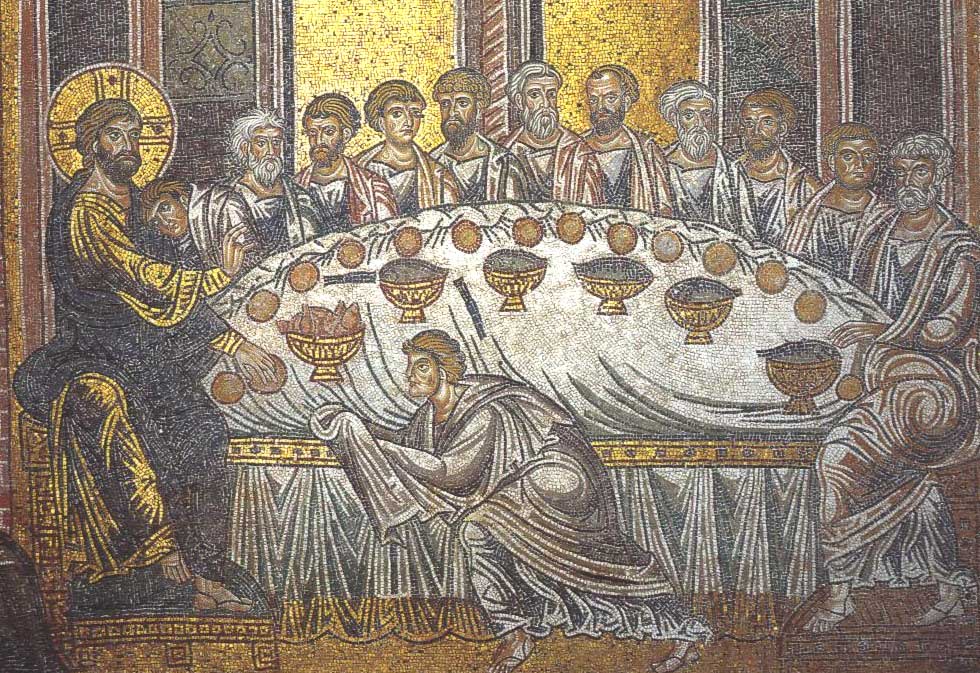
MASS OF THE LORD’S SUPPER HOMILY OF HIS HOLINESS BENEDICT XVI Basilica of St John Lateran Holy Thursday, 5 April 2012 Photo Gallery (Video) Dear Brothers and Sisters! Holy Thursday is not only the day of the institution of the Most Holy Eucharist, whose splendour bathes all else and in some ways draws it to[…]Continue reading→