
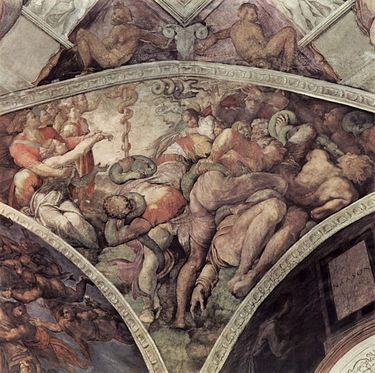
The King and Serpent in the Desert: The Fourth Sunday of Lent
Just as Moses lifted up the serpent in the wilderness, so must the Son of Man be lifted up, so that whoever believes in him may have eternal life (Jn. 3:14). ⧾
All the scripture lessons of the Mass today direct our gaze upwards, beyond the here and now to what can only perceived by faith. Our first reading records that after seventy long years of exile in Babylon God’s people were exhorted by Cyrus, King of Persia to go up and return to Jerusalem. In the Gospel Our Lord speaks of His crucifixion and also directs our gaze upwards: Just as Moses lifted up the serpent in the wilderness, so must the Son of Man be lifted up, so that whoever believes in him may have eternal life (Jn. 3:14). We do believe in Him and for this reason has God made us alive together with Christ (Eph. 2:4); and He has also raised us up with Christ and seated us with him in the heavenly places (Eph. 2:5).
Our sacramental union with Christ Our Lord and our devout discipleship enable each one of us to make our own the words of the Apostle: I have been crucified with Christ; it is no longer I who live, but Christ who lives in me; and the life I now live in the flesh I live by faith in the Son of God, who loved me and gave himself for me (Gal. 2:20). When we receive the gift of salvation, we become one with Our Lord in His saving work. Our efforts at Christian discipleship and our devout, active participation in the celebration of the Holy Sacrifice of the Mass enable us in mystery to be at the foot of the Cross and to be present at the lifting up of the Son of Man. With Him we are lifted up in the mystery of the crucifixion and so we participate in this mystery of a love that suffers for the good and benefit of others.
It is of the greatest significance that Our Lord chose to die in the worst manner possible. Crucifixion has been described as the most painful method of execution ever devised. Our Lord chose to experience the most intense form of darkness sinful man could ever conceive so that He might shed the light of His love even in the darkest regions of human degradation. St. Thomas Aquinas teaches us that the Passion of Our Lord completely suffices to fashion our lives. He asks: Why did the Son of God have to suffer for us? He explains: There was a great need and it can be considered in a twofold way: in the first place, as a remedy for sin, and secondly, as an example of how to act…for the Cross exemplifies every virtue.
Last Sunday, we heard these words of the Apostle Paul: The message about the Cross is foolishness to those who are perishing, but to us who are being saved it is power of God. (1 Cor. 1:18). We desire that none perish and we pray for the salvation of all; so we must seek all the more to be deeply united with the Sacrifice of the Cross. If the sacrament of the Lord’s Passion is to work its effect is us, we must imitate what we receive and proclaim to mankind what we revere (St. Gregory the Great). We endeavour to respond to Love Crucified with a crucified love. Each one of us unites his own works, her own sacrifices, and our own sufferings and love to the Sacrifice of Our Lord; and in so doing we complete what is lacking in Christ’s afflictions for the sake of his body, that is, the church (Col. 1:24). This is no way means that the saving Sacrifice of Our Lord is in any way insufficient. Rather, we are engaged by God in the work of salvation as active participants in a mystery that unfolds in the world in our time, and in the heart of everyone who believes. This is our work. St. Paul reminds us that we are what he has made us, created in Christ Jesus for good works, which God prepared beforehand to be our way of life (Rom. 2:10).
Here is the answer to the question of life’s meaning and purpose. We are created for good works. God created us to be good and to share this goodness, and in His goodness; and so become godly in our thoughts and in our actions. The Sacraments, especially the Eucharist, enable us to share in this goodness ontologically; that is to say, at the very level of our being. God transforms us from within and as this happens sacramentally, we come to appreciate and understand that our worship is truly the benchmark of life. This is why the latest attacks on our traditional worship must be seen as an attack also on our sacramental understanding of Christian life. Divine intimacy is at the heart of the reception of any sacrament and its desired primary effect is personal holiness; not social commitment nor a communal spirit. God must be known if He is to be loved as it befits His majesty.
As we worship, so we become. Reverence for the things of God, all of them individually and together produces in us a respect and reverence for ourselves and others and for the precious gift of life. Everything in the celebration of the liturgy is done in the beauty of holiness and the holiness of beauty in the hope that as we are led into the depth of this Mystery, the Sacrament of Our Lord’s Passion will orient us, heal us and lift us up. Sacramentally, at the Elevation of the Mass, the Son of Man is lifted up and we look on him whom they have pierced (Jn. 19:37).
What we participate in and gaze upon are eternal realities that are signs of authentic meaning. What is set before us, what we gaze upon manifests what it is to be authentically human. The celebration of the Sunday Mass as well as the important liturgies that mark our Christian life remind us of our part in the salvation that is unfolding inside us and around us, and we come to understand even if only slightly more where we fit in the great drama of salvation as adorers who worship God in spirit and in truth (Jn. 4:22-23). God has a plan for each one of us and though at times we may think that at best that we are only stumbling along, we who have been raised up with Christ and seated with him in the heavenly places (Cf. Eph. 2:5) have a part to play in the work of salvation. Blessed John Henry Newman exhorts us: Realize it, my brethren; –everyone who breathes, high and low, educated and ignorant, young and old, man and woman, has a mission, has a work. We are not sent into this world for nothing; we are not born at random…God sees every one of us; He creates every soul, He lodges it in the body, one by one, for a purpose. He needs, He deigns to need, every one of us. He has an end for each of us; we are all equal in His sight, and we are placed in our different ranks and stations not to get what we can out of them for ourselves, but to labor in them for Him. As Christ has His work we too have ours; as He rejoiced to do His work, we must rejoice in ours also.
What is set here before us and what we gaze upon is the path for the rest of our lives. Our love and devotion to the God who created and saved us is the only path to true human happiness and fulfillment; and so we endeavour to respond to Love Crucified with a crucified love. Our fasting, sacrifices, prayer, self-denial and works of charity are means to one single end – our life in Christ, a life of devout humility. As we hasten toward the solemn celebrations to come, we do so with prompt devotion and eager faith; and no less with great joy at the gift of salvation that is ours in Christ Jesus Our Lord. ⧾

Remembering Father Alphonse de Valk
(Today marks the sixth anniversary of the death of Father Alphonse de Valk, C.S.B., a faithful, courageous and indefatigable Basilian priest, pro-life-and-family apostle, and the founder of Catholic Insight magazine. Here is what we wrote those on his entering into eternity five years ago, as we continue to remember him in our prayers and thoughts)[…]Continue reading→

Divine Mercy Sunday – An Echo of Every Mass
Reach out your hand and put it in my side. Do not doubt but believe’… ‘My Lord and my God!’ (Jn. 20:18)). Today is Divine Mercy Sunday, and as we celebrate the end of the Easter Octave, we contemplate the wounded side of our Saviour, the Church’s source of life. On Good Friday in the[…]Continue reading→

Saint Stanislaus of Szczepanów
We celebrate Saint Stanislaus today (+ April 11, 1079), in light of this Easter Octave, a bishop and martyr who accepted the episcopacy only at the direct order of Pope Alexander II. He proved a wise and courageous leader of his flock, put to death by his own king, Boleslaus, for rebuking the monarch’s ‘immoral[…]Continue reading→

First Holy Communion: Sermon from May 16, 1943
Here is a sermon from the good old days by +Rev. Msgr. Vincent Nicholas Foy (August 14, 1915 – March 13, 2017), from 1943. Readers may recall that Pope Saint Pius X, by the decree Quam Singulari in 1910, lowered the customary age of reception of Holy Communion – after the rigours of the plague[…]Continue reading→

In the Glorious Light of Easter, Alleluia!
Set your minds on things that are above, not on things that are on earth, for you have died, and your life is hidden with Christ in God. When Christ who is your life is revealed, then you also will be revealed with him in glory (Col. 3:3-4). The Resurrection of Our Lord and Saviour[…]Continue reading→

An Ancient Homily for Holy Saturday
The time between Good Friday and Easter Sunday is one of waiting, in silence, as the world wonders – anticipates – what will happen, after the death of Christ. We re-live this time each year in the anamnesis of our liturgy, and in turn look forward to the glorious re-creation of all things at the[…]Continue reading→

Europe’s Long Descent
(As we meditate on this day on Christ’s burial, and His descent into hell, it is fitting to ponder here with contributor Peter Marcus how the world seems to be heading there as well. The difference is that, although God cannot ‘redeem’ hell, nor those therein, He can and did redeem the world. There is[…]Continue reading→
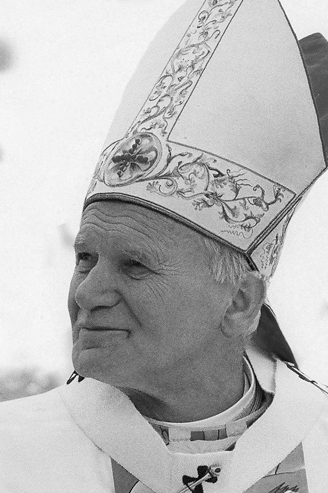
Pope Saint John Paul II’s First Good Friday Homily
ADDRESS OF HIS HOLINESS JOHN PAUL II AT THE CONCLUSION OF THE STATIONS OF THE CROSS AT THE COLOSSEUM Good Friday, 13 April 1979 When we make the Way of the Cross from one station to the next, in spirit we are always at the spot wherethis journey had its “historical” place: where it[…]Continue reading→
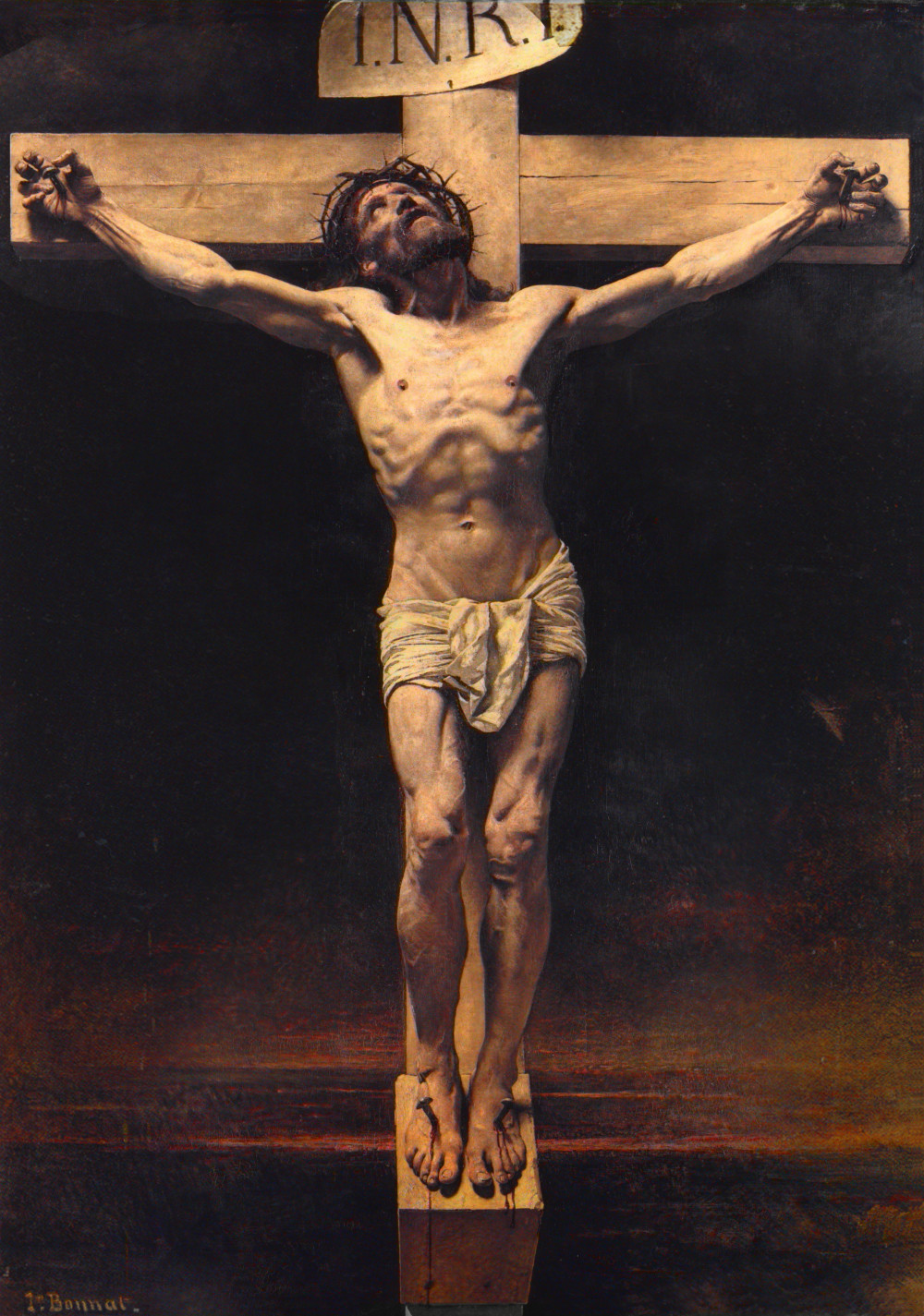
A Meditation for Good Friday: How To Undo the Effects of Sin?
Cardinal Newman, now Saint John Henry Newman, was a towering figure of nineteenth-century Catholicism who is almost universally admired. I say “almost” because not everyone likes him. I knew a priest once, Arthur Caulkins, who has become disenchanted with Newman. As an undergraduate Arthur had been enamoured of Newman, and this interest continued when he[…]Continue reading→
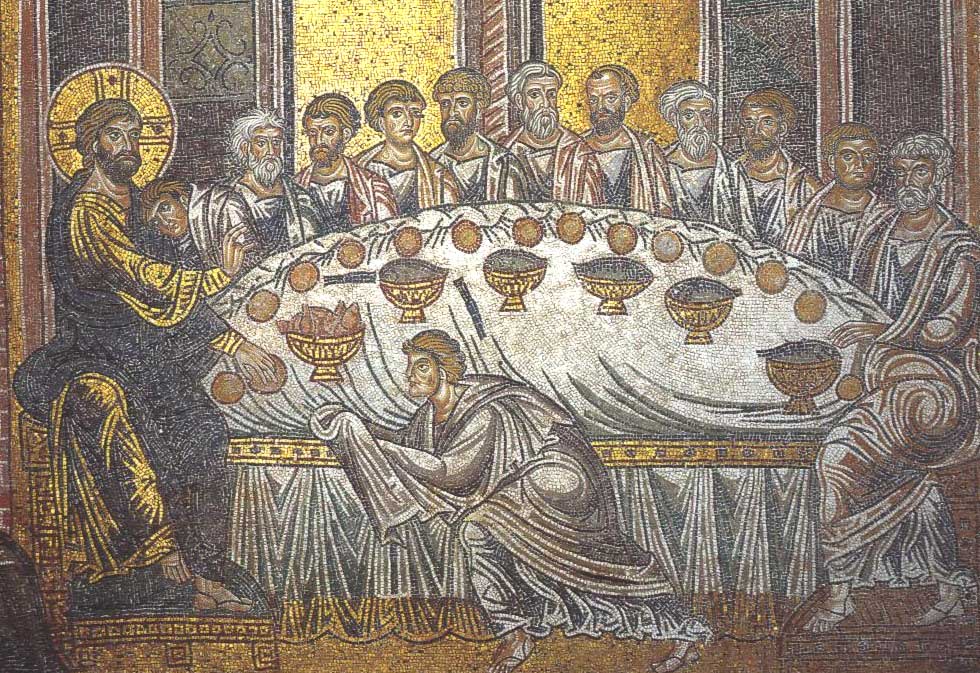
Pope Benedict’s Last Holy Thursday Homily
MASS OF THE LORD’S SUPPER HOMILY OF HIS HOLINESS BENEDICT XVI Basilica of St John Lateran Holy Thursday, 5 April 2012 Photo Gallery (Video) Dear Brothers and Sisters! Holy Thursday is not only the day of the institution of the Most Holy Eucharist, whose splendour bathes all else and in some ways draws it to[…]Continue reading→