
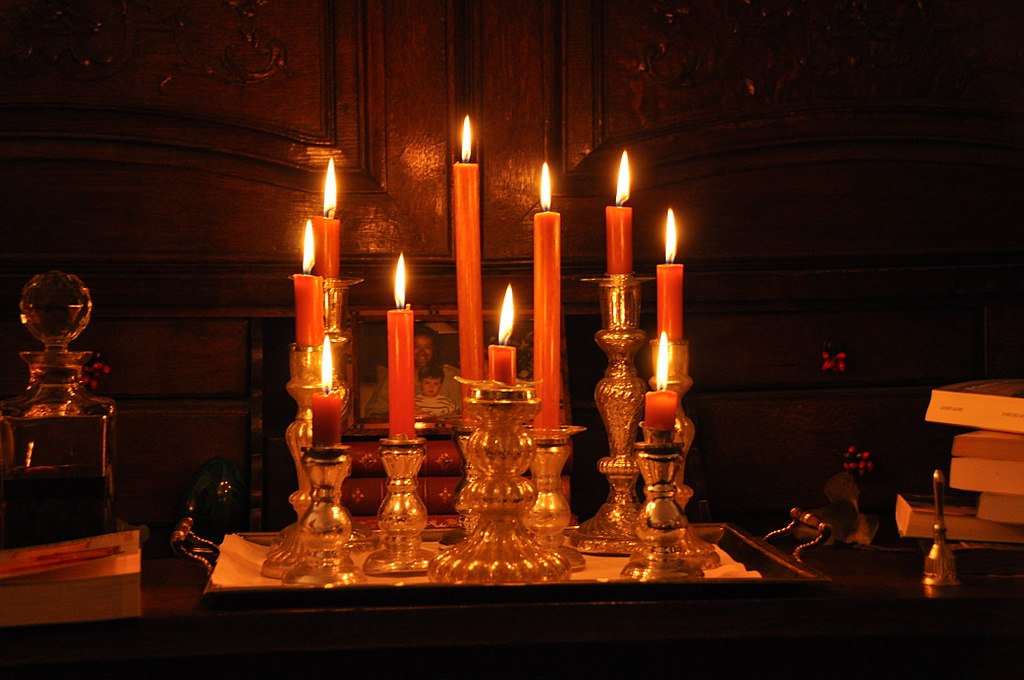
Lent’s Little Lights
One of the most beautiful uplifting things that helps me stay focused on Lent is the theme of light. In his Angelus address of Sunday 28 February 2021, Pope Francis invited us to ignite the light of the transfigured Christ everywhere we go. He told us: We are called to experience the encounter with Christ so that, enlightened by his light, we might take it and make it shine everywhere. Igniting little lights in people’s hearts; being little lamps of the Gospel that bear a bit of love and hope: this is the mission of a Christian.”
During this Lenten journey there are some lights which greatly encourage us to keep going in the ongoing pilgrimage of conversion, irrespective of our different callings both in the Church as well as in the world. Thus, as the Lenten season is progressing we start being conscious of the fact that having patience with ourselves is undoubtedly crucial. St Francis de Sales says: Have patience with all things, but first of all with yourself. But what is this patience telling us personally and collectively? First of all, it is telling us that we need to do great things with great love! It is certainly this what counts before God! In this St John of the Cross really gives us a helping hand: The Lord measures out perfection neither by the multitude nor the magnitude of our deeds, but by the manner in which we perform them.
Naturally, this manner of performing them does not fall from the sky. Its genesis is to be found in prayer. That is why it is of the utmost importance that we purposely set a time to pray. But how do I pray? St Josemarià Escrivà’s advice really motivates us: You don’t know how to pray? Put yourself in the presence of God, and as soon as you have said, ‘Lord, I don’t know how to pray!’ you can be sure you’ve already begun. This making time for the Lord has many benefits, principally for ourselves. Catherine Doherty says: Lent is a time of going very deeply into ourselves… What is it that stands between us and God? Between us and our brothers and sisters? Between us and life, the life of the Spirit? Whatever it is, let us relentlessly tear it out, without a moment’s hesitation.
In other words, the period of Lent is a golden opportunity wherein we let God interrupt our way of seeing things and performing them. In his book Life Together: The Classic Exploration of Christian Community, the German Lutheran theologian, Dietrich Bonhoeffer, puts it this way: We must be ready to allow ourselves to be interrupted by God. God will be constantly crossing our paths and canceling our plans by sending us people with claims and petitions. Pope Francis would comment on Bonhoeffer’s understanding by adding an essential quality in our following of the Lord when confronted with these heavenly interruptions: the attitude of humble listening. Thus, in his Angelus address of Sunday 8 July 2020, the Holy Father said: But, today, the Lord asks us to adopt an attitude of humble listening and docile expectation because God’s grace often manifests itself in surprising ways that do not match our expectations.
Already these reflections are gently yet adamantly showing that the Lenten pilgrimage can be uncomfortable. The Venerable Fulton Sheen notes: Unless there is a Good Friday in your life, there can be no Easter Sunday. This point is furthered by Saint Catherine of Siena when she says: Nothing great is ever achieved without much enduring. However, St Thomas Aquinas points out to us the beneficial effects of fasting when he states: Fasting cleanses the soul, raises the mind, subjects one’s flesh to the spirit, renders the heart contrite and humble, scatters the clouds of concupiscence, quenches the fire of lust, kindles the true light of chastity.
Nevertheless, the idea that suffering is part and parcel with one’s spiritual progress in Lent is never neglected or somehow obscured. In fact, Pope Francis brought forward this uncomfortableness which the Lenten journey presents to us and called it by its actual evangelical name: self-denial. He said: Lent is a fitting time for self-denial; we would do well to ask ourselves what we can give up in order to help and enrich others by our own poverty. Let us not forget that real poverty hurts: no self-denial is real without this dimension of penance. I distrust a charity that costs nothing and does not hurt. Let us not forget Christ’s undying words to each and every one of us: And he said to all, “If any man would come after me, let him deny himself and take up his cross daily and follow me” (Luke 9:23).
The Lenten journey keeps challenging us to go the extra mile. Catherine Doherty makes us think about this when she wrote: There are ways of being crucified that do not involve rough wood or heavy nails, but a love beyond our capacity to love, which means a love that has been given to us by God… Another woman of God, this time Saint Rose of Lima, had the same conviction as Doherty when she affirmed: Apart from the cross, there is no other ladder by which we may get to heaven.
In the suffering of our brothers and sisters, Jesus is calling you and me throughout this Lent to love Him in them in order that He may love us through them in return. Saint Teresa of Calcutta says: As Lent is the time for greater love, listen to Jesus’ thirst…He knows your weakness. He wants only your love, wants only the chance to love you. In an interesting and challenging reflection Venerable Fulton Sheen highlights the costly price of selfless love and openly says that the scars it leaves behind are, in effect, the fruits of its authenticity. Show me your hands. Do they have scars from giving? Show me your feet. Are they wounded in service? Show me your heart. Have you left a place for divine love?
The encouraging advice of St Gregory Nazianzen fills us with the joyful hope that in our Lenten journey what we precisely should aim for is to always start afresh. Give something, however small, to the one in need. For it is not small to one who has nothing. Neither is it small to God, if we have given what we could. Furthermore, Thomas a Kempis in his classic book The Imitation of Christ, says: Nothing, how little so ever it be, if it is suffered for God’s sake, can pass without merit in the sight of God. Loving in this way is what we mean by fasting. In his erudite style, Pope Emeritus Benedict XVI helps us to go back to basics, particularly to retrieve the powerful spiritual weapon of fasting. In a splendid way he explains: The ultimate goal of fasting is to help each one of us to make a complete gift of self to God.
In fasting this way we make the devil fearful of us. St Francis de Sales states: Although we may be able to do but little, the enemy nevertheless stands more in awe of those whom he knows can fast. The book of Lamentations lovingly brings to our mind and heart that God’s mercy is always available to us. The steadfast love of the Lord never ceases, his mercies never come to an end; they are new every morning; great is thy faithfulness (Lam 3:22-23). Having said that we need to keep clear before our eyes the scope of Lent, as Pope Emeritus Benedict XVI rightly helps us to do. (Lent) is a period of spiritual ‘combat’ which we must experience alongside Jesus, not with pride and presumption, but using the arms of faith: prayer, listening to the word of God and penance. In this way we will be able to celebrate Easter in truth, ready to renew the promises of our Baptism.
All in all it boils down to the imagery of the soldier who is marching determinedly into battle with prayer as well as with his total openness and self-responsibility to grace, as shown in the following famous quote attributed to Saint Ignatius of Loyola and Saint Augustine too: Pray as though everything depended on God; act as though everything depended on you. Thus, Pope Francis encourages us by telling us: God never tires of forgiving us; we are the ones who tire of seeking his mercy. Whereas St Francis de Sales whispers resolutely to us: You learn to speak by speaking, to study by studying, to run by running, to work by working, and just so, you learn to love by loving. All those who think to learn in any other way deceive themselves.
May these simple but profound reflections of these men and women of God be for us our Lent’s little lights that are continually showing us the way for our salvation and transformation in, with and through Jesus Christ!

Remembering Father Alphonse de Valk
(Today marks the sixth anniversary of the death of Father Alphonse de Valk, C.S.B., a faithful, courageous and indefatigable Basilian priest, pro-life-and-family apostle, and the founder of Catholic Insight magazine. Here is what we wrote those on his entering into eternity five years ago, as we continue to remember him in our prayers and thoughts)[…]Continue reading→

Divine Mercy Sunday – An Echo of Every Mass
Reach out your hand and put it in my side. Do not doubt but believe’… ‘My Lord and my God!’ (Jn. 20:18)). Today is Divine Mercy Sunday, and as we celebrate the end of the Easter Octave, we contemplate the wounded side of our Saviour, the Church’s source of life. On Good Friday in the[…]Continue reading→

Saint Stanislaus of Szczepanów
We celebrate Saint Stanislaus today (+ April 11, 1079), in light of this Easter Octave, a bishop and martyr who accepted the episcopacy only at the direct order of Pope Alexander II. He proved a wise and courageous leader of his flock, put to death by his own king, Boleslaus, for rebuking the monarch’s ‘immoral[…]Continue reading→
First Holy Communion: Sermon from May 16, 1943
Here is a sermon from the good old days by +Rev. Msgr. Vincent Nicholas Foy (August 14, 1915 – March 13, 2017), from 1943. Readers may recall that Pope Saint Pius X, by the decree Quam Singulari in 1910, lowered the customary age of reception of Holy Communion – after the rigours of the plague[…]Continue reading→
In the Glorious Light of Easter, Alleluia!
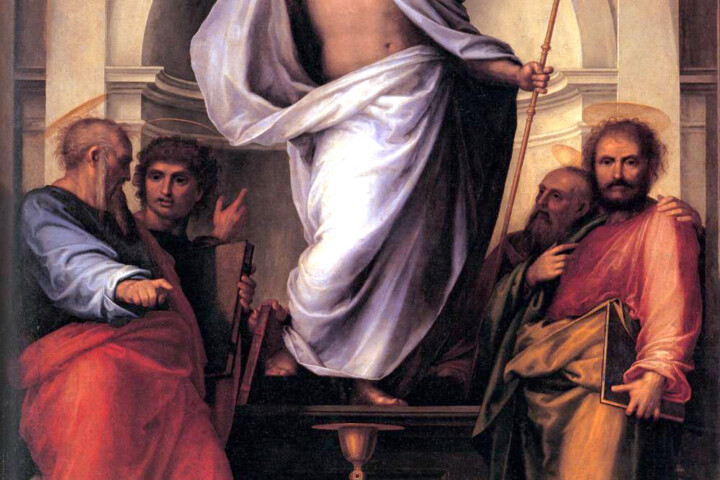
Set your minds on things that are above, not on things that are on earth, for you have died, and your life is hidden with Christ in God. When Christ who is your life is revealed, then you also will be revealed with him in glory (Col. 3:3-4). The Resurrection of Our Lord and Saviour[…]Continue reading→
An Ancient Homily for Holy Saturday
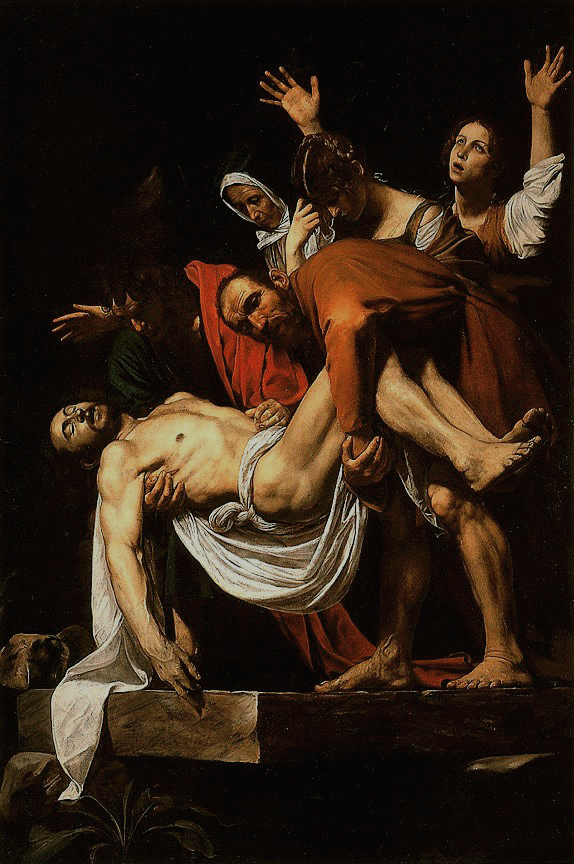
The time between Good Friday and Easter Sunday is one of waiting, in silence, as the world wonders – anticipates – what will happen, after the death of Christ. We re-live this time each year in the anamnesis of our liturgy, and in turn look forward to the glorious re-creation of all things at the[…]Continue reading→
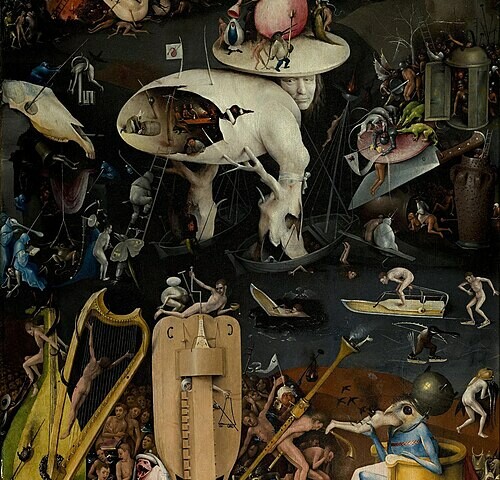
Europe’s Long Descent
(As we meditate on this day on Christ’s burial, and His descent into hell, it is fitting to ponder here with contributor Peter Marcus how the world seems to be heading there as well. The difference is that, although God cannot ‘redeem’ hell, nor those therein, He can and did redeem the world. There is[…]Continue reading→
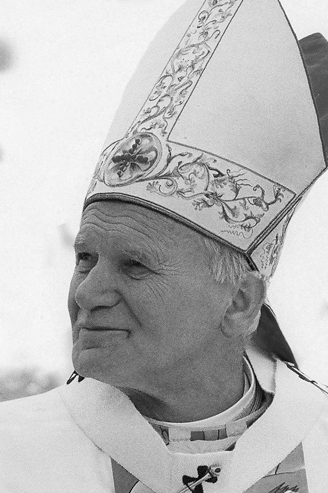
Pope Saint John Paul II’s First Good Friday Homily
ADDRESS OF HIS HOLINESS JOHN PAUL II AT THE CONCLUSION OF THE STATIONS OF THE CROSS AT THE COLOSSEUM Good Friday, 13 April 1979 When we make the Way of the Cross from one station to the next, in spirit we are always at the spot wherethis journey had its “historical” place: where it[…]Continue reading→
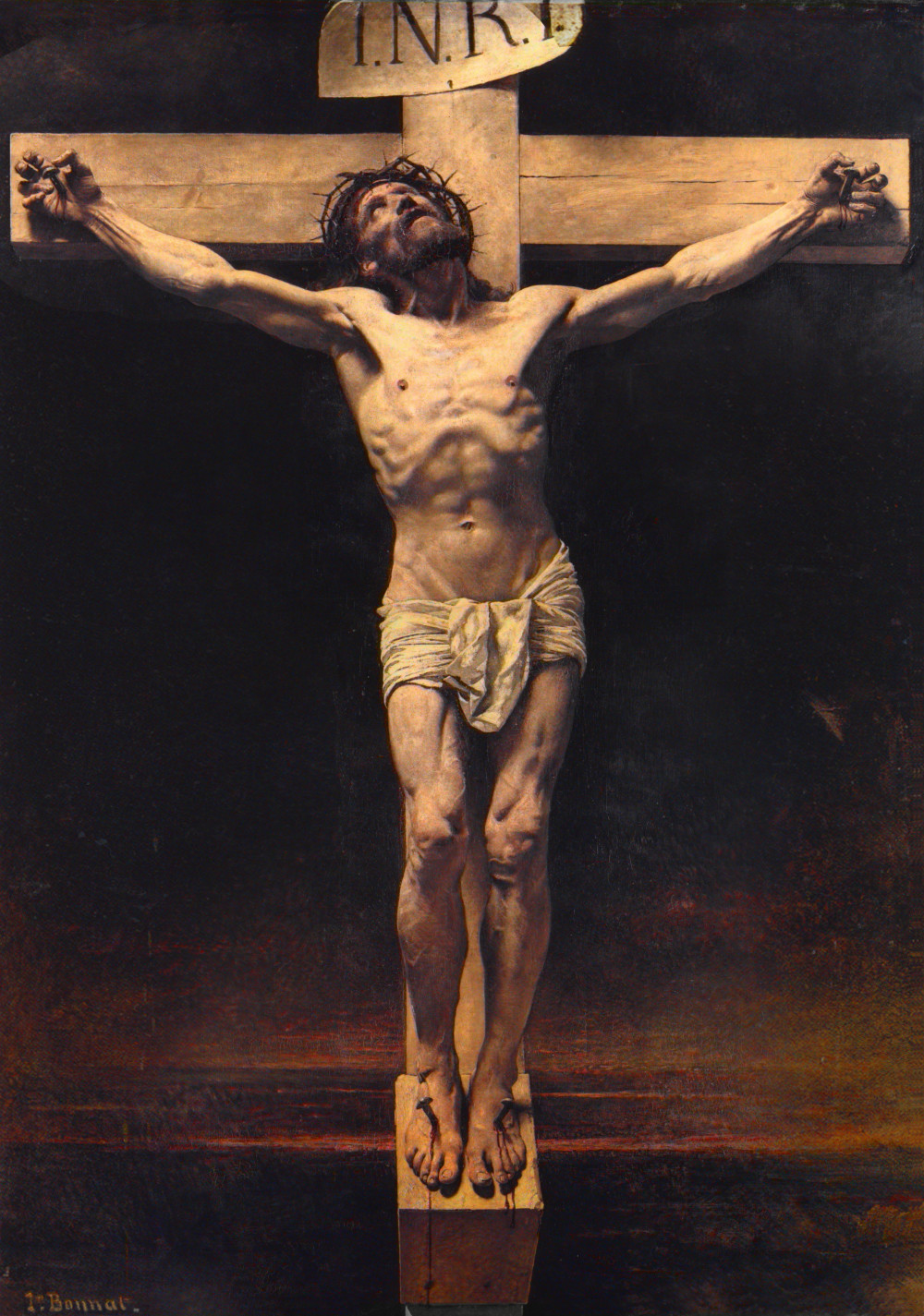
A Meditation for Good Friday: How To Undo the Effects of Sin?
Cardinal Newman, now Saint John Henry Newman, was a towering figure of nineteenth-century Catholicism who is almost universally admired. I say “almost” because not everyone likes him. I knew a priest once, Arthur Caulkins, who has become disenchanted with Newman. As an undergraduate Arthur had been enamoured of Newman, and this interest continued when he[…]Continue reading→
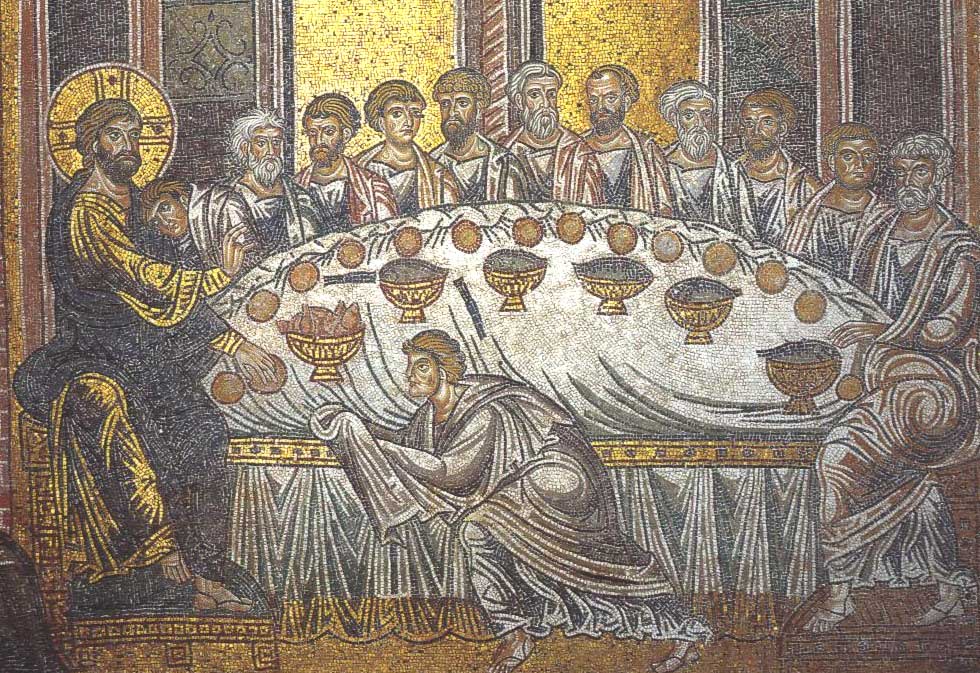
Pope Benedict’s Last Holy Thursday Homily
MASS OF THE LORD’S SUPPER HOMILY OF HIS HOLINESS BENEDICT XVI Basilica of St John Lateran Holy Thursday, 5 April 2012 Photo Gallery (Video) Dear Brothers and Sisters! Holy Thursday is not only the day of the institution of the Most Holy Eucharist, whose splendour bathes all else and in some ways draws it to[…]Continue reading→