
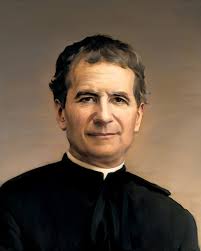
St John Bosco: Our True Spiritual Companion
On January 31 the Church celebrates the feast of Saint John Bosco, the founder of the worldwide huge Salesian family.
Don Bosco (1815-1888), as a spiritual father and a splendid teacher as he was, managed, by God’s grace, to be an excellent mix between nature and grace. He was profoundly human, rich in the qualities of his people who were open to the earthly realities; but at the same time he was also intensely a Godly man, imbued with the Holy Spirit’s gifts. Don Bosco lived his life “seeing him who is invisible”. These two converging aspects, overshadowed by the Spirit’s sanctifying action, helped him be at the service of the young. Don Bosco fulfilled his important yet delicate mission with a firm constancy tapered with an impressive sensitivity of a generous heart, even if difficulties and fatigue assailed him. In the words of his first successor of the Salesian family, Don Michael Rua, “he took no step, he said no word, he took up no task that was not directed to the saving of the young…Truly the only concern of his heart was for souls.”
In the preface to the book Evangelii gaudium con don Bosco, (Evangelii Guadium with St John Bosco) Pope Francis says that this great saint was a “healthy bearer” of the Gospel. The Argentinian Pope also took the opportunity to remind the Salesians that they are really blessed to have a founder who projected that majestic joy of Easter Sunday rather than the sorrow of Good Friday. The Holy Father said that St John Bosco “was always joyful, welcoming, despite the thousand of labours and difficulties that besieged him every day”. In his preface to the book Pope Francis depicted Don Bosco’s message as truly “revolutionary” within a historical context where many priests were living their lives “detached” from the people they were supposed to accompany. Don Bosco was capable of shining “the joy and care of the true educator” to all boys he saved from the streets of 19th century Turin. Recalling his early experience at the Salesian school Pope Francis said that he encountered the same “climate of joy and family” which Don Bosco laboured for. Moreover, he said that the Salesians helped him appreciate beauty, work and cheerfulness. It is this, in a nutshell, the vocation of every Salesian.
To the Salesians Pope Francis advised them to adopt what he called the three “white loves” which made up Don Bosco’s affectionate life, namely the love of Mary, the love of the Eucharist as well as the love of the Pope. The Holy Father exhorted them to be “concrete”, as their founder was. On the footsteps of Don Bosco every genuine Salesian “knows how to look around, sees critical situations and problems, faces them, analyses them, and makes courageous decisions”.
He demonstrated that young people must be “brought to this good news,” namely that Christ is truly risen. When this is done, the Pope said, a Salesian becomes “a witness to the Gospel, the Good News, which in its simplicity must confront the complex culture of each country.” In concluding his preface to the book, Pope Francis admitted that he is convinced “that reading these pages will do good to all the sons and daughters of Don Bosco spread throughout the world, and to all those who share the Salesian educational charism.”
St John Bosco is surely a great Master of Youth and a true spiritual companion for all those who want to follow Christ more closely. He also taught that confidence and love are the real backbone of authentic education. He said: Without confidence and love, there can be no true education. If you want to be loved…you must love yourselves, and make your children feel that you love them. For Don Bosco the school was an excellent platform for one’s betterment in life. He observed: The school was not the end; it was rather the instrumental means for improving the way of life. Doing something good is heroic. Therefore no good action can be fulfilled if it lacks its necessary ingredients. And here they are: If one is to do good, he must have a little courage, be ready for sacrifice, deal affably with all and never slight anybody. By following this method I have always had significant success, in fact, marvelous success.
The following are all advices that he gave to the youth. However, when you come to think of it, this advice is really sound and reliable for adults too. For instance, before acting one should think about the consequences of the course of action he and she is inclined to undertake. He used to say: Act today in such a way that you need not blush tomorrow. Time is really precious. It passes quickly and never returns. So, any good action that needs to be carried out let it be carried now before it will be too late! Thus, there is no point in wasting time whatsoever. Don Bosco tells us: Do not put off till tomorrow the good you can do today. You may not have a tomorrow.
Since we have only one life to live it is so wise to make the best out of it. Hence, Don Bosco’s advice: Let us strive to fare well in this life and in the next. At the end only God can pass judgement. With this in mind St John Bosco taught his youths and us: Be slow to pass judgment. Having the loving respect of others is so rewarding. Nonetheless one earns this loving respect by the way one behaves with others. Consequently, St John Bosco used to say: Do you want your companions to respect you? Always think well of everyone, and be ready to help others. Do this and you will be happy. Life is truly precious. Thus, it is important that one lives it with a spirit of joy whilst avoiding sin at all cost. In this respect, he liked to repeat a saying from St Philip Neri: Run, jump, have all the fun you want at the right time, but, for heaven’s sake, do not commit sin! For St John Bosco an integrated life is one which proclaims from its rooftops: Servite Domino in laetitia! (Serve the Lord joyfully!)
The logical consequence St John Bosco leads me to, thanks to the wisdom the Holy Spirit endowed him with, is the following: Do your very best so that you won’t have regrets!

Saint Kateri , Canada’s Protectress
This was the title given to Saint Kateri Tekakwitha, by Pope Benedict XVI, when he canonized her on October 28th, 2012, along with six others, in Saint Peter’ Square (she had been beatified by Pope John Paul II back in 1980). With Saint Joseph as our protector, along with the Canadian martyrs, we seem to[…]Continue reading→

Remembering Father Alphonse de Valk
(Today marks the sixth anniversary of the death of Father Alphonse de Valk, C.S.B., a faithful, courageous and indefatigable Basilian priest, pro-life-and-family apostle, and the founder of Catholic Insight magazine. Here is what we wrote those on his entering into eternity five years ago, as we continue to remember him in our prayers and thoughts)[…]Continue reading→

My Name is Bernadette
April 16th is a propitious day, for besides the anniversary of Father de Valk’s death, who founded Catholic Insight in its print form decades ago, and the commemoration of the ‘two Benedicts’, mentioned in accompanying posts, today we also recall Saint Bernadette Soubirous, the young visionary to whom the Virgin Mary appeared numerous times at[…]Continue reading→
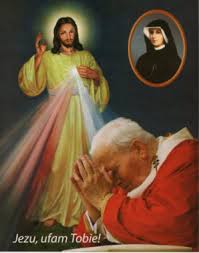
Canonizing Sister Faustina and Divine Mercy
HOMILY OF THE HOLY FATHER MASS IN ST PETER’S SQUARE FOR THE CANONIZATION OF SR MARY FAUSTINA KOWALSKA Sunday, 30 April 2000 1. “Confitemini Domino quoniam bonus, quoniam in saeculum misericordia eius”; “Give thanks to the Lord for he is good; his steadfast love endures for ever” (Ps 118: 1). So the Church sings on the Octave of[…]Continue reading→
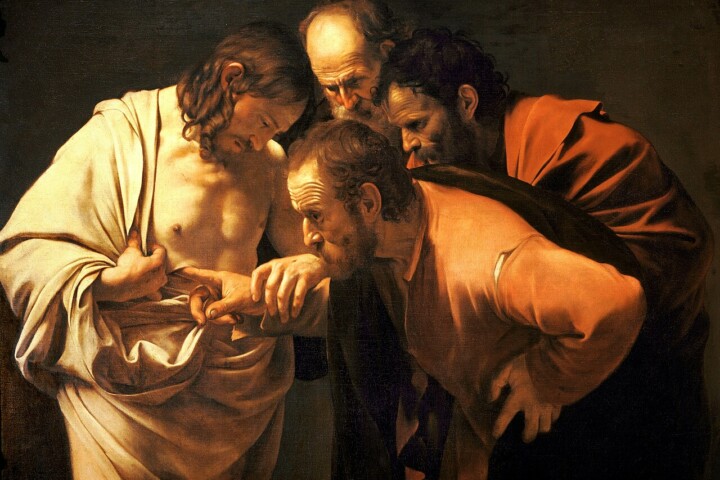
Divine Mercy Sunday – An Echo of Every Mass
Reach out your hand and put it in my side. Do not doubt but believe’… ‘My Lord and my God!’ (Jn. 20:18)). Today is Divine Mercy Sunday, and as we celebrate the end of the Easter Octave, we contemplate the wounded side of our Saviour, the Church’s source of life. On Good Friday in the[…]Continue reading→

Saint Stanislaus of Szczepanów
We celebrate Saint Stanislaus today (+ April 11, 1079), in light of this Easter Octave, a bishop and martyr who accepted the episcopacy only at the direct order of Pope Alexander II. He proved a wise and courageous leader of his flock, put to death by his own king, Boleslaus, for rebuking the monarch’s ‘immoral[…]Continue reading→
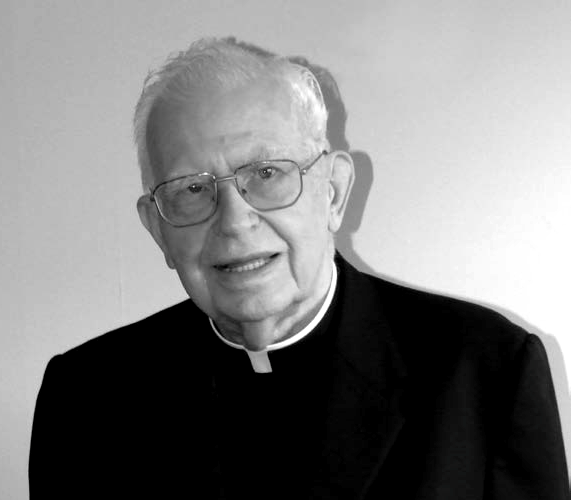
First Holy Communion: Sermon from May 16, 1943
Here is a sermon from the good old days by +Rev. Msgr. Vincent Nicholas Foy (August 14, 1915 – March 13, 2017), from 1943. Readers may recall that Pope Saint Pius X, by the decree Quam Singulari in 1910, lowered the customary age of reception of Holy Communion – after the rigours of the plague[…]Continue reading→
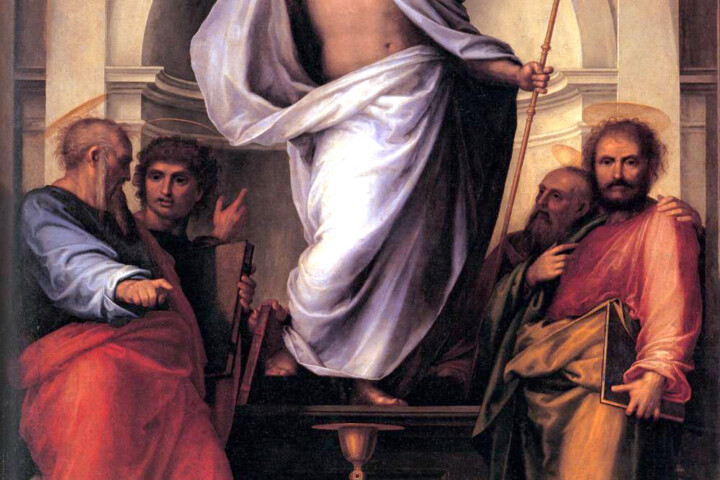
In the Glorious Light of Easter, Alleluia!
Set your minds on things that are above, not on things that are on earth, for you have died, and your life is hidden with Christ in God. When Christ who is your life is revealed, then you also will be revealed with him in glory (Col. 3:3-4). The Resurrection of Our Lord and Saviour[…]Continue reading→
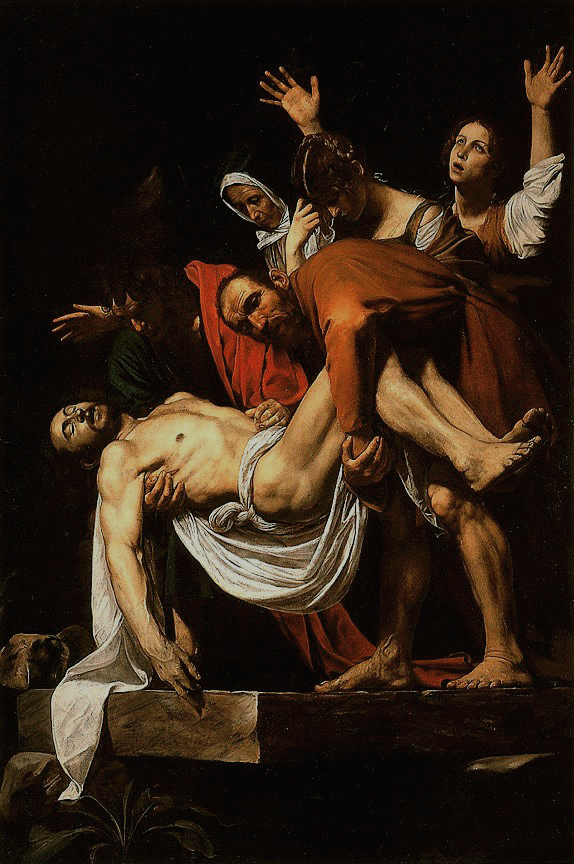
An Ancient Homily for Holy Saturday
The time between Good Friday and Easter Sunday is one of waiting, in silence, as the world wonders – anticipates – what will happen, after the death of Christ. We re-live this time each year in the anamnesis of our liturgy, and in turn look forward to the glorious re-creation of all things at the[…]Continue reading→
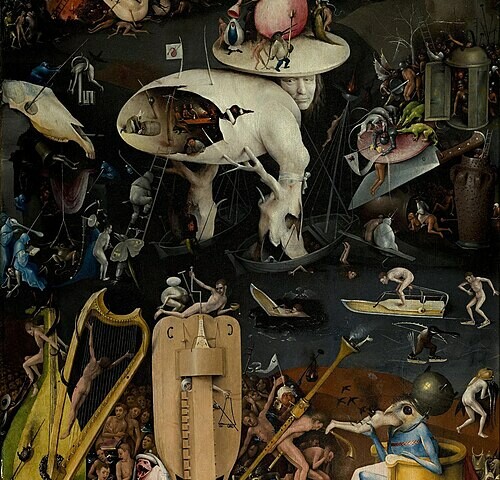
Europe’s Long Descent
(As we meditate on this day on Christ’s burial, and His descent into hell, it is fitting to ponder here with contributor Peter Marcus how the world seems to be heading there as well. The difference is that, although God cannot ‘redeem’ hell, nor those therein, He can and did redeem the world. There is[…]Continue reading→