
Facing Death with Peace and Joy
“Praised may You be, my Lord, through our Sister, Bodily Death, from whom no living man can escape.” (Canticle of the Sun composed by St. Francis of Assisi,+1226).
Those who have lived or stayed for a while in Australia must have noticed that generally Australians focus heavily on life, and avoid talking about death. They are deeply concerned about the health and physical well-being of themselves and their children. A vast majority of them try not to broach the subject of death with close family members, finding it terribly uncomfortable or not wanting to upset their loved ones. Ironically, the recent COVID-19 pandemic has triggered a surge of death anxiety across the Land Down Under, making it even more difficult to keep wandering away from this issue.
Holy persons who embrace death with confidence, even joy, are truly able to stand apart. Hence, the more we know about the experience of the already considerable number of our canonized or beatified brothers and sisters, the greater progress we can make toward transforming the experience of death and grief from a horrifying event into a good or paradoxically happy one. Thus argues Fr. Michael Witczak, an associate professor of liturgical studies at the Catholic University of America.
Saint Thomas More (+1535), Chancellor of England, declined to attend the coronation of Anne Boleyn. King Henry VIII viewed this as an insult and a sign that Thomas questioned his authority as Head of the Church and State. Despite a brilliant defense, he was convicted in fifteen minutes. Thomas was accused of high treason and sentenced to be hanged, drawn and quartered. He was reportedly “merry” when he mounted the scaffold to face the executioner and uttered the immortal words: “I am the King’s good servant, but God’s first.” I think all politicians should follow his example.
Saint Therese of Lisieux (+1897), the Little Flower, uttered these relevant thoughts: “It is not Death that will come to fetch me, it is the good God. Death is not the phantom or horrible specter that is presented in pictures. The catechism states that death is the separation of soul and body. That is all! Well, I am not afraid of a separation which will unite me to the good God forever.”
Saint Jose Luis Sanchez del Rio (+1928) is the newest Mexican saint who died as a martyr at age 14. While the godless socialist soldiers brutally tortured him with sharp metal blows, trying to make him shout “Death to Christ the King,” the boy remained calm and firmly replied “Long live Christ the King! Long live Our Lady of Guadalupe!” With every stab of their bayonets he cried out louder and louder “Viva Christo Rey!”
Saint Maximilian Kolbe (+1941) volunteered to die in place of a stranger in the German death camp of Auschwitz. Father Kolbe entered the starvation bunker with nine other men, where he spent a fortnight encouraging his fellow sufferers by praying and singing hymns. They went through dreadful days. Some drank their own urine, others licked the moisture off dank walls. At every inspection, when almost all the others were lying on the floor, Father Kolbe was either kneeling or standing in the center looking cheerfully in the face of the SS men. One of the guards remarked: “This priest is really a great man. We have never seen anyone like him…” When all of the prisoners had died but Father Kolbe, a German named Bock gave him a lethal injection of carbolic acid. When we remember this dauntless Franciscan priest, Jesus’ words come to mind: “There is no greater love than this: to lay down one’s life for one’s friends.”
Another example of such abiding love and of a different approach to death is found in the story of Sister Stella (+1943) and her ten companions, Sisters of the Holy Family of Nazareth, the martyrs of Nowogrodek. The German terror began in 1942 with the extermination of the town’s Jewish population which was followed by an escalation in Polish arrests and the slaughter of 60 people, including two priests. Several months went by and the life of 120 Poles was in the gravest peril. With one accord the sisters offered their lives to God in exchange for the lives of the imperiled lay people and of a local priest. It is known that Sister Mary Stella, at a meeting with Father Zienkiewicz, said: “My God, if sacrifice of life is needed, let them kill us and not those who have families. We are even praying for that.” It seems that the Lord graciously accepted their sacrifice since the planed execution did not take place. Some of the arrested were deported to forced labor camps in Germany while others were freed, but they all survived the war. Meanwhile, a year afterwards the religious community was summoned by the local Gestapo commander to report to the local police station, where they were held overnight. At dawn in a nearby forest, the eleven women were shot dead and buried in a common grave.
Saint Gianna Beretta Molla (+1962) was an Italian pediatrician and mother to four children. In the second month of her last pregnancy, she was diagnosed with a large fibroid. After examination, the doctor offered her three options: an abortion, which would preserve her life and allow her to continue to have children, but take the life of the child she carried; a complete hysterectomy, which would save her life, but take the unborn child’s life and prevent further pregnancy; or removal of only the fibroma, with the potential of further complications, which could preserve the life of her baby. Gianna chose to have only the fibroma removed, putting the chance to save the baby over the risk to herself. She requested that if there was a problem during the delivery, they should spare the child’s life rather than her own. Eventually, she gave birth to a baby girl but passed away just eight days later due to complications of the delivery. Just before her death she told her sister: “If you only knew how differently things are judged at the hour of death! […] How vain certain things appear, to which we give such importance in the world!” Gianna can be a heroic model of commitment to the life of her own child, defying the scandal of the easy-abort mentality of our day.
Blessed Chiara Luce Badano (+1990) was an Italian teenager who was beatified in 2010 by Pope Benedict XVI. At age seventeen while she was playing tennis all of a sudden she experienced sharp pain. It turned out that Badano had bone cancer. As the disease developed, she faced numerous hospitalizations and intensifying pain. Despite this she often repeated: “For you, Jesus. If you wish it, so do I.” Once she confided in her close friend Chiara Lubich that medicine had laid down its weapons. She went on, saying that “with interrupting the treatments, the pains in her back have increased so I can scarcely move.” She often felt as if the pain were suffocating her. In the end Badano wanted to prepare her funeral: the songs, the flowers, the hairdo, the dress, which would be white, a wedding dress for her “wedding feast.” The last words she spoke to her mother were: “Be happy, I am happy!” Undoubtedly the shining witness of Blessed Chiara Luce Badano serves as a fine example to follow, particularly for young people who seek to avoid suffering at any cost.
In the context of the current pandemic, the testimony of the saints and blessed represents the highest, most trustworthy level of the sensus fidelium. Drawing strength from their intimate union with Christ and his Immaculate Mother, they all passed the test of faith, demonstrating that death is only a passage between the material world and the never-ending world of felicity.
“I am the resurrection and the life; whoever believes in me, even if he dies, will live, and everyone who lives and believes in me will never die. Do you believe this?” (John 11, 25-26)
Finally, may the words received from Jesus by a contemporary Polish mystic, Alicja Lenczewska (+2012), be a dire warning to all those who willfully neglect meeting Jesus in the afterlife. “Turning away from God, especially by definite break-up and rebellion against him, is suicide and deicide. It is killing what is divine in man and thus condemning oneself to eternal, terrible suffering, parallel to ripping out one’s heart.”

Remembering Father Alphonse de Valk
(Today marks the sixth anniversary of the death of Father Alphonse de Valk, C.S.B., a faithful, courageous and indefatigable Basilian priest, pro-life-and-family apostle, and the founder of Catholic Insight magazine. Here is what we wrote those on his entering into eternity five years ago, as we continue to remember him in our prayers and thoughts)[…]Continue reading→

Divine Mercy Sunday – An Echo of Every Mass
Reach out your hand and put it in my side. Do not doubt but believe’… ‘My Lord and my God!’ (Jn. 20:18)). Today is Divine Mercy Sunday, and as we celebrate the end of the Easter Octave, we contemplate the wounded side of our Saviour, the Church’s source of life. On Good Friday in the[…]Continue reading→
Weronika Krawczyk and Injustice in Poland
Catholic Action in Poland has issued a formal statement appealing to the President of the Republic of Poland to pardon Weronika Krawczyk—convicted for warning other women against an abortion-performing gynaecologist. Catholic Action (AK) emphasizes that no apology is owed to a doctor who has performed numerous abortions and proposed others; furthermore, the organization considers the[…]Continue reading→

In the Glorious Light of Easter, Alleluia!
Set your minds on things that are above, not on things that are on earth, for you have died, and your life is hidden with Christ in God. When Christ who is your life is revealed, then you also will be revealed with him in glory (Col. 3:3-4). The Resurrection of Our Lord and Saviour[…]Continue reading→

An Ancient Homily for Holy Saturday
The time between Good Friday and Easter Sunday is one of waiting, in silence, as the world wonders – anticipates – what will happen, after the death of Christ. We re-live this time each year in the anamnesis of our liturgy, and in turn look forward to the glorious re-creation of all things at the[…]Continue reading→
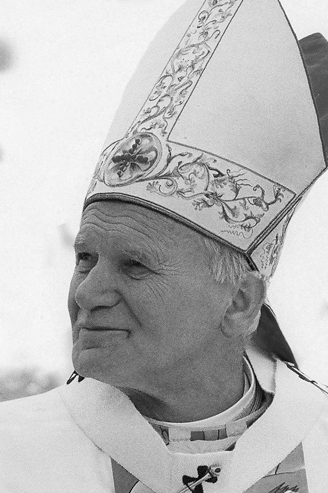
Pope Saint John Paul II’s First Good Friday Homily
ADDRESS OF HIS HOLINESS JOHN PAUL II AT THE CONCLUSION OF THE STATIONS OF THE CROSS AT THE COLOSSEUM Good Friday, 13 April 1979 When we make the Way of the Cross from one station to the next, in spirit we are always at the spot wherethis journey had its “historical” place: where it[…]Continue reading→
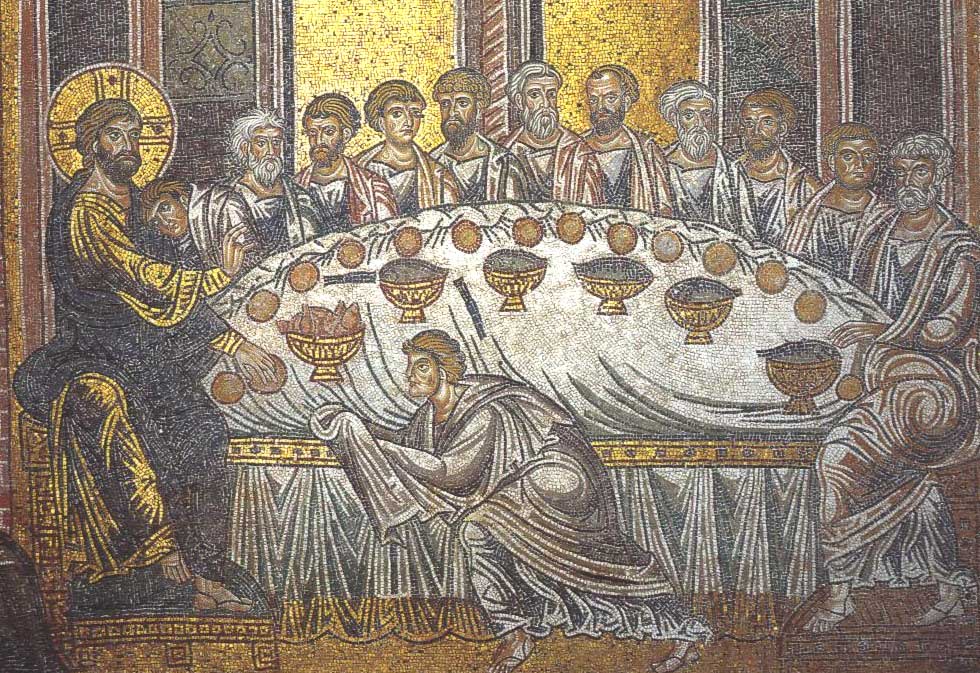
Pope Benedict’s Last Holy Thursday Homily
MASS OF THE LORD’S SUPPER HOMILY OF HIS HOLINESS BENEDICT XVI Basilica of St John Lateran Holy Thursday, 5 April 2012 Photo Gallery (Video) Dear Brothers and Sisters! Holy Thursday is not only the day of the institution of the Most Holy Eucharist, whose splendour bathes all else and in some ways draws it to[…]Continue reading→
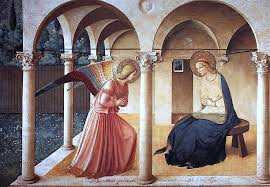
Homily of John Paul II in the Basilica of the Annunciation
A blessed Solemnity of the Annunciation to one and all! Verbum caro factum est! Here is a meditation of the late, great John Paul II, staunchly devoted to Our Lady, from the Jubilee Year, just over a quarter of century ago, to provide food for thought, as we celebrate, and pray. Editor. JUBILEE PILGRIMAGE OF[…]Continue reading→
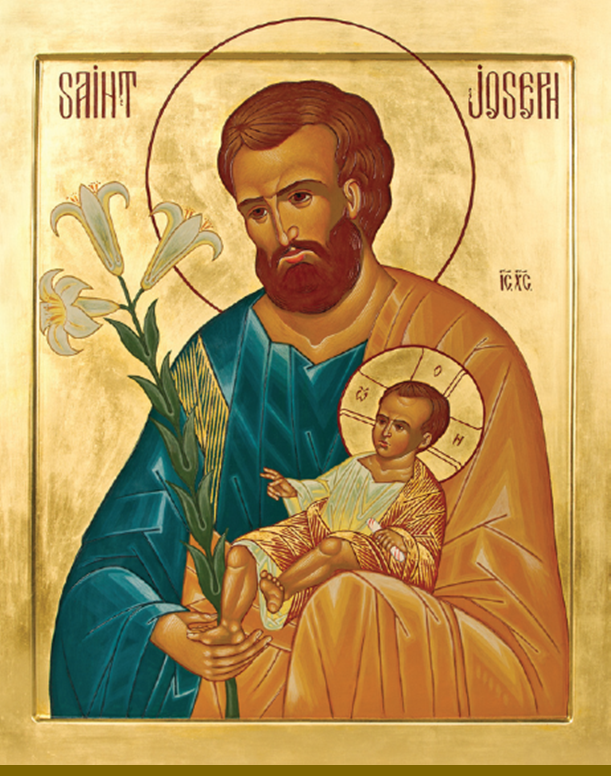
Homily of Pope Benedict on Saint Joseph
APOSTOLIC JOURNEY OF THE HOLY FATHER BENEDICT XVI TO CAMEROON AND ANGOLA (MARCH 17-23, 2009) EUCHARISTIC CELEBRATION ON THE OCCASION OF THE PUBLICATION OF THE INSTRUMENTUM LABORIS HOMILY OF THE HOLY FATHER BENEDICT XVI Amadou Ahidjo Stadium of Yaoundé Thursady, 19 March 2009 Dear Brother Bishops, Dear Brothers and Sisters, Praised be Jesus Christ who has gathered[…]Continue reading→
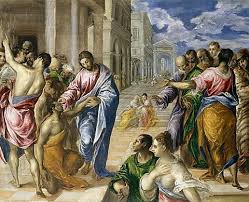
Fourth Sunday of Lent: Siloam and Spiritual Blindness
Once you were darkness, but now in the Lord you are light. Live as children of light – for the fruit of the light is found in all that is good and true (Eph. 5:8-9). The account of the cure of the blind man at the pool of Siloam, like the account of the conversation[…]Continue reading→