
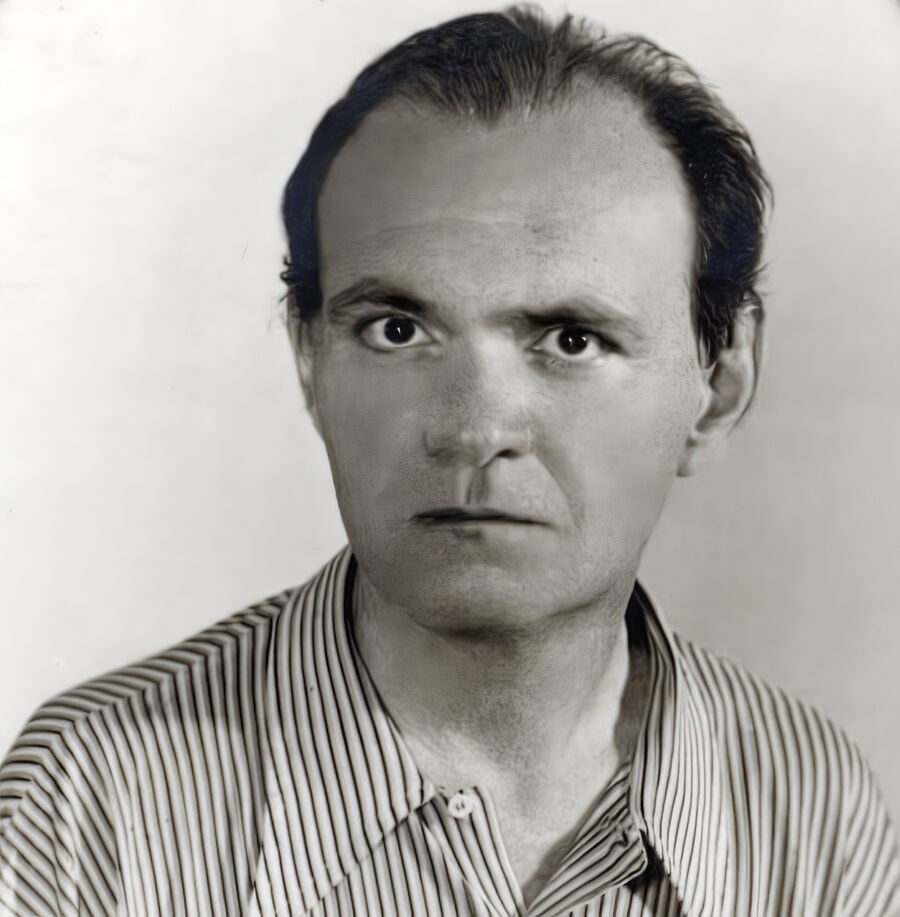
Marcel Tyberg – a Forgotten Composer of the Holocaust
In the 75 years since the end of the Second World War and the Holocaust, it is still hard to say how much the world has lost, particularly in the area of music. Some music survives from this time, such as the Catholic organist-composer Olivier Messiaen’s Quatuor pour la fin du temps, which was written when he was a prisoner behind German lines. Despite what does survive, there is certainly far more music that was destroyed and forever lost with the death of many composers in the concentration camps.
Marcel Tyberg is one such composer, whose music was nearly lost forever. He was born in Vienna in 1893 to a musical family, where his father was a violinist, and his mother was a pianist. Little is known about Tyberg’s musical education, though it is known that he was an accomplished pianist and organist as well as a composer. After his father’s death in 1927, Tyberg and his mother moved to Abbazia, then a resort town in Northern Italy, but now modern-day Croatia. While there, he wrote dance music under the pseudonym ‘Til Bergmar,’ but also taught music, conducted, and was a local church organist. After the Nazi forces occupied northern Italy in 1943, they required that anyone with Jewish ancestry in the last seven generation be registered. Tyberg’s mother did as was required, notifying the authorities that her great-grandfather was Jewish. She died shortly thereafter of natural causes, leaving her son, a pious Roman Catholic, to face the Nazis alone.
Tyberg was a composer of powerful works, namely three symphonies, two Masses, as well as chamber and instrumental compositions. All of this music was nearly lost, but thankfully survives. Tyberg knew he would soon be captured, and in anticipation of this, he entrusted his manuscripts to Milan Mihich, whose son Enrico was a student of the composer. Tyberg was soon deported by the Nazis and died in 1944 at Auschwitz. The Mihich family later fled to Milan when the communists encroached, and the father died in 1948. Enrico assumed the responsibility of the manuscript collection, which he took with him to Buffalo, New York, where he became a leading cancer researcher. In 2001, Dr. Mihich met JoAnn Falletta, the conductor of the Buffalo Philharmonic, with grocery bags of Tyberg’s manuscripts.[i] Falletta then took on these scores, and thanks to her hard work, the Third Symphony was performed in 2008 and recorded on Naxos. This symphony, along with the Second Symphony (recorded in 2013 also by Falletta), is in the lineage of Anton Bruckner and Robert Schumann, and is a lush late-Romantic work. The finale of this magnificent work was finished in 1943, the same year the Nazis occupied Abbazia. The music reveals an urgency, and ends seemingly too soon, being less than half of the duration of the first movement, as if Tyberg were scribbling away frantically while his captors knocked down his door.
More recently, Tyberg’s two Mass settings, both with organ accompaniment, have been performed and recorded by the South Dakota Chorale in 2016. Mass No. 1 in G Major is a wonderful composition with soaring lines and rich harmonies, and could have been used in the liturgy in the composer’s lifetime, although we sadly have no way of knowing this. After a bright Kyrie movement, the Gloria is quicker and jubilant, with meditative, fugal passages interpolated against the festive character of the other sections. The Credo is of a moderato tempo, with chromatic harmonies drawing attention to the most profound sections of the text. These occasional “left turns,” wherein the harmonies abruptly change in an unexpected way, are akin to the Masses of Bruckner, himself a devout Catholic. The Sanctus is exultant, particularly on the first, “Hosanna in excelsis,” in which the music crescendos greatly, while the Benedictus is quiet, but as the “Hosanna” returns, so does the forte singing of this glorious part of the Mass. After all of this lovely choral singing, the Agnus Dei features a soloist, who sings the first iteration of the tripartite text. The choir soon joins in again, growing in volume and urgency toward the section, “miserere nobis,” or, “have mercy on us,” after which the finale section of the Mass Ordinary ends quietly and peacefully.
When asked about beauty of Tyberg’s music in spite of the approaching darkness, conductor JoAnn Falletta says, “It’s about the beauty of the music. And of course, patterning himself after Bruckner and Schumann. Especially Bruckner, the kind of spirituality he had, I think he was following that. Music was meant to be beautiful. Yes, there are moments of darkness in there. But he was not affected by the net of terror that was probably growing around him. I think like most people he could probably not believe it would get to that point.”[ii] Enrico Mihich recalled once of his teacher that, “Tyberg was a believer filled with deepest piety. So, for instance, he has completed a Te Deum which was to have its first performance at the consecration of the enlarged Abbazian church. On the evening before, I attended the last rehearsal in the dimly lit church. The organ played, and all…sang to God’s honour and praise. I listened, moved by the music as I had been moved only once before – listening to Mozart’s Requiem. In that night Italy ’s fate was decided for a long period to come. It was 25 July 1943 [when Mussolini was forced out of office].”[iii]
While little is unfortunately known about the particulars of Tyberg’s Catholicity, his deep devotion speaks through his music, a profoundly beautiful music despite the terrors that surround him.
Recommended listening:
Symphony No. 2 (1927-1931) – https://www.youtube.com/watch?v=VyLL7jSxQqA
Mass No. 2 in F major (1941) – https://www.youtube.com/watch?v=hkYL4-Fn454&list=OLAK5uy_l2OYXyEc5h7MmREe-rC3-0qBukFu93SgU&index=7
String Sextet in F minor – available on Spotify
Further reading:
http://orelfoundation.org/composers/article/marcel_tyberg
https://holocaustmusic.ort.org/resistance-and-exile/marcel-tyberg/
[i] “Giving voice to a lost composer: JoAnn Falletta explores Tyberg.” Buffalo Philharmonic Orchestra. Sep 10, 2013. YouTube video. 5:57. https://www.youtube.com/watch?v=ndQVlF-nTjQ
[ii] Lewis, Susan. “The Story of Composer Marcel Tyberg’s Music, Reborn Decades After His Death at Auschwitz.” WRTI, April 11, 2018. https://www.wrti.org/post/story-composer-marcel-tybergs-music-reborn-decades-after-his-death-auschwitz.
[iii] Schiffler, Marion. “Tyberg Remembered.” Wayback Machine. Accessed December 10, 2020. https://web.archive.org/web/20120724011203/http://claude.torres1.perso.sfr.fr/GhettosCamps/Camps/Tyberg/TybergMarcel.html.

Remembering Father Alphonse de Valk
(Today marks the sixth anniversary of the death of Father Alphonse de Valk, C.S.B., a faithful, courageous and indefatigable Basilian priest, pro-life-and-family apostle, and the founder of Catholic Insight magazine. Here is what we wrote those on his entering into eternity five years ago, as we continue to remember him in our prayers and thoughts)[…]Continue reading→

Divine Mercy Sunday – An Echo of Every Mass
Reach out your hand and put it in my side. Do not doubt but believe’… ‘My Lord and my God!’ (Jn. 20:18)). Today is Divine Mercy Sunday, and as we celebrate the end of the Easter Octave, we contemplate the wounded side of our Saviour, the Church’s source of life. On Good Friday in the[…]Continue reading→

Saint Stanislaus of Szczepanów
We celebrate Saint Stanislaus today (+ April 11, 1079), in light of this Easter Octave, a bishop and martyr who accepted the episcopacy only at the direct order of Pope Alexander II. He proved a wise and courageous leader of his flock, put to death by his own king, Boleslaus, for rebuking the monarch’s ‘immoral[…]Continue reading→

First Holy Communion: Sermon from May 16, 1943
Here is a sermon from the good old days by +Rev. Msgr. Vincent Nicholas Foy (August 14, 1915 – March 13, 2017), from 1943. Readers may recall that Pope Saint Pius X, by the decree Quam Singulari in 1910, lowered the customary age of reception of Holy Communion – after the rigours of the plague[…]Continue reading→
In the Glorious Light of Easter, Alleluia!
Set your minds on things that are above, not on things that are on earth, for you have died, and your life is hidden with Christ in God. When Christ who is your life is revealed, then you also will be revealed with him in glory (Col. 3:3-4). The Resurrection of Our Lord and Saviour[…]Continue reading→
An Ancient Homily for Holy Saturday
The time between Good Friday and Easter Sunday is one of waiting, in silence, as the world wonders – anticipates – what will happen, after the death of Christ. We re-live this time each year in the anamnesis of our liturgy, and in turn look forward to the glorious re-creation of all things at the[…]Continue reading→
Europe’s Long Descent
(As we meditate on this day on Christ’s burial, and His descent into hell, it is fitting to ponder here with contributor Peter Marcus how the world seems to be heading there as well. The difference is that, although God cannot ‘redeem’ hell, nor those therein, He can and did redeem the world. There is[…]Continue reading→
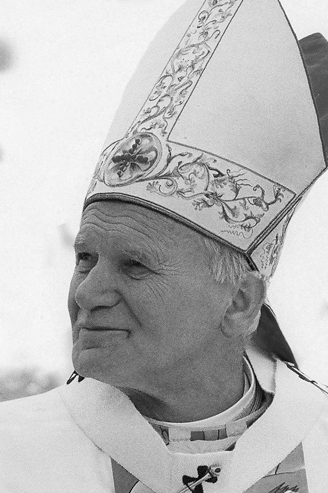
Pope Saint John Paul II’s First Good Friday Homily
ADDRESS OF HIS HOLINESS JOHN PAUL II AT THE CONCLUSION OF THE STATIONS OF THE CROSS AT THE COLOSSEUM Good Friday, 13 April 1979 When we make the Way of the Cross from one station to the next, in spirit we are always at the spot wherethis journey had its “historical” place: where it[…]Continue reading→
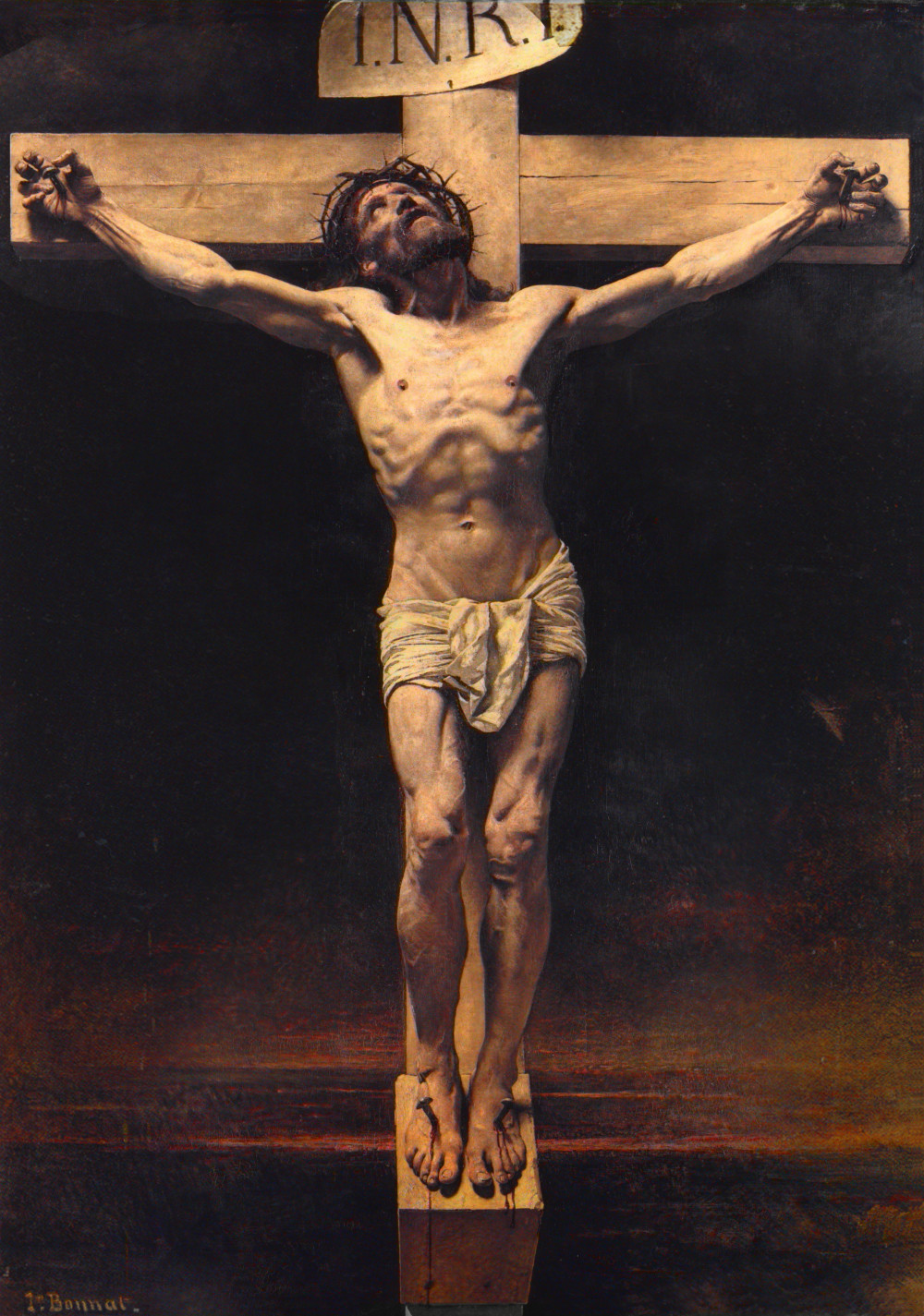
A Meditation for Good Friday: How To Undo the Effects of Sin?
Cardinal Newman, now Saint John Henry Newman, was a towering figure of nineteenth-century Catholicism who is almost universally admired. I say “almost” because not everyone likes him. I knew a priest once, Arthur Caulkins, who has become disenchanted with Newman. As an undergraduate Arthur had been enamoured of Newman, and this interest continued when he[…]Continue reading→
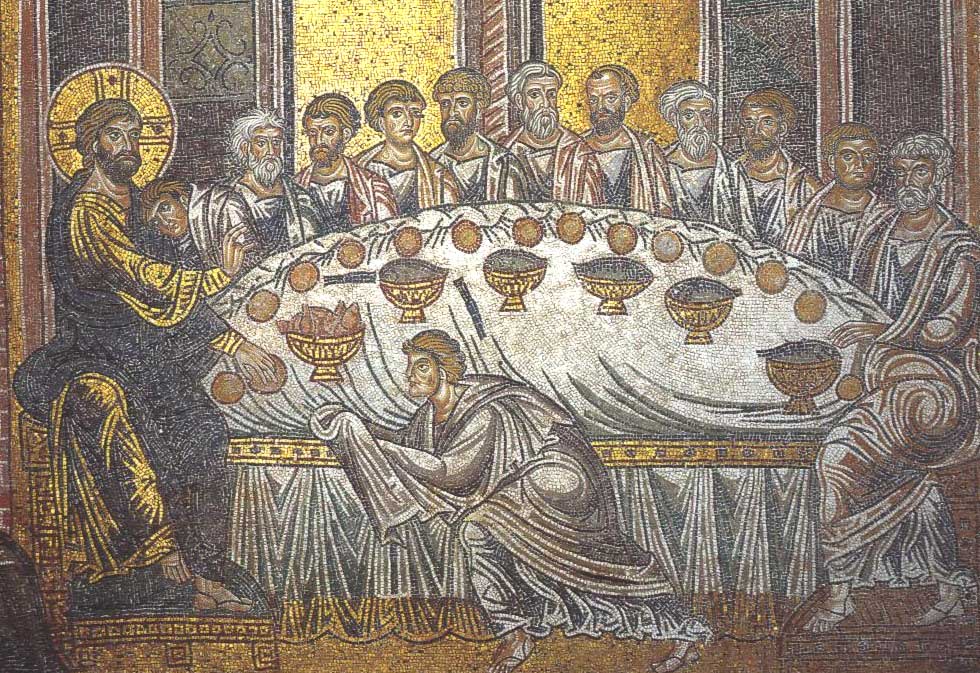
Pope Benedict’s Last Holy Thursday Homily
MASS OF THE LORD’S SUPPER HOMILY OF HIS HOLINESS BENEDICT XVI Basilica of St John Lateran Holy Thursday, 5 April 2012 Photo Gallery (Video) Dear Brothers and Sisters! Holy Thursday is not only the day of the institution of the Most Holy Eucharist, whose splendour bathes all else and in some ways draws it to[…]Continue reading→