

John Paul II, Poland and the Land Down Under
The year 2020 marks the 100th anniversary of the birth of St. John Paul II, with Catholics reflecting on a Pope who still remains a “spiritual compass” fifteen years after his death. His demise was an irreparable loss for all Catholics, not least Polish-Australians, but also for some Italian and Irish-Australians – we were all like sheep without a shepherd, at least for a while.
Though Catholics are seeking to interpret their faith equally as many of their mainline Protestant brethren, they are assisted by the Virgin Mary, along with a plethora of Saints who in a special way offer support from Heaven. They ought to remember that they would never be able to bear what may well be the coming persecution in their own strength. This anniversary of the great Pope’s birth provides a great opportunity to rediscover the wealth of thoughts of the Pontiff and show mettle in the painful hour of an Australian Good Friday.
Words stated by His Holiness Pope John Paul II, on October 5, 1995 to the General Assembly and the United Nations staff, perfectly fit in the current so-called Covid-19 Pandemic Emergency. “We must learn not to be afraid, we must rediscover a spirit of hope and a spirit of trust. Hope is not empty optimism springing from a naive confidence that the future will necessarily be better than the past. Hope and trust are the premise of responsible activity and are nurtured in that inner sanctuary of conscience where “man is alone with God.”
On 27th September 1992, on St. Peter’s Square, during the beatification of a group of Irish Martyrs the Pope addressed those gathered: “The Martyrs’ significance for today lies in the fact that their testimony shatters the vain claim to live one’s life or to build a model of society without an integral vision of our human destiny, without reference to our eternal calling, without transcendence.”
To the Polish Pope, the existence of ‘the civilization of love’ was the foundation of a humane world in the context of a civilization appreciating the intrinsic value of each and every human being. Sadly, all the while, the Commonwealth of Australia has joined a race downhill in the direction of total spiritual destruction, of which I have alluded before in a couple of articles. The flagship of culture of death, Australian Broadcasting Corporation is doing its best to promote disastrous neo-pagan religions – from environmentalism and feminism to pansexualism – even so, one must never give up. It makes no odds that the disturbing odor of the Frankfurt School has reached the Antipodes. It is high time Australians employed a powerful weapon which is both secure and invincible – the Rosary. It was a prayer that was very dear to Pope John Paul’s heart. After all, nothing is out of God’s reach. “The graces of My mercy are drawn by means of one vessel only, and that is – trust. The more a soul trusts, the more it will receive.” (Diary of St. Faustina, 1578) wrote down one of the most beloved Pope’s saints.
The world hears much of mercy and justice nowadays, and in the media racial tensions and injustices are brought to the fore: On 29 November 1986 Pope John Paul II addressed the Aboriginal and Torres Strait Islander Peoples in Alice Springs. “The establishment of a new society for Aboriginal people cannot go forward without just and mutually recognized agreements with regard to these human problems, even though their causes lie in the past. The greatest value to be achieved by such agreements, which must be implemented without causing new injustices, is respect for the dignity and growth of the human person.”
But what of these agreements and recompenses? Some forces in this beautiful country are using an industry of guilt to bring even multi-billion compensation claims, such as $290 billion for spiritual damage over an area of land owned by Noongar people, which seem far from social justice. Moreover, many Polish-Australians would say that over the last decade prejudice against the black has been replaced by prejudice against the white, and now any open attempt to express one’s doubts about the status quo of traditional land owners ends up, ironically, being called `racist’. Then again, in his own milieu, Karol Wojtyla being a young man was a witness of a painful series of injustices and resentments; nevertheless, his trust in Divine Providence and relationship with Our Lady allowed him to pass the test of faith.
In a moving message of September 11th 2000, to the Community of Jagiellonian University of Kraków, he spoke of a healthy spirit of patriotism in the Polish nation.
“Our homeland is a patrimony which does not only include a certain reserve of material goods in a given territory but, above all, is a treasure, the only one of its kind, of values and spiritual content, that is, of all that constitutes the nation’s culture. One after another, generations of teachers, professors and students of the university have safeguarded this treasure and helped to build it up, even at the price of great sacrifices. In this very way they learned patriotism, that is, love of what belongs to the homeland, of what is the fruit of their forebears’ genius and of what distinguishes one people from the others and, at the same time, is a place of encounter and creative exchange in the dimension of the human race.”
Actually, contemporary Australians would do better to avoid expressions of national pride. In the Land Down Under patriotism comes in many forms, sometimes it is something about a connection with the landscape, about history and family. For others, it can be associated with what is civic and democratic. More often however, it involves a mixture of these elements. Some Aussies find the American style of patriotism with flags mounted on front porches, school children pledging their allegiance every morning or politicians wearing a national flag pin on their lapel, a bit heavy. One could wonder if the current youth, who are being presently raised with the scorn for true patriotic attitudes by mainstream media, would ever be able to shed their blood and lose their lives for Australia, like the heroes of Gallipoli or the Kokoda Track? It is hard to avoid the conclusion that it would be far simpler to sacrifice themselves for dying koalas than stand up to protect their home country. “Do not be afraid. Do not be satisfied with mediocrity. Put out into the deep and let down your nets for a catch.” (Saint Peter’s Square, Sunday, 22 October 1978).
Finally, preaching on Victory Square, Warsaw, Poland on 2 June, 1979 John Paul II touched an even deeper nerve, as he explicitly opposed the exclusion of Jesus Christ from the history of man, nation and humanity.
“Christ cannot be kept out of the history of man in any part of the globe, at any longitude or latitude of geography. The exclusion of Christ from the history of man is an act against man. Without Christ it is impossible to understand the history of Poland, especially the history of the people who have passed or are passing through this land. The history of people. The history of the nation is above all the history of people. And the history of each person unfolds in Jesus Christ. In him it becomes the history of salvation.”
Australia is also a Christian country. At the time of Federation in 1901, with 96% of Australians described themselves so. In 2014, to mourn the death of passengers of the tragic Flight MH 17, the Lord’s Prayer was recited and Australians across the country attended churches. About six months ago, amid coronavirus crisis, the Australian Prime Minister, Scott Morrison praying for Oz, committed her nation to God. Regrettably, it is vital for the Church enemies that people would completely forget about their Christian roots. The history that is taught at Australian schools has systematically been loosing its Christian references. Federal union backed the ban on church-education gospel from all public schools. The times when you could easily hear Christmas carols on the Australian radio are remembered by few. All in all, in order not to offend members of other religions, in the public sphere, Jesus Christ has become a persona non grata, as it were. It is even more surprising since 51.1% of the population still identify with Christianity, and the non-Christian religions occupy a proportion of mere 8.3% of the population. “This is no time to be ashamed of the Gospel. It is the time to preach it from the rooftops!” (Homily, World Youth Day, Denver, 1993)
All Australian Catholics, despite facing growing pressures, are called to prepare the world for the final coming of Jesus and make Australia Holy.
May a fire of love for His Sacred Heart blaze in hearts of all Australian people and reclaim unshakable faith in God, Jesus Christ. God Bless Australia. Amen.

Saint Kateri , Canada’s Protectress
This was the title given to Saint Kateri Tekakwitha, by Pope Benedict XVI, when he canonized her on October 28th, 2012, along with six others, in Saint Peter’ Square (she had been beatified by Pope John Paul II back in 1980). With Saint Joseph as our protector, along with the Canadian martyrs, we seem to[…]Continue reading→

Remembering Father Alphonse de Valk
(Today marks the sixth anniversary of the death of Father Alphonse de Valk, C.S.B., a faithful, courageous and indefatigable Basilian priest, pro-life-and-family apostle, and the founder of Catholic Insight magazine. Here is what we wrote those on his entering into eternity five years ago, as we continue to remember him in our prayers and thoughts)[…]Continue reading→

My Name is Bernadette
April 16th is a propitious day, for besides the anniversary of Father de Valk’s death, who founded Catholic Insight in its print form decades ago, and the commemoration of the ‘two Benedicts’, mentioned in accompanying posts, today we also recall Saint Bernadette Soubirous, the young visionary to whom the Virgin Mary appeared numerous times at[…]Continue reading→

Canonizing Sister Faustina and Divine Mercy
HOMILY OF THE HOLY FATHER MASS IN ST PETER’S SQUARE FOR THE CANONIZATION OF SR MARY FAUSTINA KOWALSKA Sunday, 30 April 2000 1. “Confitemini Domino quoniam bonus, quoniam in saeculum misericordia eius”; “Give thanks to the Lord for he is good; his steadfast love endures for ever” (Ps 118: 1). So the Church sings on the Octave of[…]Continue reading→

Divine Mercy Sunday – An Echo of Every Mass
Reach out your hand and put it in my side. Do not doubt but believe’… ‘My Lord and my God!’ (Jn. 20:18)). Today is Divine Mercy Sunday, and as we celebrate the end of the Easter Octave, we contemplate the wounded side of our Saviour, the Church’s source of life. On Good Friday in the[…]Continue reading→

Saint Stanislaus of Szczepanów
We celebrate Saint Stanislaus today (+ April 11, 1079), in light of this Easter Octave, a bishop and martyr who accepted the episcopacy only at the direct order of Pope Alexander II. He proved a wise and courageous leader of his flock, put to death by his own king, Boleslaus, for rebuking the monarch’s ‘immoral[…]Continue reading→
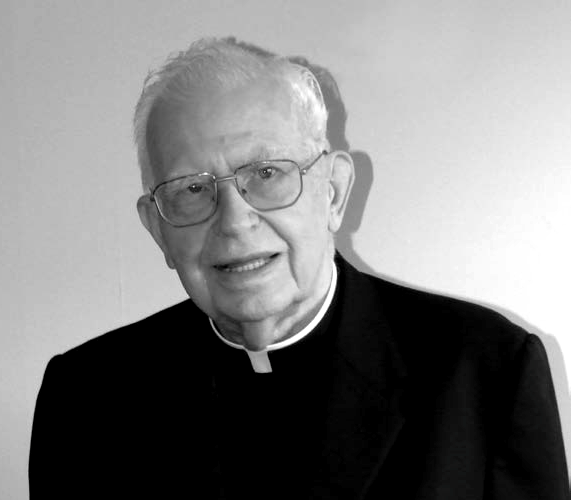
First Holy Communion: Sermon from May 16, 1943
Here is a sermon from the good old days by +Rev. Msgr. Vincent Nicholas Foy (August 14, 1915 – March 13, 2017), from 1943. Readers may recall that Pope Saint Pius X, by the decree Quam Singulari in 1910, lowered the customary age of reception of Holy Communion – after the rigours of the plague[…]Continue reading→
Weronika Krawczyk and Injustice in Poland
Catholic Action in Poland has issued a formal statement appealing to the President of the Republic of Poland to pardon Weronika Krawczyk—convicted for warning other women against an abortion-performing gynaecologist. Catholic Action (AK) emphasizes that no apology is owed to a doctor who has performed numerous abortions and proposed others; furthermore, the organization considers the[…]Continue reading→
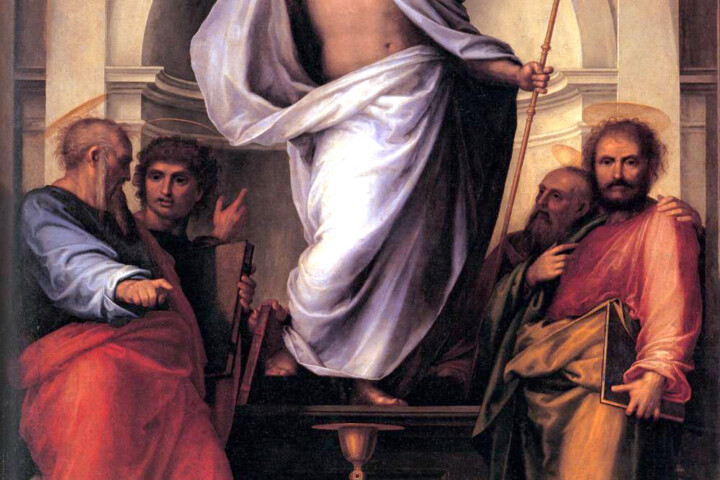
In the Glorious Light of Easter, Alleluia!
Set your minds on things that are above, not on things that are on earth, for you have died, and your life is hidden with Christ in God. When Christ who is your life is revealed, then you also will be revealed with him in glory (Col. 3:3-4). The Resurrection of Our Lord and Saviour[…]Continue reading→
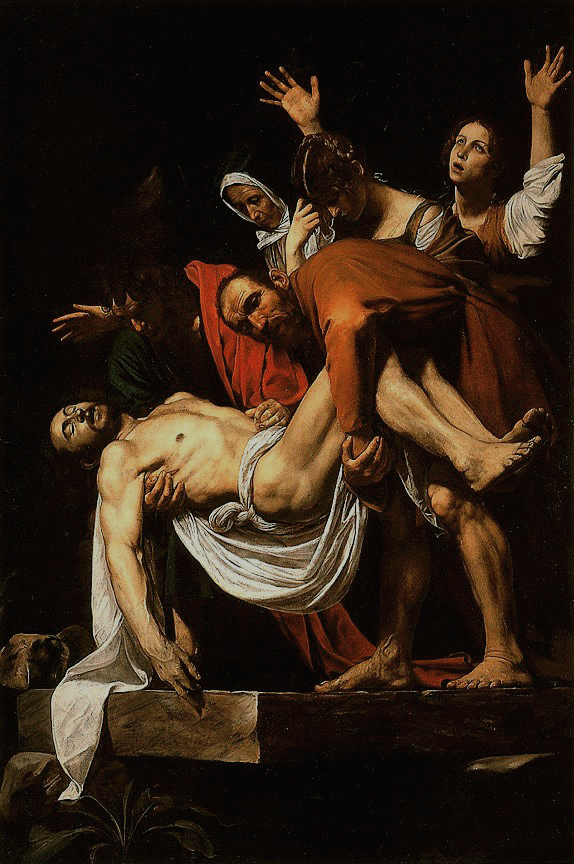
An Ancient Homily for Holy Saturday
The time between Good Friday and Easter Sunday is one of waiting, in silence, as the world wonders – anticipates – what will happen, after the death of Christ. We re-live this time each year in the anamnesis of our liturgy, and in turn look forward to the glorious re-creation of all things at the[…]Continue reading→