
Manliness, Courage and the Fear of Death
I recently returned from a trip to visit my family in Montreal and spend some time with old friends in the countryside nearby. Across the city and the small towns I visited I saw rainbow decals and drawings in windows. These weren’t gender ideological rainbows; nor were they reminders of the covenant. Underneath most of the rainbows was the slogan: ça va bien aller: ‘It will all be fine’. The slogan seemed at odds with what I saw around me, or didn’t see, as the case may be: one of the liveliest cities in the world transformed into a sleepy town, the false and naïve hope of ça va bien aller refuted by the intense fear of and deep anxiety about a virus with a relatively low – and decreasing – morbidity rate. Indeed, I arrived in Montreal when the city was under an orange alert and left when the alert was red. We should be afraid of the former, terrified, I presume, of the latter. Like many people today, most Montrealers are afraid; they would do well to cultivate the old-fashioned virtue of courage.
Courage is not fearlessness. The person who isn’t afraid of lions, particularly when one is charging at him, is not courageous; he is a fool. Courage does involve, however, standing up to something that is genuinely frightening when doing so is good, like getting between the charging lion and a child, but standing up to something frightening when doing so serves no higher purpose, like fearfully attacking the lion to test one’s mettle, is also folly.
The difference lies less in a spirited feeling than it does in knowing the difference between things we should be afraid of and things we should not be afraid of or be less afraid of, as well as knowing what is worth risking life and limb for, and what not. The boldest person will be no more courageous for it, if he doesn’t also understand what the proper objects of fear are, or under what circumstances he should endure those objects. Of course, the person who fears things that are not properly frightening is cowardly, but, similarly, his problem is not only that he feels fear excessively, but that he doesn’t know what he should and shouldn’t fear.
Courage, bravery, and fortitude are all translations of the ancient Greek word, andreia, literally ‘manliness’. The person with andreia is the person who does what men do, and does it well. Of course, men do more than face fears boldly yet with understanding; but, at core, this word implies that men are most properly themselves when they risk their lives for a higher good, for victory, honour, and glory. For the ancient Greeks, the good soldier epitomizes manliness. As Aristotle puts it in Book 3 of the Nicomachean Ethics, “one would call courageous the person who is unafraid in the face of a beautiful death, and in whatever circumstances make death be close at hand, and such most of all are the things involved in war.” The person who risks death for the sake of a beautiful outcome is manly.
All men – indeed, all humans – should be virtuous. They should cultivate all the virtues, above all the four cardinal virtues (prudence, justice, courage, and temperance) and the three theological virtues (faith, hope, and charity). But a lack of manliness is particularly shameful in a man. We rightly consider a man with poor judgment, for instance, to be deficient; he lacks prudence, a virtue central to living well because it directs all moral action. He may even be a bad man. But a man who shows no courage, who is afraid of everything and utterly incapable of facing danger? He’s unmanly. It is not surprising that there are so many words in English to describe such a man: he is a wuss, a wimp, a sissy, a chicken, and a whole spate of other terms unsuitable for print. I see no such terminological excess when it comes to other virtues.
The surplus of words for cowards does not demonstrate that cowardice is worse or more shameful than other vices, but it does suggest that men are distinctly repelled by it. It is morally worse to lack good judgment, but it may be more difficult to get by as a coward. The unmanly man will be shamed if not cast out by other men, being forced, to his embarrassment, to keep the company of other likeminded cowards; many women will avoid his company, too. Although women are much less likely to be disparaged for lacking this virtue than are men, none of this gainsays the courage of women; it only indicates that a woman will be courageous by doing the same, namely risking life for a higher good, by being manly.
Courage is possible because we have something to lose. We can only be courageous, or not, because we are vulnerable, because humans can be harmed or injured, and, as Jose Pieper points out in his short book on Fortitude, “the ultimate injury, the deepest injury, is death. And even those injuries which are not fatal are prefigurations of death; this extreme violation, this final negation, is reflected and effective in every lesser injury.” Whether one is in combat or not, courage is “readiness to die or, more accurately, readiness to fall, to die, in battle.”
Such readiness is only sacrificial if the person ready to fall loves life. There can be no courage without love. Not only must a courageous man prefer to live, but he must understand that living is good. He must also understand that the end for which he is willing to lay down his life is higher than his natural life. It is right and natural to fear death, but it is also right to accept death when something better than life is at stake. We should fear dishonour, vice, and ugliness much more than death.
To fear death above all else is both cowardly and irrational; it is a sign of intellectual and theological immaturity. Plato addresses this beautifully in his dramatization of the last day of Socrates in the Phaedo. In this dialogue, Socrates’ friends visit him in prison on the day he will be executed. Apart from one friend, the old and reliable Crito, all of Socrates’ visitors are young men. They are, unsurprisingly, sad to be losing, not only a friend, but a wise teacher and a reliable moral guide. Socrates, however, is calm when they visit, showing no signs of fear at all.
Socrates’ apparent fearlessness strikes his young friends as irrational. Shouldn’t he be terrified? Shouldn’t he be afraid that, when he dies, his soul will just fall apart and scatter, like smoke dissipating in the wind? In other words, Socrates’ friends are worried that human life is purely material, that the soul is some sort of loosely packed chunk of matter located in and dependent on the body, such that, when a human dies, the soul is separated from the body and disperses in the air well before the body decomposes. Accordingly, death is not just the cessation of natural life but the end of all human agency and consciousness. If human being is wholly material, then death is the most terrifying thing of all.
Understanding both their sadness and their immaturity, Socrates doesn’t just refute his friends. He carefully and slowly tries to get them to reconsider their understanding of human nature, and specifically of the soul, and thus their understanding of the proper objects of fear. The soul isn’t a material thing; it is an immaterial thing. Since dying applies to the composite of body and soul, the soul doesn’t die. To think otherwise is to make a category mistake. A human being dies, not a body nor a soul.
If the soul doesn’t die, then it must go somewhere after death. Where and what happens to it? Socrates tells a myth about the judgment of souls after death. Let me oversimplify and summarize it: souls are subjected to divine judgment; bad souls are punished in hell and good ones are rewarded in heaven. The point of the story is pretty clear: people need to stop fearing death and should start fearing eternal punishment instead. A person who has lived well, as Socrates believes he has, has nothing to fear in death; a person who has not, perhaps like Socrates’ young friends, should be afraid of death only because it will occasion the truly fearful thing: divine punishment. Socrates’ confidence will rightly strike the Christian as prideful, but the intuition is on point: death is not the problem; living badly and being punished for it is.
We might not need a pagan like Plato – though, to be fair, a pagan who was rightly admired by the early Church fathers – to tell us we should fear damnation more than death. That message is plastered everywhere in good Christian writing, above all the Bible, over two millennia; it is also one of the key lessons of Marian apparitions. Sadly, too many Catholics need to be reminded of that, as they overconfidently hope – or worse, expect – that all men, themselves above all, will be saved. Last I checked, salvation is not guaranteed; it is a gift that, like all true gifts, is undeserved. Whether I am saved or not is decidedly not entirely up to me, even if I have a hand in it. It is not surprising that someone who forgets this will fear death more than living badly. The point is not that we should not fear death. We should, because we love life, and we love life because it is good, as is the whole of creation. But we should not fear death above all else.
I don’t fear corona virus – or whatever other virus is and will be out there threatening me and others. I do, however, fear not being let into my church for Mass because I won’t lie to the usher when she asks whether I feel ill before letting me in; I fear not confessing my sins or, heaven forbid, dying in a state of mortal sin because I couldn’t get to confession; I fear being isolated and withdrawn from society so much that I fail to perform my obligations to others. I fear death, but I fear living badly and viciously immeasurably more. We ought to be courageous at all times, but threatening times force us to live out this virtue with more regularity, to be manly, men and women alike. There is always something to fear far more than a virus, a pandemic, a riot in the streets, mockery online, a terminal disease, and, ultimately, death itself. There is even something more terrifying than damnation. The most frightening thing of all is the prospect of being cut off from God eternally. Of that I am always properly afraid.

Remembering Father Alphonse de Valk
(Today marks the sixth anniversary of the death of Father Alphonse de Valk, C.S.B., a faithful, courageous and indefatigable Basilian priest, pro-life-and-family apostle, and the founder of Catholic Insight magazine. Here is what we wrote those on his entering into eternity five years ago, as we continue to remember him in our prayers and thoughts)[…]Continue reading→

Divine Mercy Sunday – An Echo of Every Mass
Reach out your hand and put it in my side. Do not doubt but believe’… ‘My Lord and my God!’ (Jn. 20:18)). Today is Divine Mercy Sunday, and as we celebrate the end of the Easter Octave, we contemplate the wounded side of our Saviour, the Church’s source of life. On Good Friday in the[…]Continue reading→

Saint Stanislaus of Szczepanów
We celebrate Saint Stanislaus today (+ April 11, 1079), in light of this Easter Octave, a bishop and martyr who accepted the episcopacy only at the direct order of Pope Alexander II. He proved a wise and courageous leader of his flock, put to death by his own king, Boleslaus, for rebuking the monarch’s ‘immoral[…]Continue reading→

First Holy Communion: Sermon from May 16, 1943
Here is a sermon from the good old days by +Rev. Msgr. Vincent Nicholas Foy (August 14, 1915 – March 13, 2017), from 1943. Readers may recall that Pope Saint Pius X, by the decree Quam Singulari in 1910, lowered the customary age of reception of Holy Communion – after the rigours of the plague[…]Continue reading→
In the Glorious Light of Easter, Alleluia!
Set your minds on things that are above, not on things that are on earth, for you have died, and your life is hidden with Christ in God. When Christ who is your life is revealed, then you also will be revealed with him in glory (Col. 3:3-4). The Resurrection of Our Lord and Saviour[…]Continue reading→
An Ancient Homily for Holy Saturday
The time between Good Friday and Easter Sunday is one of waiting, in silence, as the world wonders – anticipates – what will happen, after the death of Christ. We re-live this time each year in the anamnesis of our liturgy, and in turn look forward to the glorious re-creation of all things at the[…]Continue reading→
Europe’s Long Descent
(As we meditate on this day on Christ’s burial, and His descent into hell, it is fitting to ponder here with contributor Peter Marcus how the world seems to be heading there as well. The difference is that, although God cannot ‘redeem’ hell, nor those therein, He can and did redeem the world. There is[…]Continue reading→
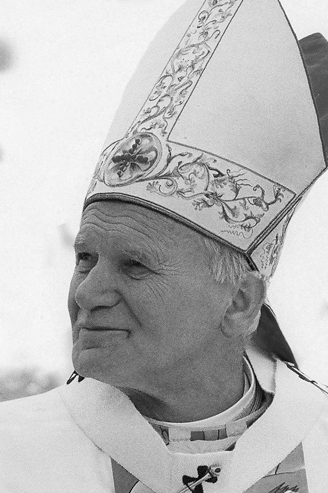
Pope Saint John Paul II’s First Good Friday Homily
ADDRESS OF HIS HOLINESS JOHN PAUL II AT THE CONCLUSION OF THE STATIONS OF THE CROSS AT THE COLOSSEUM Good Friday, 13 April 1979 When we make the Way of the Cross from one station to the next, in spirit we are always at the spot wherethis journey had its “historical” place: where it[…]Continue reading→
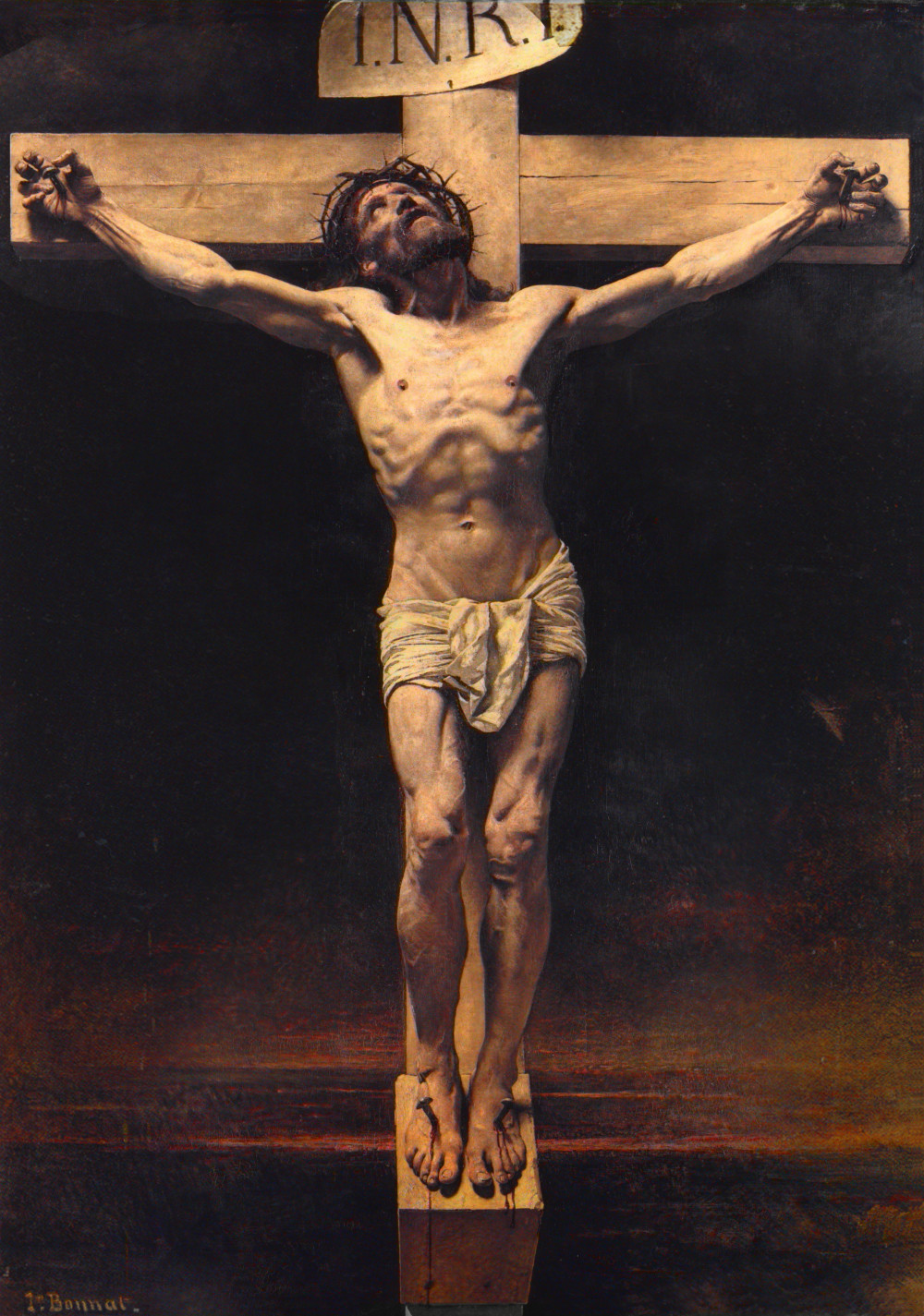
A Meditation for Good Friday: How To Undo the Effects of Sin?
Cardinal Newman, now Saint John Henry Newman, was a towering figure of nineteenth-century Catholicism who is almost universally admired. I say “almost” because not everyone likes him. I knew a priest once, Arthur Caulkins, who has become disenchanted with Newman. As an undergraduate Arthur had been enamoured of Newman, and this interest continued when he[…]Continue reading→
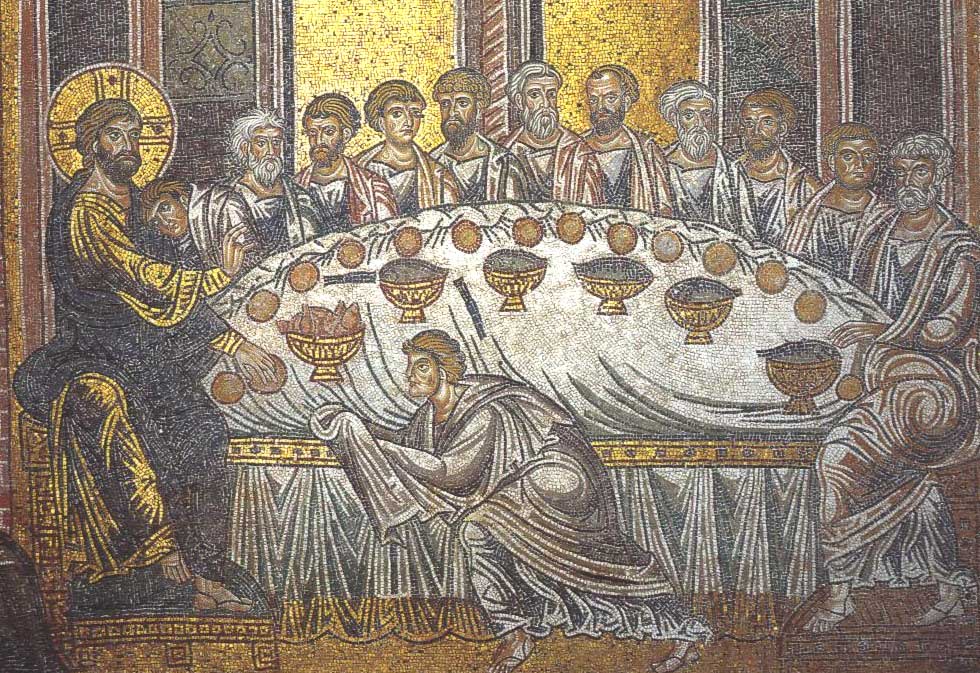
Pope Benedict’s Last Holy Thursday Homily
MASS OF THE LORD’S SUPPER HOMILY OF HIS HOLINESS BENEDICT XVI Basilica of St John Lateran Holy Thursday, 5 April 2012 Photo Gallery (Video) Dear Brothers and Sisters! Holy Thursday is not only the day of the institution of the Most Holy Eucharist, whose splendour bathes all else and in some ways draws it to[…]Continue reading→