
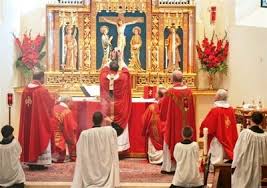
The Beauty of the Mass as a Bridge to God
For my house shall be called a house of prayer for all peoples (Is. 56: 7). ⧾
In any given region or country, a common language is a source of unity. You may be familiar with the term lingua franca or bridge language, a language used to make communication possible between people who do not share a common language. Not long ago, it was the French language that served this purpose, certainly in the world of diplomacy; hence the expression, lingua franca. Today, it would seem that English has become the common or bridge language of the world community
My house shall be called a house of prayer for all peoples (Is. 56: 7).The prophecy of Isaiah is fulfilled in our hearing. We too have common language; a universal language with particular accents. This is literally true inasmuch as Latin is both the official language of the Church, and the irreplaceable foundation of our culture and civilization. The universal language of the Catholic Church however, is also the unity and integrity of faith that binds us together as one people. As St. Paul teaches: There is one body and one Spirit, just as you were called to the one hope that belongs to your call, one Lord, one faith, one baptism, one God and Father of us all (Eph. 4-5). The accents of this common language might be understood as the practices of piety or liturgical celebrations that may be particular to a given local Church, the artistic expressions in whatever forms that celebrate the one faith but the language is universal and indeed unchanging.
A sacred or ritual language helps to safeguard this unity and so does the ritual or rite itself. An example of this is the Holy Mass of the Traditional Roman Rite, sometimes referred to as the Gregorian or Tridentine Rite. This rite can be traced back to the apostolic age; its form is intimately connected with the decades in which Christianity was established. In the sixteenth century the missal of the Roman pope which since late antiquity had never succumbed to heretical attack, was prescribed for universal use by Catholic Christendom throughout the West. The Traditional Roman Rite faithfully and unequivocally expressed the Christian faith: that God the Creator took on the form of man, His creature. In Christ Our Saviour, the whole fullness of deity dwells bodily, and [we] have come to fullness of life in him (Col. 2:9-10). The Christian Rite, of which the Roman Rite is an ancient part, thus became an incessant repetition of the Redemptive Incarnation; the representation in time of the one, eternal Sacrifice of Our Lord on Calvary.
My house shall be called a house of prayer for all peoples (Is. 56: 7). The vision of the Prophet Isaiah also alludes to our understanding of the Church as a sacrament of unity. God has gathered together as one all those who in faith look upon Jesus as the author of salvation and the source of unity and peace, and has established them as the Church, that for each and all she may be the visible sacrament of this saving unity (Lumen Gentium, 9). Just as Jesus, Way, Truth and Life is our way to the Father; so the Church in which Our Lord is present performing His saving work, is the way that leads us to God. Since God cannot be seen or heard directly, He conveys His summoning Word and inviting sign in a form that is audible, concrete and visible. This is what the Church is; and specifically, this is what the Mass is: an ancient form that is audible, concrete and visible. The form of the Mass is not arbitrary or inconsequential, and happily, Catholics, especially younger men and women with families, are rediscovering the treasure of our sacred Tradition. At least in North America, increased attendance at the Traditional Mass is the only area of growth. The Mass invites all of us to a lifetime of education. In the presence of this Mystery, one has never learned everything there is to learn. O the depths of the riches and wisdom and knowledge of God! How unsearchable are his judgments and how inscrutable his ways! (Rom. 11:33)
It is the Messiah come in the flesh, Our Saviour Jesus Christ who makes known to us the wisdom of God. Our discipleship is a free response and embrace of the Cross leading to a participation in its mystery. Whoever does not carry his own cross and come after me cannot be my disciple (Lk. 14:27). Our Lord has left us the Mass as the Memorial of His Sacred Passion and our reverent celebration of the Holy Sacrifice is in and of itself the most effective form of evangelization. It may be said that the traditional Sacred Liturgy is one of the riches of the poor. Here, all of us whatever our state can have an experience of shared transcendence, a glimpse on this side of the veil, of the glory that awaits those who seek and love God. And the foreigners who join themselves to the Lord, to minister to him, to love the name of the Lord and to be his servants, all who keep the Sabbath…these I will bring to my holy mountain, and make them joyful in my house of prayer (Is. 56:6-7). These words are fulfilled in the communion that is the Catholic Church, whose faith is unchanging – regardless of what we may hear or even be told. What a privilege it is to live the Gospel. The Church of Christ, the Catholic Church embraces all the families of the peoples, and the Eucharist which makes us one with Christ Our Lord conforms us to His image on earth (Prayer after Communion, Twentieth Sunday Per Annum, The Roman Missal).
Yesterday, in our celebration of the Feast of Our Lady’s Assumption, we experienced in a delightful manner the fusion of sacred music with the ancient Roman Rite whose magnificent Latin texts inspired those remarkable compositions. This also is one of the riches of the poor and an expression of the path of beauty (via pulchritudinis), a privileged path or way of coming to know the truth of God. The rediscovery of beauty as a form of knowledge that leads to God is a pressing need of our time. Beauty, for St. Thomas Aquinas, the Angelic Doctor, includes unity, proportion and clarity. Despite our limitations, we have endeavoured to realize these qualities both here in our church and in our Chapel dedicated to St. Joseph and our Canadian Saints.
Pope Benedict recognised the importance of beauty as an effective means of evangelization and of growth in faith. Being struck and overcome by the beauty of Christ is a more real, more profound knowledge than mere rational deduction. Of course we must not underrate the importance of theological reflection…but to move from here to disdain or reject the impact produced by the response of the heart in the encounter with beauty as a true form of knowledge would impoverish us and dry up our faith and our theology. We must rediscover this form of knowledge; it is a pressing need of our time. We pray therefore this morning that those whose hearts may be closed to the truth of Christ; that the beauty of Christ may draw them to this holy dwelling place, a house of prayer for all peoples (Is. 56: 7). ⧾

Remembering Father Alphonse de Valk
(Today marks the sixth anniversary of the death of Father Alphonse de Valk, C.S.B., a faithful, courageous and indefatigable Basilian priest, pro-life-and-family apostle, and the founder of Catholic Insight magazine. Here is what we wrote those on his entering into eternity five years ago, as we continue to remember him in our prayers and thoughts)[…]Continue reading→

Divine Mercy Sunday – An Echo of Every Mass
Reach out your hand and put it in my side. Do not doubt but believe’… ‘My Lord and my God!’ (Jn. 20:18)). Today is Divine Mercy Sunday, and as we celebrate the end of the Easter Octave, we contemplate the wounded side of our Saviour, the Church’s source of life. On Good Friday in the[…]Continue reading→

Saint Stanislaus of Szczepanów
We celebrate Saint Stanislaus today (+ April 11, 1079), in light of this Easter Octave, a bishop and martyr who accepted the episcopacy only at the direct order of Pope Alexander II. He proved a wise and courageous leader of his flock, put to death by his own king, Boleslaus, for rebuking the monarch’s ‘immoral[…]Continue reading→
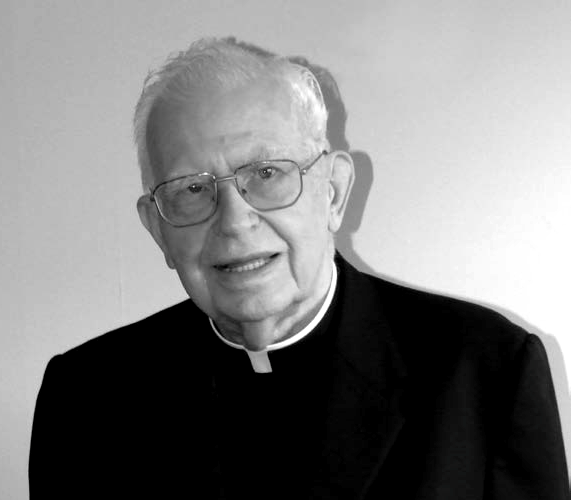
First Holy Communion: Sermon from May 16, 1943
Here is a sermon from the good old days by +Rev. Msgr. Vincent Nicholas Foy (August 14, 1915 – March 13, 2017), from 1943. Readers may recall that Pope Saint Pius X, by the decree Quam Singulari in 1910, lowered the customary age of reception of Holy Communion – after the rigours of the plague[…]Continue reading→
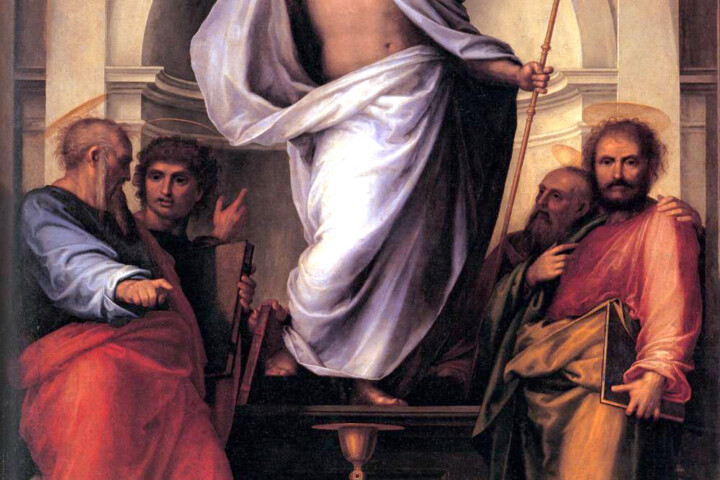
In the Glorious Light of Easter, Alleluia!
Set your minds on things that are above, not on things that are on earth, for you have died, and your life is hidden with Christ in God. When Christ who is your life is revealed, then you also will be revealed with him in glory (Col. 3:3-4). The Resurrection of Our Lord and Saviour[…]Continue reading→
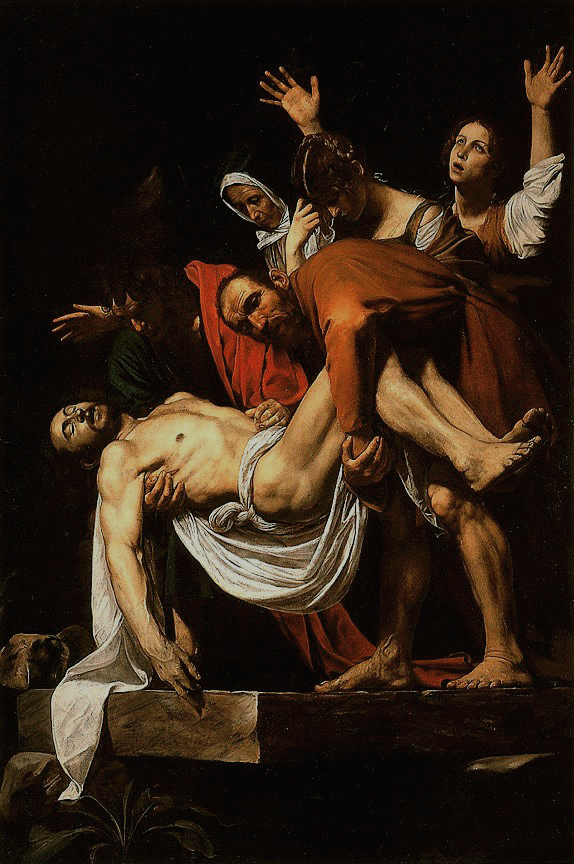
An Ancient Homily for Holy Saturday
The time between Good Friday and Easter Sunday is one of waiting, in silence, as the world wonders – anticipates – what will happen, after the death of Christ. We re-live this time each year in the anamnesis of our liturgy, and in turn look forward to the glorious re-creation of all things at the[…]Continue reading→
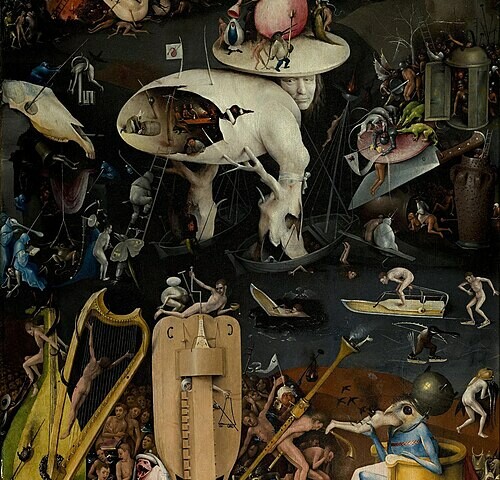
Europe’s Long Descent
(As we meditate on this day on Christ’s burial, and His descent into hell, it is fitting to ponder here with contributor Peter Marcus how the world seems to be heading there as well. The difference is that, although God cannot ‘redeem’ hell, nor those therein, He can and did redeem the world. There is[…]Continue reading→
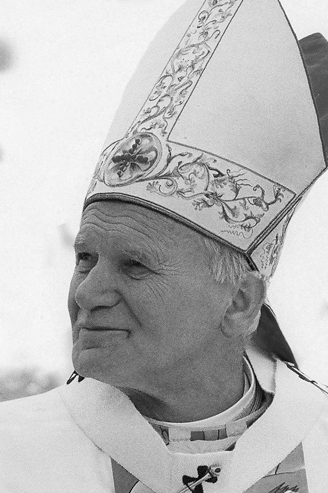
Pope Saint John Paul II’s First Good Friday Homily
ADDRESS OF HIS HOLINESS JOHN PAUL II AT THE CONCLUSION OF THE STATIONS OF THE CROSS AT THE COLOSSEUM Good Friday, 13 April 1979 When we make the Way of the Cross from one station to the next, in spirit we are always at the spot wherethis journey had its “historical” place: where it[…]Continue reading→
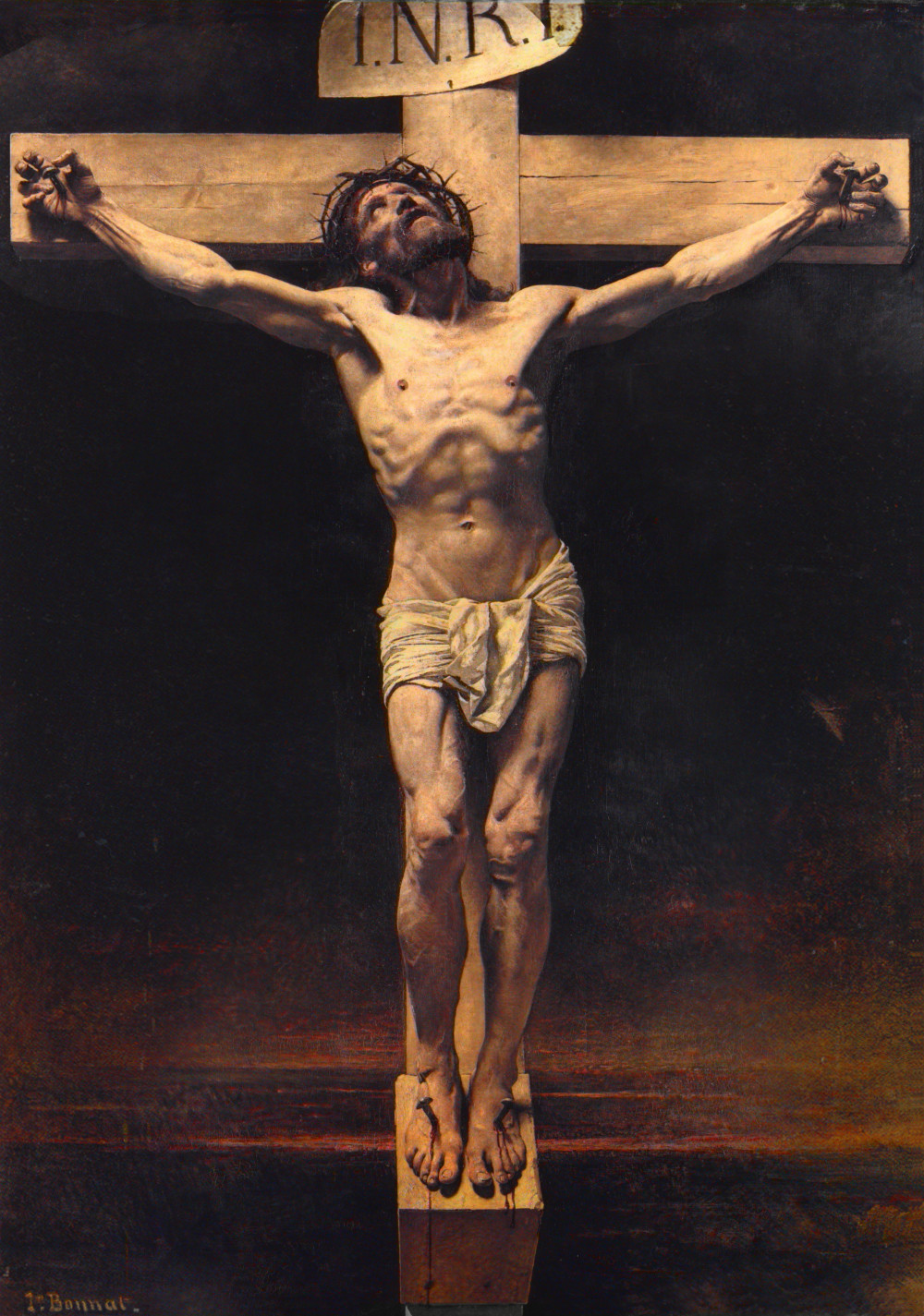
A Meditation for Good Friday: How To Undo the Effects of Sin?
Cardinal Newman, now Saint John Henry Newman, was a towering figure of nineteenth-century Catholicism who is almost universally admired. I say “almost” because not everyone likes him. I knew a priest once, Arthur Caulkins, who has become disenchanted with Newman. As an undergraduate Arthur had been enamoured of Newman, and this interest continued when he[…]Continue reading→
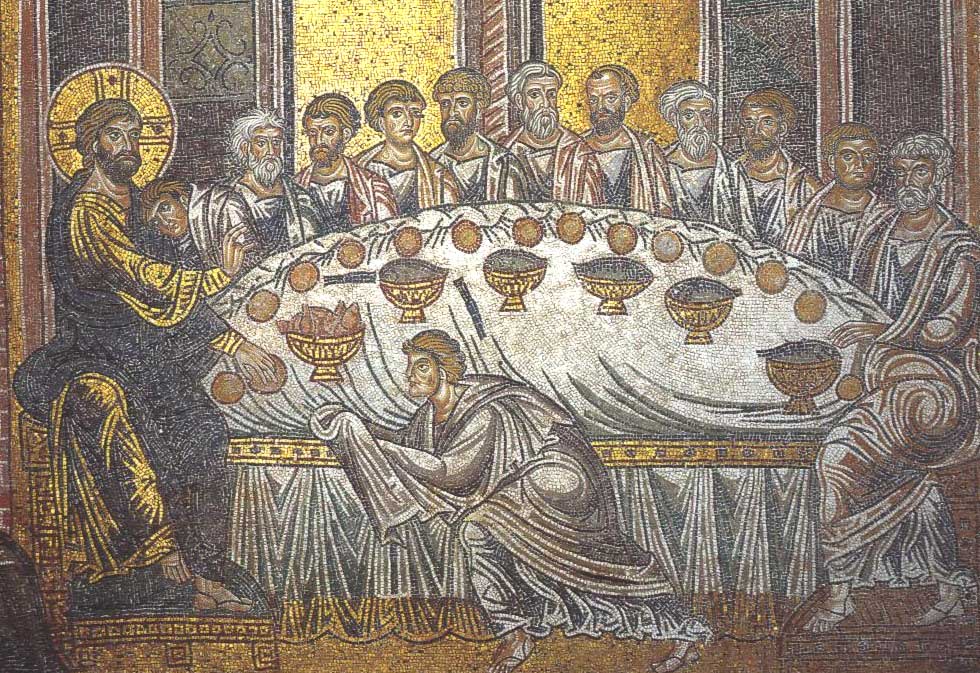
Pope Benedict’s Last Holy Thursday Homily
MASS OF THE LORD’S SUPPER HOMILY OF HIS HOLINESS BENEDICT XVI Basilica of St John Lateran Holy Thursday, 5 April 2012 Photo Gallery (Video) Dear Brothers and Sisters! Holy Thursday is not only the day of the institution of the Most Holy Eucharist, whose splendour bathes all else and in some ways draws it to[…]Continue reading→