
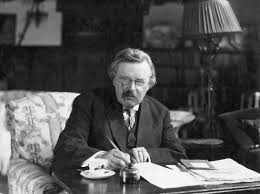
The Glory of the Past, the Narrowness of a Future Without It
The modern mind is forced towards the future by a certain sense of fatigue, not unmixed with terror, with which it regards the past. It is propelled towards the coming time; it is, in the exact words of the popular phrase, knocked into the middle of next week. And the goad which drives it on thus eagerly is not an affectation for futurity Futurity does not exist, because it is still future. Rather it is a fear of the past; a fear not merely of the evil in the past, but of the good in the past also. The brain breaks down under the unbearable virtue of mankind. There have been so many flaming faiths that we cannot hold; so many harsh heroisms that we cannot imitate; so many great efforts of monumental building or of military glory which seem to us at once sublime and pathetic. The future is a refuge from the fierce competition of our forefathers. The older generation, not the younger, is knocking at our door. It is agreeable to escape, as Henley said, into the Street of By-and-Bye, where stands the Hostelry of Never. It is pleasant to play with children, especially unborn children. The future is a blank wall on which every man can write his own name as large as he likes; the past I find already covered with illegible scribbles, such as Plato, Isaiah, Shakespeare, Michael Angelo, Napoleon. I can make the future as narrow as myself; the past is obliged to be as broad and turbulent as humanity. And the upshot of this modern attitude is really this: that men invent new ideals because they dare not attempt old ideals. They look forward with enthusiasm, because they are afraid to look back.
Now in history there is no Revolution that is not a Restoration. Among the many things that leave me doubtful about the modern habit of fixing eyes on the future, none is stronger than this: that all the men in history who have really done anything with the future have had their eyes fixed upon the past. I need not mention the Renaissance, the very word proves my case. The originality of Michael Angelo and Shakespeare began with the digging up of old vases and manuscripts. The mildness of poets absolutely arose out of the mildness of antiquaries. So the great mediaeval revival was a memory of the Roman Empire. So the Reformation looked back to the Bible and Bible times. So the modern Catholic movement has looked back to patristic times. But that modern movement which many would count the most anarchic of all is in this sense the most conservative of all. Never was the past more venerated by men than it was by the French Revolutionists. They invoked the little republics of antiquity with the complete confidence of one who invokes the gods. The Sans-culottes believed (as their name might imply) in a return to simplicity. They believed most piously in a remote past; some might call it a mythical past. For some strange reason man must always thus plant his fruit trees in a graveyard. Man can only find life among the dead. Man is a misshapen monster, with his feet set forward and his face turned back. He can make the future luxuriant and gigantic, so long as he is thinking about the past. When he tries to think about the future itself, his mind diminishes to a pin point with imbecility, which some call Nirvana. To-morrow is the Gorgon; a man must only see it mirrored in the shining shield of yesterday. If he sees it directly he is turned to stone. This has been the fate of all those who have really seen fate and futurity as clear and inevitable. The Calvinists, with their perfect creed of predestination, were turned to stone. The modern sociological scientists (with their excruciating Eugenics) are turned to stone. The only difference is that the Puritans make dignified, and the Eugenists somewhat amusing, statues.
But there is one feature in the past which more than all the rest defies and depresses the moderns and drives them towards this featureless future. I mean the presence in the past of huge ideals, unfulfilled and sometimes abandoned. The sight of these splendid failures is melancholy to a restless and rather morbid generation; and they maintain a strange silence about them—sometimes amounting to an unscrupulous silence. They keep them entirely out of their newspapers and almost entirely out of their history books. For example, they will often tell you (in their praises of the coming age) that we are moving on towards a United States of Europe. But they carefully omit to tell you that we are moving away from a United States of Europe, that such a thing existed literally in Roman and essentially in mediaeval times. They never admit that the international hatreds (which they call barbaric) are really very recent, the mere breakdown of the ideal of the Holy Roman Empire. Or again, they will tell you that there is going to be a social revolution, a great rising of the poor against the rich; but they never rub it in that France made that magnificent attempt, unaided, and that we and all the world allowed it to be trampled out and forgotten. I say decisively that nothing is so marked in modern writing as the prediction of such ideals in the future combined with the ignoring of them in the past. Anyone can test this for himself. Read any thirty or forty pages of pamphlets advocating peace in Europe and see how many of them praise the old Popes or Emperors for keeping the peace in Europe. Read any armful of essays and poems in praise of social democracy, and see how many of them praise the old Jacobins who created democracy and died for it. These colossal ruins are to the modern only enormous eyesores. He looks back along the valley of the past and sees a perspective of splendid but unfinished cities. They are unfinished, not always through enmity or accident, but often through fickleness, mental fatigue, and the lust for alien philosophies. We have not only left undone those things that we ought to have done, but we have even left undone those things that we wanted to do.
(From What’s Wrong with the World, 1910)

Saint Kateri , Canada’s Protectress
This was the title given to Saint Kateri Tekakwitha, by Pope Benedict XVI, when he canonized her on October 28th, 2012, along with six others, in Saint Peter’ Square (she had been beatified by Pope John Paul II back in 1980). With Saint Joseph as our protector, along with the Canadian martyrs, we seem to[…]Continue reading→

Remembering Father Alphonse de Valk
(Today marks the sixth anniversary of the death of Father Alphonse de Valk, C.S.B., a faithful, courageous and indefatigable Basilian priest, pro-life-and-family apostle, and the founder of Catholic Insight magazine. Here is what we wrote those on his entering into eternity five years ago, as we continue to remember him in our prayers and thoughts)[…]Continue reading→

My Name is Bernadette
April 16th is a propitious day, for besides the anniversary of Father de Valk’s death, who founded Catholic Insight in its print form decades ago, and the commemoration of the ‘two Benedicts’, mentioned in accompanying posts, today we also recall Saint Bernadette Soubirous, the young visionary to whom the Virgin Mary appeared numerous times at[…]Continue reading→
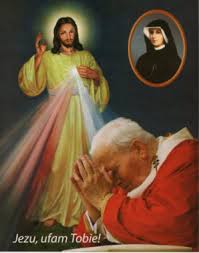
Canonizing Sister Faustina and Divine Mercy
HOMILY OF THE HOLY FATHER MASS IN ST PETER’S SQUARE FOR THE CANONIZATION OF SR MARY FAUSTINA KOWALSKA Sunday, 30 April 2000 1. “Confitemini Domino quoniam bonus, quoniam in saeculum misericordia eius”; “Give thanks to the Lord for he is good; his steadfast love endures for ever” (Ps 118: 1). So the Church sings on the Octave of[…]Continue reading→
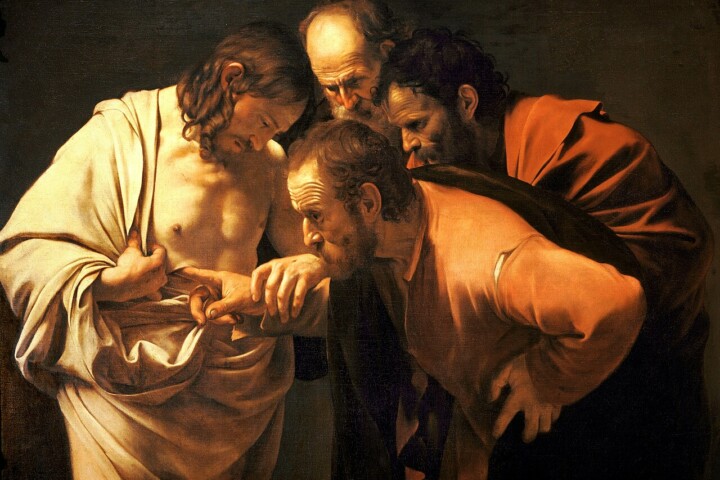
Divine Mercy Sunday – An Echo of Every Mass
Reach out your hand and put it in my side. Do not doubt but believe’… ‘My Lord and my God!’ (Jn. 20:18)). Today is Divine Mercy Sunday, and as we celebrate the end of the Easter Octave, we contemplate the wounded side of our Saviour, the Church’s source of life. On Good Friday in the[…]Continue reading→

Saint Stanislaus of Szczepanów
We celebrate Saint Stanislaus today (+ April 11, 1079), in light of this Easter Octave, a bishop and martyr who accepted the episcopacy only at the direct order of Pope Alexander II. He proved a wise and courageous leader of his flock, put to death by his own king, Boleslaus, for rebuking the monarch’s ‘immoral[…]Continue reading→
First Holy Communion: Sermon from May 16, 1943
Here is a sermon from the good old days by +Rev. Msgr. Vincent Nicholas Foy (August 14, 1915 – March 13, 2017), from 1943. Readers may recall that Pope Saint Pius X, by the decree Quam Singulari in 1910, lowered the customary age of reception of Holy Communion – after the rigours of the plague[…]Continue reading→
In the Glorious Light of Easter, Alleluia!
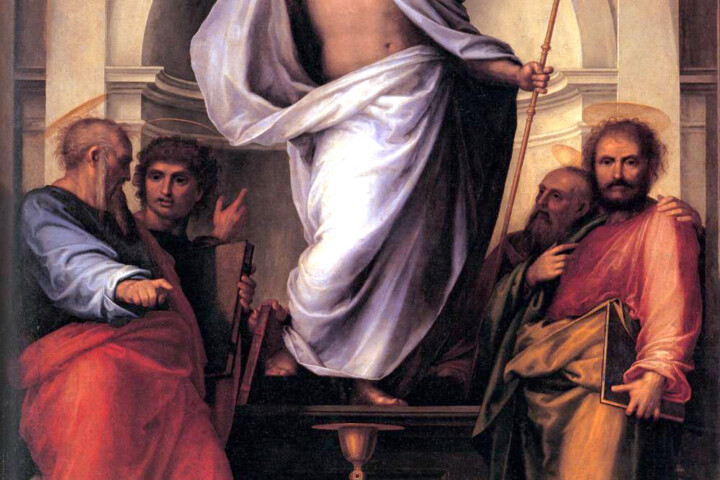
Set your minds on things that are above, not on things that are on earth, for you have died, and your life is hidden with Christ in God. When Christ who is your life is revealed, then you also will be revealed with him in glory (Col. 3:3-4). The Resurrection of Our Lord and Saviour[…]Continue reading→
An Ancient Homily for Holy Saturday
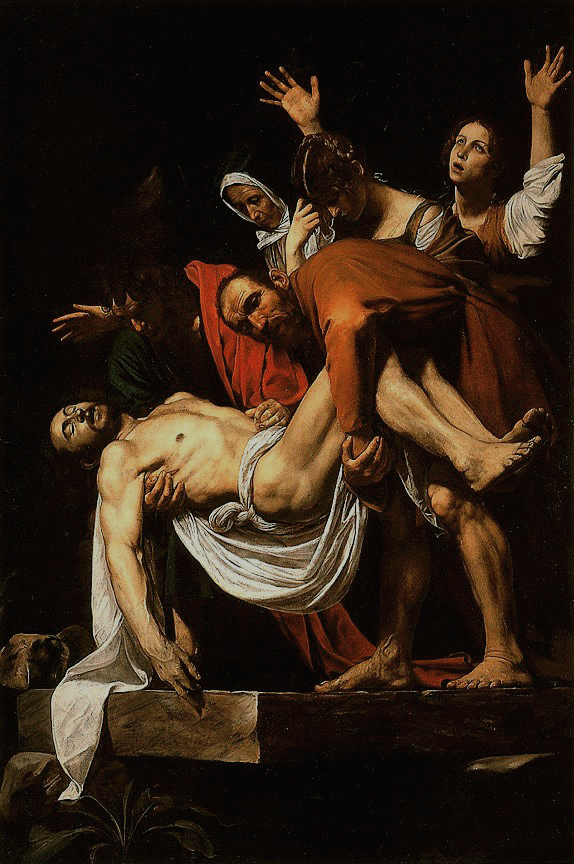
The time between Good Friday and Easter Sunday is one of waiting, in silence, as the world wonders – anticipates – what will happen, after the death of Christ. We re-live this time each year in the anamnesis of our liturgy, and in turn look forward to the glorious re-creation of all things at the[…]Continue reading→
Europe’s Long Descent
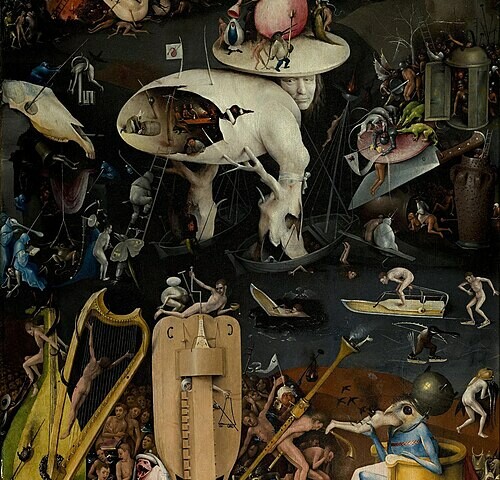
(As we meditate on this day on Christ’s burial, and His descent into hell, it is fitting to ponder here with contributor Peter Marcus how the world seems to be heading there as well. The difference is that, although God cannot ‘redeem’ hell, nor those therein, He can and did redeem the world. There is[…]Continue reading→