
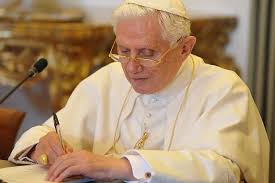
Pope Benedict and Saint Ephraim the Deacon
BENEDICT XVI
GENERAL AUDIENCE
Paul VI Audience Hall
Wednesday, 28 November 2007
Saint Ephrem
Dear Brothers and Sisters,
Common opinion today supposes Christianity to be a European religion which subsequently exported the culture of this Continent to other countries. But the reality is far more complex since the roots of the Christian religion are found in the Old Testament, hence, in Jerusalem and the Semitic world. Christianity is still nourished by these Old Testament roots. Furthermore, its expansion in the first centuries was both towards the West – towards the Greco-Latin world, where it later inspired European culture – and in the direction of the East, as far as Persia and India. It thus contributed to creating a specific culture in Semitic languages with an identity of its own. To demonstrate this cultural pluralism of the one Christian faith in its origins, I spoke in my Catechesis last Wednesday of a representative of this other Christianity who is almost unknown to us: Aphraates, the Persian sage. Today, along the same lines, I would like to talk about St Ephrem the Syrian, who was born into a Christian family in Nisibis in about 306 A.D. He was Christianity’s most important Syriac-speaking representative and uniquely succeeded in reconciling the vocations of theologian and poet. He was educated and grew up beside James, Bishop of Nisibis (303-338), and with him founded the theological school in his city. He was ordained a deacon and was intensely active in local Christian community life until 363, the year when Nisibis fell into Persian hands. Ephrem then emigrated to Edessa, where he continued his activity as a preacher. He died in this city in 373, a victim of the disease he contracted while caring for those infected with the plague. It is not known for certain whether he was a monk, but we can be sure in any case that he remained a deacon throughout his life and embraced virginity and poverty. Thus, the common and fundamental Christian identity appears in the specificity of his own cultural expression: faith, hope – the hope which makes it possible to live poor and chaste in this world, placing every expectation in the Lord – and lastly, charity, to the point of giving his life through nursing those sick with the plague.
(To continue reading, please see here).
A Closed, Unsustainable, Descending Loop
As a follow-up to my thoughts on Payette’s payout, here be a stark image of where are here in Canada. As the graph shows in, well, graphic terms, since 2025, the public sector has contributed to 95.5% of economic growth. The private sector – which funds the public sector, or is supposed to – has[…]Continue reading→

Remembering Father Alphonse de Valk
(Today marks the sixth anniversary of the death of Father Alphonse de Valk, C.S.B., a faithful, courageous and indefatigable Basilian priest, pro-life-and-family apostle, and the founder of Catholic Insight magazine. Here is what we wrote those on his entering into eternity five years ago, as we continue to remember him in our prayers and thoughts)[…]Continue reading→
Presidential Pardon of Weronika Krawczyk
As a good news, follow-up to our story from Poland, of the persecution of Weronika Krawczyk for her pro-life views, we heard that she has been granted a presidential pardon. One might still wonder why one needs a presidential pardon for simply holding the long-held belief that the child within the womb is a child,[…]Continue reading→

Divine Mercy Sunday – An Echo of Every Mass
Reach out your hand and put it in my side. Do not doubt but believe’… ‘My Lord and my God!’ (Jn. 20:18)). Today is Divine Mercy Sunday, and as we celebrate the end of the Easter Octave, we contemplate the wounded side of our Saviour, the Church’s source of life. On Good Friday in the[…]Continue reading→
Pope Leo and a Rosary for Peace
Pope Leo XIV has asked Catholics across the world to join him in a Rosary for peace today, at 18:00 Rome time (6 pm), which would be noon from where I write (EST). If you are able, whether at that time or another, and in whatever way you pray, to join in intercession with the[…]Continue reading→
Payette’s Payout
I was glancing through some headlines, and noticed a mention of Julie Payette – engineer and astronaut and sometime the Queen’s representative in Canada – which brought back vague memories. She was appointed Governor-General by Justin Trudeau in 2017. Ms. Payette resigned in 2021, amidst claims that she created a ‘toxic work environment’, with allegations[…]Continue reading→

Saint Stanislaus of Szczepanów
We celebrate Saint Stanislaus today (+ April 11, 1079), in light of this Easter Octave, a bishop and martyr who accepted the episcopacy only at the direct order of Pope Alexander II. He proved a wise and courageous leader of his flock, put to death by his own king, Boleslaus, for rebuking the monarch’s ‘immoral[…]Continue reading→
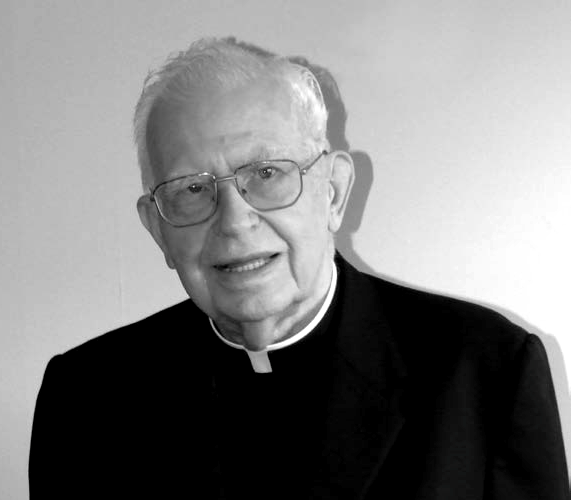
First Holy Communion: Sermon from May 16, 1943
Here is a sermon from the good old days by +Rev. Msgr. Vincent Nicholas Foy (August 14, 1915 – March 13, 2017), from 1943. Readers may recall that Pope Saint Pius X, by the decree Quam Singulari in 1910, lowered the customary age of reception of Holy Communion – after the rigours of the plague[…]Continue reading→
Weronika Krawczyk and Injustice in Poland
Catholic Action in Poland has issued a formal statement appealing to the President of the Republic of Poland to pardon Weronika Krawczyk—convicted for warning other women against an abortion-performing gynaecologist. Catholic Action (AK) emphasizes that no apology is owed to a doctor who has performed numerous abortions and proposed others; furthermore, the organization considers the[…]Continue reading→
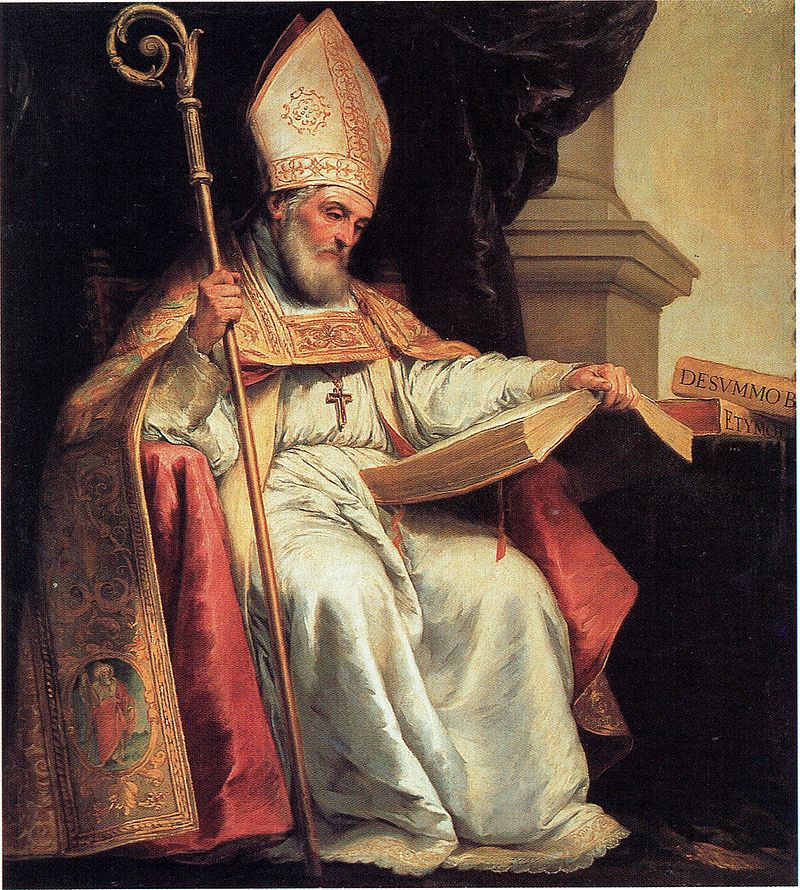
Saint Isidore of Seville, the Internet and Industriousness
Today, April 4th, muted this year by Holy Saturday, is the commemoration of Saint Isidore of Seville (560-636) a bishop and doctor of the Church during a tumultuous age, when civilization was crumbling, coming apart at its very seams, which may sound sort of au courant. Then again, the form of this world has always[…]Continue reading→